
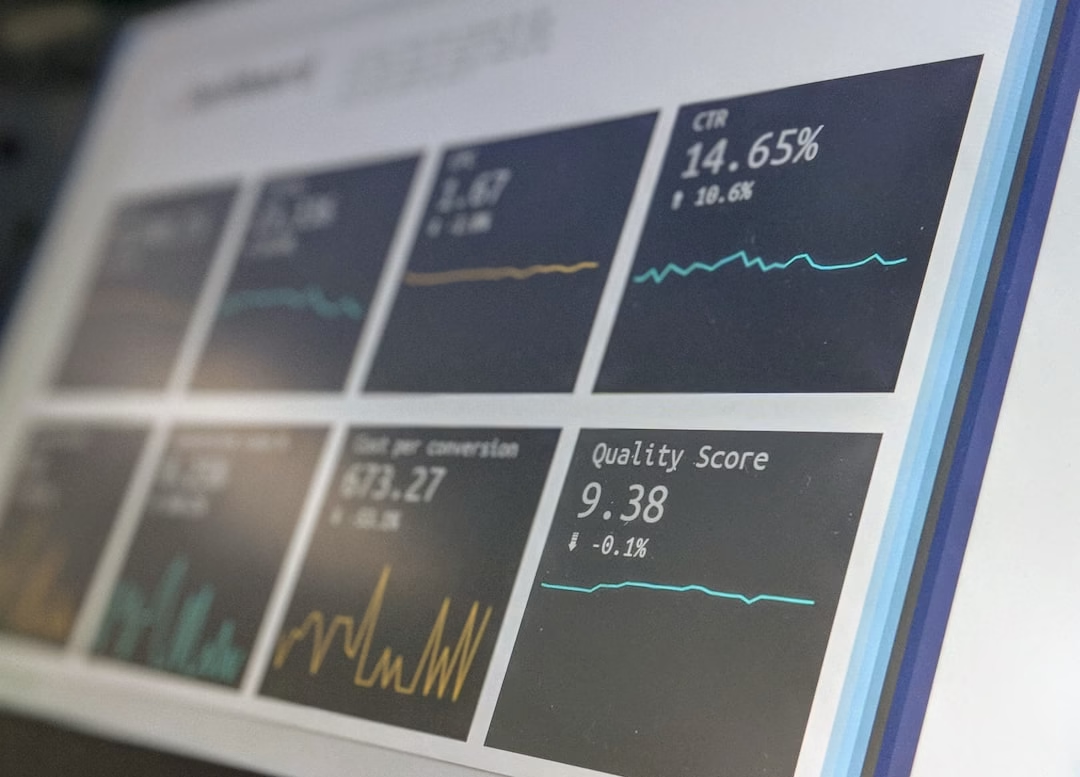
In recent years, data analytics has emerged as a foundational element in modern building management, revolutionizing the way facilities are operated, maintained, and optimized. The integral role of data analytics in building management cannot be overstated, as it offers unprecedented opportunities to transform the efficiency, sustainability, and overall performance of buildings.
Data analytics in building management refers to the process of collecting, analyzing, and interpreting vast amounts of data generated by various building systems and sensors. This data-driven approach enables building managers to gain deep insights into their facilities’ operations, allowing for more informed decision-making and proactive management strategies.
The transformative potential of data analytics in building management lies in its ability to provide a holistic view of a facility’s performance. By integrating data from multiple sources such as HVAC systems, lighting controls, occupancy sensors, and energy meters, building managers can identify patterns, trends, and anomalies that would otherwise go unnoticed. This comprehensive understanding allows for targeted interventions and improvements, leading to enhanced efficiency and sustainability.
One of the primary ways data analytics transforms building efficiency is through the optimization of energy consumption. By analyzing historical and real-time data on energy usage patterns, building managers can identify areas of waste and implement strategies to reduce consumption. For example, data analytics can reveal opportunities for adjusting HVAC schedules based on occupancy patterns or highlight equipment that may be operating inefficiently.
Sustainability is another critical area where data analytics plays a pivotal role. As organizations increasingly prioritize environmental responsibility, data-driven insights help building managers implement and track sustainable practices. Analytics can measure and verify the impact of green initiatives, such as renewable energy installations or water conservation measures, ensuring that sustainability goals are met and quantified.
The occupant experience is also significantly enhanced through the application of data analytics. By analyzing data from various building systems and sensors, managers can create more comfortable and productive environments for occupants. For instance, data on temperature, humidity, and air quality can be used to optimize indoor environmental conditions, while occupancy data can inform space utilization strategies and improve facility layout.
The evolution of building management practices with the integration of data analytics represents a paradigm shift in the industry. Traditional reactive approaches to building management are being replaced by proactive, predictive strategies enabled by data-driven insights. This shift allows building managers to anticipate issues before they occur, schedule maintenance more effectively, and allocate resources more efficiently.
Moreover, data analytics facilitates continuous improvement in building management. By establishing key performance indicators (KPIs) and regularly analyzing relevant data, managers can track progress over time and make data-informed decisions to drive ongoing enhancements in building performance.
The adoption of data analytics in building management also aligns with broader trends in smart building technologies and the Internet of Things (IoT). As buildings become increasingly connected and equipped with smart sensors and devices, the volume and variety of data available for analysis grow exponentially. This wealth of information, when properly harnessed through analytics, enables building managers to create truly intelligent and responsive buildings that adapt to the needs of their occupants and the environment.
Benefits of Data-Driven Decision Making
Data-driven decision making has become a cornerstone of effective building management, offering a wide array of benefits that significantly impact operational efficiency, cost reduction, and sustainability. By leveraging the power of data analytics, building managers can make more informed decisions, leading to improved outcomes across various aspects of facility management.
One of the primary advantages of data-driven decision making in building management is the substantial improvement in operational efficiency. By analyzing data from multiple building systems, managers can identify inefficiencies and optimize processes. For example, data analytics can reveal patterns in energy consumption, allowing for the fine-tuning of HVAC systems to operate more efficiently. This not only reduces energy waste but also extends the lifespan of equipment by ensuring it runs optimally.
Cost reduction is another significant benefit of data-driven decision making. By analyzing historical and real-time data, building managers can identify areas of unnecessary expenditure and implement targeted cost-saving measures. For instance, predictive maintenance strategies based on data analytics can help prevent costly equipment failures by addressing issues before they escalate. This proactive approach not only reduces repair costs but also minimizes downtime, resulting in substantial long-term savings.
Sustainability is increasingly becoming a priority for organizations, and data-driven decision making plays a crucial role in achieving environmental goals. By analyzing energy consumption data, building managers can implement strategies to reduce carbon footprints and improve overall sustainability. For example, data insights might reveal opportunities for implementing renewable energy sources or optimizing waste management processes, contributing to a building’s green credentials.
The strategic advantage of data-driven insights extends to predictive maintenance, which is revolutionizing how building managers approach equipment upkeep. By analyzing data from sensors and historical maintenance records, managers can predict when equipment is likely to fail and schedule maintenance proactively. This approach not only reduces unexpected breakdowns but also optimizes maintenance schedules, ensuring that resources are allocated efficiently.
Energy management is another area where data-driven decision making provides a strategic advantage. By analyzing energy consumption patterns, building managers can implement dynamic energy management strategies. For example, data insights might reveal opportunities for load shifting, where energy-intensive activities are scheduled during off-peak hours to take advantage of lower electricity rates. This not only reduces energy costs but also helps balance the load on the power grid, contributing to overall energy efficiency.
Data-driven decisions also lead to more effective resource allocation. By having a clear understanding of how different areas of a building are used and performing, managers can allocate staff, budget, and other resources more efficiently. This might involve adjusting cleaning schedules based on occupancy data or prioritizing renovations for areas that show the highest potential for improvement in energy efficiency.
Moreover, data-driven decision making enhances transparency and accountability in building management. With clear metrics and data-backed decisions, stakeholders can easily understand the rationale behind management choices and track progress towards goals. This transparency fosters trust and can be particularly valuable when communicating with building owners, tenants, or regulatory bodies.
The Role of Data Visualization in Building Management
Data visualization plays a crucial role in modern building management, serving as a powerful tool for interpreting complex data sets and facilitating informed decision-making. As buildings generate vast amounts of data from various systems and sensors, the ability to present this information in a clear, intuitive manner becomes increasingly important for building managers.
The importance of data visualization in building management cannot be overstated. It transforms raw, often overwhelming data into visual representations that are easily digestible and actionable. This visual approach to data interpretation allows building managers to quickly identify trends, patterns, and anomalies that might otherwise go unnoticed in traditional spreadsheets or reports.
One of the primary reasons why data visualization is crucial for building managers is its ability to enhance decision-making processes. By presenting complex data in visual formats such as charts, graphs, and heat maps, managers can gain instant insights into building performance. For example, a color-coded floor plan showing temperature variations across different zones can immediately highlight areas of concern, allowing for quick adjustments to HVAC systems.
Data visualization also facilitates more effective communication among stakeholders. Visual representations of data can bridge the gap between technical staff and non-technical decision-makers, ensuring that everyone has a clear understanding of building performance and operational issues. This shared understanding leads to more collaborative and efficient problem-solving.
In recent years, there have been significant advancements in data visualization techniques and tools specifically designed for building management. Interactive dashboards have become increasingly popular, offering real-time updates on key performance indicators (KPIs) such as energy consumption, occupancy rates, and equipment performance. These dashboards allow managers to drill down into specific data points, compare performance across different time periods, and even simulate future scenarios.
3D visualization tools are another innovative development in the field. These tools create virtual representations of buildings, allowing managers to overlay various data sets onto the building model. For instance, energy consumption data can be visualized as a heat map on a 3D model of the building, providing an intuitive understanding of energy usage patterns across different floors or zones.
Augmented reality (AR) is also making its way into building management data visualization. AR applications can overlay real-time data onto physical spaces when viewed through a smartphone or tablet, allowing facility managers to see important information about equipment or spaces as they walk through a building.
Real-life examples demonstrate the transformative impact of data visualization on building operations and management. For instance, a large hospital complex implemented a comprehensive data visualization system that integrated data from various building systems. The visual dashboard allowed facility managers to quickly identify areas of high energy consumption and implement targeted efficiency measures. As a result, the hospital reduced its energy consumption by 15% within the first year of implementation.
Another example involves a commercial office building that used data visualization to optimize space utilization. By creating heat maps of occupancy patterns, the management team identified underutilized areas and implemented a hot-desking system. This data-driven approach not only improved space efficiency but also enhanced employee satisfaction by providing more flexible working arrangements.
Data visualization also plays a critical role in predictive maintenance strategies. By visualizing historical performance data and real-time sensor readings, building managers can identify equipment that may be at risk of failure. For example, a line graph showing the gradual increase in a motor’s vibration over time can alert managers to potential issues before a breakdown occurs, allowing for proactive maintenance and minimizing downtime.
Energy management is another area where data visualization proves invaluable. Energy consumption data can be visualized in various ways, such as stacked bar charts showing consumption by different building systems or line graphs tracking usage over time. These visualizations make it easy to identify peak usage periods, compare performance against benchmarks, and track the impact of energy-saving initiatives.
Moreover, data visualization can enhance occupant comfort and satisfaction. By visualizing data from environmental sensors, managers can ensure that temperature, humidity, and air quality are maintained at optimal levels throughout the building. Occupant feedback can also be visualized, allowing managers to quickly identify and address areas of concern.
Impact of Cloud Computing on Building Data Management
Cloud computing has revolutionized building data management, offering unprecedented opportunities for scalability, efficiency, and security in handling the vast amounts of data generated by modern buildings. The integration of cloud technologies with building management systems has transformed how facility managers collect, store, analyze, and act upon data, leading to more intelligent and responsive building operations.
The role of cloud computing in enabling scalable, efficient, and secure data management for buildings is multifaceted. First and foremost, cloud platforms provide virtually unlimited storage capacity, allowing building managers to collect and retain large volumes of data from various sources such as sensors, meters, and building systems. This scalability is crucial as buildings become increasingly instrumented and generate ever-growing amounts of data.
Efficiency is another key advantage of cloud-based building data management. Cloud services offer powerful computing resources that can process and analyze large datasets much faster than traditional on-premises systems. This capability enables real-time analysis and rapid decision-making, which is essential for optimizing building performance and responding quickly to changing conditions.
Security is a critical concern in building data management, and cloud providers have made significant investments in robust security measures. Advanced encryption, multi-factor authentication, and regular security updates are standard features of cloud platforms, often providing a level of security that surpasses what many organizations can achieve with on-premises systems.
The benefits of cloud solutions in terms of accessibility are particularly valuable in building management. Cloud-based systems allow facility managers to access building data and controls from anywhere with an internet connection. This remote accessibility has become increasingly important, especially in light of recent trends towards remote work and the need for flexible management solutions.
Cost-effectiveness is another significant advantage of cloud computing in building data management. Cloud solutions typically operate on a pay-as-you-go model, eliminating the need for large upfront investments in hardware and software. This model also allows organizations to scale their data management capabilities up or down as needed, paying only for the resources they use.
Integration capabilities are enhanced through cloud-based building management systems. Cloud platforms often provide APIs and other integration tools that make it easier to connect various building systems and external data sources. This interoperability facilitates a more holistic approach to building management, allowing for the correlation of data from different systems to gain deeper insights.
Cloud computing also facilitates the implementation of machine learning and artificial intelligence in building management. These advanced technologies require significant computational resources and large datasets, which are more easily managed in a cloud environment. For instance, a commercial office building used cloud-based machine learning algorithms to optimize its HVAC operations. The system learned from historical data and continuously adjusted settings based on weather forecasts and occupancy patterns, resulting in a 25% reduction in HVAC-related energy consumption.
The integration of IoT devices in building management is greatly enhanced by cloud computing. Cloud platforms can handle the massive influx of data from IoT sensors, providing the storage and processing power needed to derive meaningful insights. For example, a smart city project used a cloud-based system to manage data from thousands of IoT sensors across multiple buildings. This integrated approach allowed for city-wide energy optimization and improved urban planning.
Data analytics in the cloud also enables more sophisticated benchmarking and performance tracking. Building managers can easily compare performance across multiple properties or against industry standards, identifying best practices and areas for improvement. This capability is particularly valuable for organizations managing large portfolios of buildings.
Implementing Data Analytics in Facilities
Implementing data analytics in facilities management is a transformative process that can significantly enhance operational efficiency, reduce costs, and improve overall building performance. However, successful implementation requires a strategic approach, the right tools and technologies, and a plan to overcome common challenges. This section provides a comprehensive guide to integrating data analytics into building management practices, highlighting essential tools and strategies to address implementation challenges.
The key steps to successfully implement data analytics in building management begin with a clear definition of objectives. Facility managers should identify specific goals they aim to achieve through data analytics, such as reducing energy consumption, optimizing space utilization, or improving maintenance practices. These objectives will guide the entire implementation process and help in selecting the most appropriate tools and technologies.
The next step involves assessing the current state of data collection and management within the facility. This assessment should identify existing data sources, such as building management systems (BMS), energy meters, and occupancy sensors. It’s also crucial to evaluate the quality and accessibility of this data. Many buildings may need to upgrade or install new sensors and meters to ensure comprehensive and accurate data collection.
Once the data sources are identified, the next step is to establish a robust data infrastructure. This typically involves implementing a centralized data platform that can integrate data from various building systems and sensors. Cloud-based platforms are often preferred for their scalability and accessibility. It’s essential to ensure that the chosen platform can handle the volume and variety of data generated by the building systems.
With the infrastructure in place, the focus shifts to selecting and implementing analytics tools. There are numerous tools available for data analytics in facilities management, ranging from basic reporting software to advanced predictive analytics platforms. The choice of tools should align with the organization’s objectives and technical capabilities. Some essential tools for data analytics in facilities include:
1. Energy Management Systems (EMS): These tools provide detailed insights into energy consumption patterns and help identify opportunities for energy savings.
2. Predictive Maintenance Software: These applications use historical data and machine learning algorithms to predict equipment failures and optimize maintenance schedules.
3. Space Management Tools: These applications analyze occupancy data to optimize space utilization and improve workplace efficiency.
4. Building Information Modeling (BIM) Software: BIM tools integrate with analytics platforms to provide a comprehensive view of building performance and facilitate data-driven decision-making.
5. Indoor Environmental Quality (IEQ) Monitoring Systems: These tools analyze data from environmental sensors to ensure optimal comfort and health conditions for occupants.
Implementing these tools requires careful planning and often involves a phased approach. It’s crucial to start with pilot projects that focus on specific areas or systems before scaling up to facility-wide implementation. This approach allows for testing and refinement of processes and helps build confidence in the analytics capabilities.
Training and change management are critical components of successful implementation. Facility managers and staff need to be trained not only in the use of new tools but also in interpreting and acting upon the insights generated by data analytics. This often requires a shift in mindset from reactive to proactive management strategies.
One of the significant challenges in adopting data analytics is data quality and integration. Many facilities struggle with siloed data systems and inconsistent data formats. Overcoming this challenge requires investing in data cleansing and integration processes. Implementing data governance policies and standards can help ensure data consistency and reliability across different systems.
Another common challenge is resistance to change. Some staff members may be hesitant to adopt new technologies or change established processes. Addressing this challenge requires clear communication of the benefits of data analytics and involving staff in the implementation process. Demonstrating early wins and tangible benefits can help build support for broader adoption.
Privacy and security concerns also present challenges, especially when dealing with occupant data. It’s essential to implement robust data security measures and ensure compliance with relevant privacy regulations. Transparency about data collection and usage can help alleviate concerns among building occupants.
Budget constraints can be a significant barrier to implementing advanced analytics solutions. To address this, organizations can start with low-cost or open-source analytics tools and gradually invest in more sophisticated solutions as they demonstrate value. Cloud-based solutions can also help reduce upfront costs and provide scalability.
Lastly, the lack of in-house expertise in data analytics can be a challenge for many facilities. This can be addressed through partnerships with analytics service providers, hiring data scientists, or upskilling existing staff through training programs.
Smart Building Technologies and IoT
Smart building technologies and the Internet of Things (IoT) have emerged as transformative forces in the field of building management, offering unprecedented opportunities for enhancing efficiency, sustainability, and occupant comfort. The synergy between IoT devices and data analytics creates a powerful ecosystem that enables buildings to become more intelligent, responsive, and adaptive to the needs of their occupants and the environment.
IoT devices contribute significantly to building management by providing a vast network of sensors and connected devices that continuously collect and transmit data. These devices range from smart thermostats and lighting controls to occupancy sensors and air quality monitors. The data generated by these devices forms the foundation for advanced analytics and intelligent decision-making in building management.
One of the primary benefits of integrating IoT devices in building management systems is the ability to achieve granular control and monitoring of building operations. For instance, IoT-enabled HVAC systems can adjust temperature and airflow based on real-time occupancy data, optimizing energy use while maintaining comfort. This level of precision control was previously unattainable with traditional building management systems.
Energy efficiency is a key area where smart building technologies and IoT drive significant improvements. By leveraging data from various sensors and systems, building managers can implement sophisticated energy management strategies. For example, smart lighting systems can adjust brightness based on natural light levels and occupancy, while IoT-enabled power meters can provide real-time insights into energy consumption patterns, allowing for immediate interventions to reduce waste.
Predictive maintenance is another critical application of smart building technologies and IoT. By continuously monitoring equipment performance through IoT sensors, building managers can detect potential issues before they escalate into major problems. This proactive approach not only reduces maintenance costs but also minimizes downtime and extends the lifespan of building systems.
Occupant comfort and productivity are significantly enhanced through smart building technologies. IoT devices can monitor and adjust various environmental factors such as temperature, humidity, and lighting to create optimal conditions for occupants. Some advanced systems even allow individual occupants to customize their immediate environment through smartphone apps, enhancing personal comfort and satisfaction.
The impact of smart building technologies on sustainability extends beyond energy efficiency. IoT devices can monitor and optimize water usage, waste management, and indoor air quality, contributing to overall environmental performance. For instance, smart water meters can detect leaks and abnormal usage patterns, while waste management systems can optimize collection routes based on bin fill levels.
The integration of IoT and smart technologies also enables more sophisticated security and access control systems. Biometric authentication, smart cameras, and IoT-enabled access points can work together to create a seamless and secure environment. These systems not only enhance physical security but also provide valuable data on occupancy patterns and movement within the building.
Smart building technologies and IoT are also driving innovations in indoor navigation and wayfinding. In large complex buildings such as hospitals or airports, IoT beacons and smartphone apps can guide occupants to their destinations, improving the user experience and reducing confusion.
The future of smart building technologies and IoT looks promising, with emerging trends such as digital twins and AI-driven building management systems. Digital twins create virtual replicas of buildings, allowing managers to simulate and optimize operations in a risk-free environment. AI-driven systems can learn from historical data and continuously adapt building operations to changing conditions without human intervention.
However, the implementation of smart building technologies and IoT is not without challenges. Data privacy and security concerns need to be carefully addressed, ensuring that the vast amount of data collected is protected and used responsibly. Interoperability between different IoT devices and systems can also be a challenge, requiring careful planning and selection of compatible technologies.
Sustainability and Energy Efficiency Strategies
Data analytics plays a pivotal role in driving sustainability and energy efficiency in buildings, offering powerful tools for identifying, implementing, and monitoring strategies that reduce environmental impact while optimizing performance. As organizations increasingly prioritize sustainability goals, data-driven approaches have become essential in achieving and maintaining green building standards.
One of the primary ways data analytics drives sustainability is through comprehensive energy management. By analyzing data from smart meters, IoT sensors, and building management systems, facility managers can gain detailed insights into energy consumption patterns. This granular view allows for the identification of energy waste, peak usage periods, and opportunities for optimization. For instance, data analytics might reveal that certain areas of a building consistently consume more energy than necessary during off-hours, prompting adjustments to HVAC or lighting schedules.
Advanced analytics techniques, such as machine learning algorithms, can be employed to predict energy demand based on factors such as weather forecasts, occupancy patterns, and historical usage data. This predictive capability enables proactive energy management strategies, such as load shifting or demand response, where energy-intensive activities are scheduled during off-peak hours to reduce strain on the power grid and take advantage of lower electricity rates.
Data analytics also plays a crucial role in optimizing renewable energy systems. For buildings with solar panels or wind turbines, analytics can help maximize the efficiency of these systems by predicting energy generation based on weather forecasts and historical performance data. This information can be used to optimize energy storage and distribution, ensuring that renewable energy is utilized effectively throughout the building.
Water conservation is another area where data analytics contributes significantly to sustainability efforts. Smart water meters and leak detection systems generate data that can be analyzed to identify unusual consumption patterns or potential leaks. This early detection capability can prevent water waste and reduce associated costs. Additionally, analytics can inform water-saving strategies, such as optimizing irrigation schedules based on weather data and soil moisture levels.
Waste management is increasingly being enhanced through data analytics. Smart waste bins equipped with fill-level sensors can optimize collection routes and schedules, reducing the number of unnecessary pickups and associated vehicle emissions. Analytics can also track waste generation patterns, informing strategies to reduce waste and improve recycling rates.
Indoor environmental quality (IEQ) is a critical aspect of sustainable building management that benefits greatly from data analytics. By analyzing data from air quality sensors, temperature and humidity monitors, and occupancy sensors, building managers can ensure optimal comfort conditions while minimizing energy consumption. For example, analytics might reveal that certain areas are being overcooled or overheated, allowing for targeted adjustments that improve both comfort and efficiency.
Best practices for leveraging data analytics to promote sustainability include:
1. Establishing clear sustainability goals and key performance indicators (KPIs) that can be measured and tracked using data analytics.
2. Implementing a comprehensive sensor network to collect data on various aspects of building performance, including energy consumption, water usage, waste generation, and indoor environmental conditions.
3. Utilizing cloud-based analytics platforms that can integrate data from multiple sources and provide real-time insights and alerts.
4. Employing advanced visualization tools to make complex data easily understandable for decision-makers and stakeholders.
5. Regularly benchmarking performance against industry standards and similar buildings to identify areas for improvement.
6. Implementing continuous commissioning processes that use data analytics to ensure building systems are operating at peak efficiency over time.
7. Engaging occupants in sustainability efforts by providing them with access to relevant data and insights about their impact on building performance.
Data analytics also plays a crucial role in achieving and maintaining green building certifications such as LEED, BREEAM, or WELL. These certification systems often require detailed documentation of building performance across various sustainability metrics. Data analytics provides the necessary tools to track, analyze, and report on these metrics accurately and efficiently. For example, analytics can help demonstrate energy savings, water conservation, and improvements in indoor air quality, all of which are key components of green building certifications.
Data analytics in building management is only as useful as the data being collected. The resolution and completeness of sensor coverage determines what patterns are visible and what operational decisions can be made. Buildings with continuous, multi-parameter sensor data across all occupied zones can identify correlations between environmental conditions, occupancy patterns, energy consumption, and occupant complaints that buildings with sparse metering simply cannot see.
Nosy is a wireless environmental sensor platform that monitors CO2, temperature, humidity, tVOCs, atmospheric pressure, and occupancy across commercial buildings, with readings every five minutes and a web-based dashboard that stores historical data for trend analysis. The platform uses a self-configuring Bluetooth mesh network that requires no building IT changes, making it practical to instrument buildings that currently lack the sensor density needed for meaningful analytics. Building managers looking for context on affordable sensor infrastructure for building analytics can find a useful starting point at Fractional BAS Explained.
Conclusion
The integral role of data analytics in building management has redefined the landscape of facility operations, ushering in a new era of efficiency, sustainability, and occupant-centric design. As we have explored throughout this article, data analytics serves as the cornerstone for transforming raw building data into actionable insights, enabling managers to make informed decisions that optimize performance across all aspects of building operations.
The implementation of data analytics in building management represents a paradigm shift from reactive to proactive strategies. By leveraging real-time data and predictive analytics, building managers can anticipate issues before they arise, optimize resource allocation, and create environments that adapt to the needs of occupants. This proactive approach not only enhances operational efficiency but also contributes significantly to sustainability goals and occupant satisfaction.
Key takeaways for building managers regarding the implementation of data analytics include:
1. Start with clear objectives: Define specific goals for implementing data analytics, whether it’s reducing energy consumption, improving maintenance practices, or enhancing occupant comfort.
2. Invest in robust data infrastructure: Ensure that your building has the necessary sensors, meters, and connectivity to collect comprehensive and accurate data.
3. Choose the right analytics tools: Select tools that align with your objectives and integrate well with existing systems. Consider cloud-based solutions for scalability and accessibility.
4. Focus on data quality: Implement data governance policies to ensure data consistency and reliability across different systems.
5. Embrace a culture of data-driven decision making: Train staff to interpret and act upon data insights, fostering a culture that values evidence-based management.
6. Prioritize cybersecurity: As buildings become more connected, ensure robust security measures are in place to protect sensitive data.
7. Plan for scalability: Start with pilot projects and scale up as you demonstrate value and build confidence in your analytics capabilities.
8. Continuously evolve: Stay informed about emerging technologies and be prepared to adapt your strategies as new tools and techniques become available.
The future of building management is inseparable from data analytics due to several factors. Firstly, the increasing complexity of building systems and the growing emphasis on sustainability require sophisticated management approaches that only data analytics can provide. Secondly, the expectations of building occupants are evolving, with a growing demand for personalized, responsive environments that adapt to individual needs. Data analytics is crucial in meeting these expectations.
Moreover, the integration of IoT devices and smart building technologies is generating unprecedented volumes of data. The ability to harness this data through advanced analytics will be a key differentiator in building management. As artificial intelligence and machine learning techniques continue to advance, we can expect even more sophisticated analytics capabilities that can automate complex decision-making processes and optimize building performance in real-time.
The future outlook of building management with continuous advancements in data analytics and technology is promising. We can anticipate buildings that are not just smart, but truly intelligent – capable of learning from past performance, predicting future needs, and adapting autonomously to changing conditions. These buildings will be more energy-efficient, more sustainable, and more attuned to the needs of their occupants than ever before.
Furthermore, the role of building managers will evolve alongside these technological advancements. While data analytics tools will automate many routine tasks, building managers will need to develop new skills in data interpretation, strategic planning, and change management. The most successful managers will be those who can effectively bridge the gap between technological capabilities and human needs, ensuring that buildings serve not just as efficient machines, but as healthy, productive, and inspiring environments for their occupants.
