
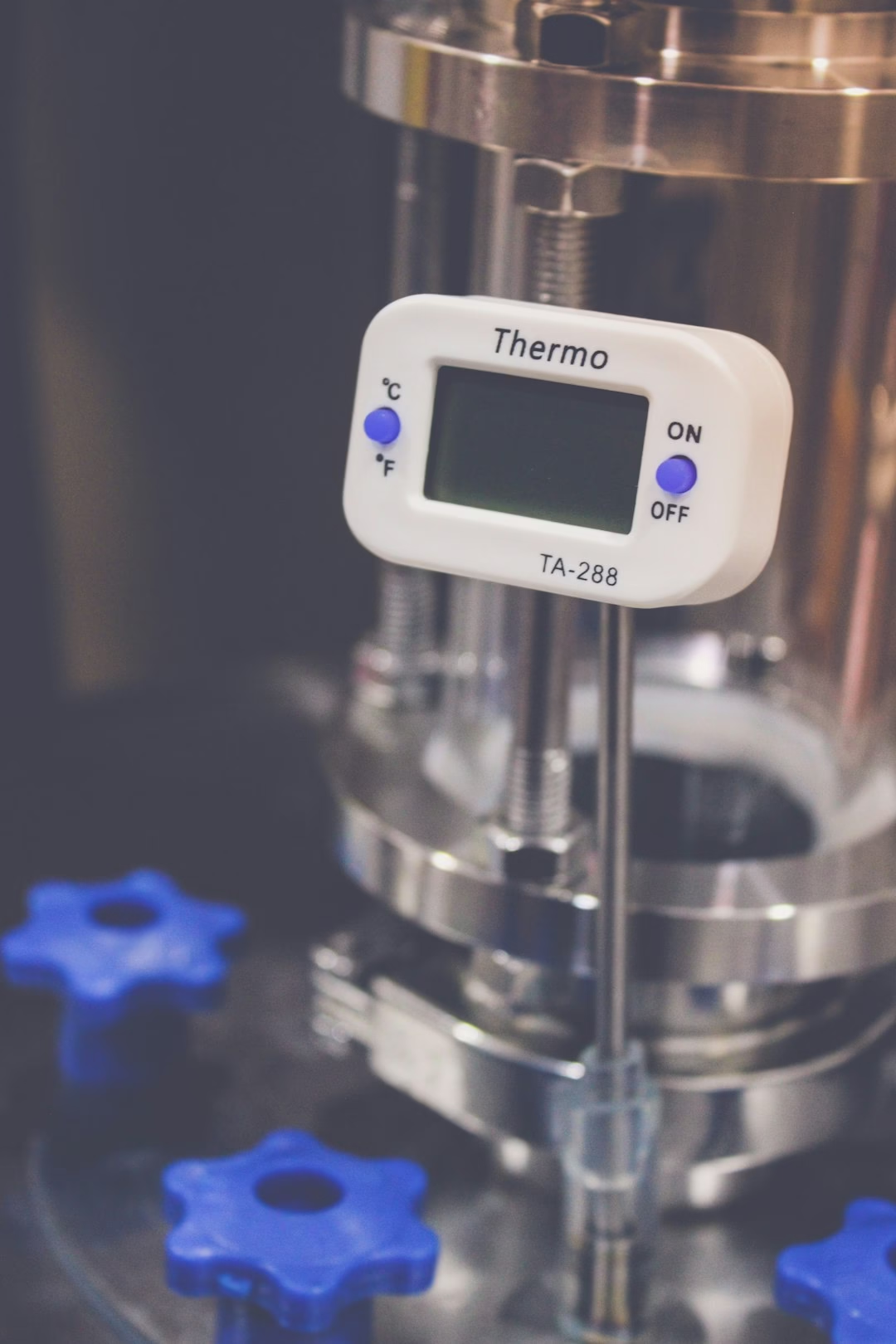
Introduction to Real-Time Temperature Control in Distilleries
Temperature control stands as the cornerstone of successful fermentation in distilleries. Without precise management of thermal conditions, yeast activity becomes unpredictable, leading to inconsistent product quality and wasted resources. Distillery managers and process engineers understand that even slight variations can transform a premium spirit into an inferior product. Therefore, maintaining optimal conditions throughout the fermentation process becomes essential for achieving desired outcomes.
Real-time temperature control systems revolutionize how distilleries manage their fermentation processes. These advanced systems monitor conditions continuously, making adjustments within seconds rather than hours. Traditional methods required manual checks and adjustments, often missing critical fluctuations that occurred between monitoring intervals. Modern technology eliminates these gaps, providing constant oversight that ensures yeast performs optimally throughout the entire fermentation cycle. Consequently, distillers gain unprecedented control over their production environment.
The relationship between temperature and yeast activity defines fermentation success. Yeast organisms are remarkably sensitive to thermal changes, with different strains requiring specific temperature ranges for optimal performance. When conditions stray outside these parameters, yeast either becomes sluggish or hyperactive, producing unwanted compounds that affect flavor profiles. Real-time monitoring catches these deviations immediately, triggering corrective measures before problems escalate. This proactive approach protects both product quality and operational efficiency.
Advanced temperature control systems deliver multiple benefits beyond simple monitoring. They integrate with heating and cooling equipment to maintain consistent conditions automatically. Distillery owners appreciate how these systems reduce labor costs while improving product consistency. Furthermore, automated controls minimize human error, which often contributes to fermentation failures. The technology creates a stable environment where brewmasters can focus on optimizing recipes rather than constantly adjusting equipment. Smart fermentation sensors provide granular data that helps refine processes over time, building institutional knowledge that drives continuous improvement.
Product quality improvements represent the most compelling reason for adopting real-time temperature control. Consistent fermentation temperatures ensure that flavor compounds develop predictably, batch after batch. Quality assurance managers recognize how temperature stability eliminates one of the most common sources of product variation. When fermentation occurs under ideal conditions, distilleries achieve their target flavor profiles reliably. This consistency strengthens brand reputation and customer loyalty, ultimately impacting the bottom line positively.
Understanding Fermentation Fluctuations
Multiple factors contribute to temperature instability during fermentation. External environmental conditions create the first challenge, as seasonal temperature swings affect distillery buildings. Summer heat waves and winter cold snaps strain cooling and heating systems, making it difficult to maintain stable internal conditions. Additionally, the fermentation process itself generates heat as yeast metabolizes sugars. This exothermic reaction can raise temperatures rapidly, especially in larger fermentation tanks where the liquid volume retains heat effectively.
Equipment limitations often exacerbate temperature control challenges. Older cooling systems may lack the capacity to handle peak fermentation activity, leading to temperature spikes during critical phases. Inadequate insulation in fermentation tanks allows external temperatures to influence the fermentation environment. Poor circulation within tanks creates temperature gradients, where some areas run warmer than others. These variations mean yeast populations experience different conditions within the same vessel, producing inconsistent results.
The consequences of temperature fluctuations extend far beyond simple discomfort for quality control specialists. When temperatures rise above optimal ranges, yeast produces higher concentrations of fusels and other undesirable compounds. These off-flavors taint the final product, requiring additional processing or blending to correct. Conversely, temperatures that drop too low cause yeast to become dormant, stalling fermentation and extending production timelines. Extended fermentation periods increase contamination risks while tying up valuable tank space.
Fermentation efficiency suffers dramatically when temperatures fluctuate. Yeast stressed by temperature variations diverts energy toward survival rather than optimal sugar conversion. This inefficiency reduces alcohol yields, directly impacting profitability. Moreover, stressed yeast populations become more vulnerable to contamination by bacteria and wild yeast strains. These unwanted microorganisms can completely ruin batches, resulting in significant financial losses. Quality control in distillation becomes exponentially more difficult when fermentation conditions vary unpredictably.
Managing temperature variations requires a multifaceted approach. Insulation represents the first line of defense against external temperature influences. Modern fermentation tanks incorporate advanced insulation materials that maintain stable internal conditions despite ambient temperature changes. Environmental controls within the distillery building create a buffer against extreme weather conditions. Climate-controlled fermentation rooms provide consistent baseline temperatures, reducing the burden on individual tank cooling systems. Additionally, proper tank placement away from heat sources and direct sunlight minimizes external temperature influences.
Implementing brewery temperature regulation strategies helps minimize variations. Glycol-jacketed fermentation tanks provide precise cooling capability, circulating chilled liquid through channels surrounding the fermentation vessel. These systems respond quickly to temperature increases, maintaining tight control throughout fermentation. Regular equipment maintenance ensures cooling systems operate at peak efficiency when needed most. Process engineers also design fermentation schedules that account for seasonal variations, adjusting batch sizes and timing to match available cooling capacity.
The Role of Temperature Monitoring Systems
Temperature monitoring systems in distilleries operate through networks of strategically placed sensors. These sensors continuously measure conditions at multiple points within fermentation tanks and throughout the facility. Modern sensors utilize digital technology that provides accurate readings with minimal drift over time. The sensors transmit data to central control systems via wired or wireless connections. This real-time data flow enables immediate response to developing temperature issues.
Effective temperature sensors for fermentation must meet several critical specifications. Accuracy becomes paramount, as even small measurement errors can lead to inappropriate corrective actions. Sensors need sufficient range to handle both normal operating temperatures and potential extreme conditions. Response time matters significantly, with faster sensors detecting changes more quickly. Durability ensures sensors withstand the harsh conditions inside fermentation tanks, including exposure to alcohol, acids, and cleaning chemicals. Finally, sensors must integrate seamlessly with existing control systems.
The operational principles behind these sensors vary based on technology type. Resistance temperature detectors measure electrical resistance changes that correlate with temperature variations. Thermocouples generate small voltage signals proportional to temperature differences. Digital sensors incorporate microprocessors that convert thermal measurements into standardized electronic signals. Regardless of the underlying technology, all effective sensors share common characteristics: reliability, accuracy, and the ability to function continuously without frequent calibration.
Integrating real-time monitoring technology requires careful planning by automation specialists. Sensor placement determines monitoring effectiveness, with strategic locations providing comprehensive coverage. Multiple sensors within large fermentation tanks detect temperature gradients that single-point monitoring might miss. Data logging systems record temperature histories, creating valuable records for process analysis. These logs help identify patterns and optimize fermentation parameters over time. Advanced systems generate alerts when temperatures approach threshold limits, enabling preemptive intervention.
Smart fermentation sensors represent the cutting edge of monitoring technology. These intelligent devices do more than simply report temperatures; they analyze trends and predict potential problems. Machine learning algorithms process historical data to establish normal operating patterns. When current readings deviate from established baselines, the system flags anomalies for human review. This predictive capability helps prevent problems before they impact product quality. Furthermore, smart sensors often include self-diagnostic features that alert maintenance teams to calibration needs or potential failures.
Implementation guidance emphasizes a phased approach to deploying monitoring systems. Distillery managers should begin by identifying critical control points where temperature monitoring delivers maximum value. Starting with key fermentation vessels allows teams to gain experience with the technology before expanding coverage. Training staff on system operation ensures everyone understands how to interpret data and respond appropriately. Regular system audits verify that sensors remain properly calibrated and functioning as intended. Over time, accumulated data informs process improvements that enhance overall distillery performance.
Benefits of Preventing Fermentation Fluctuations
Maintaining stable fermentation temperatures delivers immediate advantages that distillery owners notice quickly. Product consistency improves dramatically when every batch ferments under identical conditions. This reliability allows brands to build customer trust through predictable quality. Yield optimization represents another immediate benefit, as yeast performing under ideal conditions converts sugars more efficiently. Higher alcohol yields from the same raw materials directly improve profitability. Additionally, stable temperatures reduce batch failures, eliminating the costly waste associated with ruined fermentation runs.
Long-term benefits extend beyond individual batch improvements. Consistent fermentation conditions enable progressive recipe refinement. Brewmasters can make subtle adjustments knowing that temperature variables remain constant. This controlled environment accelerates product development and innovation. Equipment longevity increases when cooling and heating systems operate within design parameters rather than constantly cycling to correct fluctuations. Reduced equipment stress translates into lower maintenance costs and fewer unexpected breakdowns. Furthermore, consistent operations simplify regulatory compliance by minimizing process variations that might require additional documentation.
Energy efficiency in distilleries improves significantly through stable temperature control. Constant temperature adjustments consume substantial energy as systems work to correct frequent deviations. Preventing fluctuations reduces this wasted energy expenditure. Modern temperature control systems optimize equipment operation, running cooling and heating units at maximum efficiency. Smart controls anticipate temperature needs based on fermentation stage, adjusting proactively rather than reactively. These strategies can reduce energy consumption by twenty to thirty percent compared to reactive temperature management approaches.
The relationship between temperature control and energy consumption extends throughout distillation processes. Efficient fermentation produces cleaner alcohol that requires less energy to distill. Fewer unwanted compounds mean simpler separation processes during distillation. Energy-saving distillery solutions incorporate temperature management as a foundational element. Process engineers recognize that optimizing fermentation reduces downstream processing requirements. This holistic view of distillery operations reveals how temperature control influences total energy consumption across all production stages.
Consistent fermentation temperature profoundly impacts the sensory and chemical properties of distilled products. Flavor development occurs predictably when yeast operates within optimal temperature ranges. Specific flavor compounds form at particular temperatures, and maintaining stability ensures these compounds develop in desired proportions. Off-flavors associated with temperature stress disappear when fermentation proceeds smoothly. The result is a cleaner, more refined product that requires minimal correction during finishing.
Chemical analysis confirms what sensory evaluation reveals. Consistent fermentation produces alcohol with more uniform congener profiles. These congeners, while present in small quantities, significantly influence flavor character. Temperature fluctuations create variability in congener formation, making it difficult to achieve target flavor profiles. Stable conditions eliminate this source of variation, giving distillers precise control over product characteristics. Quality control specialists appreciate how temperature stability simplifies analytical testing, as results become more predictable and interpretable.
Integrating Data-Driven Process Optimization
Data analytics transform temperature control from reactive management to proactive optimization. Modern systems collect vast amounts of fermentation data, including temperature readings, yeast activity indicators, and environmental conditions. Advanced software analyzes these data streams, identifying patterns that human observers might miss. Statistical process control methods detect subtle trends before they manifest as quality problems. This analytical approach enables continuous refinement of fermentation parameters, steadily improving outcomes over successive batches.
Real-time data analytics in brewing provides unprecedented visibility into fermentation dynamics. Operators monitor fermentation progress through detailed dashboards that display current conditions alongside historical norms. Deviation alerts draw attention to developing issues immediately. Predictive analytics forecast how fermentation will proceed based on current trajectories, allowing early intervention when problems loom. This forward-looking capability represents a fundamental shift from traditional reactive management. Process engineers leverage these insights to optimize fermentation schedules, equipment usage, and resource allocation.
The benefits of integrating data-driven insights extend across all aspects of distillery operations. Precise temperature control becomes possible when decisions rest on comprehensive data rather than intuition alone. Operators understand exactly how temperature changes affect fermentation outcomes. This knowledge enables fine-tuning that was previously impossible. Equipment maintenance schedules optimize based on actual usage patterns rather than arbitrary intervals. Preventive maintenance occurs before failures happen, minimizing unexpected downtime that disrupts production schedules.
Smart distillery management embraces data as a strategic asset. Leading facilities establish data governance practices that ensure information accuracy and accessibility. Cross-functional teams including brewmasters, process engineers, and quality control specialists collaborate using shared data platforms. This transparency eliminates information silos that previously hindered optimization efforts. Decision-making improves when everyone works from the same factual foundation. Moreover, documented data supports regulatory compliance and quality certifications that increasingly require detailed process documentation.
Several distilleries have successfully implemented data-driven temperature management strategies with remarkable results. One mid-sized craft distillery reduced batch variation by forty percent after deploying comprehensive monitoring systems. Their approach combined advanced sensors with analytics software that identified optimal fermentation curves for each product line. Another facility achieved fifteen percent energy savings by optimizing cooling system operation based on predictive models. These models anticipated temperature changes, allowing proactive adjustments rather than reactive corrections.
Case examples demonstrate that successful implementation requires more than just installing technology. Cultural change accompanies technological adoption, as teams learn to trust data over traditional methods. Training programs help staff develop analytical skills needed to interpret information effectively. Leadership commitment ensures resources remain available for ongoing system refinement. Organizations that treat implementation as a continuous improvement journey rather than a one-time project achieve the best results. Their experiences provide valuable lessons for other distilleries considering similar investments.
Future Trends in Distillery Temperature Control
Emerging technologies promise to revolutionize temperature control capabilities in coming years. Artificial intelligence and machine learning will enable systems that learn optimal control strategies automatically. These adaptive systems will adjust to seasonal variations, equipment aging, and changing product requirements without manual reprogramming. Wireless sensor networks will become more sophisticated, with battery-free sensors powered by energy harvesting technologies. These advances will eliminate installation barriers that currently limit sensor deployment in older facilities.
Sensor technology continues evolving rapidly. Next-generation sensors will offer improved accuracy, faster response times, and enhanced durability. Miniaturization will enable sensor placement in previously inaccessible locations, providing more comprehensive monitoring coverage. Multi-parameter sensors will measure temperature alongside other critical variables like pH and dissolved oxygen. This integrated approach will provide holistic views of fermentation conditions. Furthermore, sensor costs continue declining, making advanced monitoring accessible to smaller distilleries that previously couldn’t justify the investment.
The future of fermentation monitoring extends beyond temperature alone. Integrated systems will correlate temperature data with yeast activity measurements, providing deeper insights into fermentation dynamics. Optical sensors may eventually enable real-time yeast cell counting and viability assessment. This biological monitoring combined with temperature control will create closed-loop systems that adjust conditions based on actual yeast performance rather than just thermal parameters. Such systems will optimize fermentation outcomes even more precisely than current technology allows.
Process automation in distilleries will increasingly incorporate temperature management as a core component. Fully automated fermentation control will become standard rather than exceptional. These systems will manage entire fermentation cycles from pitch to transfer with minimal human intervention. Operators will shift from hands-on control to supervisory roles, monitoring automated systems and intervening only when exceptions occur. This evolution will free skilled personnel to focus on product development and process improvement rather than routine operations.
Challenges accompany these technological advances. Cybersecurity becomes critical as distilleries connect temperature control systems to networks. Protecting operational technology from cyber threats requires new security approaches. Integration complexity increases as systems become more sophisticated. Distilleries must develop internal expertise or partner with specialized service providers to maintain advanced systems. Change management becomes essential as automation reduces traditional job functions while creating needs for new technical skills.
Opportunities arising from these trends favor forward-thinking distilleries. Early adopters of advanced temperature control gain competitive advantages through improved quality and efficiency. The data generated by sophisticated monitoring systems becomes valuable intellectual property that guides strategic decisions. Energy-saving distillery solutions incorporating cutting-edge temperature management will become increasingly important as energy costs rise and environmental regulations tighten. Facilities that invest in these capabilities position themselves for long-term success in an evolving industry landscape.
Real-time temperature monitoring is the foundation of effective fermentation control. Without continuous readings across the fermentation space, temperature fluctuations can go undetected during the hours between manual checks, allowing conditions to drift far enough outside target range to affect yeast health, off-flavor formation, and overall batch consistency. Automated alerts based on threshold exceedances give production teams the ability to intervene before a temperature problem becomes a batch problem.
Nosy monitors temperature, humidity, CO2, and occupancy across fermentation rooms and production facilities, with readings every five minutes and alerts that surface out-of-range conditions through a web-based dashboard. At a craft distillery in Rhode Island, Nosy sensors are deployed across barrel aging and production areas, providing continuous temperature visibility across the full production environment. Craft producers looking to improve their fermentation temperature monitoring can find more at Nosy for Craft Distilleries and Nosy for Craft Breweries.
Conclusion
Real-time temperature control fundamentally transforms distillery operations by eliminating one of the most significant sources of product variation. The technology enables precision that was unimaginable just decades ago. Distilleries implementing these systems achieve remarkable improvements in product consistency, operational efficiency, and profitability. The investment required for advanced temperature control systems pays dividends through reduced waste, improved yields, and enhanced product quality. Moreover, the operational insights gained through comprehensive monitoring drive continuous improvement across all production aspects.
Several key takeaways guide distilleries aiming to optimize their fermentation processes. First, temperature stability represents the foundation of fermentation success. Without consistent conditions, even the best recipes and ingredients cannot deliver reliable results. Second, modern monitoring technology provides capabilities that manual methods simply cannot match. Real-time data and automated controls catch problems early while maintaining optimal conditions continuously. Third, data-driven decision making unlocks optimization opportunities that intuition alone cannot reveal. Analytics transform raw measurements into actionable insights that improve operations systematically.
Investing in advanced temperature control systems becomes essential for future competitiveness. Consumer expectations for product quality continue rising. Craft distillers compete based on distinctive character and consistent excellence. Industrial producers must deliver uniform quality across massive production volumes. Both segments require precise temperature management to meet their respective goals. Furthermore, regulatory pressures and sustainability concerns make operational efficiency increasingly important. Energy-efficient temperature control addresses these concerns while reducing operating costs.
The distilling industry stands at a technological inflection point. Facilities that embrace advanced temperature control and data-driven optimization will thrive. Those clinging to traditional methods will find themselves increasingly disadvantaged. The good news is that temperature control technology has matured to the point where implementation risks are minimal. Proven systems exist at various price points, making the technology accessible to operations of all sizes. The question facing distillery managers is not whether to adopt advanced temperature control, but rather how quickly they can implement it to capture available benefits.
Looking forward, temperature management will continue evolving as sensor technology, analytics capabilities, and automation advance. Distilleries investing in these systems today position themselves to leverage future innovations as they emerge. The foundational infrastructure established now will support increasingly sophisticated capabilities tomorrow. Smart fermentation sensors and advanced temperature control systems represent strategic investments in operational excellence that will deliver returns for years to come. Distilleries that recognize this reality and act accordingly will lead their industry into an exciting future of unprecedented precision and performance.
