
Introduction to Local Law 97
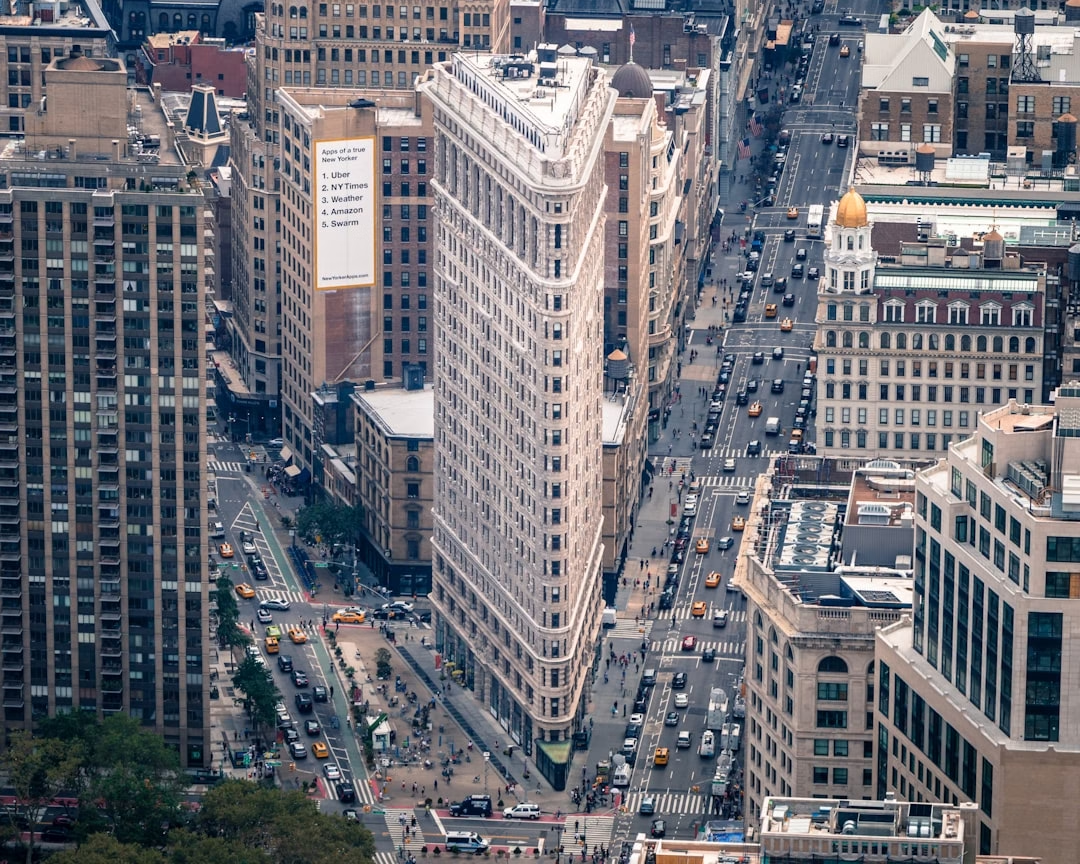
New York City stands at the forefront of climate action with Local Law 97, a groundbreaking regulation that targets carbon emissions from the city’s largest buildings. This legislation, part of the Climate Mobilization Act passed in 2019, represents one of the most ambitious urban environmental policies in the United States. The law specifically addresses buildings larger than 25,000 square feet, which collectively account for nearly 70 percent of New York City’s total greenhouse gas emissions. As the deadline for initial compliance approaches in 2024, building owners and real estate developers across the city face unprecedented challenges and opportunities in transforming their properties.
Local Law 97 establishes strict carbon emission caps for covered buildings, with limits that become progressively more stringent in 2030 and beyond. The primary objective centers on reducing citywide emissions by 40 percent by 2030 and 80 percent by 2050, compared to 2005 levels. Building owners who exceed these caps face substantial penalties, starting at $268 per metric ton of carbon emissions over the limit. For large commercial properties, these fines can quickly escalate into millions of dollars annually, creating a powerful financial incentive for immediate action. However, the law also recognizes the complexity of building upgrades by offering renewable energy credits and alternative compliance pathways that provide flexibility while maintaining environmental integrity.
The significance of this legislation extends far beyond simple regulatory compliance. Local Law 97 fundamentally reshapes how developers, investors, and property managers approach commercial real estate in New York City. Buildings that fail to meet emission standards risk losing market value and tenant appeal, while properties that exceed requirements position themselves as leaders in sustainable urban real estate. This shift creates a new competitive landscape where energy efficiency becomes as important as location and amenities. Real estate professionals must now integrate carbon performance into every aspect of property evaluation, from acquisition strategies to lease negotiations.
The transformation required by LL97 touches multiple stakeholder groups, each facing distinct pressures and opportunities. Building owners confront the immediate need for energy audits, system upgrades, and often significant capital investments. Real estate investors must recalibrate their valuation models to account for both compliance costs and the premium value of high-performing green buildings. Urban planners gain new tools for shaping citywide development patterns, while sustainability officers finally have regulatory backing for initiatives that might have previously seemed too ambitious or expensive. Technology innovators find expanding markets for smart building solutions, and architects discover fresh demand for sustainable design expertise.
Impact of LL97 on Commercial Real Estate
Commercial real estate developers across New York City have responded to Local Law 97 with a mixture of strategic adaptation and innovative problem-solving. Many property owners initially focused on low-hanging fruit, implementing straightforward energy efficiency measures such as LED lighting upgrades, improved insulation, and HVAC system optimization. These relatively affordable interventions often deliver immediate emission reductions while buying time for more complex renovations. However, as compliance deadlines approach, developers increasingly recognize that superficial improvements alone cannot achieve the deep carbon reductions that LL97 demands, particularly for older buildings with outdated infrastructure and poor energy performance.
Several pioneering projects demonstrate how forward-thinking developers turn regulatory requirements into competitive advantages. The Empire State Building’s landmark retrofit, completed before LL97 took effect, provides a blueprint for comprehensive building modernization. This project reduced energy consumption by 38 percent through a combination of window replacements, chiller plant upgrades, and advanced building management systems. The investment paid for itself through energy savings while significantly increasing the property’s market value and tenant satisfaction. Similar success stories emerge across Manhattan, Brooklyn, and other boroughs, where building owners discover that exceeding compliance standards attracts premium tenants who prioritize sustainability and operational efficiency.
The economic implications of LL97 compliance extend throughout the commercial real estate sector. Properties that require extensive retrofitting face substantial upfront costs, sometimes ranging from millions to tens of millions of dollars for large buildings. These capital requirements influence property valuations, financing terms, and investment returns. Conversely, buildings already equipped with modern, efficient systems gain valuation premiums as buyers and tenants recognize lower operating costs and reduced regulatory risk. This dynamic accelerates market segmentation between high-performing assets and outdated properties that struggle to compete. Real estate investors increasingly view carbon performance as a fundamental risk factor, comparable to structural integrity or location quality.
Beyond individual buildings, LL97 reshapes broader investment strategies across the commercial real estate market. Developers pursuing new construction projects automatically incorporate high-performance standards that far exceed code minimums, recognizing that buildings designed today must remain competitive for decades. Acquisition teams conduct detailed carbon audits before purchasing existing properties, factoring compliance costs into their financial models. Some investors specifically target buildings with significant efficiency gaps, betting they can add value through strategic retrofitting and green certifications. Meanwhile, commercial building owners who ignore LL97’s requirements find themselves facing declining property values, difficulty refinancing, and challenges attracting quality tenants who increasingly demand sustainable workspaces.
Sustainable Architecture and Urban Planning
Local Law 97 catalyzes a fundamental shift in how architects and urban planners approach building design throughout New York City. The legislation elevates energy efficiency and carbon reduction from optional considerations to central design drivers that shape every project decision. Architects working on new developments now start with rigorous energy modeling early in the design process, using sophisticated software to test how different configurations, materials, and systems affect overall carbon performance. This analytical approach influences everything from building orientation and window placement to mechanical system selection and facade design. The result represents a departure from purely aesthetic or programmatic concerns toward a more holistic methodology that balances form, function, and environmental impact.
Sustainable urban design principles promoted by LL97 emphasize integration between individual buildings and the broader urban fabric. Progressive architects recognize that truly sustainable cities require more than efficient individual structures. They incorporate features like green roofs that manage stormwater, reduce urban heat island effects, and provide community amenity space. Building designs increasingly include dedicated infrastructure for renewable energy generation, such as rooftop solar arrays or connections to district energy systems. Ground-floor retail and mixed-use programming reduce transportation needs by creating walkable neighborhoods where residents can live, work, and shop within compact areas. These strategies align with LL97’s broader vision of sustainable urban development while creating more livable, resilient communities.
The importance of green building certifications grows substantially under LL97’s regulatory framework. Certifications like LEED (Leadership in Energy and Environmental Design) and WELL Building Standard provide third-party verification of sustainable design and operation while offering clear roadmaps for achieving compliance. Many developers pursue these certifications even beyond what LL97 specifically requires, recognizing their marketing value and ability to attract environmentally conscious tenants willing to pay premium rents. The certification process itself drives better outcomes by establishing clear performance targets, requiring ongoing measurement and verification, and creating accountability throughout the building’s lifecycle. Urban planners leverage these standards when developing zoning incentives and approval processes that reward projects demonstrating exceptional sustainability performance.
Material selection emerges as another critical factor in LL97 compliance and sustainable architecture more broadly. Eco-friendly building materials reduce embodied carbon, the greenhouse gas emissions associated with manufacturing, transporting, and installing construction products. Architects increasingly specify materials like cross-laminated timber, recycled steel, and low-carbon concrete alternatives that minimize environmental impact without sacrificing structural performance. Façade systems feature high-performance glazing that optimizes natural light while minimizing heat gain and loss. Interior finishes prioritize materials with low volatile organic compound content, supporting both environmental goals and occupant health. This attention to material sustainability reflects growing recognition that building performance depends on both operational energy use and the carbon footprint embedded in construction itself.
Energy Efficiency and Smart Building Technologies
Smart building technologies represent the cutting edge of compliance strategies for meeting Local Law 97’s demanding emission reduction targets. These advanced systems leverage Internet of Things sensors, artificial intelligence, and cloud computing to optimize building performance in ways impossible with traditional controls. Smart thermostats learn occupancy patterns and adjust temperatures automatically to avoid wasting energy in empty spaces. Intelligent lighting systems dim or brighten based on available natural light and actual room usage. Advanced building management platforms aggregate data from hundreds or thousands of sensors, identifying inefficiencies and enabling predictive maintenance that keeps systems running at peak performance. Property owners implementing these technologies consistently achieve energy reductions of 20 to 40 percent while simultaneously improving tenant comfort and satisfaction.
The integration of IoT in real estate transforms how building owners understand and manage their properties’ energy consumption. Traditional buildings operate essentially blind, with managers relying on monthly utility bills that provide limited insight into actual usage patterns. Smart buildings generate continuous data streams showing exactly when, where, and how energy gets consumed throughout the property. This granular visibility reveals unexpected opportunities for improvement, such as equipment running unnecessarily overnight, spaces being heated or cooled beyond requirements, or systems operating inefficiently due to maintenance issues. Building operators can respond to problems in real-time rather than discovering them months later through elevated utility costs. Some advanced systems even employ machine learning algorithms that automatically adjust operations based on weather forecasts, occupancy predictions, and electricity pricing to minimize both emissions and costs.
Smart energy management systems prove particularly valuable for the complex challenge of retrofitting existing buildings to meet LL97 standards. Older commercial properties often contain maze-like mechanical systems that evolved through decades of piecemeal modifications and upgrades. Installing smart controls on this legacy infrastructure provides immediate benefits without requiring complete system replacement. Smart sensors identify which equipment consumes the most energy and operates least efficiently, helping building owners prioritize capital improvements for maximum impact. Zone-level monitoring reveals spaces where envelope improvements would deliver the best return on investment. This data-driven approach enables more strategic allocation of limited retrofit budgets, ensuring every dollar spent generates measurable emission reductions.
The future of smart office spaces extends beyond energy efficiency into broader workplace transformation that supports both LL97 compliance and evolving tenant demands. Modern office tenants expect sophisticated amenities that enhance productivity and well-being, from air quality monitoring and circadian lighting to mobile apps that control temperature and reserve meeting rooms. These features align perfectly with energy efficiency goals when properly implemented. Smart ventilation systems provide superior indoor air quality while using substantially less energy than conventional approaches by adjusting airflow based on actual occupancy and CO2 levels. Advanced shading systems automatically adjust window coverings throughout the day to optimize natural light and minimize solar heat gain. Integration with renewable energy sources enables buildings to shift electricity consumption toward times when solar or wind power generation peaks, further reducing carbon footprints and operating costs.
Challenges and Opportunities for Real Estate Developers
Real estate developers navigating Local Law 97 compliance confront significant financial challenges that require careful planning and creative problem-solving. The capital costs for deep energy retrofits can reach staggering levels, particularly for older buildings constructed before modern energy codes existed. A typical mid-sized office building might need several million dollars in upgrades to achieve compliance, covering everything from window replacements and insulation improvements to complete HVAC system overhauls and electrical infrastructure upgrades. Securing financing for these projects presents additional hurdles, as traditional lenders often struggle to underwrite loans based on future energy savings rather than current cash flows. Some developers find themselves caught in difficult situations where compliance costs exceed their buildings’ current market values, creating potential financial distress and forcing hard decisions about whether to invest or divest.
Despite these financial pressures, LL97 creates compelling opportunities for developers willing to embrace innovation and leadership in sustainable real estate development. Properties that achieve superior energy performance command premium valuations in an increasingly environmentally conscious market. Tenants, particularly large corporations with ambitious sustainability commitments, actively seek spaces in high-performing buildings that help them meet their own climate goals. These quality tenants often accept higher rents and demonstrate greater lease stability than tenants focused solely on price. Developers who position themselves at the forefront of green building innovation gain reputational advantages that extend beyond individual properties, enhancing their ability to attract investors, partners, and favorable financing terms for future projects.
Strategies for retrofitting existing buildings successfully require comprehensive approaches that address multiple building systems simultaneously. Piecemeal improvements rarely achieve the deep carbon reductions LL97 demands, and can even create problems when different systems work against each other. Effective retrofit projects typically begin with detailed energy audits that identify all significant sources of emissions and inefficiency. Engineers then model various improvement scenarios to determine which combinations deliver optimal results within budget constraints. The most successful projects often adopt an integrated design approach where mechanical engineers, architects, and building operators collaborate closely to ensure upgrades work together synergistically. This methodology might combine envelope improvements that reduce heating and cooling loads with right-sized HVAC equipment optimized for the new conditions, creating much larger savings than either intervention would achieve independently.
Investment in green technologies extends beyond compliance necessity into strategic positioning for long-term market success. Renewable energy installations like rooftop solar panels or participation in community solar programs provide both emission reductions and long-term cost predictability as utility rates continue rising. Battery storage systems enable buildings to shift consumption away from peak pricing periods while providing backup power during grid outages. Advanced building automation platforms position properties to take advantage of emerging opportunities like demand response programs that pay buildings for reducing consumption during grid stress events. Developers who view LL97 as an opportunity to fundamentally upgrade their assets rather than merely a regulatory burden to minimize often discover unexpected benefits that extend well beyond avoiding fines.
The Role of Government and Regulations in Real Estate Development
The government’s role in supporting Local Law 97 compliance extends well beyond simple enforcement of emission caps and penalties. New York City created the NYC Accelerator program specifically to help building owners navigate the complex technical and financial challenges of meeting LL97 requirements. This initiative provides free energy efficiency advisors who conduct building assessments, identify improvement opportunities, and connect owners with qualified contractors and service providers. The program also offers educational workshops, technical guidance documents, and case studies demonstrating successful compliance strategies. By providing these resources at no cost, the city reduces barriers to action particularly for smaller building owners who lack in-house expertise or dedicated sustainability staff.
Financial support mechanisms complement technical assistance in encouraging voluntary action ahead of regulatory deadlines. Various incentive programs offer grants, low-interest loans, and tax abatements for qualified energy efficiency projects and renewable energy installations. The Property Assessed Clean Energy (PACE) financing program enables building owners to fund improvements through special assessments on their property tax bills, with repayment terms extending up to 30 years that align with the useful life of installed equipment. These programs address the upfront capital barrier that prevents many owners from pursuing comprehensive retrofits despite clear long-term benefits. Renewable energy credits provide another compliance pathway, allowing buildings that cannot fully reduce on-site emissions to purchase credits from renewable energy projects, though this option faces ongoing policy debates about ensuring genuine emission reductions.
Environmental regulations like LL97 profoundly influence urban planning and development patterns across New York City. The legislation creates strong incentives for adaptive reuse and renovation of existing buildings rather than demolition and new construction, since new buildings face immediate compliance with strict standards while existing buildings receive more time and flexibility. This dynamic helps preserve neighborhood character and architectural heritage while reducing the massive embodied carbon associated with demolition and new construction. Zoning policies increasingly align with climate objectives by encouraging dense, transit-oriented development that reduces transportation emissions and supports walkable communities. Some neighborhoods explore district energy systems that serve multiple buildings from central plants, enabling efficiency improvements impossible at individual building scale.
Strategies for aligning with government regulations while benefiting from support programs require proactive engagement and long-term planning. Developers who wait until deadlines loom often find themselves competing for limited contractor capacity and rushing through projects without adequate planning. Those who begin early can take advantage of available incentives before programs reach capacity limits, secure better pricing by avoiding last-minute market competition, and implement more thoughtful solutions that deliver superior results. Regular engagement with city agencies through comment periods and stakeholder meetings ensures developers understand regulatory intentions and can adapt their strategies as policies evolve. Some forward-thinking owners even pursue voluntary emission reductions exceeding current requirements, positioning their properties to meet future standards while gaining immediate competitive advantages in an increasingly sustainability-focused market.
LL97 is reshaping how commercial real estate is valued, with tenants and investors increasingly factoring environmental performance into occupancy and acquisition decisions. Buildings that have built the data infrastructure to demonstrate continuous compliance and occupant comfort are positioned to attract this demand. Those relying on periodic assessments and manual documentation are at a disadvantage as transparency expectations continue to rise.
Nosy monitors temperature, humidity, CO2, occupancy, and tVOCs across commercial buildings, with readings every five minutes and automated monthly reports that create a transparent, documented record of building performance over time. The platform uses a wireless Bluetooth mesh network that installs without wiring or IT changes, making it practical to build this data foundation without major capital investment. Building owners and investors looking for context on how sensor monitoring supports LL97 positioning can find more at Nosy for Offices.
Conclusion
Local Law 97 fundamentally transforms New York City’s commercial real estate landscape, establishing new baseline expectations for building performance that prioritize environmental sustainability alongside traditional concerns of location, design, and financial returns. The legislation’s aggressive emission reduction targets force building owners and developers to reimagine their properties through a climate lens, investing billions of dollars in energy efficiency improvements, renewable energy systems, and smart building technologies. While these investments create significant near-term challenges, particularly for owners of older buildings requiring extensive retrofits, they simultaneously unlock opportunities for innovation, competitive differentiation, and enhanced property values. The commercial real estate sector increasingly recognizes that sustainable building operation represents not just regulatory compliance but fundamental business strategy essential for long-term success.
Key stakeholders across the real estate industry must adapt their approaches to thrive under LL97’s requirements and the broader sustainability transformation it represents. Real estate developers need comprehensive strategies that integrate carbon performance from initial project conception through ongoing operations, viewing efficiency investments as value creation rather than mere cost. Investors must incorporate climate risk and carbon metrics into valuation models, recognizing that stranded assets with poor energy performance face declining values while high-performing buildings command premiums. Urban planners gain powerful tools for shaping citywide development patterns that support climate goals while creating more livable, resilient neighborhoods. Technology providers find expanding markets for innovative solutions that reduce emissions while improving building operations and tenant experiences.
The precedent Local Law 97 establishes extends far beyond New York City’s boundaries, influencing urban sustainability efforts and real estate development practices worldwide. Cities including Boston, Washington DC, and jurisdictions throughout California have adopted or are considering similar building performance standards, creating a growing network of markets where carbon performance determines property competitiveness. This regulatory wave accelerates industry-wide transformation toward sustainable building practices, driving innovation in construction techniques, mechanical systems, and operational strategies. Real estate professionals who develop expertise in navigating these requirements position themselves for success across multiple markets, while those who resist adaptation increasingly find themselves unable to compete effectively.
Looking forward, Local Law 97 represents just the beginning of New York City’s climate action journey rather than its conclusion. The emission caps scheduled for 2030 become substantially more stringent than current 2024 limits, requiring continued innovation and investment throughout the next decade. Future regulatory enhancements may address building embodied carbon, expand coverage to smaller properties, or establish requirements for specific building systems and fuel sources. The commercial real estate sector that emerges from this transformation will look fundamentally different from what existed before, characterized by ultra-efficient buildings, extensive renewable energy integration, sophisticated smart systems, and deep commitment to environmental performance. Those who embrace this future proactively rather than reactively will define the next generation of successful real estate development in America’s largest city and beyond.
