
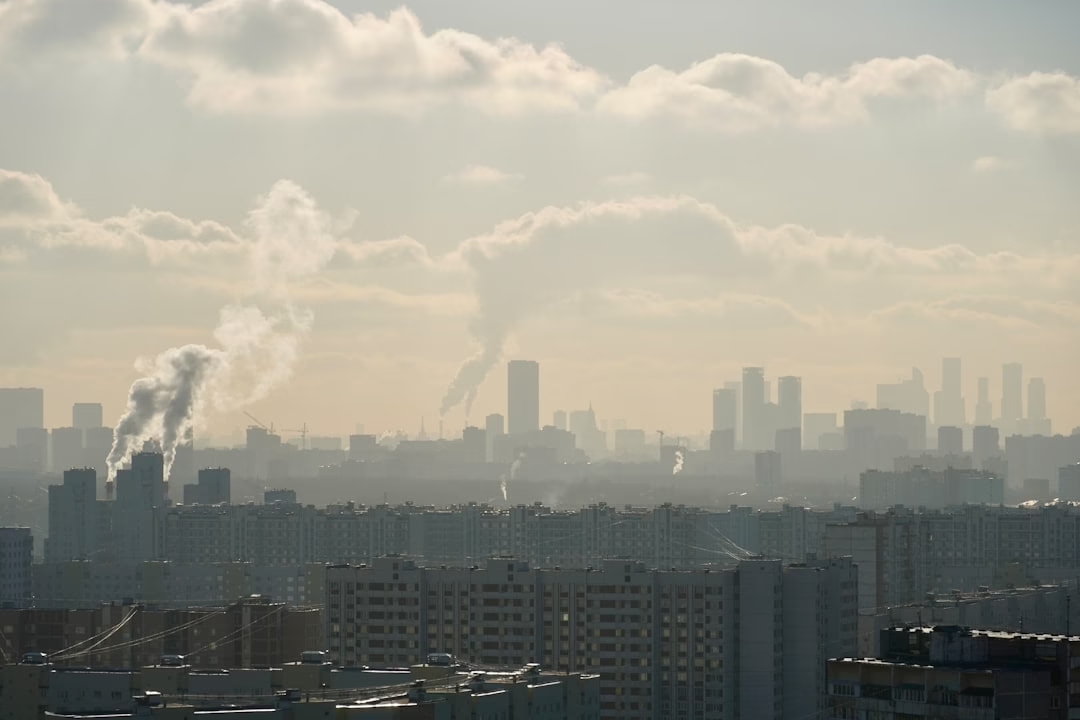
Air pollution and climate change stand as two of the most pressing environmental challenges facing our planet today. While often discussed separately, these issues are deeply interconnected, with each exacerbating the effects of the other. This article delves into the intricate relationship between air pollution and climate change, highlighting their combined impact on public health and the environment, and presenting strategies for mitigation and improvement.
Air pollution refers to the presence of harmful substances in the air, including particulate matter, greenhouse gases, and other pollutants. These substances can originate from various sources, such as industrial emissions, vehicle exhaust, and agricultural activities. Climate change, on the other hand, is a long-term shift in global or regional climate patterns, primarily driven by human activities that release greenhouse gases into the atmosphere.
The relationship between air pollution and climate change is complex and multifaceted. Many of the same pollutants that contribute to poor air quality also play a significant role in driving climate change. For instance, the burning of fossil fuels releases both particulate matter that degrades air quality and carbon dioxide that traps heat in the atmosphere, leading to global warming. Conversely, climate change can exacerbate air pollution by altering weather patterns and increasing the frequency of wildfires, which release additional pollutants into the air.
The combined effects of air pollution and climate change pose significant threats to public health and environmental sustainability. Poor air quality can lead to respiratory and cardiovascular diseases, while climate change contributes to extreme weather events, rising sea levels, and biodiversity loss. These impacts are often disproportionately felt by vulnerable communities, raising important questions about environmental justice.
The Science Behind Air Pollution and Climate Change
To fully understand the relationship between air pollution and climate change, it’s essential to delve into the scientific mechanisms that drive these phenomena. At the heart of both issues are greenhouse gases, which play a crucial role in trapping heat within the Earth’s atmosphere and contributing to global warming.
Greenhouse gases, such as carbon dioxide, methane, and nitrous oxide, are naturally present in the atmosphere and are vital for maintaining the Earth’s temperature at a level suitable for life. However, human activities have dramatically increased the concentration of these gases, leading to an enhanced greenhouse effect and subsequent global warming.
The primary source of increased greenhouse gas emissions is the burning of fossil fuels for energy production, transportation, and industrial processes. When fossil fuels are combusted, they release carbon dioxide and other pollutants into the atmosphere. Carbon dioxide is particularly significant due to its long atmospheric lifetime and its ability to absorb and re-emit infrared radiation, effectively trapping heat within the Earth’s atmosphere.
In addition to greenhouse gases, air pollution encompasses a wide range of airborne pollutants that can have both direct and indirect effects on climate change. These include particulate matter, which can absorb or reflect sunlight, affecting the Earth’s energy balance; black carbon, a component of particulate matter that strongly absorbs sunlight and contributes to warming; tropospheric ozone, a secondary pollutant formed by the reaction of sunlight with other pollutants, which acts as a greenhouse gas in the lower atmosphere; and sulfur dioxide and nitrogen oxides, which can form aerosols that reflect sunlight, potentially leading to a cooling effect, but also contribute to the formation of acid rain and have negative impacts on human health and ecosystems.
The interplay between these pollutants and climate change is complex. For example, while some aerosols may have a cooling effect by reflecting sunlight, others, like black carbon, can contribute to warming. Moreover, climate change can influence the formation and distribution of air pollutants through changes in temperature, precipitation patterns, and atmospheric circulation.
Understanding these scientific processes is crucial for developing effective strategies to address both air pollution and climate change. By targeting the common sources of these issues, such as fossil fuel combustion, we can work towards solutions that simultaneously improve air quality and mitigate climate change.
Health Impacts of Air Pollution and Climate Change
The combined effects of air pollution and climate change pose significant threats to human health, with impacts that are both direct and far-reaching. These environmental challenges are inextricably linked, often exacerbating each other’s negative health consequences.
Air pollution is a major environmental risk to health, causing an estimated 7 million premature deaths annually worldwide. The primary health effects of air pollution include respiratory diseases, cardiovascular diseases, neurological effects, and pregnancy complications. Exposure to air pollutants can lead to or worsen conditions such as asthma, chronic obstructive pulmonary disease, and lung cancer. Fine particulate matter can enter the bloodstream, contributing to heart disease, stroke, and other cardiovascular issues. Recent studies have also linked air pollution to cognitive decline, dementia, and other neurological disorders. Furthermore, maternal exposure to air pollution has been associated with low birth weight, preterm birth, and other adverse pregnancy outcomes.
Climate change, while often perceived as a long-term environmental issue, also has immediate and significant health impacts. Rising temperatures and extreme heat events can lead to heat-related illnesses and deaths, particularly among vulnerable populations such as the elderly and those with pre-existing health conditions. Changes in precipitation patterns and increased flooding can contribute to water-borne diseases and create breeding grounds for disease-carrying insects, potentially leading to the spread of vector-borne diseases. Climate change-induced extreme weather events, such as hurricanes and wildfires, not only pose immediate physical dangers but also have long-term mental health consequences for affected communities.
The relationship between air pollution and climate change further compounds these health risks. For instance, higher temperatures associated with climate change can accelerate the formation of ground-level ozone, a major component of smog that can cause respiratory problems. Increased frequency and intensity of wildfires due to climate change release large amounts of particulate matter and other pollutants into the air, affecting air quality over vast areas and posing significant health risks to both nearby and distant populations.
Moreover, the health impacts of air pollution and climate change are not distributed equally across populations. Low-income communities and communities of color often bear a disproportionate burden of these environmental health risks, highlighting the critical importance of addressing environmental justice in efforts to combat air pollution and climate change.
Strategies for Improving Air Quality
Addressing the interconnected challenges of air pollution and climate change requires a multifaceted approach that combines technological innovation, policy measures, and individual actions. Effective strategies for improving air quality often have the added benefit of mitigating climate change, creating a synergistic effect that enhances overall environmental protection efforts.
One of the most impactful strategies for improving air quality is the transition to clean energy sources. Shifting away from fossil fuels towards renewable energy such as solar, wind, and hydroelectric power can significantly reduce emissions of both air pollutants and greenhouse gases. This transition not only improves local air quality but also contributes to global efforts to combat climate change. Governments and businesses can accelerate this shift by investing in renewable energy infrastructure and providing incentives for clean energy adoption.
Sustainable urban planning plays a crucial role in reducing air pollution in densely populated areas. Cities can implement green infrastructure projects, such as expanding urban forests and creating more green spaces, which help filter air pollutants and reduce the urban heat island effect. Additionally, designing cities to be more walkable and bike-friendly, while improving public transportation systems, can reduce reliance on personal vehicles and decrease emissions from transportation, a major source of urban air pollution.
Improving energy efficiency in buildings and industries is another effective strategy for reducing both air pollution and greenhouse gas emissions. This can be achieved through stricter building codes, energy-efficient appliances and lighting, and industrial process improvements. Not only does this approach reduce emissions, but it also often leads to cost savings for businesses and homeowners.
Implementing and enforcing stringent emissions standards for vehicles and industries is crucial for improving air quality. This includes promoting the adoption of electric vehicles, implementing low emission zones in cities, and requiring industries to use best available technologies for pollution control. Such measures can significantly reduce emissions of particulate matter, nitrogen oxides, and other harmful pollutants.
Agricultural practices also play a role in air quality and climate change. Promoting sustainable farming methods, reducing the use of chemical fertilizers, and improving livestock management can help reduce emissions of methane and other pollutants from the agricultural sector. Additionally, preserving and expanding forests and other natural ecosystems can help sequester carbon dioxide and filter air pollutants.
Individual actions, while seemingly small, can collectively make a significant impact on air quality and climate change mitigation. Encouraging behaviors such as using public transportation, carpooling, or choosing active transport options like walking or cycling can reduce vehicle emissions. Educating the public about the importance of energy conservation and the proper disposal of waste can also contribute to improved air quality and reduced greenhouse gas emissions.
Lastly, international cooperation is essential in addressing air pollution and climate change, as these issues transcend national boundaries. Global agreements and collaborations can help set common goals, share best practices, and provide support for developing nations in their efforts to improve air quality and mitigate climate change.
The Role of Policy Makers and Environmental Scientists
Policy makers and environmental scientists play pivotal roles in the fight against air pollution and climate change. Their collaborative efforts are essential for developing effective strategies, implementing regulations, and advancing our understanding of these complex environmental issues.
Policy makers have the responsibility of crafting and implementing regulations that address air pollution and climate change. This includes setting air quality standards, establishing emissions limits for industries and vehicles, and creating incentives for clean energy adoption. Effective policies can drive significant changes in behavior and technology adoption, leading to improved air quality and reduced greenhouse gas emissions.
One of the key challenges for policy makers is balancing environmental protection with economic considerations. They must navigate the interests of various stakeholders, including industries, environmental groups, and the general public. This often requires finding compromise solutions that promote environmental protection while minimizing economic disruption. For instance, policies that phase in stricter emissions standards over time allow industries to adapt gradually, reducing economic shock while still achieving environmental goals.
Environmental scientists, on the other hand, provide the crucial scientific foundation upon which effective policies are built. Their research helps us understand the complex interactions between air pollution, climate change, and human health. This includes studying the sources and behavior of air pollutants, modeling climate change scenarios, and investigating the health impacts of environmental degradation.
The work of environmental scientists is essential for identifying emerging threats and evaluating the effectiveness of existing policies. For example, research on the health impacts of fine particulate matter has led to more stringent air quality standards in many countries. Similarly, climate models developed by scientists have been instrumental in shaping global climate policies and agreements.
Collaboration between policy makers and environmental scientists is crucial for addressing air pollution and climate change effectively. Scientists can provide policy makers with the latest research findings and expert recommendations, while policy makers can help direct research efforts towards the most pressing environmental challenges. This partnership ensures that environmental policies are grounded in sound science and that scientific research is relevant to real-world policy needs.
Moreover, both policy makers and environmental scientists play important roles in public education and awareness. They can help communicate complex environmental issues to the public, fostering a better understanding of the challenges we face and the actions needed to address them. This can lead to greater public support for environmental initiatives and encourage individual actions that contribute to air quality improvement and climate change mitigation.
In recent years, there has been an increasing recognition of the need for interdisciplinary approaches to environmental challenges. This has led to collaborations between environmental scientists, public health experts, economists, and social scientists to develop more comprehensive and effective solutions to air pollution and climate change.
The role of policy makers and environmental scientists extends beyond national borders. International cooperation is essential for addressing global environmental challenges. Policy makers participate in international negotiations and agreements, such as the Paris Agreement on climate change, while scientists contribute to global research efforts like the Intergovernmental Panel on Climate Change (IPCC).
Sustainable Development and Renewable Energy
Sustainable development and renewable energy are critical components in the fight against air pollution and climate change. These interrelated concepts offer promising solutions that can simultaneously address environmental concerns, economic growth, and social equity.
Sustainable development, as defined by the United Nations, refers to development that meets the needs of the present without compromising the ability of future generations to meet their own needs. This approach recognizes the interconnectedness of environmental protection, economic prosperity, and social well-being. In the context of air pollution and climate change, sustainable development practices aim to reduce emissions and environmental degradation while still supporting economic growth and improving quality of life.
Renewable energy plays a central role in sustainable development efforts. Unlike fossil fuels, which are finite and contribute significantly to air pollution and greenhouse gas emissions, renewable energy sources such as solar, wind, hydroelectric, and geothermal power offer clean, inexhaustible alternatives. The transition to renewable energy is crucial for reducing air pollution, mitigating climate change, and creating a more sustainable energy future.
The adoption of renewable energy has been accelerating globally, driven by technological advancements, falling costs, and supportive policies. Solar and wind power, in particular, have seen dramatic growth and cost reductions in recent years. This trend not only helps in reducing emissions but also creates new economic opportunities and jobs in the renewable energy sector.
However, the transition to renewable energy is not without challenges. Issues such as intermittency of solar and wind power, energy storage, and grid integration need to be addressed. Innovative solutions, such as advanced battery technologies, smart grids, and improved energy management systems, are being developed to overcome these challenges.
Sustainable urban planning is another key aspect of sustainable development that can significantly impact air quality and climate change. Cities that prioritize public transportation, pedestrian-friendly design, and green spaces not only reduce emissions but also improve quality of life for residents. Green building practices, which focus on energy efficiency and sustainable materials, can further reduce the environmental impact of urban development.
In the industrial sector, sustainable development principles are driving innovations in cleaner production processes, waste reduction, and circular economy models. These approaches not only reduce air pollution and greenhouse gas emissions but can also lead to cost savings and improved resource efficiency for businesses.
Agriculture, a significant contributor to both air pollution and climate change, is also seeing a shift towards more sustainable practices. Sustainable agriculture methods, such as precision farming, organic farming, and agroforestry, can reduce emissions, improve soil health, and enhance food security. These practices often have the added benefit of increasing resilience to climate change impacts.
The concept of a “just transition” is increasingly important in discussions of sustainable development and renewable energy. This approach emphasizes the need to ensure that the shift to a low-carbon economy does not disproportionately burden vulnerable communities or workers in fossil fuel industries. Policies and programs that provide training, job opportunities, and support for affected communities are essential for a socially equitable transition.
International cooperation plays a crucial role in promoting sustainable development and renewable energy adoption globally. Initiatives such as the United Nations Sustainable Development Goals provide a framework for collective action on environmental, economic, and social challenges. Additionally, technology transfer and financial support from developed to developing countries can accelerate the global transition to sustainable practices and clean energy.
Education and public awareness are also vital components of sustainable development efforts. Informing the public about the benefits of renewable energy and sustainable practices can drive consumer choices and political support for environmental policies. Many communities and organizations are taking proactive steps to implement sustainable practices and promote renewable energy adoption at the local level.
Urbanization and Its Environmental Impact
Urbanization, the process by which an increasing proportion of a population lives in cities and towns, has been a defining trend of the modern era. While urbanization has brought many economic and social benefits, it also poses significant challenges to air quality and contributes to climate change. Understanding the environmental impact of urbanization is crucial for developing sustainable solutions that address both air pollution and climate change in urban areas.
One of the primary ways urbanization affects air quality is through increased emissions from transportation. As cities grow, so does the demand for mobility, often leading to a rise in vehicle use. The concentration of vehicles in urban areas results in higher levels of air pollutants such as nitrogen oxides, particulate matter, and carbon monoxide. These pollutants not only degrade local air quality but also contribute to the formation of smog and ground-level ozone, which can have severe health impacts on urban populations.
Industrial activities, which are often concentrated in and around urban areas, are another significant source of air pollution associated with urbanization. Factories, power plants, and other industrial facilities emit a range of pollutants that can compromise air quality and contribute to climate change. The proximity of these sources to large populations in urban areas amplifies their impact on public health.
The built environment of cities also plays a role in exacerbating air pollution and contributing to climate change. The urban heat island effect, where cities experience higher temperatures than surrounding rural areas due to heat-absorbing surfaces like concrete and asphalt, can lead to increased energy consumption for cooling. This, in turn, can result in higher emissions from power generation. Additionally, the loss of green spaces in urban development reduces the natural capacity of vegetation to filter air pollutants and sequester carbon dioxide.
Waste management is another challenge that grows with urbanization. Improper waste disposal and treatment can lead to air pollution through the release of methane from landfills and emissions from waste incineration. These processes not only affect local air quality but also contribute to greenhouse gas emissions.
However, urbanization also presents opportunities for addressing air pollution and climate change more efficiently. The concentration of population and resources in cities can facilitate the implementation of large-scale environmental solutions. For instance, well-planned public transportation systems can significantly reduce per capita emissions compared to car-dependent suburban areas. Similarly, district heating and cooling systems in dense urban areas can be more energy-efficient than individual heating and cooling units in less densely populated regions.
Sustainable urban planning is key to mitigating the negative environmental impacts of urbanization. This includes strategies such as promoting mixed-use development to reduce the need for transportation, implementing green building standards to improve energy efficiency, and preserving and expanding urban green spaces. Many cities are also adopting “smart city” technologies that use data and digital solutions to optimize resource use and reduce emissions.
The concept of compact city development, which emphasizes high-density, mixed-use urban areas with efficient public transportation, is gaining traction as a model for sustainable urbanization. This approach can reduce energy consumption and emissions by minimizing travel distances and promoting walking, cycling, and public transit use.
Urban agriculture and green roofs are innovative solutions that can help improve air quality and reduce the urban heat island effect while also providing other benefits such as food security and improved biodiversity in cities. These initiatives demonstrate how urban spaces can be reimagined to serve multiple environmental and social functions.
Conclusion
The relationship between air pollution and climate change presents both significant challenges and opportunities for global environmental protection efforts. Throughout this exploration, we have seen how these two issues are deeply interconnected, with many of the same pollutants contributing to both poor air quality and global warming. The health impacts of this dual threat are profound, affecting respiratory and cardiovascular health, exacerbating existing health conditions, and disproportionately burdening vulnerable populations. However, this interconnectedness also means that strategies aimed at addressing one issue often yield benefits for the other, offering a pathway for integrated solutions that can simultaneously improve air quality and mitigate climate change.
Moving forward, addressing these environmental challenges requires a multifaceted approach that combines technological innovation, policy measures, sustainable development practices, and individual actions. The transition to renewable energy, implementation of sustainable urban planning, and adoption of cleaner technologies in industry and transportation are critical components of a comprehensive solution. Moreover, the role of policy makers, environmental scientists, and international cooperation cannot be overstated in driving meaningful change. As we confront the realities of air pollution and climate change, it is clear that our collective actions today will shape the environmental legacy we leave for future generations. By embracing sustainable practices, supporting evidence-based policies, and fostering global collaboration, we can work towards a future with cleaner air, a stable climate, and a more sustainable world for all.
