
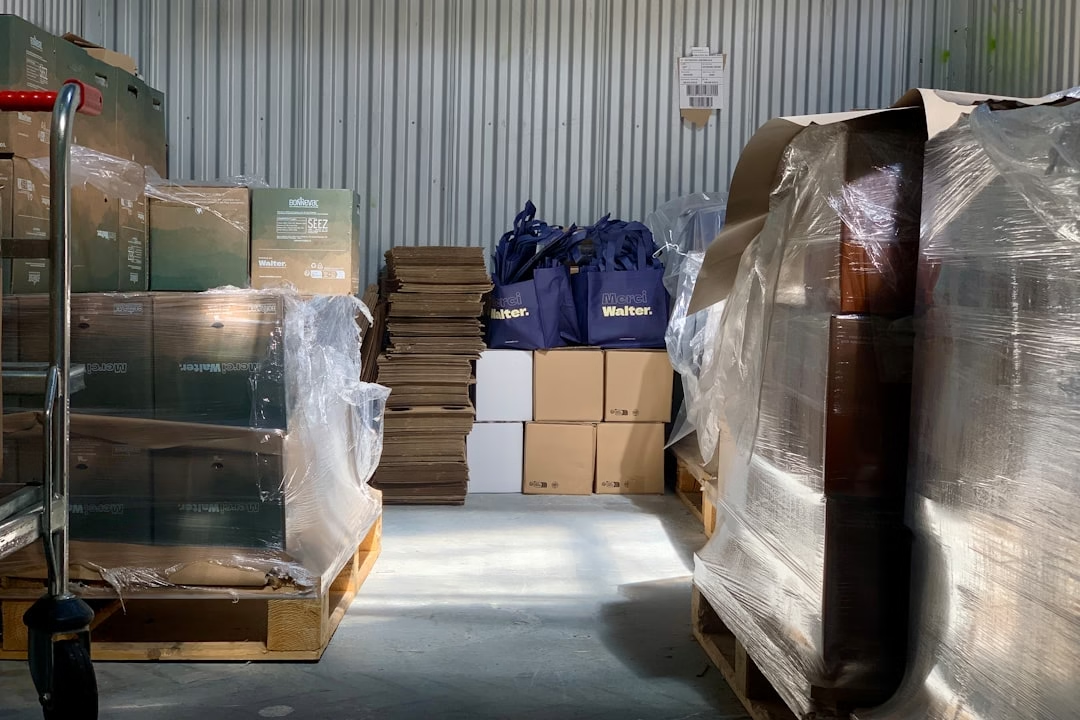
In today’s fast-paced logistics industry, maintaining optimal temperature conditions in large warehouses has become a critical factor for ensuring product quality, safety, and operational efficiency. Temperature control plays a vital role in preserving the integrity of stored goods, particularly in industries such as pharmaceuticals, food and beverage, and electronics. As warehouses continue to grow in size and complexity, traditional methods of temperature management are often inadequate to address the challenges posed by vast storage spaces and diverse inventory requirements.
Smart warehouse solutions have emerged as a game-changing approach to enhance temperature management in large-scale storage facilities. These innovative systems leverage cutting-edge technologies such as the Internet of Things (IoT), artificial intelligence, and advanced sensors to provide real-time monitoring, precise control, and predictive capabilities for temperature regulation. By integrating smart climate control systems, warehouse operators can achieve unprecedented levels of accuracy and efficiency in maintaining optimal temperature conditions throughout their facilities.
The implementation of smart warehouse solutions for temperature control offers numerous benefits that extend beyond simple temperature regulation. These systems contribute significantly to operational efficiency by automating temperature monitoring and adjustment processes, reducing the need for manual interventions and minimizing the risk of human error. Moreover, smart climate control systems play a crucial role in energy conservation efforts, optimizing cooling and heating operations based on real-time data and environmental conditions.
One of the key advantages of smart warehouse solutions is their ability to provide comprehensive visibility into temperature variations across different zones within a warehouse. This granular level of insight enables operators to identify and address potential issues proactively, preventing temperature-related product damage and ensuring compliance with regulatory requirements. Additionally, the data collected by these systems can be analyzed to uncover patterns and trends, facilitating informed decision-making and continuous improvement in temperature management strategies.
As the demand for efficient and reliable temperature control in warehouses continues to grow, the adoption of smart solutions is becoming increasingly essential for businesses looking to maintain a competitive edge in the market. By embracing these technologies, warehouse operators can not only enhance their temperature management capabilities but also drive overall operational excellence, reduce costs, and improve customer satisfaction through consistent product quality and timely deliveries.
The Role of IoT in Temperature Monitoring
The Internet of Things (IoT) has revolutionized temperature monitoring in large warehouses, providing unprecedented levels of accuracy, real-time data collection, and automated control. IoT technology serves as the backbone of smart temperature monitoring systems, enabling warehouses to maintain optimal conditions for stored goods while improving operational efficiency and reducing energy consumption.
At the core of IoT-based temperature monitoring are sophisticated sensors strategically placed throughout the warehouse. These sensors continuously measure temperature and humidity levels, transmitting data in real-time to a centralized management system. The seamless integration of these devices creates a network of interconnected data points, offering a comprehensive view of the warehouse’s thermal landscape.
One of the primary advantages of IoT-based temperature monitoring systems is their ability to provide real-time insights. Unlike traditional methods that rely on periodic manual checks, IoT sensors offer continuous monitoring, allowing for immediate detection of any temperature fluctuations. This real-time capability enables warehouse managers to respond swiftly to potential issues, preventing product spoilage and ensuring compliance with storage requirements.
Moreover, IoT technology facilitates predictive maintenance in temperature control systems. By analyzing historical data and identifying patterns, these systems can anticipate potential equipment failures or performance issues before they occur. This proactive approach minimizes downtime, reduces maintenance costs, and ensures consistent temperature control throughout the warehouse.
Implementing IoT solutions for better temperature management in warehouses involves several key steps. First, a thorough assessment of the warehouse layout and temperature requirements is necessary to determine optimal sensor placement. Next, the selection of appropriate IoT devices and sensors that can withstand the warehouse environment is crucial. Integration with existing warehouse management systems follows, ensuring seamless data flow and compatibility with other operational processes.
The installation of a robust network infrastructure is essential to support the IoT ecosystem, enabling reliable data transmission and real-time communication. This may involve setting up Wi-Fi networks, cellular connections, or low-power wide-area networks (LPWAN) depending on the warehouse’s specific needs and layout.
Data analytics plays a vital role in extracting valuable insights from the vast amount of information collected by IoT sensors. Advanced analytics platforms can process this data to generate actionable insights, such as identifying temperature trends, optimizing cooling strategies, and predicting future temperature fluctuations based on various factors like weather conditions or inventory levels.
Furthermore, IoT-based temperature monitoring systems can be integrated with automated climate control mechanisms, creating a closed-loop system that adjusts temperature settings automatically based on real-time data. This level of automation not only ensures consistent temperature control but also optimizes energy usage by adjusting cooling or heating systems only when necessary.
The scalability of IoT solutions is particularly beneficial for large warehouses. As storage facilities expand or change their layout, additional sensors can be easily integrated into the existing network, maintaining comprehensive coverage without significant disruption to operations.
Security considerations are paramount when implementing IoT solutions for temperature monitoring. Robust encryption protocols and secure data transmission methods must be employed to protect sensitive information and prevent unauthorized access to the system.
By leveraging IoT technology for temperature monitoring, warehouses can achieve a new level of precision and efficiency in maintaining optimal storage conditions. The real-time insights, predictive capabilities, and automated control offered by these systems not only enhance product quality and safety but also contribute to significant cost savings and improved operational performance.
Energy-Efficient Cooling Solutions for Warehouses
As energy costs continue to rise and environmental concerns become increasingly pressing, warehouses are turning to energy-efficient cooling solutions to maintain optimal temperatures while reducing their carbon footprint and operational expenses. These innovative cooling systems are designed to provide effective temperature control in large spaces while minimizing energy consumption and environmental impact.
One of the key features of energy-efficient cooling solutions is their ability to adapt to varying temperature needs across different zones within a warehouse. Advanced systems utilize smart sensors and analytics to identify areas that require more or less cooling, allowing for targeted temperature control rather than a one-size-fits-all approach. This zonal cooling strategy not only improves energy efficiency but also ensures that products in different areas of the warehouse are stored at their ideal temperatures.
Variable speed compressors are another important component of energy-efficient cooling systems. Unlike traditional compressors that operate at a fixed speed, variable speed compressors can adjust their output based on the cooling demand. This flexibility allows the system to operate at lower speeds during periods of reduced cooling needs, significantly reducing energy consumption while maintaining consistent temperatures.
Thermal energy storage systems represent an innovative approach to energy-efficient cooling in warehouses. These systems use off-peak electricity to freeze a thermal battery (often a solution of water and glycol), which is then used to cool the warehouse during peak hours. This load-shifting technique not only reduces energy costs by taking advantage of lower off-peak rates but also helps to balance the overall energy demand on the power grid.
The implementation of energy recovery ventilation (ERV) systems is another effective strategy for improving cooling efficiency in warehouses. ERV systems recover the energy from exhaust air to precool incoming fresh air, reducing the overall cooling load on the HVAC system. This not only improves energy efficiency but also helps maintain indoor air quality by introducing fresh air into the warehouse environment.
Evaporative cooling technologies offer a highly energy-efficient solution for warehouses in hot, dry climates. These systems use the natural process of water evaporation to cool the air, consuming significantly less energy compared to traditional air conditioning systems. While their effectiveness may be limited in humid environments, evaporative coolers can provide substantial energy savings in suitable climates.
When selecting cooling solutions for warehouses, several factors must be considered to ensure optimal performance and efficiency. The size and layout of the warehouse play a crucial role in determining the most appropriate cooling system. Larger warehouses may benefit from a combination of different cooling technologies to address varying temperature requirements across different zones effectively.
The specific temperature requirements of stored products are another critical consideration. Some goods may require precise temperature control within a narrow range, while others may tolerate wider temperature fluctuations. Understanding these requirements helps in designing a cooling system that can maintain optimal conditions while minimizing energy waste.
Climate conditions in the warehouse location also influence the choice of cooling solutions. Warehouses in regions with extreme temperature variations may require more robust systems capable of handling significant cooling loads, while those in milder climates might benefit from more passive cooling strategies.
The impact of energy-efficient cooling solutions on operational costs can be substantial. While the initial investment in advanced cooling technologies may be higher than traditional systems, the long-term savings in energy costs often result in a favorable return on investment. Additionally, many regions offer incentives and rebates for implementing energy-efficient systems, further improving the financial benefits for warehouse operators.
As warehouses continue to evolve and grow in size and complexity, the adoption of energy-efficient cooling solutions becomes increasingly crucial. These systems not only help maintain optimal storage conditions for a wide range of products but also align with broader sustainability goals and contribute to significant cost savings over time. By carefully selecting and implementing the right combination of energy-efficient cooling technologies, warehouse operators can achieve a balance between effective temperature control, environmental responsibility, and operational efficiency.
Implementing Smart Climate Control Systems
Smart climate control systems represent the pinnacle of temperature management technology for large warehouses, offering unprecedented levels of precision, efficiency, and adaptability. These advanced systems integrate various components such as IoT sensors, artificial intelligence, and automated control mechanisms to create a comprehensive solution for maintaining optimal temperature conditions throughout a warehouse facility.
At the heart of a smart climate control system is a network of interconnected sensors that continuously monitor temperature, humidity, and other relevant environmental factors across different zones within the warehouse. These sensors feed real-time data into a central management platform, which uses advanced analytics and machine learning algorithms to process the information and make intelligent decisions about climate control adjustments.
One of the key features that sets smart climate control systems apart is their ability to adapt to varying temperature needs dynamically. Unlike traditional systems that operate on fixed schedules or setpoints, smart systems can adjust their operation based on a multitude of factors. These may include current inventory levels, product-specific temperature requirements, external weather conditions, and even predictive models based on historical data and upcoming inventory changes.
The implementation of smart climate control in warehouses involves several crucial steps, beginning with a comprehensive assessment of the facility’s layout, existing infrastructure, and specific temperature control requirements. This initial evaluation helps in determining the optimal placement of sensors, the most suitable control mechanisms, and any necessary upgrades to the warehouse’s HVAC systems.
Selecting the right vendors and technology partners is a critical aspect of deploying smart climate control solutions. It’s essential to choose providers with proven expertise in warehouse temperature management and a track record of successful implementations in similar environments. The selected system should offer scalability to accommodate future expansions and the flexibility to integrate with existing warehouse management systems.
The installation process typically involves setting up the sensor network, implementing the central control platform, and integrating the system with the warehouse’s HVAC and other relevant equipment. This phase may require careful planning to minimize disruptions to ongoing operations, potentially involving phased implementation or off-hours installation work.
Training warehouse staff on the new system is crucial for ensuring its effective use and maintenance. This includes educating personnel on interpreting system data, responding to alerts, and performing basic troubleshooting. Many smart climate control systems offer user-friendly interfaces and mobile applications that facilitate easy monitoring and control, even from remote locations.
Data analytics plays a pivotal role in maximizing the benefits of smart climate control systems. Advanced analytics platforms can process the vast amounts of data collected by the system to uncover insights into temperature patterns, energy consumption trends, and potential areas for optimization. This data-driven approach enables continuous improvement of the climate control strategy, leading to enhanced efficiency and performance over time.
One of the significant advantages of smart climate control systems is their ability to integrate with other warehouse automation technologies. For instance, the system can communicate with inventory management software to anticipate temperature control needs based on incoming or outgoing shipments. Similarly, integration with predictive maintenance systems can help schedule HVAC maintenance activities proactively, minimizing downtime and ensuring consistent performance.
Energy efficiency is a key focus area for smart climate control systems. By optimizing the operation of cooling and heating equipment based on real-time needs and predictive insights, these systems can significantly reduce energy consumption compared to traditional climate control methods. Many smart systems also incorporate features like adaptive scheduling, which adjusts climate control operations based on warehouse activity levels and external factors like time of day or seasonal changes.
The implementation of smart climate control systems in warehouses offers numerous benefits beyond precise temperature management. These systems contribute to improved product quality by maintaining consistent storage conditions, reduce energy costs through optimized operations, and enhance regulatory compliance by providing detailed temperature monitoring logs and reports.
As warehouses continue to evolve and face increasing pressure to improve efficiency and sustainability, smart climate control systems are becoming an essential component of modern warehouse infrastructure. By providing precise, adaptive, and data-driven temperature management, these systems enable warehouses to meet the complex challenges of maintaining optimal storage conditions while minimizing energy consumption and operational costs. Temperature Mapping and Its Importance
Temperature mapping is a critical process in warehouse management that involves systematically measuring and documenting temperature variations across different areas of a storage facility. This comprehensive approach to temperature monitoring is crucial for ensuring product integrity, optimizing climate control strategies, and maintaining regulatory compliance in large warehouses.
The primary objective of temperature mapping is to identify hot spots, cold zones, and areas of temperature fluctuation within a warehouse. This detailed understanding of the thermal landscape allows warehouse managers to implement targeted solutions for maintaining consistent temperatures throughout the facility. Temperature mapping is particularly important in industries such as pharmaceuticals, food storage, and electronics, where even slight temperature variations can significantly impact product quality and safety.
The process of temperature mapping typically involves placing temperature sensors or data loggers at strategic locations throughout the warehouse. These devices record temperature data over a specified period, usually covering different seasons and various operational conditions. The collected data is then analyzed to create a three-dimensional temperature profile of the warehouse, highlighting areas of concern and guiding the development of effective climate control strategies.
One of the key benefits of temperature mapping is its contribution to efficient warehouse operations. By identifying areas prone to temperature fluctuations, warehouse managers can optimize storage layouts, placing temperature-sensitive products in the most stable zones. This strategic approach not only ensures product quality but also reduces the risk of spoilage and waste, leading to significant cost savings.
Temperature mapping also plays a crucial role in regulatory compliance, particularly in industries with strict storage requirements. Many regulatory bodies, such as the FDA for pharmaceuticals, require detailed temperature mapping studies as part of Good Distribution Practice (GDP) guidelines. These studies demonstrate a warehouse’s ability to maintain consistent and appropriate storage conditions, ensuring product safety and efficacy throughout the supply chain.
When conducting temperature mapping, several best practices should be followed to ensure accurate and useful results. Firstly, the mapping study should be designed to capture data under various conditions, including different seasons, times of day, and operational states (e.g., fully stocked vs. partially empty). This comprehensive approach provides a more accurate representation of the warehouse’s temperature profile under diverse circumstances.
The placement of temperature sensors is critical to the success of a mapping study. Sensors should be positioned at different heights and in various locations, including near doors, windows, and HVAC vents, to capture the full range of temperature variations. Special attention should be given to areas known to be problematic or those housing particularly sensitive products.
The duration of a temperature mapping study is another important consideration. While short-term studies can provide valuable insights, extended monitoring periods (often lasting several weeks or months) offer a more comprehensive understanding of temperature patterns and seasonal variations. This long-term data is invaluable for developing robust climate control strategies and anticipating potential issues before they arise.
Advanced data analysis techniques are essential for interpreting the vast amount of information collected during temperature mapping. Modern mapping software can generate detailed heat maps, trend analyses, and statistical reports that highlight temperature patterns and anomalies. These visual representations make it easier for warehouse managers to identify areas requiring attention and to communicate findings to stakeholders.
Regular temperature mapping should be an ongoing practice in warehouse management. As facilities undergo changes in layout, equipment, or inventory composition, new temperature mapping studies should be conducted to ensure that climate control strategies remain effective. Additionally, periodic mapping helps in identifying gradual changes in temperature patterns that may occur due to equipment wear or environmental factors.
The insights gained from temperature mapping can inform a range of improvements in warehouse operations. For instance, the data might reveal the need for additional insulation in certain areas, upgrades to HVAC systems, or the installation of air curtains near frequently used doors. In some cases, temperature mapping results may even guide decisions about facility expansion or redesign to address persistent temperature control challenges.
Warehouse Automation and Temperature Control
The integration of warehouse automation with temperature control systems represents a significant advancement in managing large-scale storage facilities. This synergy between automated processes and smart climate control not only enhances operational efficiency but also ensures more precise and reliable temperature management throughout the warehouse.
Warehouse automation encompasses a wide range of technologies and systems designed to streamline operations, reduce manual labor, and improve accuracy in inventory management. When combined with advanced temperature control systems, these automated solutions create a powerful ecosystem that can respond dynamically to changing environmental conditions and operational needs.
One of the primary benefits of integrating automation with temperature control is the ability to create a closed-loop system for climate management. Automated systems can continuously monitor temperature data from sensors throughout the warehouse and make real-time adjustments to heating, cooling, and ventilation systems without human intervention. This level of responsiveness ensures that temperature conditions remain consistently optimal, even as factors such as inventory levels, external weather, or operational activities change.
Automated guided vehicles (AGVs) and robotic systems used in modern warehouses can be equipped with temperature sensors, adding an extra layer of mobile monitoring to the facility’s climate control network. As these automated units move through different zones of the warehouse, they can collect and transmit temperature data, providing a more comprehensive and dynamic view of thermal conditions throughout the space.
The integration of automated inventory management systems with temperature control offers significant advantages in maintaining product quality. For temperature-sensitive goods, automated systems can ensure that products are stored in zones with the most suitable temperature conditions. Moreover, these systems can track the time products spend in different temperature zones, alerting managers if items approach their temperature exposure limits.
Predictive maintenance is another area where the combination of automation and temperature control yields substantial benefits. By analyzing data from both automated warehouse systems and temperature sensors, predictive algorithms can anticipate potential issues with climate control equipment before they lead to temperature excursions. This proactive approach minimizes downtime, reduces maintenance costs, and ensures consistent temperature control.
Energy efficiency is significantly enhanced when automation and temperature control systems work in tandem. Automated systems can adjust climate control settings based on real-time inventory levels, scheduled shipments, and even employee work schedules. For instance, cooling can be reduced in areas of the warehouse that are temporarily empty or during periods of low activity, leading to substantial energy savings without compromising product safety.
The implementation of automated temperature control systems often involves sophisticated software platforms that integrate with broader warehouse management systems (WMS). These platforms provide centralized control and monitoring capabilities, allowing warehouse managers to view real-time temperature data, set alerts for temperature deviations, and generate comprehensive reports for compliance and analysis purposes.
Case studies of successful integration of automation and temperature control technologies in warehouses demonstrate the tangible benefits of this approach. For example, a large pharmaceutical distribution center implemented an automated storage and retrieval system (AS/RS) integrated with a smart temperature control system. This integration allowed for automatic adjustment of storage locations based on product temperature requirements and real-time environmental conditions, resulting in a 30% reduction in temperature-related product losses and a 20% improvement in energy efficiency.
Another case study involves a food distribution warehouse that combined automated conveyor systems with zone-specific temperature control. The automated system directed products to storage areas with appropriate temperature settings based on their specific requirements. This integration led to a 40% reduction in manual handling of temperature-sensitive products and a significant decrease in temperature-related quality issues.
As warehouse automation technologies continue to evolve, their integration with temperature control systems is expected to become even more sophisticated. Future trends may include the use of artificial intelligence to predict and preemptively adjust temperature conditions based on a wide range of factors, including weather forecasts, upcoming inventory changes, and historical patterns.
The adoption of Internet of Things (IoT) technologies is also set to play a crucial role in the future of automated temperature control in warehouses. IoT-enabled sensors and devices will provide even more granular data on temperature conditions, allowing for micro-adjustments to climate control settings and further optimizing energy usage.
Temperature variation across large warehouse spaces isn’t captured well by the handful of sensors typically embedded in warehouse HVAC systems. Stratification, solar gain through roof sections, proximity to loading dock doors, and the thermal mass of dense storage areas all create local conditions that differ substantially from what building averages suggest. Effective temperature management in warehouses requires sensor coverage dense enough to surface those variations and continuous enough to track how they change through the day and across seasons.
Nosy monitors temperature, humidity, CO2, tVOCs, and IAQ continuously across warehouse and large facility spaces, with readings every five minutes and a web-based dashboard that shows zone-level conditions. Sensors communicate over a wireless Bluetooth mesh that requires no wiring, making multi-zone deployment practical across large warehouse floor plates without construction or infrastructure work. Warehouse operators and facilities managers looking for more on temperature and environmental monitoring can find more at Nosy for Warehouses.
Conclusion
The integration of IoT-based temperature monitoring has been a game-changer in warehouse management. These systems offer unparalleled visibility into thermal conditions throughout the facility, allowing for the early detection of potential issues and the implementation of preventive measures. The continuous stream of data provided by IoT sensors not only ensures consistent temperature control but also facilitates predictive maintenance, reducing downtime and extending the lifespan of climate control equipment.
Furthermore, the integration of blockchain technology with smart warehouse solutions may provide enhanced traceability and transparency in temperature-controlled supply chains. This could be particularly valuable in industries where maintaining an unbroken cold chain is critical, such as pharmaceuticals and perishable goods.
Smart warehouse solutions for detecting and managing temperature variations have become essential for modern warehouses seeking to maintain optimal storage conditions, improve operational efficiency, and reduce energy consumption. These systems not only address the immediate challenges of temperature control in large facilities but also pave the way for more sustainable and efficient warehouse operations in the future. As businesses continue to face pressures to improve efficiency, ensure product quality, and reduce environmental impact, the adoption of smart temperature control solutions will likely become a standard practice across the warehousing industry. The ongoing evolution of these technologies promises to bring even greater levels of precision, efficiency, and adaptability to warehouse temperature management, further cementing their role as a cornerstone of modern logistics and supply chain operations.
