
Introduction to Local Law 97
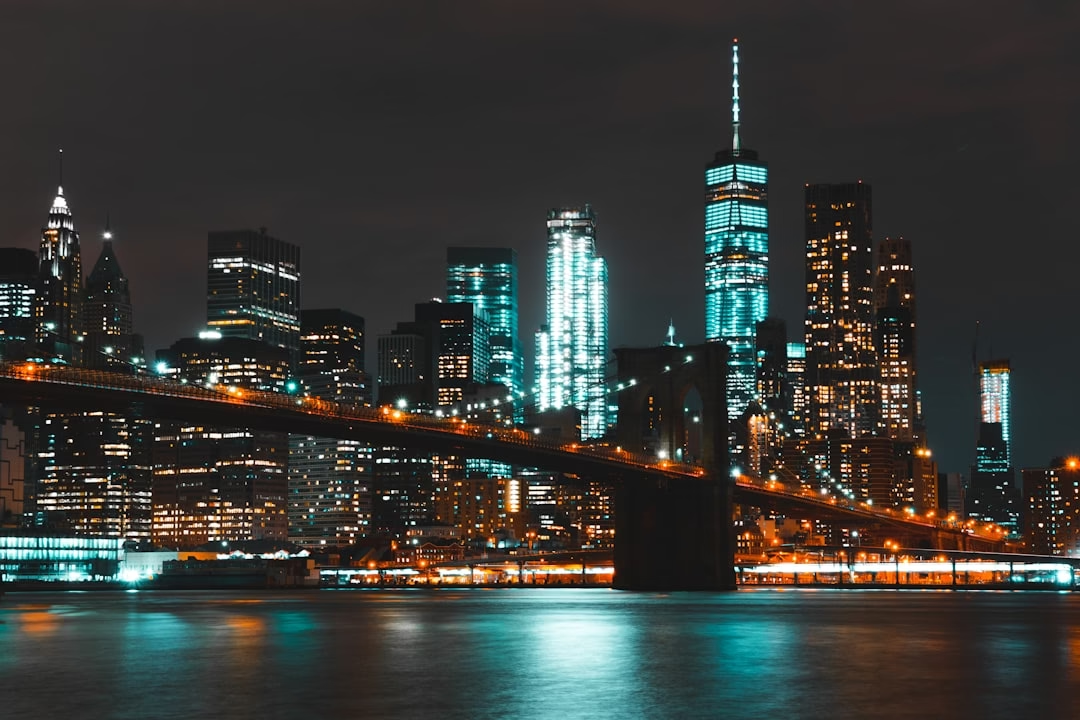
Local Law 97 represents one of New York City’s most ambitious sustainability initiatives, fundamentally reshaping how New York buildings operate. The New York City Council enacted this comprehensive legislation to address the urgent challenge of climate change and reduce greenhouse gas emissions from buildings across the city. Property owners, urban planners, and sustainability consultants need to understand which buildings are subject to the requirements of Local Law 97 because it affects operations throughout New York and transforms how building owners manage their properties.
Local Law 97 emerged as a critical component of New York City’s broader Climate Mobilization Act, reflecting the city’s commitment to environmental responsibility. The law specifically targets covered buildings as major contributors to New York State’s carbon footprint. Buildings account for nearly 70 percent of New York City building emissions, making them the primary focus for sustainability efforts across the entire city. City officials designed Local Law 97 to create concrete, measurable progress toward reducing greenhouse gas emissions significantly through mandatory compliance requirements.
The law applies to buildings meeting specific criteria including size thresholds measured in square feet and usage types across residential, commercial, and mixed-use categories. Understanding which buildings are subject to the requirements of Local Law 97 matters greatly for building owners who must plan for compliance with increasingly stricter limits. The legislation establishes emissions limits that covered buildings must achieve by certain deadlines. These compliance requirements apply progressively, giving building owners and property owners time to implement necessary changes while pushing for meaningful environmental progress.
Local Law 97 aims to transform building sustainability in New York City through mandatory emissions reductions under New York Local Law standards. The law creates financial incentives for early compliance and penalties for those who fail to meet deadlines established by the NYC department and related agencies. This two-pronged approach encourages building owners to invest in energy efficiency, renewable energy sources, and sustainable retrofitting strategies. Through these requirements, New York City and New York State push the entire real estate industry toward cleaner, more efficient operations that benefit both property values and the environment.
Criteria for Compliance
Determining which buildings are subject to the requirements of Local Law 97 depends on specific criteria that the city established through the New York City Administrative Code. The law requires compliance from covered buildings that are 25,000 square feet or larger in size, capturing most commercial buildings and many residential properties. Buildings exceeding 50,000 gross square feet face particularly stringent compliance requirements and earlier deadlines. However, size alone does not determine which buildings are subject to the requirements of Local Law 97, as other factors also play important roles in determining compliance obligations.
Building owner assessment of eligibility involves checking several key criteria beyond square footage measurements. Local Law 97 compliance applies to buildings that consume more than 25,000 kilowatt-hours of electricity annually or use significant amounts of natural gas or steam for heating and cooling purposes. Additionally, property type influences compliance timelines, with public and nonprofit buildings facing different schedules than private commercial properties. The New York City Administrative Code provides detailed guidance on property type classifications and how they affect compliance pathways for different covered buildings.
The covered buildings list maintained by the NYC Department helps property owners determine if their building must comply with LL97 compliance requirements. Building owners can assess their property’s eligibility by consulting official resources and understanding their specific property type. Many building owners find it helpful to work with compliance officers or sustainability experts who understand these complex eligibility requirements and can interpret New York City building regulations. Professional consultants often help building owners and building owner representatives navigate the distinction between buildings subject to regulations and those receiving exemptions or alternative compliance pathways.
Meeting compliance with Local Law 97 compliance obligations involves a systematic approach that starts with accurate measurement of building emissions. Building owners must first conduct comprehensive energy audits to establish current emissions baselines according to Energy Star Portfolio Manager standards. These audits identify where energy waste occurs and which systems consume the most resources across large buildings and smaller properties alike. Following the audit, building owners develop a compliance strategy that may include various prescriptive energy conservation measure approaches, such as upgrading HVAC systems, improving insulation, installing renewable energy systems, or purchasing renewable energy credits.
The law establishes a step-by-step timeline that gives building owners clear deadlines for achieving compliance with stricter limits. The first emissions reduction requirement in the initial compliance period required buildings to reduce emissions by four percent from 2005 baseline levels. Subsequent compliance periods increase these requirements progressively, reaching more aggressive emissions limits in later years. Building owners who plan proactively and invest early in large buildings often find compliance more manageable than those who delay. Working with compliance officers ensures that buildings follow proper documentation procedures and meet all reporting requirements the city demands through the NYC Administrative Code.
Understanding the Implications of Non-Compliance
Non-compliance with Local Law 97 compliance obligations carries serious financial and operational consequences that building owners and property owners cannot ignore. The city imposes substantial fines on covered buildings that fail to meet established emissions limits outlined in compliance requirements. These financial penalties start at approximately $268 per metric ton of carbon emissions that exceed the allowed emission limit threshold. For large buildings with significant excess building emissions, these penalties accumulate quickly, potentially reaching hundreds of thousands of dollars annually for non-compliant properties.
Beyond direct fines tied to emissions limits, non-compliance affects multiple aspects of a building’s operation and real estate market value. Buildings failing to meet LL97 compliance requirements face difficulties accessing traditional financing, as lenders increasingly consider Local Law 97 compliance status when evaluating loan applications for real estate investors. Insurance companies may increase premiums for non-compliant buildings or decline to provide coverage altogether, raising operational costs substantially across large buildings. Property managers struggling with compliance must also contend with tenant demands for sustainable practices, as occupants increasingly prioritize environmental consciousness in their workplace or residential choices.
Non-compliance also undermines property values in ways that extend beyond immediate penalties from emissions limits. Real estate investors consider compliance status when evaluating properties, and covered buildings failing to comply typically command lower prices than similar compliant buildings. Institutional investors managing large building portfolios often exclude non-compliant buildings from acquisition strategies, limiting the pool of potential buyers in the real estate market. This reduced market demand translates directly into lower property valuations and reduced revenue potential for building owners throughout New York City.
Fortunately, support systems exist to help building owners and owner representatives struggling with Local Law 97 compliance pathways. New York City offers grants and loan programs specifically designed to help building owners finance energy efficiency improvements required for compliance. These financial assistance programs reduce the barrier to entry for retrofitting projects, making compliance more achievable for property owners facing budget constraints across multiple buildings. Many nonprofit organizations affiliated with urban green initiatives also provide technical assistance and advisory services to help building owners navigate compliance pathways effectively.
Additionally, some covered buildings may qualify for exemptions or alternative compliance approaches under New York Local Law requirements. Affordable housing properties, certain institutional buildings, and healthcare facilities facing specific circumstances may pursue alternative compliance pathways to demonstrate progress toward emissions limits. Building owners uncertain about their compliance status or facing financial challenges should consult with sustainability experts and legal professionals who understand the nuances of Local Law 97 regulations. Taking proactive steps to address compliance concerns prevents escalating penalties and protects long-term property values in the real estate market.
Sustainable Building Practices for Compliance
Building owners pursuing compliance with Local Law 97 compliance requirements can implement numerous sustainable practices that reduce emissions effectively. Energy efficiency improvements represent the foundation of most compliance strategies, as they deliver measurable reductions in building emissions while simultaneously lowering operational costs for large buildings. Upgrading to high-efficiency HVAC systems prevents energy waste during heating and cooling seasons, directly reducing the emission limit calculations. Installing LED lighting throughout covered buildings reduces electricity consumption substantially compared to traditional lighting systems used in older structures.
Advanced building management systems help covered buildings optimize energy use intelligently and track progress toward emissions limits. These systems use sensors and data analysis to monitor energy consumption in real time, identifying inefficiencies and adjusting operations accordingly across multiple buildings. Automating lighting based on occupancy ensures that spaces consume energy only when needed, reducing overall building emissions. Smart thermostats adjust temperature settings based on weather patterns and occupancy schedules, preventing waste from heating or cooling empty spaces in large buildings. Such technological solutions enable building owners to reduce emissions while maintaining comfortable conditions for occupants.
Green building certifications like LEED demonstrate commitment to sustainable practices and often contribute to compliance achievements for covered buildings. Buildings pursuing LEED certification undergo rigorous evaluation of their environmental performance according to standards that align with Local Law 97 compliance requirements. The certification process requires documented proof of energy efficiency measures addressing emissions limits and water conservation strategies. Buildings achieving LEED status often exceed Local Law 97 compliance targets, positioning themselves well ahead of requirements in the real estate market. These certifications also enhance building reputation and marketability, attracting environmentally conscious tenants and investors aware of compliance status.
Renewable energy credits provide an alternative pathway for meeting emissions limits without directly generating clean energy on-site. Building owners can purchase renewable energy credits to offset portions of their building emissions proportionally. This compliance pathway works particularly well for urban properties where on-site renewable energy generation proves impractical due to space constraints or structural limitations. Combining renewable energy credits with prescriptive energy conservation measure improvements creates comprehensive compliance strategies that address emissions limits from multiple angles.
Solar installations and other on-site renewable energy systems contribute to meeting Local Law 97 compliance by eliminating carbon emissions from on-site energy generation. Rooftop solar systems convert sunlight into electricity, reducing dependence on grid power drawn from fossil fuel sources. For buildings unable to generate sufficient renewable energy on-site, purchasing renewable energy credits allows them to support clean energy development while meeting compliance obligations. Water efficiency measures also contribute to overall sustainability goals even though Local Law 97 compliance focuses primarily on emissions limits. Building owners integrating multiple sustainable practices typically achieve compliance more easily and often exceed minimum requirements.
Retrofitting Existing Buildings for Compliance
Retrofitting older buildings ranks as essential for most New York City properties seeking Local Law 97 compliance with established emissions limits. Older covered buildings typically operate far less efficiently than modern constructions because they lack contemporary energy management systems and insulation standards. Improving these aging structures to meet current compliance requirements addresses the building’s greatest energy waste sources systematically. Facility managers and building owners recognize retrofitting as an investment that pays dividends through reduced operational costs and compliance achievement simultaneously while meeting emissions limits.
Common retrofitting strategies target the building systems that consume the most energy and drive emissions calculations upward. HVAC system upgrades represent one of the most impactful retrofitting projects for large buildings, as heating and cooling account for roughly 40 percent of building energy consumption in northern climates. Replacing aging boilers and chillers with high-efficiency equipment dramatically reduces energy waste and building emissions. Ductwork sealing prevents conditioned air from escaping through cracks and gaps in distribution systems throughout covered buildings. Upgrading controls allows HVAC systems to respond dynamically to actual building needs rather than operating continuously at fixed settings.
Building envelope improvements prevent conditioned air from escaping and outdoor air from infiltrating spaces unnecessarily. Insulation upgrades in attics, walls, and basements significantly reduce heating and cooling loads for large buildings subject to Local Law 97 compliance. Window replacements with high-performance glass reduce heat transfer while maintaining visibility and natural light in building interiors. Air sealing around doors, windows, and other penetrations prevents drafts and uncontrolled air leakage across the building envelope. These envelope measures work together to create more consistent interior temperatures while reducing the energy required to maintain comfort in covered buildings.
Lighting system upgrades deliver quick returns on investment through reduced electricity consumption and lower building emissions. Converting from incandescent and fluorescent fixtures to LED technology reduces lighting energy by 75 percent or more across large buildings. Adding occupancy sensors and daylight harvesting controls ensures that spaces receive only the lighting they need when they need it. Modern lighting systems also improve light quality and can enhance occupant productivity and satisfaction while supporting emissions limits compliance.
Financing retrofit projects presents challenges that building owners and owner representatives must address strategically through available compliance pathways. Government incentive programs provide grants and rebates that offset portions of retrofit costs, reducing net project expenses for retrofitting initiatives. Commercial Property Assessed Clean Energy financing programs allow building owners to repay retrofit costs through property tax assessments, spreading expenses over longer periods. Energy service companies offer performance-based financing where retrofit improvements must generate energy savings sufficient to cover project costs. These diverse financing options make retrofitting more accessible to building owners and property owners facing budget limitations across multiple buildings throughout New York.
Legal and Financial Considerations
Building owners must understand the legal obligations Local Law 97 compliance imposes to maintain compliant status and avoid penalties tied to emissions limits. The law requires covered buildings to document their emissions calculations using standardized methodology approved under Energy Star Portfolio Manager guidelines and report results to the city annually. Building owners must maintain comprehensive records showing the energy consumption data, building characteristics, property type classifications, and calculation methodology used to determine emissions under the New York City Administrative Code. Failure to submit accurate documentation on time triggers penalties separate from actual compliance violations with emissions limits.
Building owners working with compliance officers and owner representatives share responsibility for maintaining complete records and meeting all reporting deadlines established in compliance periods. Financial planning represents the second critical element of managing Local Law 97 compliance effectively for covered buildings. Property owners benefit from developing comprehensive budgets that account for retrofitting costs, potential penalties, renewable energy credit purchases, and operational changes required for compliance. Early planning allows building owners to spread compliance investments across multiple years rather than facing sudden, large expenses as stricter limits approach in subsequent compliance periods.
Strategic financial management helps building owners optimize their compliance pathway while controlling costs for large buildings. Buildings pursuing renewable energy credits or alternative compliance approaches may face different expenses than those focusing on prescriptive energy conservation measures. Analyzing multiple compliance pathways allows building owners to select the most cost-effective approach for their specific property type and building characteristics. Sustainability consultants often help building owners evaluate trade-offs between different Local Law 97 compliance strategies based on financial implications and operational feasibility across multiple buildings.
Long-term compliance benefits extend far beyond initial compliance achievement in the real estate market. Buildings that reduce emissions typically see operational costs decline substantially as energy consumption decreases through prescribed measures. Reduced electricity, natural gas, and water consumption translates into lower utility bills month after month for covered buildings. These ongoing savings compound over time, eventually recovering retrofit investment costs completely while providing continued financial benefits. Property values increase when buildings operate efficiently and maintain compliant status, as investors recognize the reduced financial risks and operational advantages in the real estate sector.
Additionally, energy-efficient buildings that achieve LL97 compliance attract higher-quality tenants willing to pay premium rents for superior environmental performance and reduced utility costs. Certified sustainable buildings meeting or exceeding Local Law 97 compliance requirements command market premiums compared to otherwise similar non-compliant properties. Employee productivity often improves in well-lit, temperature-controlled buildings with superior air quality, benefiting commercial tenants significantly. These intangible benefits combine with direct financial advantages to justify significant investments in compliance and sustainability measures required by New York City building regulations.
Conclusion
Local Law 97 fundamentally advances New York City’s sustainability goals by transforming how buildings throughout the city operate and manage their emissions limits. The law creates concrete mechanisms for reducing carbon emissions from the city’s largest source of environmental impact and greenhouse gas emissions. By establishing clear emissions limits, compliance periods, and accountability mechanisms, the law motivates building owners and property owners to invest in efficiency, renewable energy sources, and sustainable practices. This comprehensive approach positions New York City and New York State as climate leaders while creating healthier, more efficient buildings for occupants and operators throughout the real estate market.
Building owners facing Local Law 97 compliance requirements should recognize compliance as an opportunity rather than merely an obligation imposed through the New York City Administrative Code. Investments in energy efficiency, renewable energy credits, and building system upgrades deliver financial returns through reduced operating costs and enhanced property values. Buildings that achieve compliance early establish competitive advantages in real estate markets and attract environmentally conscious tenants and investors. The city’s support programs, professional resources, and established compliance pathways make achieving Local Law 97 compliance manageable for most building owners willing to plan strategically and implement compliance measures.
Local Law 97 shapes the future trajectory of urban sustainability and building standards across New York City and influences policy across New York State. Early adopters of aggressive sustainability measures influence industry standards and demonstrate feasibility of ambitious emissions limits and environmental goals. Buildings that exceed compliance requirements often become models for other properties and inspire additional investments in sustainability throughout the real estate industry. As more covered buildings achieve compliance and sustainability becomes normalized in building operations, New York City moves closer to its broader climate goals while improving the quality and efficiency of its building stock for current and future generations.
