
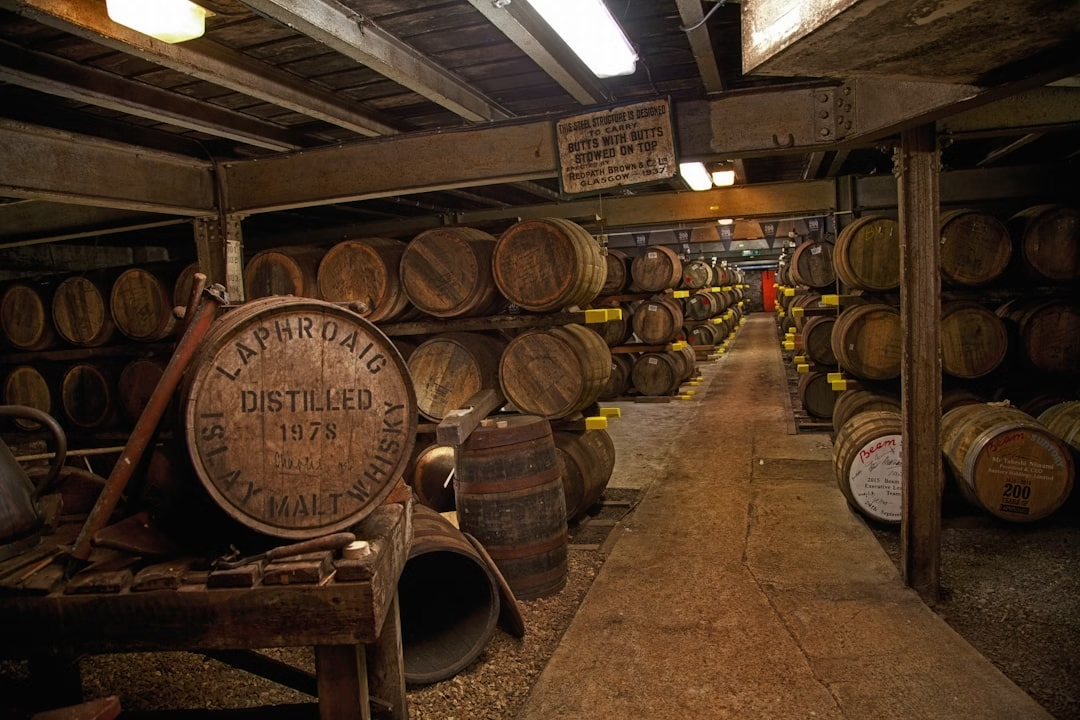
Introduction to Multi-Zone Environmental Monitoring
In the ever-evolving landscape of beverage production, multi-zone environmental monitoring has emerged as a crucial tool for optimizing production processes. This advanced approach to monitoring encompasses the comprehensive tracking and control of environmental conditions across various production areas, including rickhouses, fermentation chambers, and bottling facilities. By implementing multi-zone environmental monitoring, producers can ensure precise control over critical factors such as temperature, humidity, and air quality, which directly impact the quality and consistency of their products.
Multi-zone environmental monitoring refers to the systematic observation and regulation of environmental parameters across different areas of a production facility. This approach recognizes that each stage of the production process has unique environmental requirements, and by tailoring monitoring and control strategies to these specific needs, producers can significantly enhance their operational efficiency and product quality. In the context of beverage production, particularly in industries such as distilling and brewing, this technology plays a pivotal role in managing the delicate balance of conditions necessary for optimal outcomes.
The application of multi-zone environmental monitoring in managing rickhouses, fermentation areas, and bottling facilities is particularly significant due to the sensitive nature of these processes. Rickhouses, where spirits are aged, require precise control of temperature and humidity to ensure proper maturation and flavor development. Fermentation areas demand careful regulation of environmental factors to promote optimal yeast activity and prevent contamination. Similarly, bottling areas necessitate stringent environmental control to maintain product integrity and ensure compliance with quality standards.
The importance of multi-zone environmental monitoring in production process optimization cannot be overstated. By providing real-time data and insights into environmental conditions across various production zones, this technology enables producers to make informed decisions and rapid adjustments to maintain optimal conditions. This level of control not only enhances product quality and consistency but also contributes to improved resource efficiency, reduced waste, and increased overall productivity.
Furthermore, multi-zone environmental monitoring serves as a cornerstone for regulatory compliance and quality assurance. In an industry where adherence to strict regulatory standards is paramount, this technology provides a robust framework for documenting and demonstrating compliance with environmental and quality control requirements. By maintaining detailed records of environmental conditions throughout the production process, producers can easily validate their practices and ensure they meet or exceed industry standards.
The integration of multi-zone environmental monitoring into production processes represents a significant leap forward in the pursuit of operational excellence. By leveraging advanced sensor technology and automated monitoring systems, producers can achieve unprecedented levels of control and insight into their production environments. This not only facilitates the creation of superior products but also paves the way for innovation and continuous improvement in production methodologies.
As the beverage industry continues to evolve, the role of multi-zone environmental monitoring in production process optimization is set to become increasingly prominent. Its ability to harmonize the complex interplay of environmental factors across various production areas positions it as an indispensable tool for producers seeking to maintain a competitive edge in a demanding market. By embracing this technology, producers can not only enhance their current operations but also lay the groundwork for future advancements in production efficiency and product quality.
Benefits of Multi-Zone Environmental Monitoring
The implementation of multi-zone environmental monitoring in production areas offers a multitude of benefits that significantly enhance operational efficiency, product quality, and regulatory compliance. This advanced approach to environmental control provides producers with unprecedented insights and control over their production processes, leading to tangible improvements across various aspects of their operations.
One of the primary benefits of multi-zone environmental monitoring is the enhanced control over production environments, which directly translates to improved product quality. By maintaining precise control over factors such as temperature, humidity, and air quality in different production zones, producers can create optimal conditions for each stage of the production process. For instance, in rickhouses, where spirits are aged, maintaining consistent temperature and humidity levels is crucial for achieving desired flavor profiles and preventing excessive evaporation. Multi-zone monitoring ensures that these conditions remain stable, leading to more predictable and higher-quality outcomes.
In fermentation areas, the ability to closely monitor and adjust environmental conditions can significantly impact the quality and consistency of the final product. Yeast activity, which is central to fermentation, is highly sensitive to temperature fluctuations. Multi-zone monitoring allows for precise temperature control, ensuring that fermentation proceeds at the optimal rate and produces the desired flavors and alcohol content. This level of control not only enhances product quality but also improves production efficiency by reducing the likelihood of batch failures or inconsistencies.
Another significant benefit of multi-zone environmental monitoring is its contribution to meeting regulatory compliance more efficiently. The beverage industry is subject to stringent regulations regarding production processes, quality control, and product safety. Multi-zone monitoring systems provide comprehensive data logging and reporting capabilities, making it easier for producers to demonstrate compliance with regulatory requirements. This data can be used to create detailed audit trails, showing that production environments have been maintained within specified parameters throughout the production process. Such documentation is invaluable during inspections and can streamline the compliance verification process.
Moreover, multi-zone environmental monitoring plays a crucial role in reducing environmental impact and promoting sustainable practices. By providing real-time data on energy consumption and environmental conditions, these systems enable producers to optimize their resource usage. For example, precise monitoring can help identify areas where energy is being wasted on excessive cooling or heating, allowing for adjustments that reduce overall energy consumption. This not only lowers operational costs but also contributes to a reduced carbon footprint, aligning with growing consumer demand for environmentally responsible production practices.
The implementation of multi-zone environmental monitoring also contributes to significant improvements in operational efficiency. By automating the monitoring and control of environmental conditions, producers can reduce the need for manual checks and adjustments, freeing up staff to focus on other critical tasks. Additionally, the ability to detect and respond to environmental anomalies quickly can prevent costly production delays or product losses. For instance, early detection of a malfunctioning cooling system in a fermentation area can allow for prompt intervention, preventing potential spoilage of an entire batch.
Furthermore, the data collected through multi-zone environmental monitoring serves as a valuable resource for continuous improvement initiatives. By analyzing trends and patterns in environmental data, producers can identify opportunities for process optimization, leading to incremental improvements in efficiency and quality over time. This data-driven approach to production management enables producers to make informed decisions about equipment upgrades, process modifications, and resource allocation.
The benefits of multi-zone environmental monitoring extend beyond immediate operational improvements. By ensuring consistent product quality and demonstrating a commitment to regulatory compliance and sustainability, producers can enhance their brand reputation and customer trust. In a competitive market where quality and consistency are paramount, the ability to deliver products of consistently high quality can be a significant differentiator.
Technologies Behind Multi-Zone Environmental Monitoring
The effectiveness of multi-zone environmental monitoring in optimizing production processes relies heavily on the sophisticated technologies that underpin these systems. At the core of this technology are advanced sensor systems and automated monitoring solutions that work in concert to provide comprehensive, real-time data on environmental conditions across various production zones. Understanding these technologies is crucial for producers looking to implement or upgrade their environmental monitoring capabilities.
Sensor technology forms the foundation of multi-zone environmental monitoring systems. Modern sensors are capable of measuring a wide range of environmental parameters with high precision and reliability. Temperature sensors, for instance, can detect minute changes in ambient temperature, which is crucial for processes such as fermentation where even small temperature fluctuations can significantly impact the final product. Humidity sensors play a vital role in monitoring moisture levels, particularly important in rickhouses where humidity affects the aging process of spirits. Air quality sensors can detect the presence of contaminants or undesirable gases, ensuring a safe and optimal environment for production.
These sensors are not standalone devices but are integrated into a network that covers multiple zones of the production facility. Each sensor is strategically placed to capture data from critical points within the production environment. The placement of sensors is a critical aspect of system design, requiring a deep understanding of the production process and the specific environmental requirements of each zone.
Complementing the sensor network are automated monitoring systems that collect, process, and analyze the data from the sensors in real-time. These systems typically consist of centralized control units that receive data from all sensors across the facility. Advanced software algorithms process this data, providing operators with actionable insights and alerts. For example, if temperature in a fermentation tank deviates from the set parameters, the system can immediately alert operators or even automatically adjust climate control systems to bring the temperature back within the desired range.
The integration of sensor technology with automated monitoring systems creates a powerful tool for environmental control. This integration allows for the creation of feedback loops where environmental conditions are continuously monitored and adjusted to maintain optimal parameters. Such systems can operate with minimal human intervention, ensuring consistent conditions 24/7 and reducing the risk of human error.
Recent advancements in sensor technology have further enhanced the capabilities of multi-zone environmental monitoring systems. Miniaturization of sensors has allowed for more discreet and widespread deployment throughout production facilities. This enables more granular monitoring, capturing micro-climates within larger zones and providing a more detailed picture of environmental conditions.
Wireless sensor technology has also revolutionized the implementation of multi-zone monitoring systems. Wireless sensors can be easily deployed and relocated as needed, offering flexibility in system design and reducing installation costs. These sensors can transmit data to central monitoring systems without the need for extensive wiring, making it easier to retrofit existing facilities with advanced monitoring capabilities.
Another significant advancement is the development of smart sensors with built-in processing capabilities. These sensors can perform preliminary data analysis at the point of measurement, reducing the load on central processing systems and enabling faster response times to environmental changes. Some advanced sensors can even self-calibrate, ensuring long-term accuracy without frequent manual adjustments.
The integration of Internet of Things (IoT) technology has further enhanced the capabilities of multi-zone environmental monitoring systems. IoT-enabled sensors and monitoring systems can be accessed and controlled remotely, allowing operators to monitor and adjust environmental conditions from anywhere. This capability is particularly valuable for large-scale operations or facilities in remote locations.
Data analytics and machine learning algorithms are increasingly being incorporated into environmental monitoring systems. These technologies can analyze historical data to predict trends, identify patterns, and even suggest optimizations to environmental parameters. For example, by analyzing data from multiple production cycles, these systems can recommend adjustments to temperature or humidity levels to improve product quality or increase yield.
Cloud computing has also played a significant role in advancing multi-zone environmental monitoring. Cloud-based systems allow for the storage and processing of vast amounts of environmental data, enabling more sophisticated analysis and long-term trend identification. Cloud platforms also facilitate easier sharing of data across different departments or even between different facilities, promoting a more holistic approach to production optimization.
As technology continues to evolve, the future of multi-zone environmental monitoring looks promising. Emerging technologies such as artificial intelligence and augmented reality are likely to be integrated into these systems, offering even more sophisticated analysis and intuitive interfaces for operators. The continued advancement of sensor technology promises even greater accuracy and the ability to monitor an ever-wider range of environmental parameters.
Managing Rickhouses with Environmental Monitoring
The management of rickhouses, where spirits such as whiskey and bourbon are aged, is a critical aspect of the production process that significantly influences the quality and character of the final product. Environmental monitoring plays a pivotal role in this process, ensuring that the delicate balance of conditions necessary for optimal aging is maintained consistently over extended periods. The implementation of multi-zone environmental monitoring in rickhouses represents a significant advancement in the pursuit of quality and consistency in spirit production.
The importance of environmental monitoring in managing rickhouses cannot be overstated. The aging process of spirits is highly sensitive to environmental conditions, particularly temperature and humidity. These factors directly influence the rate of evaporation, known in the industry as the “angel’s share,” as well as the interaction between the spirit and the wood of the barrel. Fluctuations in temperature and humidity can lead to inconsistent aging, affecting the flavor profile, color, and overall quality of the spirit.
Temperature control is particularly crucial in rickhouses. Ideally, the temperature should remain relatively stable, with gradual seasonal changes that contribute to the natural aging process. Extreme temperature fluctuations can cause rapid expansion and contraction of the barrels, potentially leading to leaks or excessive evaporation. Multi-zone environmental monitoring allows for precise tracking of temperature across different areas of the rickhouse, accounting for variations that may occur due to factors such as the building’s orientation, insulation, or proximity to heating and cooling sources.
Humidity regulation is equally important in the management of rickhouses. The optimal humidity level for spirit aging typically ranges between 50% and 70%. Too low humidity can lead to excessive evaporation of water from the barrels, resulting in higher alcohol content and potentially harsher flavors. Conversely, excessive humidity can inhibit the desired evaporation process and may lead to issues with mold or barrel degradation. Multi-zone monitoring ensures that humidity levels are maintained within the ideal range throughout the rickhouse, accounting for variations that may occur due to factors such as airflow patterns or proximity to walls and windows.
The implementation of multi-zone environmental monitoring in rickhouses allows for a more nuanced approach to aging management. Different areas within a rickhouse may experience varying environmental conditions. For instance, barrels stored on higher racks may be exposed to higher temperatures due to heat rising, while those near exterior walls might experience more significant temperature fluctuations. By monitoring these micro-environments separately, producers can make informed decisions about barrel placement and rotation to achieve desired aging profiles.
Best practices for implementing environmental monitoring systems in rickhouses include strategic sensor placement to capture data from representative locations throughout the facility. This might involve placing sensors at different heights and in various sections of the rickhouse to create a comprehensive environmental map. The data collected should be continuously analyzed to identify trends, anomalies, or areas requiring intervention.
Advanced monitoring systems can also integrate control mechanisms for temperature and humidity. For example, if the system detects that conditions in a particular zone are deviating from the desired parameters, it can automatically activate heating, cooling, or humidification systems to bring the environment back into the optimal range. This level of automated control ensures consistent conditions even when staff are not present, which is particularly valuable given the 24/7 nature of the aging process.
The data gathered through multi-zone environmental monitoring in rickhouses is not only valuable for maintaining optimal aging conditions but also serves as a powerful tool for quality assurance and product development. By correlating environmental data with the characteristics of the aged spirits, producers can gain insights into how specific conditions influence the final product. This knowledge can be applied to fine-tune aging processes, develop new product lines, or even recreate specific flavor profiles more consistently.
Furthermore, the detailed environmental data provided by these monitoring systems can be invaluable for regulatory compliance and quality certification processes. Many regulatory bodies require detailed records of aging conditions, and multi-zone monitoring systems can automatically generate the necessary documentation, streamlining audits and inspections.
The integration of multi-zone environmental monitoring in rickhouses also contributes to more sustainable practices in spirit production. By optimizing environmental conditions, producers can minimize unnecessary evaporation, reducing product loss and potentially lowering the environmental impact of the aging process. Additionally, the precise control afforded by these systems can lead to more efficient use of energy for climate control, aligning with broader sustainability goals.
As technology continues to advance, the future of rickhouse management with environmental monitoring looks promising. Emerging technologies such as AI-driven predictive analytics could allow producers to anticipate and preemptively address potential environmental issues before they impact the aging process. Virtual and augmented reality interfaces might provide immersive ways for master distillers to visualize and interact with environmental data, further enhancing their ability to craft exceptional spirits.
The application of multi-zone environmental monitoring in rickhouses represents a significant leap forward in the art and science of spirit aging. By providing unprecedented control and insight into the aging environment, these systems enable producers to maintain the delicate balance of conditions necessary for optimal maturation. This not only ensures consistent quality and flavor profiles but also opens up new possibilities for innovation in spirit production. As the industry continues to evolve, the role of advanced environmental monitoring in rickhouse management will undoubtedly become increasingly central to the pursuit of excellence in spirit production.
Optimizing Fermentation Processes
Fermentation is a critical stage in the production of many beverages, including beer, wine, and certain spirits. The success of this process hinges on maintaining precise environmental conditions that promote optimal yeast activity while preventing contamination. Multi-zone environmental monitoring plays a crucial role in optimizing fermentation processes, enabling producers to achieve consistent quality, enhance flavor profiles, and improve overall production efficiency.
The importance of environmental conditions in the fermentation process cannot be overstated. Yeast, the microorganism responsible for converting sugars into alcohol, is highly sensitive to its environment. Factors such as temperature, pH levels, and oxygen content significantly impact yeast performance and, consequently, the characteristics of the final product. Multi-zone environmental monitoring provides the tools necessary to precisely control these factors across various fermentation vessels or areas within a production facility.
Temperature control is perhaps the most critical aspect of fermentation optimization. Different yeast strains have specific temperature ranges at which they perform optimally, and even small deviations from these ranges can result in off-flavors, incomplete fermentation, or stressed yeast that produce unwanted byproducts. Multi-zone monitoring systems allow for precise temperature control in individual fermentation tanks or across larger fermentation areas. By maintaining the ideal temperature throughout the fermentation process, producers can ensure that yeast performs optimally, leading to more consistent and higher-quality products.
Advanced environmental monitoring systems can track temperature trends over time, allowing producers to implement specific temperature profiles for different stages of fermentation. For example, in beer production, some brewers use a temperature ramp-up during fermentation to encourage the yeast to produce specific flavor compounds. Multi-zone monitoring makes it possible to implement and consistently reproduce these complex temperature profiles across multiple batches or fermentation vessels.
Humidity regulation, while less critical than temperature control forthe fermentation process itself, is still an important factor in maintaining a clean and controlled fermentation environment. Proper humidity levels can help prevent contamination and ensure that the fermentation area remains in optimal condition. Multi-zone environmental monitoring systems can track humidity levels across different areas of the fermentation facility, alerting operators to any deviations that could potentially impact the process or product quality.
pH monitoring is another crucial aspect of fermentation control that can be integrated into multi-zone environmental monitoring systems. The pH level of the fermenting liquid directly affects yeast activity and can influence the flavor profile of the final product. Advanced sensors can continuously monitor pH levels, allowing for real-time adjustments to maintain optimal conditions throughout the fermentation process.
Dissolved oxygen content is yet another critical factor in fermentation, particularly in the early stages where yeast requires oxygen for growth. Multi-zone monitoring systems equipped with dissolved oxygen sensors can ensure that appropriate oxygen levels are maintained at the start of fermentation and then reduced as the process continues, optimizing yeast performance and preventing oxidation issues that could affect product quality.
The integration of these various monitoring capabilities into a comprehensive multi-zone system allows for a holistic approach to fermentation optimization. By simultaneously tracking and controlling multiple environmental factors across different fermentation zones, producers can create ideal conditions for each specific product or yeast strain they work with.
Technological solutions for precise monitoring and control during fermentation have advanced significantly in recent years. Wireless sensor networks, for instance, allow for flexible placement of monitoring devices throughout the fermentation area without the need for extensive wiring. These sensors can transmit data in real-time to central control systems, providing operators with up-to-the-minute information on fermentation conditions.
Data analytics and machine learning algorithms are increasingly being applied to fermentation monitoring, allowing for predictive modeling and automated decision-making. By analyzing historical data alongside real-time measurements, these systems can predict fermentation outcomes and suggest adjustments to optimize the process. For example, an AI-driven system might recognize patterns indicating the onset of a stuck fermentation and recommend corrective actions before the issue becomes severe.
Cloud-based monitoring platforms have also revolutionized fermentation control, especially for larger operations or those with multiple facilities. These systems allow for centralized monitoring and control of fermentation processes across different locations, enabling standardization of practices and facilitating knowledge sharing between production teams.
The benefits of implementing advanced multi-zone environmental monitoring in fermentation processes are numerous. Consistency in product quality is perhaps the most significant advantage, as precise control over fermentation conditions allows for reproducible results batch after batch. This consistency is particularly important for large-scale producers who must maintain uniform product characteristics across substantial production volumes.
Efficiency gains are another key benefit. By optimizing fermentation conditions, producers can often achieve faster fermentation times without sacrificing quality. This can lead to increased production capacity and reduced energy costs associated with maintaining fermentation temperatures over extended periods.
Multi-zone monitoring also contributes to waste reduction in fermentation processes. By closely tracking environmental conditions and yeast activity, producers can identify and address potential issues early, reducing the likelihood of batch failures or substandard products. This not only saves on raw materials but also contributes to more sustainable production practices.
Furthermore, the detailed data provided by multi-zone monitoring systems serves as a valuable resource for process improvement and innovation. By analyzing the relationship between environmental conditions and fermentation outcomes, producers can experiment with new techniques or yeast strains to develop unique flavor profiles or improve existing products.
As technology continues to evolve, the future of fermentation optimization through environmental monitoring looks promising. Emerging technologies such as nanosensors may allow for even more precise monitoring of fermentation conditions at the microscopic level. Virtual and augmented reality interfaces could provide new ways for brewers and winemakers to visualize and interact with fermentation data, enhancing their ability to make informed decisions and adjustments.
Enhancing Bottling Efficiency through Environmental Monitoring
The bottling stage represents a critical juncture in the beverage production process, where the final product is packaged for distribution. Environmental monitoring in bottling areas is of paramount importance, as it ensures that the product maintains its quality and integrity during this final phase of production. Multi-zone environmental monitoring plays a crucial role in enhancing bottling efficiency, maintaining product quality, and ensuring compliance with stringent industry standards.
The significance of maintaining optimal environmental conditions in bottling areas cannot be overstated. Temperature fluctuations, humidity levels, and air quality can all impact the bottling process and the final product. For instance, temperature variations can affect the viscosity of certain beverages, potentially leading to inconsistencies in fill levels or difficulties in proper sealing. Humidity control is essential to prevent condensation, which can compromise label adhesion or create conditions conducive to mold growth. Air quality monitoring ensures that the bottling environment remains free from contaminants that could affect product safety or quality.
Multi-zone environmental monitoring systems provide a comprehensive solution for maintaining these optimal conditions across various areas of the bottling facility. By deploying sensors throughout the bottling line and storage areas, producers can create a detailed environmental map of their facility, allowing for precise control and rapid response to any deviations from ideal conditions.
One of the primary ways in which multi-zone environmental monitoring improves bottling efficiency is through the prevention of product waste and reduction of downtime. By maintaining consistent environmental conditions, producers can minimize issues such as improper sealing, label application problems, or product spoilage. For example, if the monitoring system detects a sudden increase in humidity that could affect label adhesion, it can automatically trigger dehumidification systems or alert operators to take corrective action before a significant number of products are affected.
The implementation of environmental monitoring systems in bottling operations involves several key strategies. First, sensor placement is critical. Sensors should be strategically located to capture data from all crucial areas of the bottling line, including filling stations, labeling areas, and packaging zones. This comprehensive coverage ensures that environmental conditions are monitored at every stage of the bottling process.
Integration with existing bottling equipment and control systems is another important aspect of implementing environmental monitoring. Modern monitoring systems can often be seamlessly integrated with bottling line controls, allowing for automated adjustments to equipment settings based on environmental data. For instance, if temperature sensors detect a rise in ambient temperature, the system could automatically adjust cooling systems or conveyor speeds to maintain optimal conditions for the product.
Data analytics play a crucial role in leveraging the information gathered by multi-zone monitoring systems. Advanced analytics platforms can process the vast amounts of data collected, identifying trends, predicting potential issues, and suggesting optimizations. This data-driven approach allows producers to continually refine their bottling processes, leading to incremental improvements in efficiency and quality over time.
Real-time monitoring and alerting capabilities are essential features of effective environmental monitoring systems in bottling areas. These systems can provide immediate notifications to operators when environmental parameters deviate from specified ranges, allowing for rapid intervention. This quick response capability is particularly valuable in high-speed bottling operations where even brief periods of suboptimal conditions can result in significant product loss or quality issues.
The benefits of multi-zone environmental monitoring in bottling areas extend beyond just maintaining product quality. These systems can also contribute significantly to energy efficiency and sustainability efforts. By providing detailed data on environmental conditions, monitoring systems allow producers to optimize their heating, cooling, and ventilation systems, potentially leading to substantial energy savings. Additionally, by reducing product waste and improving process efficiency, these systems contribute to more sustainable production practices.
Compliance with regulatory standards is another area where environmental monitoring systems prove invaluable in bottling operations. Many regulatory bodies require detailed documentation of environmental conditions during the bottling process, particularly for sensitive products like dairy or certain pharmaceuticals. Multi-zone monitoring systems can automatically generate the necessary compliance reports, streamlining audits and inspections.
As technology continues to advance, the future of environmental monitoring in bottling areas looks promising. Emerging technologies such as AI-driven predictive maintenance could allow bottling lines to anticipate and prevent equipment failures based on environmental data. Augmented reality interfaces might provide bottling line operators with real-time, visually intuitive environmental data overlays, enhancing their ability to maintain optimal conditions.
The integration of Internet of Things (IoT) technology is also set to play an increasingly important role in bottling line environmental monitoring. IoT-enabled sensors and devices can create a more interconnected bottling environment, where data from various sources – including environmental sensors, production equipment, and quality control systems – can be synthesized to provide a holistic view of the bottling process.
Multi-zone environmental monitoring reveals production patterns that single-point measurements miss. Different areas of a production facility, from grain storage to fermentation tanks to the bottling line, have distinct environmental requirements that interact in ways affecting product quality. Temperature in a bottling area can affect fill levels and closure performance. Tracking conditions continuously across all zones makes it possible to catch environmental problems before they become product defects or yield issues.
Nosy provides wireless sensor coverage across all production zones, monitoring temperature, humidity, CO2, atmospheric pressure, and tVOCs with readings every five minutes and a web-based dashboard that shows conditions by location. At a craft distillery in Rhode Island, Nosy is deployed across barrel aging and production areas, providing continuous environmental data across the full production workflow. Craft producers interested in multi-zone monitoring can find more at Nosy for Craft Distilleries and Nosy for Craft Breweries.
Conclusion
Multi-zone environmental monitoring has established itself as a critical technology for optimizing production processes in the beverage industry. Its comprehensive application across rickhouses, fermentation areas, and bottling facilities enables unprecedented control over environmental conditions, directly enhancing product quality, consistency, and operational efficiency. For industry professionals, this technology offers valuable insights for data-driven decision-making, proactive quality control, and streamlined regulatory compliance.
Looking ahead, the role of multi-zone environmental monitoring in production strategies is set to expand further. As it integrates with emerging technologies like AI and IoT, its capabilities will grow, potentially revolutionizing how environmental data is collected, analyzed, and acted upon. This evolution will drive continued innovation in the beverage industry, making multi-zone environmental monitoring an indispensable tool for producers aiming to maintain leadership in quality, efficiency, and sustainability in an increasingly competitive market.
