
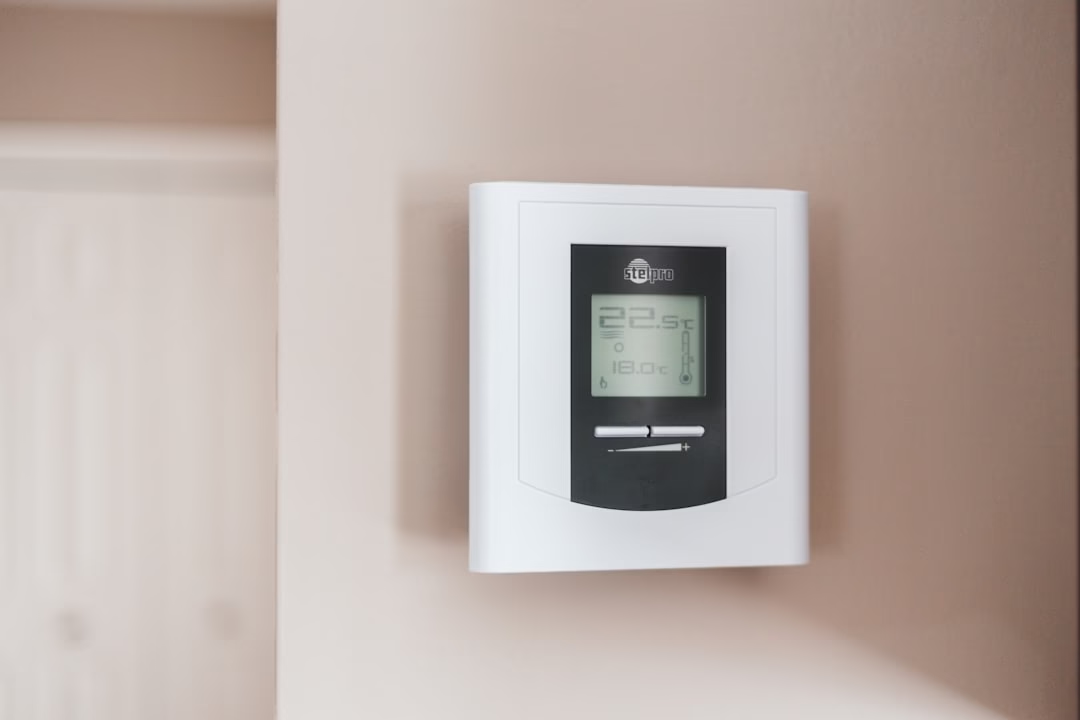
In the rapidly evolving landscape of building management and energy efficiency, smart thermostat solutions have emerged as a game-changing technology. These innovative devices are revolutionizing the way buildings manage their energy consumption, offering unprecedented control and optimization of heating, ventilation, and air conditioning (HVAC) systems. Smart thermostats are advanced, WiFi-enabled devices that go beyond simple temperature control, incorporating sensors, learning algorithms, and connectivity features to create a more intelligent and responsive heating and cooling system.
At their core, smart thermostats work by continuously monitoring and analyzing various factors such as occupancy patterns, weather conditions, and energy usage. This data is then used to automatically adjust temperature settings, ensuring optimal comfort while minimizing energy waste. Unlike traditional thermostats that rely on manual programming or maintain a constant temperature, smart thermostats can learn from user behavior and preferences, making proactive adjustments to maximize efficiency.
The contribution of smart thermostats to building efficiency is multifaceted. By optimizing HVAC operations, these devices can significantly reduce energy consumption, often leading to savings of 10-15% on heating and cooling costs. They achieve this through various means, such as implementing more accurate temperature control, utilizing occupancy detection to avoid heating or cooling empty spaces, and leveraging weather forecasts to anticipate and prepare for changes in outdoor conditions.
Moreover, smart thermostats play a crucial role in modern building management by serving as a central hub for energy data collection and analysis. They provide building managers with detailed insights into energy usage patterns, enabling more informed decision-making and targeted efficiency improvements. This level of data granularity was previously unavailable or difficult to obtain, making smart thermostats an invaluable tool for those seeking to optimize their building’s energy performance.
The importance of smart thermostat solutions in modern building management cannot be overstated. As buildings account for a significant portion of global energy consumption and carbon emissions, the need for more efficient energy management systems has become paramount. Smart thermostats address this need by offering a relatively simple yet highly effective means of reducing energy waste and improving overall building efficiency.
Furthermore, smart thermostats align with the growing trend towards smart building solutions and the Internet of Things (IoT) in construction and property management. By integrating with other building systems and devices, smart thermostats contribute to a more holistic approach to building management, where various components work in harmony to optimize performance, comfort, and sustainability.
As energy costs continue to rise and environmental concerns become more pressing, the role of smart thermostats in building management is likely to become even more critical. These devices represent a key component in the broader movement towards more sustainable and efficient buildings, offering a tangible and accessible solution for property owners and managers looking to reduce their energy footprint and operational costs.
Benefits of Smart Thermostats in Energy Management
Smart thermostats have revolutionized energy management in buildings, offering a wide array of benefits that contribute to improved efficiency, cost savings, and environmental sustainability. These advanced devices leverage cutting-edge technology to optimize heating and cooling systems, resulting in significant energy savings and a reduced carbon footprint.
One of the primary ways smart thermostats improve energy efficiency is through their ability to learn and adapt to occupancy patterns and user preferences. By analyzing data on when a building is occupied and how occupants prefer their environment, smart thermostats can automatically adjust temperature settings to ensure comfort when needed while conserving energy during unoccupied periods. This level of precision and automation eliminates the inefficiencies associated with manual thermostat management, where settings may be forgotten or improperly adjusted.
Additionally, smart thermostats often incorporate features such as geofencing, which uses smartphone location data to determine when occupants are approaching or leaving the building. This allows the system to proactively adjust temperatures, ensuring a comfortable environment upon arrival while avoiding unnecessary heating or cooling when the building is empty. Some advanced models even integrate with calendar apps to anticipate occupancy based on scheduled events, further refining their energy-saving capabilities.
The cost savings associated with using smart thermostats can be substantial. Studies have shown that these devices can reduce heating and cooling costs by an average of 10-15%, with some users reporting savings of up to 23%. For large commercial buildings or facilities with high energy consumption, these savings can translate to thousands of dollars annually. The exact amount of savings can vary depending on factors such as building size, local climate, and existing energy efficiency measures, but the potential for significant cost reduction is clear.
Moreover, the data collection and reporting capabilities of smart thermostats provide valuable insights that can lead to additional cost savings. By analyzing energy usage patterns and system performance, building managers can identify inefficiencies, schedule preventive maintenance, and make informed decisions about further energy-saving investments. This proactive approach to energy management can result in lower maintenance costs, extended equipment lifespan, and optimized overall building performance.
Smart thermostats can also play a crucial role in achieving green building certifications, such as LEED (Leadership in Energy and Environmental Design) or BREEAM (Building Research Establishment Environmental Assessment Method). These certifications are increasingly important in the commercial real estate market, as they demonstrate a commitment to sustainability and can enhance property value. Smart thermostats contribute to several criteria within these certification systems, including energy efficiency, indoor environmental quality, and innovation in design.
For instance, the precise temperature control and energy monitoring capabilities of smart thermostats align with LEED’s requirements for optimized energy performance and energy metering. The ability to integrate with other building systems and provide detailed energy usage data supports the monitoring-based commissioning processes that are valued in green building certifications. Furthermore, the innovative features of smart thermostats, such as learning algorithms and remote management capabilities, can contribute to points in innovation categories.
Beyond certification, smart thermostats support broader sustainable building practices by reducing overall energy consumption and associated greenhouse gas emissions. They enable buildings to operate more efficiently, aligning with global efforts to combat climate change and transition to a more sustainable built environment. As regulations around building energy performance become more stringent, smart thermostats offer a practical and effective means of compliance while also delivering tangible benefits to building owners and occupants.
Integration with Building Automation Systems
The integration of smart thermostats with existing building automation systems (BAS) represents a significant step towards creating truly intelligent and efficient buildings. This integration process involves connecting smart thermostats to a centralized building management platform, allowing for seamless communication and coordination between various building systems. The result is a more holistic approach to energy management and occupant comfort, where heating, ventilation, and air conditioning (HVAC) systems work in harmony with lighting, security, and other building functions.
The technical aspects of integrating smart thermostats with building automation systems typically involve leveraging standard communication protocols such as BACnet, Modbus, or LonWorks. These protocols allow different devices and systems to exchange data and commands, creating a unified network of building controls. In many cases, smart thermostats can be directly connected to the BAS through these protocols, while in others, gateway devices may be necessary to translate between different communication standards.
Cloud connectivity is another crucial aspect of integration. Many modern smart thermostats and building automation systems utilize cloud-based platforms for data storage, analysis, and remote management. This cloud integration allows for more advanced features such as real-time monitoring, predictive maintenance, and the ability to manage multiple buildings or locations from a centralized dashboard.
Despite the clear benefits, integrating smart thermostats with existing building automation systems is not without its challenges. One common issue is compatibility between older BAS infrastructure and newer smart thermostat technology. Legacy systems may not support the communication protocols or data formats used by smart thermostats, requiring additional hardware or software bridges to facilitate integration.
Another challenge lies in data management and security. The increased connectivity and data flow between systems can create potential vulnerabilities if not properly secured. Implementing robust cybersecurity measures, including encryption, secure authentication, and regular software updates, is essential to protect sensitive building data and prevent unauthorized access.
To address these challenges, solutions often involve a combination of hardware upgrades, software updates, and careful system design. In some cases, a phased approach to integration may be necessary, starting with pilot projects in specific areas of a building before rolling out to the entire facility. Working with experienced system integrators and leveraging the expertise of both BAS and smart thermostat manufacturers can help overcome technical hurdles and ensure a smooth integration process.
The benefits of successful integration are substantial and contribute significantly to overall building efficiency. By connecting smart thermostats to the broader building automation system, facilities can achieve a new level of coordination and optimization. For example, occupancy data from security systems can inform HVAC controls, automatically adjusting temperatures in specific zones based on real-time usage. Similarly, integration with lighting systems can ensure that energy is not wasted heating or cooling unoccupied, dark spaces.
Future Trends in Smart Building Technology
The landscape of smart building technology is rapidly evolving, with emerging trends promising to revolutionize the way we design, construct, and manage buildings. At the forefront of this evolution are smart thermostats, which are poised to become even more sophisticated and integral to building operations in the coming years.
One of the most significant emerging trends in smart building technology is the increased integration of artificial intelligence (AI) and machine learning algorithms. These advanced technologies are enabling smart thermostats to move beyond simple programmable functions to become truly intelligent systems capable of learning and adapting to complex environments. Future smart thermostats will likely incorporate more advanced sensors and data processing capabilities, allowing them to analyze a wider range of factors affecting building performance and occupant comfort.
For example, next-generation smart thermostats may utilize computer vision technology to detect not just occupancy, but also the number of people in a space, their activity levels, and even their emotional states. This information could be used to make more nuanced adjustments to temperature, humidity, and air flow, optimizing both comfort and energy efficiency. Additionally, these systems might incorporate predictive analytics to anticipate future conditions based on historical data, weather forecasts, and other external factors, allowing for proactive adjustments to building systems.
Another emerging trend is the increased focus on indoor air quality (IAQ) management. Future smart thermostats are likely to incorporate advanced air quality sensors capable of detecting a wide range of pollutants, allergens, and pathogens. This capability will allow building managers to monitor and improve IAQ in real-time, contributing to healthier and more productive indoor environments. Smart thermostats could automatically adjust ventilation rates or trigger air purification systems based on detected air quality issues, ensuring optimal conditions for occupants.
The integration of renewable energy sources with smart building systems is another area of future development. Smart thermostats will play a crucial role in managing the complex interplay between energy generation, storage, and consumption in buildings equipped with solar panels, wind turbines, or other renewable energy technologies. These advanced thermostats will need to balance energy use with real-time energy production and storage levels, potentially shifting energy-intensive activities to times of peak renewable energy generation.
Edge computing is also set to play a significant role in the evolution of smart thermostats and building management systems. By processing data locally rather than relying solely on cloud-based systems, edge computing can reduce latency, improve reliability, and enhance privacy and security. Future smart thermostats may incorporate powerful edge computing capabilities, allowing for faster decision-making and more resilient operation, even in the event of network disruptions.
The role of AI and machine learning in the evolution of smart buildings cannot be overstated. These technologies will enable smart thermostats to move beyond simple rule-based operations to become truly intelligent systems capable of complex decision-making. Machine learning algorithms will continuously analyze vast amounts of data from various sources, including historical performance, weather patterns, occupancy trends, and even individual occupant preferences, to optimize building operations in ways that were previously impossible.
For instance, AI-powered smart thermostats might develop sophisticated occupancy prediction models, anticipating not just when a building will be occupied, but also how different spaces within the building will be used throughout the day. This could lead to hyper-personalized comfort settings that adapt in real-time to changing conditions and user needs.
Furthermore, AI could enable smart thermostats to participate in demand response programs more effectively, automatically adjusting energy consumption based on grid conditions and electricity pricing. This could help buildings play a more active role in stabilizing the electrical grid and reducing peak demand, contributing to broader energy efficiency goals.
As these technologies mature, we can expect to see smart thermostats becoming central to a new paradigm of predictive and adaptive building management. Buildings will become more responsive to both internal and external conditions, continuously optimizing performance to meet changing needs and circumstances.
Smart Thermostats and User Behavior Analytics
The integration of user behavior analytics into smart thermostat systems represents a significant leap forward in energy management and building efficiency. By collecting and analyzing data on how occupants interact with their environment, smart thermostats can provide unprecedented insights into energy usage patterns and occupant preferences, leading to more effective energy-saving strategies and improved comfort levels.
User behavior analytics in the context of smart thermostats involves the collection and analysis of various data points related to occupant interactions with the heating, ventilation, and air conditioning (HVAC) system. This includes tracking when and how often temperature adjustments are made, preferred temperature settings for different times of day, occupancy patterns, and even individual comfort preferences when multiple users are involved.
The power of user behavior analytics lies in its ability to uncover patterns and trends that might not be immediately apparent. For example, analysis might reveal that certain zones of a building are consistently overheated or undercooled, indicating potential issues with the HVAC system or building envelope. It could also identify times when energy is being wasted heating or cooling unoccupied spaces, allowing for more efficient scheduling of HVAC operations.
One of the key ways that user behavior analytics enhances the efficiency of smart thermostats is through the refinement of learning algorithms. As the system collects more data on user preferences and behaviors, it can continually adjust its operating parameters to better match the needs of the occupants while minimizing energy waste. This might involve adjusting pre-heating or pre-cooling times based on observed occupancy patterns, or fine-tuning temperature setpoints to balance comfort with energy efficiency.
The insights gained from user behavior analytics can lead to improved energy management strategies that go beyond just automated adjustments. Building managers can use this data to identify opportunities for targeted energy-saving initiatives or to educate occupants about energy-efficient behaviors. For example, if analytics reveal that certain users consistently set temperatures to extremes, managers could provide personalized feedback or implement gentle nudges within the thermostat interface to encourage more energy-efficient choices.
Furthermore, user behavior analytics can contribute to predictive maintenance of HVAC systems. By correlating user adjustments with system performance data, smart thermostats can help identify potential issues before they become major problems. For instance, if users in a particular area are consistently adjusting temperatures beyond the normal range, it might indicate a failing HVAC component or an air distribution problem that requires attention.
The potential for predictive analytics to further refine energy savings and user comfort is immense. As smart thermostat systems accumulate more data and employ more sophisticated machine learning algorithms, they will be able to anticipate user needs with increasing accuracy. This could lead to proactive adjustments that optimize comfort and efficiency without requiring any manual intervention from users.
For example, a smart thermostat might learn that on days when outdoor temperatures are expected to rise above a certain threshold, occupants in a particular zone tend to lower their temperature settings in the afternoon. The system could then automatically pre-cool that zone slightly earlier in the day, using off-peak energy and avoiding the need for more energy-intensive cooling later when demand (and potentially energy costs) are higher.
Moreover, predictive analytics could enable smart thermostats to factor in a wider range of variables when making decisions. This might include external factors like weather forecasts, energy pricing data, and air quality indices, as well as internal factors like scheduled meetings or events. By considering all these elements, the system can make more informed decisions about how to balance energy efficiency with occupant comfort and productivity.
As user behavior analytics become more sophisticated, we can expect to see even greater personalization of indoor environments. Future systems might be able to recognize individual occupants and automatically adjust conditions to their preferences, or even anticipate needs based on factors like activity levels or time of day. This level of personalization not only enhances comfort but can also lead to significant energy savings by ensuring that energy is used only when and where it’s needed.
Integrating Renewable Energy Solutions with Smart Thermostats
The integration of renewable energy solutions with smart thermostats represents a significant step forward in building energy management, offering a synergistic approach to enhancing efficiency and sustainability. This integration allows buildings to not only optimize their energy consumption but also to intelligently manage and utilize clean energy sources, creating a more holistic and environmentally friendly energy ecosystem.
Smart thermostats can facilitate the integration of renewable energy into buildings in several ways. Firstly, they can be programmed to prioritize the use of renewable energy when it’s available. For instance, in a building with solar panels, the smart thermostat can be set to increase cooling or heating during peak sunlight hours, effectively using the “free” energy being generated on-site. This load shifting helps maximize the use of renewable energy and reduces reliance on grid power, which may be more carbon-intensive.
Additionally, smart thermostats can work in conjunction with energy storage systems, such as batteries, to optimize the use of stored renewable energy. The thermostat can be programmed to draw from battery storage during high-demand periods or when renewable generation is low, helping to smooth out energy consumption patterns and reduce peak demand charges.
The benefits of combining smart thermostats with renewable energy sources are numerous. Firstly, it allows for more efficient use of renewable energy by aligning building energy consumption with periods of renewable energy generation. This can significantly reduce a building’s carbon footprint and dependence on the grid, leading to both environmental and economic benefits.
Secondly, this integration can provide greater energy resilience. In the event of a grid outage, buildings with integrated renewable energy and smart management systems can continue to operate essential systems, using stored energy and on-site generation managed intelligently by the smart thermostat.
Furthermore, the combination of smart thermostats and renewable energy can enhance the overall energy efficiency of a building. Smart thermostats can use data from renewable energy systems to make more informed decisions about when and how to heat or cool different areas of a building. For example, on a sunny day when solar panels are generating excess electricity, the smart thermostat might pre-cool the building, storing thermal energy for later use when solar production decreases.
This integration also has a significant impact on building efficiency by enabling more sophisticated demand response strategies. Smart thermostats can adjust building energy consumption in real-time based on signals from the grid or local renewable energy production. This capability allows buildings to participate in utility demand response programs more effectively, potentially earning incentives or reduced rates while contributing to grid stability.
Looking to the future, the integration of renewable energy and smart thermostats is likely to become even more sophisticated. Advancements in artificial intelligence and machine learning will enable these systems to better predict energy generation and consumption patterns, further optimizing the use of renewable resources. We may see smart thermostats that can anticipate weather patterns and adjust building operations accordingly, or systems that can coordinate with electric vehicle charging to balance building energy loads.
Moreover, as the grid becomes increasingly decentralized and renewable-based, buildings with integrated smart energy management systems will play a crucial role in maintaining grid stability. Smart thermostats could enable buildings to act as virtual power plants, dynamically adjusting their energy consumption and even feeding excess renewable energy back to the grid when needed.
Conclusion
Smart thermostat solutions have undeniably redefined building efficiency, emerging as sophisticated energy management hubs that leverage advanced sensors, learning algorithms, and connectivity features to optimize HVAC operations. Their integration with broader building automation systems, coupled with the power of user behavior analytics, has opened up new possibilities for energy savings and operational efficiency. The synergy between smart thermostats and renewable energy systems further enhances their impact, maximizing the benefits of clean energy investments and contributing to broader sustainability goals. As artificial intelligence and machine learning continue to evolve, smart thermostats are poised to reach new levels of predictive capability and autonomous operation, promising even greater advancements in building efficiency.
These solutions are essential for the future of sustainable building practices, offering a practical means of significantly reducing energy consumption in buildings and serving as a gateway technology for more comprehensive smart building solutions. Smart thermostats provide valuable insights that can inform better building design and operation practices, while their ability to participate in demand response programs and optimize energy use in real-time makes them crucial components in the evolving energy landscape. As the urgency of addressing climate change grows, smart thermostats will play an increasingly critical role in shaping a more sustainable and efficient built environment, bridging the gap between technological innovation and practical energy management.
