
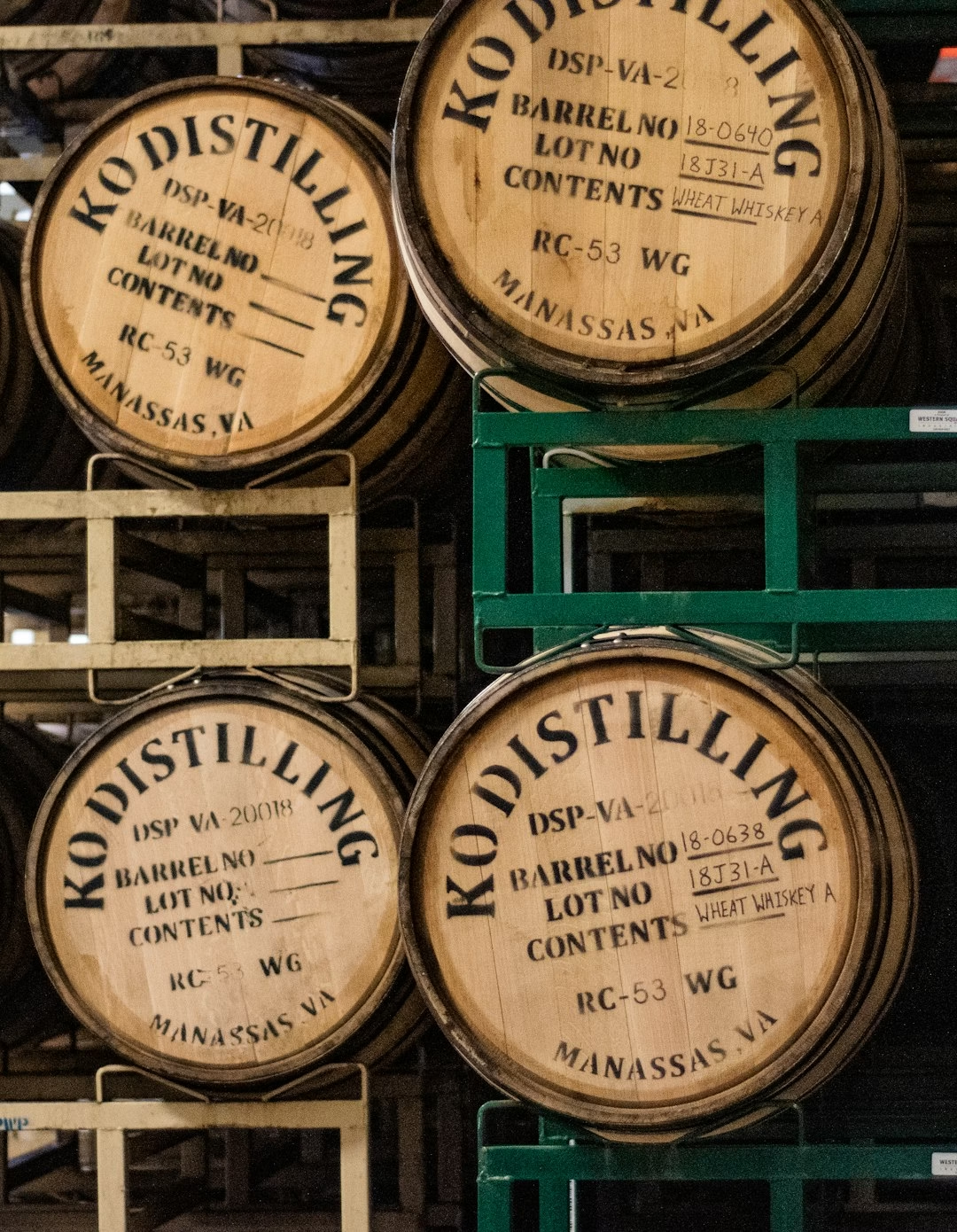
Introduction to Airflow Dynamics in Barrel Warehouses
The art of wine aging extends far beyond simply storing barrels in a dark room and waiting for time to work its magic. At the heart of successful maturation lies a complex interplay of environmental factors, with airflow dynamics playing a surprisingly critical role in determining the final quality of aged wine. Understanding how air moves through barrel warehouses represents one of the most important yet often overlooked aspects of wine production, directly influencing everything from flavor development to the preservation of wine quality over extended aging periods.
Airflow dynamics refers to the patterns and characteristics of air movement within enclosed spaces like barrel warehouses. In these carefully controlled environments, air doesn’t simply sit still. Instead, it circulates in specific patterns influenced by temperature differences, humidity levels, and the physical layout of the storage facility itself. These movement patterns create microclimates around individual barrels, affecting how wine interacts with wood and oxygen during the aging process. When winemakers properly manage ventilation, they create conditions that allow wine to develop complexity and character. Poor airflow management, however, can lead to inconsistent aging, off-flavors, and significant quality variations between barrels stored in different warehouse locations.
The relationship between ventilation and maturation operates through several interconnected mechanisms. Proper air circulation helps maintain consistent temperature throughout the warehouse, preventing hot spots that accelerate aging in some areas while leaving other sections too cool. Ventilation also regulates humidity levels, which directly impacts evaporation rates through barrel staves. This evaporation, often called the “angel’s share” in distilled spirits production, concentrates flavors and affects the wine’s final character. Additionally, controlled airflow influences the oxygen exposure that wine experiences through barrel pores, a process essential for developing the complex flavors and aromas that distinguish well-aged wines from their younger counterparts.
Flavor development during barrel aging depends heavily on maintaining optimal environmental conditions. Wine undergoes numerous chemical reactions as it matures, with compounds from the oak wood slowly dissolving into the liquid while other molecules transform through oxidation and reduction processes. These reactions require specific temperature ranges and oxygen levels to proceed at ideal rates. When airflow dynamics create stable conditions, these chemical changes occur gradually and harmoniously, producing wines with integrated flavors, smooth tannins, and appealing aromatic complexity. Conversely, unstable airflow patterns can cause temperature swings that accelerate or stall these reactions unpredictably, resulting in wines that taste harsh, underdeveloped, or simply unbalanced.
The Science of Wine Aging: Environmental Factors
Temperature, humidity, and airflow form an inseparable trinity in wine barrel aging, each factor continuously influencing the others in ways that determine maturation success. Temperature serves as the primary driver of chemical reaction rates within aging wine. Warmer conditions speed up reactions between wine compounds and oak constituents, while cooler temperatures slow everything down. However, temperature never acts in isolation. Airflow patterns distribute heat throughout the warehouse, either creating uniform conditions or establishing temperature gradients that cause wine to age at different rates depending on barrel location. When air circulates properly, heat doesn’t accumulate in ceiling spaces or near exterior walls. Instead, it disperses evenly, giving winemakers predictable control over aging rates across their entire barrel inventory.
Humidity interacts with both temperature and airflow in fascinating ways that directly affect wine quality. Oak barrels remain porous, allowing small amounts of liquid to evaporate through the wood over time. High humidity slows this evaporation by reducing the vapor pressure difference between the barrel’s interior and the surrounding air. Low humidity accelerates moisture loss, concentrating the wine more rapidly but also requiring more frequent topping to maintain fill levels. Airflow influences humidity by carrying moisture-laden air away from barrel surfaces and replacing it with drier air, or by circulating humid air that maintains higher moisture levels throughout the storage space. Winemakers targeting specific flavor profiles must carefully balance these factors, as evaporation rates affect not just wine concentration but also the relative proportions of water, alcohol, and flavor compounds that evaporate.
The critical environmental factors in wine barrel aging extend beyond just temperature and humidity to include seasonal variations, day-night temperature cycles, and the physical characteristics of the warehouse structure itself. Seasonal temperature swings cause wine to expand and contract within barrels, pushing liquid into wood pores during warm periods and drawing it back during cooler times. This breathing action facilitates the extraction of desirable oak compounds like vanillin, tannins, and aromatic lactones that contribute to wine complexity. Day-night temperature cycles create similar effects on a smaller scale, with proper ventilation helping moderate these fluctuations to prevent excessive variation that could stress the wine.
Storage condition optimization requires winemakers to think holistically about their warehouse environment rather than focusing on individual factors in isolation. The ideal aging environment maintains temperatures between fifty-five and sixty-five degrees Fahrenheit, with minimal daily fluctuation. Relative humidity should stay between sixty and seventy percent to balance evaporation concerns with mold prevention. Achieving these conditions demands strategic ventilation planning that accounts for local climate patterns, warehouse orientation, insulation properties, and barrel stacking configurations. Many successful wineries employ passive ventilation systems that leverage natural convection currents, using vents positioned to encourage cool air intake at lower levels and warm air exhaust at higher points. Others integrate mechanical systems that provide more precise control, particularly in regions where natural conditions don’t align with optimal aging parameters.
Barrel Construction and Its Impact on Wine Aging
Barrel construction fundamentally shapes how wine interacts with its aging environment, creating the interface through which airflow dynamics exert their influence on maturation. The physical characteristics of wooden barrels determine porosity levels, which control oxygen transmission rates from the surrounding air into the wine. Tight-grain oak from cooler growing regions produces barrels with smaller pores, allowing slower oxygen ingress and more gradual flavor development. Wider-grain oak from warmer climates creates barrels with larger pores that permit faster oxygen exchange and more rapid extraction of wood compounds. These differences mean that identical wines stored in barrels of different construction will age at different rates even when exposed to identical airflow conditions.
The wood species used in barrel construction affects far more than just porosity. Different oak varieties contain varying concentrations of the chemical compounds that dissolve into wine during aging. French oak, prized for its subtle flavor contributions, tends to release delicate vanilla notes and soft tannins that integrate seamlessly into wine. American oak delivers more pronounced coconut and dill characteristics along with sweeter vanilla tones. Hungarian oak falls somewhere between these extremes, offering moderate tannin levels with spicy complexity. Each wood type also responds differently to the surrounding environment. French oak’s tighter grain makes it less sensitive to humidity fluctuations, while American oak’s more porous structure reacts more dramatically to changes in moisture levels around the barrel.
Beyond species selection, the cooperage process itself introduces variables that affect how barrels interact with airflow and ventilation systems. Toast levels applied during barrel manufacturing create different chemical environments within the wood. Light toasting preserves more of oak’s natural tannins while developing subtle caramel notes. Medium toasting breaks down harsh tannins and creates compounds with vanilla and baking spice characteristics. Heavy toasting generates smoky, coffee-like flavors while significantly reducing tannin extraction. These toast levels also affect wood porosity, with heavier toasting sometimes sealing barrel surfaces in ways that reduce oxygen transmission regardless of the underlying wood grain structure.
Barrel size emerges as another crucial construction factor influencing maturation rates and flavor development. Small barrels provide greater surface area relative to wine volume, accelerating oak extraction and oxygen exposure. A fifty-gallon barrel exposes wine to significantly more wood contact per gallon than a standard sixty-gallon barrel, potentially cutting aging time requirements while also risking over-oaking if not carefully monitored. Large format barrels like puncheons and foudres offer the opposite effect, providing gentle oak influence over extended periods. The surface-to-volume ratio also affects how temperature and humidity changes in the surrounding air influence wine conditions inside the barrel. Smaller barrels respond more quickly to environmental shifts, while larger vessels maintain more stable internal conditions despite external variations.
Ventilation Strategies for Optimal Wine Aging
Implementing effective ventilation strategies requires winemakers to balance multiple competing considerations while working within the constraints of their specific warehouse structures and local climates. The most successful approaches typically combine passive and active ventilation elements, using natural airflow patterns wherever possible while supplementing with mechanical systems when environmental conditions demand additional control. Passive systems leverage fundamental physics principles, positioning intake vents low on cooler walls and exhaust vents high on warmer exposures to encourage convective air circulation. This natural movement costs nothing to operate and maintains gentle, consistent airflow that rarely disturbs barrel environments too dramatically.
Many wineries enhance passive ventilation by carefully orienting their warehouses relative to prevailing wind patterns. Buildings positioned with their long axis perpendicular to dominant winds can capture natural breezes, channeling them through the structure via strategically placed openings. This approach works particularly well in regions with reliable seasonal wind patterns, though it demands careful planning during construction or renovation phases. Interior design choices also matter significantly. Barrel stacking configurations that leave adequate space between rows allow air to circulate around individual barrels rather than creating stagnant pockets where temperature and humidity can drift away from target ranges. Some facilities employ raised flooring or slatted floors that permit air circulation beneath barrel stacks, preventing cool air from pooling at ground level.
Active ventilation systems provide the control necessary when passive approaches can’t maintain ideal conditions. Modern installations often feature zone-based controls that monitor temperature and humidity at multiple warehouse locations, adjusting fan speeds and vent positions to maintain uniformity across the storage space. These systems excel at managing extreme weather events, ramping up air exchange rates during heat waves or reducing circulation when outside air becomes too dry. The key lies in programming these systems to mimic natural conditions rather than creating artificial environments that stress wine through rapid changes. Gradual adjustments spread over hours rather than minutes help maintain the stable conditions that produce the best aging results.
Innovation in ventilation technology continues advancing, with several cutting-edge approaches gaining traction among quality-focused producers. Humidity injection systems now allow precise moisture control, adding water vapor when air becomes too dry without requiring extensive air exchange that would destabilize temperatures. Smart monitoring networks track conditions at individual barrel locations, using predictive algorithms to anticipate problems before they affect wine quality. Some experimental facilities even employ targeted ventilation that adjusts airflow patterns based on barrel age, recognizing that younger wines benefit from different conditions than those approaching bottling readiness. These technological advances don’t replace fundamental ventilation principles but rather enhance winemakers’ ability to execute strategies consistently.
The Role of Microbial Activity in Wine Aging
Microbial communities living within barrel warehouses represent an often invisible but profoundly important factor in wine maturation, with airflow and ventilation directly influencing which organisms thrive and how they affect wine chemistry. Unlike fermentation microbes that winemakers deliberately introduce, barrel warehouse microorganisms arrive through air currents, settling on barrel surfaces and eventually penetrating into wood pores where they establish long-term residence. These microbial populations include various yeast species, bacteria, and fungi, each contributing different effects to wine development. Certain yeasts produce compounds that enhance aromatic complexity, while specific bacteria can break down harsh tannins into softer, more palatable molecules.
The relationship between airflow and microbial activity operates through several mechanisms. Air circulation affects the humidity and oxygen levels that determine which microorganisms can survive in the barrel environment. High humidity combined with stagnant air creates conditions favoring mold growth on barrel exteriors, which rarely affects wine quality directly but can indicate excessive moisture that might encourage unwanted bacterial activity. Proper ventilation maintains humidity levels that support beneficial microbes while discouraging problem organisms. Oxygen availability also matters tremendously. Many beneficial barrel microbes require some oxygen exposure to function, but excessive oxygen can support spoilage organisms that produce off-flavors.
Microbial contributions to wine chemistry extend far beyond simple presence or absence of specific organisms. Different species produce enzymes that catalyze reactions between wine compounds and oak constituents, effectively speeding up processes that would otherwise require much longer aging periods. Some microbes generate aromatic molecules not found in wine or oak alone, adding layers of complexity impossible to achieve through physical and chemical processes alone. Brettanomyces yeast offers perhaps the most controversial example. At low levels, it produces leathery, earthy notes that many winemakers consider desirable complexity. At higher populations, it generates medicinal, barnyard aromas that most consumers find unpleasant. Airflow patterns that maintain moderate oxygen levels typically keep Brettanomyces populations in check.
Managing microbial activity through controlled ventilation requires understanding how different organisms respond to environmental conditions. Beneficial microbes generally prefer the same stable, moderate conditions that promote optimal chemical aging. Temperatures between fifty-five and sixty-five degrees Fahrenheit support diverse microbial communities without allowing any single species to dominate. Humidity levels around sixty-five percent provide enough moisture for microbial activity without creating conditions that favor rapid mold growth. Airflow strategies that maintain these conditions naturally encourage beneficial microbial contributions while minimizing spoilage risks. Some winemakers deliberately limit barrel cleaning between uses to preserve established microbial populations they consider part of their house character.
Temperature and Humidity Control in Barrel Warehouses
Temperature control stands as perhaps the single most critical environmental factor in successful barrel aging, with even small deviations from optimal ranges producing noticeable effects on wine development. Chemical reactions governing flavor evolution proceed at rates directly proportional to temperature, roughly doubling in speed with each eighteen-degree Fahrenheit increase. This temperature sensitivity means wine aging at seventy degrees matures nearly twice as fast as wine at fifty-two degrees. However, faster aging doesn’t automatically produce better results. Many of the complex flavor compounds that distinguish outstanding aged wines require slow formation over extended periods. Rushed development at elevated temperatures often yields wines that taste mature but lack the depth and integration achieved through patient aging at cooler temperatures.
Temperature fluctuations present even greater challenges than consistently warm or cool conditions. When temperature rises, wine expands within barrels, forcing liquid into wood pores and increasing pressure that drives deeper penetration of oak compounds. Cooling reverses this process, drawing wine back out of the wood along with extracted tannins and flavors. Moderate fluctuations operating on seasonal timescales actually benefit wine by facilitating gentle extraction. Rapid daily temperature swings, however, create stress that can strip excessive tannins or force oxidation reactions that degrade rather than improve wine quality. Proper airflow management dampens these rapid fluctuations, using thermal mass of the warehouse structure and barrel contents to buffer against short-term temperature changes.
Humidity’s interaction with temperature creates effects that significantly impact maturation outcomes. Low humidity environments accelerate water evaporation from barrels, concentrating wine more rapidly than alcohol loss alone would suggest. This concentration intensifies flavors and increases perceived body, but it also requires frequent barrel topping to prevent excessive air exposure in the headspace. High humidity slows water loss, sometimes to the point where alcohol evaporates preferentially, gradually reducing wine strength over long aging periods. The ideal humidity level depends partly on desired outcomes. Wineries targeting powerful, concentrated wines might operate at slightly lower humidity, accepting higher evaporation rates. Those seeking elegant, restrained styles often maintain higher humidity to preserve delicacy.
The synergy between temperature, humidity, and airflow determines whether warehouses achieve the stable conditions essential for predictable aging results. Airflow serves as the primary tool for balancing these factors, distributing heat to prevent temperature stratification and carrying moisture to maintain target humidity levels. Well-designed ventilation systems sense temperature and humidity at multiple locations, adjusting air circulation patterns to correct imbalances before they affect wine quality. During summer, increased ventilation might draw in cooler night air and exhaust daytime heat buildup. Winter operations might reduce air exchange to conserve warmth while preventing humidity from dropping too low. These seasonal adjustments happen gradually, maintaining the stable environment wine requires while adapting to changing external conditions.
Innovations in Wine Storage and Aging
Recent technological developments have revolutionized how wineries approach barrel storage and aging, offering unprecedented control over environmental factors that influence maturation. Modern monitoring systems now track temperature, humidity, and even air quality parameters at dozens of locations throughout warehouse facilities, providing real-time data that helps winemakers identify and correct problems immediately. Wireless sensor networks eliminate the extensive wiring traditional monitoring required, making sophisticated environmental tracking accessible to smaller producers who previously relied on manual measurements taken at a few representative locations. These sensors often connect to cloud-based platforms that analyze data trends, alerting winemakers when conditions drift outside target ranges or when seasonal patterns suggest upcoming environmental challenges.
Climate control systems have evolved far beyond simple heating and cooling units to become integrated environmental management platforms. Variable-speed fans adjust airflow based on actual conditions rather than fixed schedules, providing just enough circulation to maintain uniformity without creating excessive air movement that might accelerate evaporation. Precision humidity control systems add or remove moisture as needed, maintaining narrow humidity bands regardless of outside weather. Some advanced facilities employ separate climate zones within single warehouses, allowing different barrel lots to age under customized conditions appropriate for their specific wine styles. Younger wines might receive slightly warmer treatment to encourage initial development, while barrels approaching bottling age rest in cooler sections that promote stability.
Energy efficiency considerations have driven development of passive cooling and heating systems that minimize operational costs while maintaining optimal aging conditions. Earth-coupled temperature management uses buried pipes to precondition ventilation air, leveraging stable ground temperatures to reduce heating and cooling demands. Thermal mass designs incorporate thick walls and insulated roofing that moderate temperature swings naturally. Solar-powered ventilation fans operate during peak heating hours when cooling needs run highest, reducing grid electricity consumption. These approaches align environmental sustainability with quality objectives, recognizing that wine production facilities operating for decades or centuries must balance present-day needs with long-term resource stewardship.
Looking forward, emerging technologies promise even greater refinement in barrel aging management. Artificial intelligence algorithms now analyze historical aging data to predict how current environmental conditions will affect wine development, suggesting ventilation adjustments that optimize outcomes. Blockchain-based tracking systems document every environmental parameter each barrel experiences, creating comprehensive maturation records that help winemakers understand quality variations and refine their approaches. Some experimental facilities explore using controlled oxygen injection through barrel bungs, providing precise oxidation management independent of ambient oxygen levels. While these cutting-edge approaches remain limited to well-funded research operations, their underlying principles will likely influence mainstream practices as costs decline and benefits become better documented.
Airflow patterns in barrel warehouses directly affect how spirits mature. Stagnant air creates temperature stratification that concentrates spirits in the hottest and coolest zones, driving differences in aging rate and flavor development between barrels at different heights or positions in the warehouse. Active ventilation can reduce stratification, but its effectiveness depends on continuous monitoring across multiple locations within the warehouse to verify that airflow is actually reaching the areas that need it.
Nosy monitors temperature, humidity, atmospheric pressure, and CO2 across barrel warehouses, with readings every five minutes and a web-based dashboard with floorplan overlays that shows conditions by location and zone. At a craft distillery in Rhode Island, Nosy sensors are deployed across barrel aging and production areas, providing the spatial and temporal data needed to understand how airflow is affecting maturation conditions throughout the warehouse. Distilleries interested in monitoring their barrel aging environments can find more at Nosy for Craft Distilleries.
Conclusion
Airflow dynamics in barrel warehouses represent far more than a minor technical detail in wine production. They constitute a fundamental pillar supporting successful maturation, influencing every aspect of how wine develops character during its time in wood. The complex interplay between ventilation, temperature, humidity, barrel construction, and microbial activity creates an aging environment where countless chemical and biological processes transform young wine into the complex, nuanced beverage that wine enthusiasts appreciate. Winemakers who understand these relationships and actively manage their warehouse environments achieve consistency and quality that distinguishes their products in competitive markets.
For wine storage facility managers, the practical implications remain clear. Investing in proper ventilation infrastructure pays dividends through reduced wine losses, more predictable aging results, and enhanced ability to produce specific wine styles consistently. Regular monitoring of environmental conditions throughout storage facilities allows early detection of problems before they affect wine quality significantly. Strategic barrel placement that accounts for natural airflow patterns helps maximize existing ventilation capabilities without requiring expensive mechanical systems. Even relatively simple improvements like ensuring adequate spacing between barrel rows or adding supplementary vents can produce meaningful quality enhancements.
The future of wine barrel aging will likely see continued integration of technology with traditional practices, combining centuries of accumulated wisdom with modern tools that provide unprecedented environmental control. However, the fundamental principles governing successful maturation remain constant. Wine requires stable conditions that allow gradual chemical and biological evolution without stress or excessive variation. Airflow management serves as the primary means of achieving these conditions, making ventilation strategies central to quality winemaking regardless of technological sophistication. As climate change introduces new environmental challenges, the ability to maintain optimal barrel aging conditions through effective airflow dynamics will only grow more important for producers committed to consistent quality in an increasingly variable world.
