
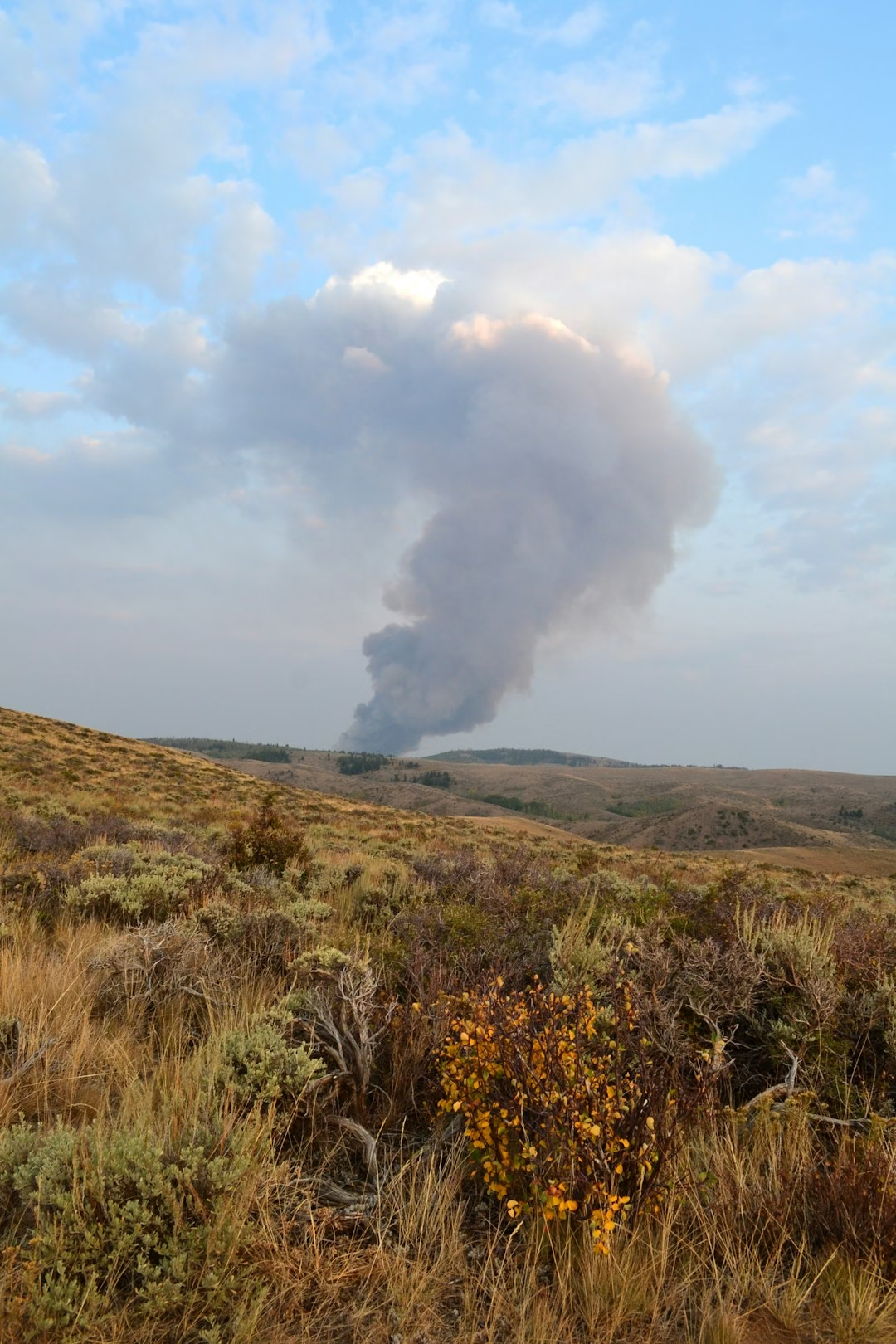
Wildfires, natural disasters that can wreak havoc on ecosystems and communities, have become an increasingly pressing concern in recent years. These uncontrolled blazes typically start in forests or grasslands, often ignited by natural causes such as lightning strikes or human activities like campfires or electrical malfunctions. While wildfires are a natural part of many ecosystems, their frequency and intensity have been on the rise, largely due to climate change and human encroachment on wildlands.
The impact of wildfires extends far beyond the immediate area of the blaze. One of the most significant and widespread effects is the degradation of air quality. As wildfires burn, they release a complex mixture of pollutants into the atmosphere, including particulate matter, carbon monoxide, nitrogen oxides, and volatile organic compounds. This toxic cocktail can travel hundreds or even thousands of miles from the source, affecting air quality in regions far removed from the fire itself.
Understanding the impact of wildfires on air quality is crucial for several reasons. Firstly, it directly affects public health, as poor air quality can lead to a range of respiratory and cardiovascular issues. Secondly, it has significant environmental implications, contributing to broader air pollution problems and potentially exacerbating climate change. Lastly, this knowledge is essential for developing effective policies and strategies to protect communities and ecosystems from the harmful effects of wildfire smoke.
As wildfires become more frequent and intense due to climate change, the need to comprehend and address their impact on air quality becomes increasingly urgent. This article will delve into the various aspects of this complex issue, from health risks and monitoring technologies to management strategies and the role of climate change.
Health Risks Associated with Wildfire Smoke
The health risks associated with wildfire smoke are numerous and can affect people of all ages, though some groups are particularly vulnerable. Wildfire smoke is a complex mixture of gases and fine particles, with particulate matter being one of the most significant concerns for human health.
Particulate matter, especially fine particles known as PM2.5 (particles with a diameter of 2.5 micrometers or smaller), can penetrate deep into the lungs and even enter the bloodstream. These tiny particles can cause a range of respiratory issues, from minor irritations like coughing and shortness of breath to more severe conditions such as asthma attacks and bronchitis. People with pre-existing respiratory conditions, such as asthma or chronic obstructive pulmonary disease (COPD), are particularly susceptible to these effects.
Beyond respiratory issues, wildfire smoke can also have significant cardiovascular impacts. Research has shown that exposure to wildfire smoke can increase the risk of heart attacks, strokes, and other cardiovascular events. This is thought to be due to the inflammatory response triggered by the particulate matter, which can affect blood vessels and heart function.
The long-term health effects of repeated exposure to wildfire smoke are still being studied, but emerging research suggests that they could be substantial. Chronic exposure to wildfire smoke may lead to decreased lung function over time, increased susceptibility to respiratory infections, and potentially even an increased risk of certain cancers.
Children, elderly individuals, pregnant women, and those with pre-existing health conditions are particularly vulnerable to the health impacts of wildfire smoke. Children’s lungs are still developing, making them more susceptible to the harmful effects of air pollution. Elderly individuals often have weakened respiratory systems and may already be dealing with chronic health conditions that can be exacerbated by poor air quality.
It’s important to note that the health impacts of wildfire smoke aren’t limited to the duration of the fire itself. Fine particulate matter can linger in the air for days or even weeks after a fire has been extinguished, continuing to pose health risks. Moreover, the psychological stress associated with wildfires and poor air quality can have its own set of health implications, including anxiety and depression.
Understanding these health risks is crucial for public health officials, policymakers, and individuals alike. It underscores the importance of effective air quality monitoring, public health advisories, and strategies to minimize exposure during wildfire events.
Monitoring Air Quality During Wildfire Events
Accurate and timely monitoring of air quality during wildfire events is crucial for protecting public health and informing emergency response efforts. A range of technologies and methods are employed to track air quality in real-time, providing valuable data to health officials, policymakers, and the public.
One of the primary tools for air quality monitoring is the network of ground-based air quality sensors. These sensors measure various pollutants, including particulate matter (PM2.5 and PM10), ozone, carbon monoxide, and nitrogen dioxide. In the United States, the Environmental Protection Agency (EPA) maintains a network of these sensors across the country, providing data that feeds into the Air Quality Index (AQI), a standardized system for reporting air quality.
Satellite technology also plays a crucial role in monitoring air quality during wildfires. Satellites equipped with specialized sensors can detect and track smoke plumes, providing a broader view of how wildfire smoke is moving and affecting air quality across large areas. This satellite data is particularly valuable for monitoring air quality in remote areas where ground-based sensors may not be available.
In recent years, there has been a growing use of mobile and low-cost air quality sensors. These devices, often deployed by citizen scientists or local communities, can provide more localized data to complement the broader network of official monitoring stations. While these sensors may not always be as accurate as professional-grade equipment, they can help fill gaps in coverage and provide valuable real-time information at a neighborhood level.
Advanced computer models are another important tool in air quality monitoring during wildfires. These models use data from various sources, including ground sensors, satellites, and weather forecasts, to predict how smoke will move and affect air quality in different areas. This predictive capability is crucial for issuing timely public health advisories and planning emergency responses.
Real-time air quality monitoring during wildfires is essential for several reasons. Firstly, it allows public health officials to issue timely warnings and advice to the public, helping individuals make informed decisions about outdoor activities and protective measures. Secondly, it informs emergency response efforts, helping firefighters and other first responders understand the conditions they’re working in and take appropriate precautions. Lastly, this data is valuable for researchers studying the long-term impacts of wildfires on air quality and public health.
Despite these advanced monitoring capabilities, there are still challenges in accurately measuring air quality during wildfire events. Smoke conditions can change rapidly, and the complex terrain in many fire-prone areas can make it difficult to predict smoke movement accurately. Moreover, in some remote areas, the lack of monitoring infrastructure can lead to gaps in coverage.
As wildfires become more frequent and intense due to climate change, continuous improvement in air quality monitoring technologies and methods will be crucial. This includes expanding monitoring networks, improving the accuracy of low-cost sensors, and refining predictive models to provide more accurate and timely information about wildfire smoke and its impacts on air quality.
Impact of Climate Change on Wildfire Frequency and Intensity
The relationship between climate change and wildfires is complex, but the evidence is clear: global warming is increasing both the frequency and intensity of wildfires in many parts of the world. This trend has significant implications for air quality, public health, and ecosystems.
Climate change affects wildfires in several ways. Rising global temperatures lead to more frequent and severe heat waves, which dry out vegetation and create ideal conditions for fires to start and spread. Changes in precipitation patterns, including more prolonged dry spells in some regions, further contribute to increased fire risk. In addition, climate change is altering ecosystems, leading to changes in vegetation types that can make some areas more susceptible to fires.
Research indicates that the wildfire season has been lengthening in many parts of the world. In the western United States, for example, the fire season is now on average 78 days longer than it was in the 1970s. This extended season means more opportunities for fires to start and spread, leading to larger and more destructive blazes.
Climate models predict that these trends will continue and potentially accelerate in the coming decades. In many fire-prone regions, including parts of the western United States, southern Europe, and Australia, wildfire risk is expected to increase significantly. Some models suggest that by the end of the century, the area burned by wildfires in the western U.S. could increase by 200-300% if greenhouse gas emissions continue at current rates.
The implications of these predictions for air quality are profound. More frequent and intense wildfires mean more episodes of severe air pollution, affecting larger areas and populations. This increase in wildfire-related air pollution could offset gains made in air quality through emission reductions in other sectors, such as transportation and industry.
Mitigating the impact of climate change on wildfires requires action on multiple fronts. At a global level, reducing greenhouse gas emissions is crucial to slow the pace of warming and its effects on fire risk. At a more local level, adaptation strategies are needed to increase resilience to wildfires. These can include improved forest management practices, such as controlled burns to reduce fuel loads, and better urban planning to create fire-resistant communities.
Land management practices play a crucial role in mitigating wildfire risk in a changing climate. This includes strategies such as forest thinning, creating firebreaks, and restoring natural fire regimes in ecosystems where fire plays a natural role. Indigenous fire management practices, which have been used for thousands of years in many parts of the world, are gaining recognition as effective strategies for reducing wildfire risk.
As the link between climate change and wildfires becomes increasingly clear, it’s evident that addressing this issue requires a comprehensive approach. This includes not only efforts to reduce greenhouse gas emissions and adapt to changing fire regimes but also improving our ability to monitor and respond to wildfires when they do occur. The impact on air quality is just one of many reasons why addressing the climate-wildfire connection is crucial for public health and environmental protection.
Public Health Policies and Wildfire Smoke Exposure
As the frequency and intensity of wildfires increase, public health policies aimed at protecting individuals from wildfire smoke exposure have become increasingly important. These policies encompass a range of strategies, from public communication and education to emergency response protocols and long-term planning initiatives.
One of the primary tools in public health policy for wildfire smoke is the Air Quality Index (AQI) system. This standardized system, used in many countries, provides easy-to-understand information about local air quality conditions. During wildfire events, public health agencies use the AQI to issue advisories and recommendations for reducing exposure to smoke. These might include suggestions to stay indoors, use air filtration systems, or wear appropriate masks when outdoors.
Many regions have implemented smoke readiness programs, which aim to prepare communities for wildfire smoke events. These programs often include public education campaigns about the health risks of smoke exposure, guidance on creating clean air spaces in homes and public buildings, and distribution of air filters to vulnerable populations.
Emergency response plans are another crucial component of public health policies related to wildfire smoke. These plans outline procedures for coordinating between different agencies, issuing public health warnings, and providing resources to affected communities. In some areas, these plans include provisions for establishing clean air shelters where people can go to escape heavy smoke.
While these policies have undoubtedly improved public health outcomes during wildfire events, there is still room for improvement. One challenge is ensuring that information and resources reach all members of a community, particularly vulnerable populations who may have limited access to technology or face language barriers. Improving communication strategies and developing culturally appropriate outreach methods are ongoing areas of focus.
Another area for potential improvement is in the integration of air quality considerations into broader urban planning and building codes. This could include requirements for better air filtration systems in new buildings or incentives for retrofitting existing structures to improve indoor air quality during smoke events.
The effectiveness of current policies in mitigating health risks associated with wildfire smoke varies. While public awareness of the dangers of smoke exposure has generally increased, translating this awareness into behavior change remains a challenge. Studies have shown that compliance with recommendations to stay indoors or use air filters during smoke events is often inconsistent.
Moreover, the long-term health impacts of repeated exposure to wildfire smoke are still not fully understood, making it challenging to develop policies that address these potential risks. As more research emerges on the chronic health effects of wildfire smoke, policies may need to evolve to better protect public health over the long term.
Looking ahead, there are several areas where public health policies related to wildfire smoke could be improved. These include:
1. Enhancing early warning systems to provide more accurate and timely information about smoke conditions.
2. Improving access to air filtration resources, particularly for vulnerable populations.
3. Developing more robust strategies for protecting outdoor workers during smoke events.
4. Integrating wildfire smoke considerations into healthcare systems, including training for healthcare providers and improved tracking of smoke-related health impacts.
5. Addressing the mental health impacts of wildfire smoke and associated disruptions to daily life.
As climate change continues to exacerbate wildfire risks, public health policies will need to evolve to meet these new challenges. This will require ongoing research, collaboration between different sectors, and a commitment to protecting the health of all community members in the face of increasing wildfire smoke exposure.
Wildfire Management and Prevention Strategies
Effective wildfire management and prevention strategies are crucial for mitigating the impact of wildfires on air quality and protecting public health. These strategies encompass a wide range of approaches, from proactive measures to reduce fire risk to reactive tactics for controlling active fires.
One of the primary wildfire management strategies is fuel management. This involves reducing the amount of flammable vegetation in fire-prone areas, often through controlled burns or mechanical thinning. Controlled burns, also known as prescribed fires, are carefully planned and executed fires that remove excess vegetation under controlled conditions. While these burns can temporarily impact air quality, they ultimately reduce the risk of larger, more severe wildfires that would have a much greater impact on air quality.
Forest management practices play a crucial role in wildfire prevention. This includes strategies such as creating firebreaks, which are gaps in vegetation that can slow or stop the spread of fires, and maintaining healthy, diverse forests that are more resistant to large-scale fires. In many areas, there’s a growing recognition of the value of Indigenous fire management practices, which have been used for thousands of years to maintain healthy ecosystems and reduce fire risk.
Community preparedness is another vital aspect of wildfire management. This includes developing and implementing comprehensive evacuation plans, creating defensible spaces around homes and buildings, and educating residents about fire safety. Many communities in fire-prone areas have adopted programs like Firewise USA, which provides resources and guidelines for reducing wildfire risk at the community level.
Technology is playing an increasingly important role in wildfire management and prevention. Advanced fire detection systems, including satellite monitoring and AI-powered camera networks, can spot fires early, allowing for faster response times. Predictive modeling tools help fire managers anticipate fire behavior and allocate resources more effectively.
Public awareness and education are crucial components of wildfire prevention. This includes teaching people about the causes of wildfires, how to prevent accidental fires, and what to do in case of a wildfire. Many regions have implemented fire danger rating systems to keep the public informed about current fire risks.
While these strategies have proven effective in many cases, challenges remain. Climate change is altering fire regimes in many parts of the world, making traditional management strategies less effective. The expanding wildland-urban interface, where human development meets wild areas, creates additional challenges for fire management.
Moreover, there’s often a tension between short-term and long-term goals in wildfire management. For example, suppressing all fires can lead to a buildup of fuels, potentially setting the stage for larger, more severe fires in the future. Balancing immediate safety concerns with long-term ecosystem health is an ongoing challenge for fire managers.
Looking ahead, experts emphasize the need for a more holistic, adaptive approach to wildfire management. This includes:
1. Integrating climate change projections into fire management planning.
2. Enhancing collaboration between different agencies and jurisdictions involved in fire management.
3. Increasing investment in proactive measures like fuel reduction and forest restoration.
4. Improving community planning to reduce development in high-risk fire areas.
5. Developing more sustainable post-fire recovery strategies that consider long-term ecosystem health.
As wildfires continue to pose significant risks to air quality and public health, effective management and prevention strategies will be crucial. These efforts require ongoing research, adaptation to changing conditions, and a commitment to balancing human safety with ecosystem health.
The Role of Technology in Wildfire Detection and Response
Advancements in technology have revolutionized the way wildfires are detected, monitored, and responded to, playing a crucial role in minimizing their impact on air quality and public health. From satellite imagery to artificial intelligence, these technological innovations are enhancing our ability to manage wildfires more effectively.
One of the most significant technological advancements in wildfire detection is the use of satellite imagery. Satellites equipped with thermal sensors can detect fires across vast areas, even in remote locations where traditional detection methods are impractical. These satellites can spot fires when they’re still small, allowing for quicker response times and potentially preventing the fires from growing into major conflagrations that significantly impact air quality.
Drones have become increasingly valuable tools in wildfire management. They can be used for early detection, providing real-time aerial views of fire conditions, and even assisting in firefighting efforts. Some advanced drones are equipped with thermal cameras that can detect hotspots not visible to the naked eye, helping firefighters locate and extinguish remnant fires that could reignite.
Artificial intelligence (AI) and machine learning algorithms are being employed to analyze vast amounts of data from various sources, including satellite imagery, weather forecasts, and topographical information. These systems can predict fire behavior, assess risk, and even suggest optimal resource allocation for firefighting efforts. For example, the WIFIRE project at the University of California San Diego uses AI to create real-time predictions of a wildfire’s path, helping emergency responders make informed decisions quickly.
On the ground, networks of IoT (Internet of Things) sensors are being deployed in fire-prone areas to detect changes in temperature, humidity, and air quality that might indicate the start of a fire. These sensors can provide early warnings and contribute to our understanding of fire behavior and its impact on air quality Continuing the article:
Mobile applications have also become important tools in wildfire response and public safety. Apps like “Wildfire” and “FireReady” provide real-time updates on fire locations, evacuation orders, and air quality conditions. These apps help communities stay informed and make timely decisions to protect their health and safety.
Advanced modeling software is another technological breakthrough in wildfire management. These programs integrate data from multiple sources to create detailed simulations of fire behavior under various conditions. This allows fire managers to anticipate how a fire might spread and how it could affect air quality in surrounding areas, enabling more effective planning and resource allocation.
LiDAR (Light Detection and Ranging) technology is being used to create highly detailed 3D maps of forested areas. These maps provide valuable information about vegetation density and terrain, which is crucial for predicting fire behavior and planning fuel reduction efforts. This technology can also be used after a fire to assess damage and plan restoration efforts.
In terms of firefighting technology, there have been significant advancements in equipment and techniques. For example, fire retardant gels have been developed that are more effective and environmentally friendly than traditional methods. Some fire departments are even experimenting with robots that can enter dangerous areas to fight fires or conduct search and rescue operations.
While these technological advancements have greatly improved our ability to detect and respond to wildfires, they also present challenges. The sheer volume of data generated by these various technologies can be overwhelming, and there’s an ongoing need for better data integration and analysis tools. Additionally, there are concerns about privacy and data security, particularly when it comes to the use of drones and surveillance technologies.
Looking to the future, emerging technologies hold promise for further improving wildfire management and minimizing impacts on air quality. For instance, some researchers are exploring the use of nanotechnology to develop more effective fire-resistant materials. Others are investigating the potential of using swarms of autonomous drones for fire detection and suppression.
The integration of 5G networks and edge computing could enable faster, more reliable communication and data processing in remote areas, enhancing the effectiveness of wildfire response efforts. Additionally, advancements in weather forecasting technology, including the use of AI, could improve our ability to predict conditions conducive to wildfires, allowing for more proactive prevention measures.
As these technologies continue to evolve, they have the potential to significantly improve our ability to manage wildfires and protect air quality. However, it’s important to remember that technology is just one part of the solution. Effective wildfire management also requires sound policies, community engagement, and a comprehensive understanding of fire ecology and climate change impacts.
Conclusion
Understanding the impact of wildfires on air quality is crucial for addressing one of the most pressing environmental and public health challenges of our time. As this article has explored, wildfires not only pose immediate dangers to life and property but also have far-reaching consequences for air quality and human health that can persist long after the flames are extinguished.
The complex interplay between wildfires, air quality, and public health underscores the need for a multifaceted approach to addressing this issue. This includes improving air quality monitoring technologies, enhancing public health policies, implementing effective wildfire management strategies, and leveraging advanced technologies for early detection and rapid response.
Key takeaways from this discussion include:
1. The significant health risks associated with wildfire smoke, particularly for vulnerable populations, emphasizing the need for robust public health measures.
2. The critical role of real-time air quality monitoring in informing public health decisions and emergency responses during wildfire events.
3. The exacerbating effect of climate change on wildfire frequency and intensity, highlighting the urgent need for climate action and adaptation strategies.
4. The importance of comprehensive public health policies that address both immediate and long-term impacts of wildfire smoke exposure.
5. The value of proactive wildfire management and prevention strategies in reducing fire risk and protecting air quality.
6. The potential of emerging technologies to revolutionize wildfire detection, monitoring, and response efforts.
For individuals and communities, this knowledge can be applied in several ways to improve preparedness and response to wildfires:
1. Stay informed about local air quality conditions, particularly during wildfire season, and follow public health advisories.
2. Develop personal and family emergency plans that include provisions for poor air quality events.
3. Support and participate in community wildfire preparedness efforts, such as creating defensible spaces around homes and participating in local Firewise programs.
4. Advocate for policies and investments that address wildfire risk, improve air quality monitoring, and enhance community resilience.
5. Consider personal investments in air purifiers and other tools to improve indoor air quality during smoke events.
As wildfires continue to pose significant challenges to air quality and public health, ongoing research, policy development, and technological innovation will be crucial. By understanding the complex relationships between wildfires, air quality, and health, we can work towards more effective solutions that protect both our communities and our environment.
The impact of wildfires on air quality is not just an environmental issue, but a societal one that requires collective action. As we face the challenges of a changing climate and increasing wildfire risk, our ability to adapt, innovate, and collaborate will be key to safeguarding air quality and public health for current and future generations.
