
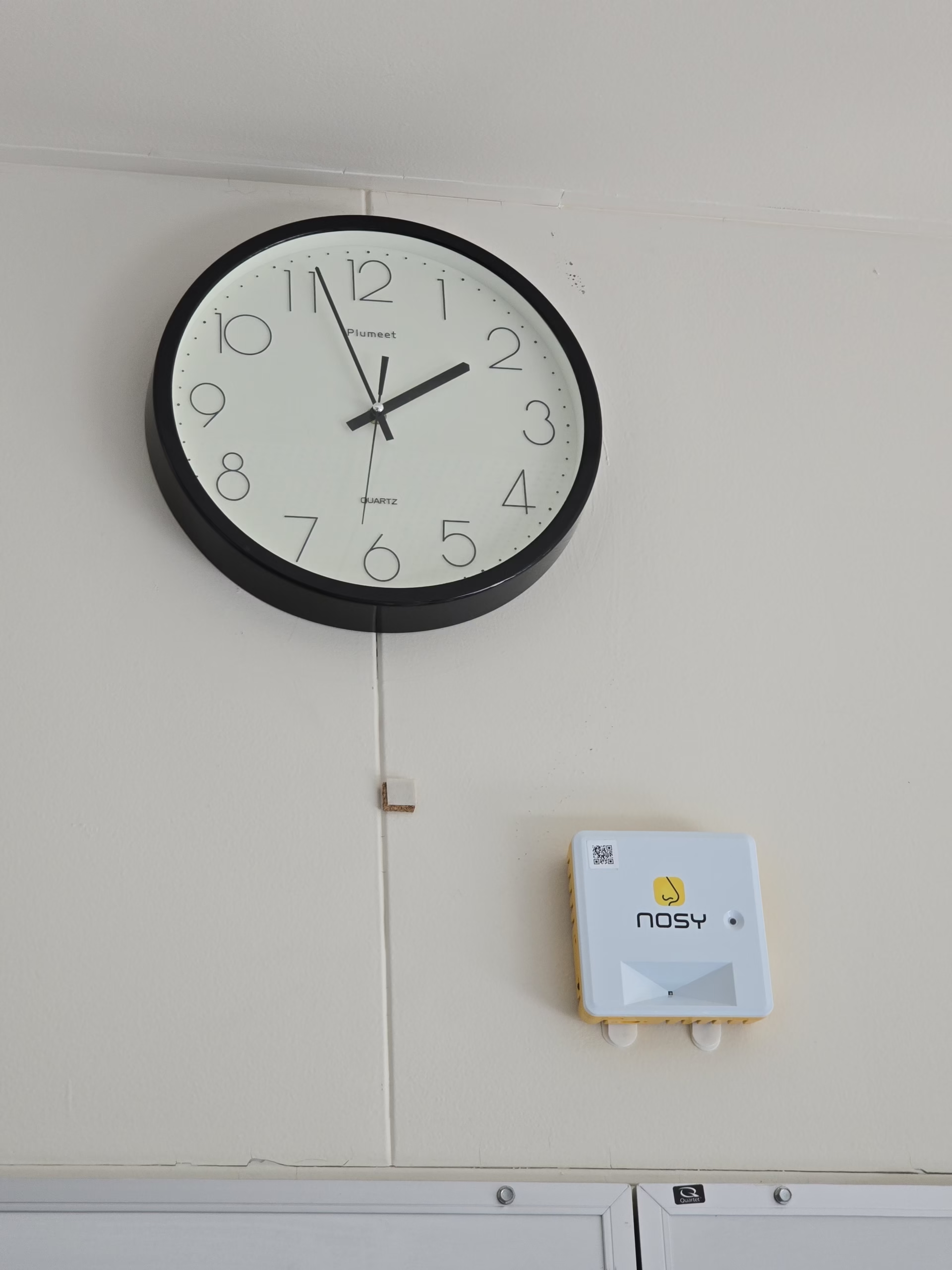
In the realm of modern building management, environmental sensors have emerged as critical tools for enhancing sustainability and efficiency. These sophisticated devices serve as the eyes and ears of a building, continuously collecting and transmitting data about various environmental parameters. Environmental sensors are electronic devices designed to detect and measure specific environmental conditions such as temperature, humidity, air quality, light levels, and occupancy. Their primary function is to provide real-time information about the building’s internal environment, enabling facility managers and building automation systems to make informed decisions and adjustments.
The importance of understanding environmental sensors in the context of building monitoring cannot be overstated. As the world grapples with climate change and the urgent need for sustainable practices, buildings – which account for a significant portion of global energy consumption and greenhouse gas emissions – have become a focal point for improvement. Environmental sensors play a crucial role in this endeavor by providing the data necessary to optimize building operations, reduce energy waste, and create healthier indoor environments for occupants.
The integration of environmental sensors with smart building technologies represents a significant leap forward in building management. Smart buildings leverage interconnected systems and data analytics to automate and optimize various building functions. Environmental sensors form the foundation of these systems by providing the raw data that drives decision-making processes. For instance, occupancy sensors can detect when a room is empty and automatically adjust lighting and HVAC settings to conserve energy. Similarly, air quality sensors can trigger ventilation systems when pollutant levels rise, ensuring a healthy indoor environment.
However, integrating environmental sensors into existing building systems presents its own set of challenges. These may include issues related to compatibility with legacy systems, data security concerns, and the need for specialized expertise to interpret and act on sensor data. Despite these challenges, the benefits of integration far outweigh the difficulties. Strategies for successful integration often involve careful planning, selecting compatible systems, and investing in training for facility management staff.
The impact of environmental sensors on building sustainability and efficiency is multifaceted. By providing accurate, real-time data on environmental conditions, these sensors enable building managers to make data-driven decisions that optimize energy use, improve indoor air quality, and enhance occupant comfort. For example, temperature and humidity sensors can help fine-tune HVAC operations, potentially reducing energy consumption by up to 30%. Moreover, the data collected by these sensors can be invaluable for achieving and maintaining green building certifications, such as LEED or BREEAM, which are increasingly important in today’s environmentally conscious market.
As we delve deeper into the world of environmental sensors and their role in building monitoring, it becomes clear that these devices are not just tools for convenience or incremental improvements. They are, in fact, essential components in the broader strategy to create more sustainable, efficient, and healthy built environments. The following sections will explore the various types of environmental sensors, their specific functions, and the myriad ways in which they contribute to the overarching goals of building sustainability and efficiency.
Types and Functions of Environmental Sensors in Buildings
Environmental sensors come in a wide variety of types, each designed to monitor specific aspects of a building’s internal environment. Understanding these different types and their functions is crucial for facility managers, architects, and building owners who aim to optimize their buildings’ performance and sustainability. Let’s explore some of the most common and impactful environmental sensors used in modern buildings.
Temperature sensors are perhaps the most ubiquitous type of environmental sensor in buildings. These devices measure ambient temperature and play a critical role in maintaining thermal comfort for occupants while optimizing energy use. Advanced temperature sensors can provide granular data across different zones of a building, allowing for precise control of heating and cooling systems. This level of control can lead to significant energy savings, as HVAC systems typically account for a large portion of a building’s energy consumption.
Humidity sensors work in tandem with temperature sensors to maintain optimal indoor air quality and comfort. These sensors measure the amount of water vapor in the air, which is crucial for preventing issues such as mold growth, wood warping, and static electricity buildup. In data centers or manufacturing facilities where precise environmental control is essential, humidity sensors help maintain ideal conditions for equipment operation and product integrity.
Carbon dioxide (CO2) sensors are becoming increasingly important in building management. These sensors measure the concentration of CO2 in the air, which can be an excellent indicator of indoor air quality and ventilation effectiveness. High CO2 levels can lead to drowsiness, headaches, and reduced cognitive performance among occupants. By monitoring CO2 levels, building managers can adjust ventilation systems to ensure a constant supply of fresh air, improving both comfort and productivity.
Volatile Organic Compound (VOC) sensors detect the presence of harmful gases emitted by various sources such as paints, furnishings, and cleaning products. These compounds can have serious health implications for building occupants. VOC sensors enable building managers to identify and address sources of indoor air pollution promptly, maintaining a healthier indoor environment.
Light sensors measure the intensity of ambient light in a space. These sensors can be used to automatically adjust artificial lighting levels based on the amount of natural light available, reducing energy waste and creating more comfortable visual environments for occupants. In smart buildings, light sensors can work in conjunction with occupancy sensors to provide the right amount of light only when and where it’s needed.
Occupancy sensors detect the presence of people in a space. These sensors can be used to automatically control lighting, HVAC, and other building systems based on real-time occupancy data. This not only saves energy but also enhances the user experience by ensuring that spaces are comfortable and ready for use when needed.
Air quality sensors are comprehensive devices that can measure multiple parameters such as particulate matter, ozone, and nitrogen dioxide. These sensors are crucial for maintaining healthy indoor environments, especially in urban areas where outdoor air pollution can be a significant concern. By monitoring air quality in real-time, building managers can take immediate action to improve ventilation or activate air purification systems when pollutant levels rise.
Pressure sensors play a vital role in maintaining proper air balance within a building. They can detect pressure differences between indoor and outdoor environments or between different zones within a building. This information is crucial for managing airflow, preventing drafts, and ensuring that contaminants don’t spread from one area to another – a particularly important consideration in healthcare facilities or laboratories.
The impact of these various environmental sensors on building performance is significant and multifaceted. By providing real-time data on multiple environmental parameters, these sensors enable building automation systems to make instantaneous adjustments to maintain optimal conditions. This not only enhances energy efficiency but also significantly improves indoor air quality and occupant comfort.
For instance, the integration of temperature, humidity, and occupancy sensors allows HVAC systems to operate more efficiently. Instead of running on a fixed schedule or maintaining a constant temperature throughout the building, these systems can adjust their output based on real-time conditions and occupancy patterns. This can lead to energy savings of up to 30% compared to traditional HVAC operations.
Similarly, the combination of light sensors and occupancy sensors can dramatically reduce lighting energy consumption. By dimming or turning off lights in unoccupied spaces and adjusting artificial lighting based on available natural light, buildings can achieve lighting energy savings of up to 40%.
The impact of environmental sensors on indoor air quality cannot be overstated. By continuously monitoring parameters such as CO2, VOCs, and particulate matter, building managers can ensure that ventilation systems are operating effectively and that potential sources of indoor air pollution are quickly identified and addressed. This not only creates healthier environments for occupants but can also lead to increased productivity and reduced absenteeism in workplace settings.
Benefits of Environmental Sensors for Sustainable Buildings
The implementation of environmental sensors in buildings brings a multitude of benefits that contribute significantly to sustainability goals and operational efficiency. These benefits extend beyond mere energy savings, encompassing improved occupant health and comfort, enhanced building performance, and support for green building certifications. Let’s explore these advantages in detail.
One of the primary benefits of environmental sensors is their contribution to energy efficiency. By providing real-time data on various environmental parameters, these sensors enable building automation systems to make precise adjustments to HVAC, lighting, and other energy-consuming systems. For example, occupancy sensors can detect when a room is empty and automatically adjust temperature settings or turn off lights, preventing energy waste. Temperature sensors distributed throughout a building can help create thermal maps, allowing for more efficient heating and cooling strategies. Studies have shown that such sensor-driven optimizations can lead to energy savings of 20-30% in commercial buildings.
Enhanced occupant comfort is another significant benefit of environmental sensors. By continuously monitoring parameters such as temperature, humidity, and air quality, these sensors enable building systems to maintain optimal conditions for human comfort and productivity. For instance, CO2 sensors can trigger increased ventilation when levels rise, preventing the drowsiness and decreased cognitive function associated with high CO2 concentrations. This not only improves the occupant experience but can also lead to increased productivity in office environments.
Environmental sensors play a crucial role in maintaining and improving indoor air quality. Air quality sensors can detect a range of pollutants, including particulate matter, volatile organic compounds (VOCs), and other harmful substances. This real-time monitoring allows building managers to take immediate action when air quality deteriorates, such as increasing ventilation or activating air purification systems. In the long term, this data can also help identify patterns or sources of indoor air pollution, allowing for more permanent solutions to be implemented.
Predictive maintenance is another area where environmental sensors provide significant benefits. By continuously monitoring the performance of building systems and environmental conditions, these sensors can help detect potential issues before they become major problems. For example, unusual changes in temperature or humidity levels might indicate a malfunctioning HVAC system. By addressing these issues early, building managers can prevent equipment failures, extend the lifespan of building systems, and avoid costly emergency repairs.
Environmental sensors also contribute to the achievement and maintenance of green building certifications. Programs such as LEED (Leadership in Energy and Environmental Design) and BREEAM (Building Research Establishment Environmental Assessment Method) often require detailed monitoring and reporting of various environmental parameters. The data provided by environmental sensors can be invaluable in meeting these requirements and demonstrating ongoing compliance. For instance, energy consumption data from sensors can be used to verify energy efficiency measures, while air quality data can demonstrate the effectiveness of ventilation systems.
The data collected by environmental sensors can provide valuable insights for long-term building management and sustainability planning. By analyzing trends over time, building managers can identify opportunities for further efficiency improvements or detect gradual changes in building performance that might otherwise go unnoticed. This data-driven approach to building management can lead to more informed decision-making and more effective sustainability strategies.
Environmental sensors also contribute to the overall resilience and adaptability of buildings. As climate patterns change and extreme weather events become more common, the ability to closely monitor and quickly respond to environmental conditions becomes increasingly important. Sensors can help buildings adapt to changing external conditions, maintain comfortable internal environments, and potentially even contribute to broader urban resilience strategies.
Lastly, the implementation of environmental sensors can have positive impacts on the health and well-being of building occupants. By ensuring optimal air quality, temperature, and humidity levels, these sensors contribute to creating healthier indoor environments. This can lead to reduced absenteeism in workplace settings, improved cognitive function, and overall better quality of life for building occupants.
Challenges and Solutions in Integrating Environmental Sensors
While the benefits of integrating environmental sensors into building systems are clear, this process is not without its challenges. Understanding these obstacles and developing effective solutions is crucial for successful implementation and maximization of the potential benefits. Let’s explore some of the common challenges faced when integrating environmental sensors into existing building systems and discuss potential solutions.
One of the primary challenges in integrating environmental sensors is compatibility with existing building management systems. Many buildings, especially older ones, may have legacy systems that are not designed to interface with modern sensor technology. This can lead to difficulties in data communication and integration. To overcome this challenge, building managers may need to invest in middleware solutions that can act as a bridge between older systems and new sensor technologies. Another approach is to gradually upgrade building management systems to more modern, open-architecture platforms that are designed to integrate with a wide range of sensors and devices.
Data management and analysis present another significant challenge. Environmental sensors can generate vast amounts of data, and without proper systems in place to collect, store, and analyze this information, much of its potential value may be lost. Moreover, interpreting this data and translating it into actionable insights requires specialized knowledge and skills. To address this, organizations should invest in robust data management systems and analytics platforms specifically designed for building data. Training programs for facility management staff on data analysis and interpretation can also be beneficial. Additionally, partnering with data analytics firms or hiring data scientists can help organizations make the most of their sensor data.
The initial cost of implementing environmental sensor systems can be a significant barrier, especially for smaller organizations or older buildings. While the long-term benefits often outweigh the costs, the upfront investment can be substantial. To address this challenge, organizations can consider phased implementation approaches, starting with the most critical areas or systems and gradually expanding. Leasing or ‘as-a-service’ models for sensor systems are also becoming more common, allowing organizations to spread costs over time. Additionally, many jurisdictions offer incentives or grants for implementing energy-efficient and sustainable building technologies, which can help offset costs.
Maintenance and calibration of sensor networks is another ongoing challenge. Sensors may drift out of calibration over time, leading to inaccurate readings, or they may fail entirely. Regular maintenance and recalibration are necessary to ensure the ongoing accuracy and reliability of the sensor network. To address this, organizations should develop comprehensive maintenance plans for their sensor systems. This might include regular calibration checks, sensor cleaning, and replacement schedules. Some modern sensor systems also incorporate self-diagnostic and self-calibration features, which can help reduce maintenance requirements.
User adoption and change management can also present challenges when implementing new sensor systems. Building occupants and facility management staff may need to adapt to new systems and processes. To facilitate this transition, comprehensive training programs should be implemented. Clear communication about the benefits of the new systems, both for the organization and for individual occupants, can help foster acceptance and engagement. User-friendly interfaces for interacting with sensor data and building controls can also improve adoption rates.
Future Trends in Environmental Sensor Technology
As we look towards the future of environmental sensor technology in buildings, several exciting trends and innovations are emerging. These advancements promise to further enhance the capabilities of environmental sensors, making buildings even more efficient, sustainable, and responsive to occupant needs. Let’s explore some of these cutting-edge trends and their potential impact on the future of building monitoring and sustainability.
One of the most significant trends is the increasing miniaturization and cost reduction of sensor technology. As sensors become smaller and more affordable, it becomes feasible to deploy them in greater numbers throughout a building. This increased sensor density allows for more granular and accurate monitoring of environmental conditions. For example, instead of having a single temperature sensor for an entire floor, future buildings might have sensors in every room or even multiple sensors within larger spaces. This level of detail can lead to more precise control of building systems and better optimization of energy use.
Artificial Intelligence (AI) and Machine Learning (ML) are set to play a crucial role in the future of environmental sensor technology. These technologies can analyze vast amounts of sensor data to identify patterns, predict future conditions, and make autonomous decisions about building operations. For instance, AI systems could learn occupancy patterns over time and predictively adjust HVAC and lighting systems to optimize energy use while maintaining comfort. ML algorithms could also detect anomalies in sensor data that might indicate equipment failures or inefficiencies, enabling proactive maintenance and further improving building performance.
The integration of environmental sensors with other smart building technologies is another important trend. We’re seeing the emergence of comprehensive IoT ecosystems in buildings, where environmental sensors work in concert with other systems such as access control, security, and asset tracking. This integration can lead to more holistic building management strategies. For example, occupancy data from access control systems could be combined with environmental sensor data to optimize space utilization and energy use.
Advancements in wireless technology, particularly the rollout of 5G networks, will have a significant impact on environmental sensor systems. High-speed, low-latency wireless communications will enable real-time data transmission from a much larger number of sensors. This could facilitate the implementation of more complex and responsive building management strategies. Additionally, improved wireless technology could reduce installation costs and complexity, making it easier to retrofit older buildings with comprehensive sensor networks.
Energy harvesting technologies are becoming increasingly viable for powering environmental sensors. These technologies allow sensors Energy harvesting technologies are becoming increasingly viable for powering environmental sensors. These technologies allow sensors to generate their own power from ambient sources such as light, heat, or vibration. This development could eliminate the need for battery replacements or wired power connections, making sensor deployment more flexible and reducing maintenance requirements. For example, solar-powered sensors could be easily installed on building exteriors to monitor outdoor air quality or weather conditions, providing valuable data for indoor environmental control.
The development of multi-functional sensors is another emerging trend. Instead of having separate devices for measuring temperature, humidity, air quality, and light levels, we’re seeing the emergence of integrated sensors that can monitor multiple parameters simultaneously. These all-in-one devices can reduce installation complexity and costs while providing a more comprehensive view of environmental conditions. Some advanced sensors are even incorporating additional functionalities such as occupancy detection or noise level monitoring, further expanding their utility in building management.
Advancements in materials science are leading to the development of new types of sensors with enhanced capabilities. For instance, researchers are working on flexible, paper-thin sensors that can be integrated into building materials or applied as a coating to surfaces. These could allow for ubiquitous environmental monitoring without visible hardware. Another exciting development is the creation of bio-inspired sensors that mimic natural sensing mechanisms found in plants or animals, potentially offering new ways to detect and respond to environmental changes.
The concept of “sensor fusion” is gaining traction in the field of environmental monitoring. This involves combining data from multiple types of sensors to gain more accurate and meaningful insights. For example, by correlating data from temperature sensors, humidity sensors, and occupancy sensors, a building management system could more accurately predict thermal comfort levels and adjust HVAC settings accordingly. As sensor fusion techniques become more sophisticated, we can expect to see more nuanced and effective building control strategies.
Edge computing is set to play a larger role in environmental sensor systems. By processing data locally at the sensor or building level, rather than sending all raw data to a central server or cloud, edge computing can reduce latency and bandwidth requirements. This allows for faster response times in building control systems and can also enhance data privacy and security. Edge computing can be particularly beneficial in applications requiring real-time responses, such as air quality control in cleanrooms or laboratories.
The integration of environmental sensors with augmented reality (AR) and virtual reality (VR) technologies presents exciting possibilities for building management and occupant interaction. Facility managers could use AR interfaces to visualize sensor data overlaid on their physical environment, making it easier to identify and address issues. VR could be used for training purposes or to simulate the effects of different environmental control strategies.
Blockchain technology is being explored as a way to enhance the security and reliability of sensor data. By creating an immutable record of sensor readings, blockchain could help prevent tampering and ensure the integrity of environmental data. This could be particularly important in applications where sensor data is used for regulatory compliance or in high-stakes environments like healthcare facilities.
As environmental concerns continue to grow, we can expect to see sensors playing a larger role in monitoring and reducing buildings’ environmental impact. Future sensors might track a building’s carbon footprint in real-time, monitor waste production and recycling rates, or even detect the use of harmful chemicals or materials within the building.
Integrating Environmental Sensors with Building Automation Systems
The integration of environmental sensors with building automation systems (BAS) represents a significant leap forward in building management and efficiency. This synergy between sensing technology and automated control systems creates a powerful framework for optimizing building performance, enhancing occupant comfort, and reducing energy consumption. Let’s explore how this integration works, best practices for implementation, and the benefits it brings to building occupants and managers.
At its core, the integration of environmental sensors with BAS involves creating a network where sensor data directly informs and triggers automated responses in building systems. For example, temperature sensors throughout a building can feed real-time data to the HVAC system, allowing it to adjust heating or cooling in specific zones based on actual conditions rather than preset schedules. This level of granular control can lead to significant energy savings while maintaining optimal comfort levels for occupants.
The process of integration typically involves several key components. Sensors are strategically placed throughout the building to monitor various environmental parameters. These sensors are connected to a central control system, often via a building’s IT network or dedicated control wiring. The control system, which is the brain of the BAS, processes the incoming sensor data and makes decisions based on predefined rules or algorithms. Finally, actuators carry out the control system’s commands, adjusting HVAC systems, lighting, window shades, and other building elements.
One of the key benefits of this integration is the ability to create more responsive and efficient building environments. For instance, occupancy sensors can detect when a room is empty and automatically adjust lighting and HVAC settings to conserve energy. CO2 sensors can trigger increased ventilation when levels rise, ensuring a constant supply of fresh air without overventilating and wasting energy when it’s not needed. Light sensors can adjust artificial lighting levels based on available natural light, optimizing both energy use and visual comfort for occupants.
Best practices for integrating environmental sensors with BAS start with careful planning and design. This involves conducting a thorough assessment of the building’s needs, existing systems, and potential areas for improvement. It’s crucial to select sensors and systems that are compatible with each other and with any existing building infrastructure. Scalability should also be considered, allowing for future expansion or upgrades of the sensor network.
Another important best practice is to ensure that the integrated system is user-friendly and provides easily accessible data and controls. Building managers should be able to monitor system performance, adjust settings, and generate reports without needing extensive technical knowledge. Many modern BAS offer intuitive dashboards and mobile apps that make it easy to manage building systems from anywhere.
Data security and privacy must also be prioritized when integrating sensor systems with BAS. As these systems often handle sensitive information about building operations and occupancy, robust cybersecurity measures should be implemented to protect against potential breaches or unauthorized access.
The benefits of integrating environmental sensors with BAS extend beyond just energy efficiency. This integration can significantly enhance occupant comfort and well-being. By maintaining optimal environmental conditions, these systems can contribute to improved productivity in office settings, better learning environments in schools, and enhanced patient outcomes in healthcare facilities.
In healthcare settings, the integration of environmental sensors with BAS can play a crucial role in maintaining the strict environmental conditions required in operating rooms, intensive care units, and pharmaceutical storage areas. Precise control of temperature, humidity, and air pressure can help prevent the spread of infections and ensure the efficacy of medications.
The integration of environmental sensors with BAS also provides valuable data for long-term planning and decision-making. By analyzing trends in energy usage, occupancy patterns, and environmental conditions over time, building managers can identify opportunities for further optimization and make informed decisions about future upgrades or renovations.
Understanding environmental sensors as a building monitoring tool means recognizing that standalone sensors — devices that measure conditions locally without connecting to a broader data system — capture only a fraction of the value that networked monitoring provides. Integration with building automation systems is where sensor data moves from historical documentation to actionable intelligence, informing HVAC adjustments, ventilation scheduling, and capital planning decisions rather than simply recording what conditions were at a given point in time.
Nosy monitors CO2, temperature, humidity, tVOCs, and IAQ across commercial buildings, with readings every five minutes and a web-based dashboard that shows conditions by zone. Nosy can connect to existing HVAC infrastructure via the BACnet protocol (if supported) and other open protocols, allowing sensor data to feed into building automation systems rather than accumulate in an isolated log. Building managers looking for context on how environmental sensors integrate with building automation systems can find a useful overview at Fractional BAS Explained.
Conclusion
The understanding and implementation of environmental sensors in building monitoring have emerged as crucial elements in the pursuit of sustainability and efficiency in the built environment. As we’ve explored throughout this article, these sophisticated devices serve as the foundation for creating smarter, more responsive, and more sustainable buildings.
Environmental sensors, ranging from temperature and humidity sensors to more advanced air quality and occupancy detectors, provide the real-time data necessary for optimizing building performance. By continuously monitoring various environmental parameters, these sensors enable building managers and automated systems to make informed decisions that enhance energy efficiency, improve indoor air quality, and increase occupant comfort.
The integration of environmental sensors with building automation systems represents a significant leap forward in building management. This synergy allows for more precise control of building systems, leading to substantial energy savings and improved occupant experiences. The ability to adjust HVAC, lighting, and other systems based on real-time environmental data and occupancy patterns ensures that resources are used efficiently while maintaining optimal comfort levels.
Environmental sensors are paving the way for a future where buildings are not just static structures, but dynamic, responsive environments that adapt to the needs of their occupants while minimizing their environmental impact. As we continue to face global challenges such as climate change and resource scarcity, the role of these technologies in creating more sustainable and efficient buildings will only grow in importance.
