
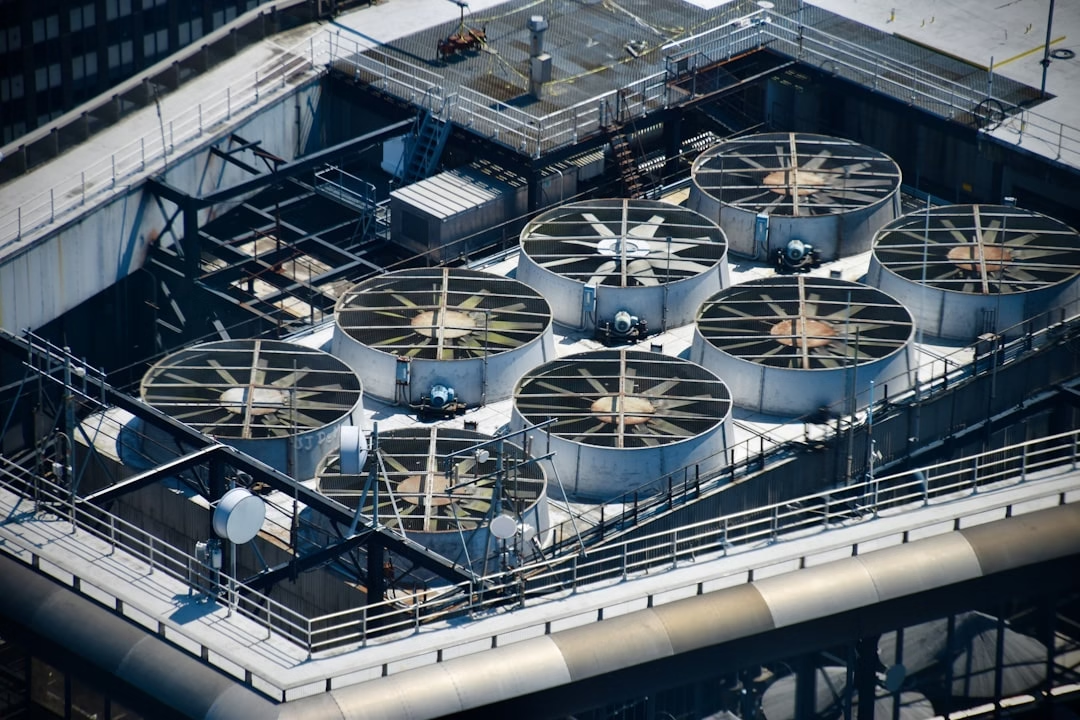
Building automation technology represents a significant leap forward in the management and operation of modern structures. This innovative approach integrates various systems within a building to create a cohesive, intelligent environment that enhances safety, efficiency, and comfort for occupants. At its core, building automation technology refers to the centralized control and monitoring of a building’s heating, ventilation, and air conditioning (HVAC), lighting, security, and other systems through a network of sensors and controllers.
The role of building automation in enhancing public safety cannot be overstated. By leveraging advanced technologies, these systems provide real-time monitoring and rapid response capabilities that significantly improve the overall safety of public spaces. For instance, in the event of a fire, building automation systems can automatically detect smoke, trigger alarms, initiate emergency lighting, and even control ventilation systems to manage smoke dispersion, potentially saving lives and minimizing property damage.
Key components of a smart building include a variety of interconnected devices and systems. Internet of Things (IoT) devices form the backbone of this network, allowing for seamless communication between different building systems. These devices range from environmental sensors that monitor air quality and temperature to occupancy sensors that optimize energy use based on the presence of people in different areas of the building. Automated controls play a crucial role in executing commands based on the data collected by these sensors, adjusting lighting, temperature, and security measures as needed.
The integration of these components creates a responsive environment that can adapt to various situations in real-time. For example, access control systems can be programmed to restrict entry to certain areas during specific hours or in response to security threats. Surveillance technology, when integrated with building automation systems, can provide comprehensive monitoring of public spaces, alerting security personnel to potential issues before they escalate.
As building automation technology continues to evolve, new trends are emerging that further enhance its capabilities. These include the integration of artificial intelligence for predictive maintenance, the use of advanced analytics to optimize building performance, and the development of more sophisticated user interfaces that allow for greater control and customization of building environments.
The adoption of building automation technology represents a significant step forward in creating safer, more efficient public spaces. By providing real-time monitoring, rapid response capabilities, and intelligent control of building systems, this technology is revolutionizing the way we approach public safety and building management. As these systems become more advanced and widespread, they will play an increasingly important role in shaping the urban environments of the future, ensuring that our public spaces are not only more comfortable and efficient but also significantly safer for all who use them.
Benefits of Building Automation for Safety and Efficiency
Building automation technology offers a multitude of benefits that significantly enhance both safety and efficiency in public spaces. These systems leverage advanced technologies to create environments that are not only more secure but also operate with greater efficiency, resulting in cost savings and improved user experiences.
One of the primary ways building automation improves safety in public spaces is through reduced emergency response times. Integrated sensors and alert systems can detect potential hazards such as fires, gas leaks, or unauthorized access attempts almost instantaneously. This rapid detection allows for immediate notification of relevant personnel and automated activation of emergency protocols. For instance, in the event of a fire, the system can automatically alert the fire department, activate sprinkler systems, unlock emergency exits, and guide occupants to safety through emergency lighting and announcements. This coordinated response can significantly reduce the time between incident detection and resolution, potentially saving lives and minimizing damage.
Enhanced surveillance capabilities are another key safety benefit of building automation. Advanced camera systems integrated with intelligent software can monitor large areas continuously, identifying suspicious activities or potential security breaches. These systems can alert security personnel to investigate unusual events, providing real-time video feeds and access to historical data. This proactive approach to security helps prevent incidents before they occur and provides valuable evidence in the event of a security breach.
From an efficiency standpoint, building automation systems offer substantial benefits, particularly in energy savings. Smart HVAC systems can adjust temperature and ventilation based on occupancy and external weather conditions, optimizing energy use without compromising comfort. Automated lighting systems can dim or turn off lights in unoccupied areas, further reducing energy consumption. These energy-saving measures not only lower operational costs but also contribute to sustainability efforts by reducing the building’s carbon footprint.
Building operations are also optimized through automation. Predictive maintenance algorithms can analyze data from various building systems to identify potential issues before they become critical, allowing for proactive maintenance that reduces downtime and extends the lifespan of equipment. This approach not only saves on repair costs but also ensures that building systems operate at peak efficiency, further enhancing energy savings and occupant comfort.
IoT-enabled safety systems play a crucial role in enhancing building safety through real-time monitoring and alerts. These systems create a network of interconnected devices that continuously collect and analyze data from various sources throughout the building. For example, environmental sensors can monitor air quality, detecting the presence of harmful substances and triggering ventilation systems to maintain a safe atmosphere. Occupancy sensors can help manage crowd flow in public spaces, alerting management when areas become overcrowded and potentially unsafe.
Moreover, IoT systems enable more effective emergency management. During a crisis, these systems can provide first responders with critical information about the building’s layout, occupancy, and the location of hazards, enabling more effective and safer rescue operations. The ability to remotely access and control building systems also allows for rapid response to emergencies, even when on-site personnel are not immediately available.
The integration of data analytics with IoT-enabled systems further enhances safety and efficiency. By analyzing patterns and trends in the data collected from various sensors and systems, building managers can make informed decisions about resource allocation, security measures, and maintenance schedules. This data-driven approach leads to more efficient operations and proactive safety measures, rather than reactive responses to incidents.
The benefits of building automation for safety and efficiency are far-reaching and transformative. From reducing emergency response times and enhancing surveillance capabilities to optimizing energy use and building operations, these systems create safer, more efficient, and more sustainable public spaces. As technology continues to advance, the potential for further improvements in building safety and efficiency through automation is immense, promising even greater benefits for building owners, operators, and occupants alike.
Smart Building Technologies and IoT Integration
The landscape of smart building technologies is rapidly evolving, with new trends emerging that promise to revolutionize the way buildings are managed and operated. One of the most significant trends is the increasing integration of Internet of Things (IoT) technology into building management systems, creating a more connected and responsive environment.
Current trends in smart building technologies focus on creating more intuitive and adaptive systems. Artificial Intelligence (AI) and machine learning algorithms are being incorporated to analyze vast amounts of data collected from various sensors and devices throughout the building. These AI-driven systems can learn from patterns and behaviors, making predictive decisions to optimize building performance. For example, AI can predict peak occupancy times and adjust HVAC settings accordingly, ensuring optimal comfort while minimizing energy consumption.
Another emerging trend is the use of digital twins in building management. A digital twin is a virtual replica of the physical building that can be used to simulate various scenarios and test the impact of changes before implementing them in the real world. This technology allows building managers to optimize operations, predict maintenance needs, and improve overall building performance with minimal disruption to daily operations.
The integration of IoT devices with building management systems is at the heart of these advancements. IoT technology allows for the seamless connection of various devices and systems within a building, creating a network that can be monitored and controlled centrally. This integration process typically involves installing IoT-enabled sensors and devices throughout the building, connecting them to a central management platform, and implementing software that can analyze and act on the data collected.
The benefits of this integration are numerous. For instance, IoT-enabled occupancy sensors can communicate with lighting and HVAC systems to automatically adjust settings based on real-time usage. This not only improves energy efficiency but also enhances occupant comfort. In terms of safety, IoT integration allows for more comprehensive monitoring of building systems. For example, IoT-enabled fire detection systems can provide more accurate information about the location and spread of a fire, enabling faster and more targeted responses.
However, the integration of IoT technology into building management systems is not without challenges. One of the primary concerns is cybersecurity. As buildings become more connected, they also become more vulnerable to cyber-attacks. Ensuring the security of these systems is crucial to protect sensitive data and prevent unauthorized access that could compromise building safety and operations.
To address these challenges, several solutions are being developed and implemented. On the cybersecurity front, advanced encryption methods and regular security audits are becoming standard practice. The development of industry standards for IoT devices in building automation is also helping to address compatibility issues and ensure more seamless integration.
As these technologies continue to evolve, the future of smart buildings looks increasingly sophisticated and efficient. The integration of IoT with building management systems is paving the way for truly intelligent buildings that can adapt in real-time to changing conditions and user needs. This not only enhances safety and efficiency but also improves the overall experience for building occupants, creating spaces that are more comfortable, productive, and sustainable.
Future Trends in Building Automation and Public Safety
The future of building automation and public safety is poised for significant advancements, driven by emerging technologies and evolving societal needs. These future trends promise to create even safer, more efficient, and more responsive built environments.
One of the most promising emerging trends in building automation for public safety is the integration of advanced artificial intelligence (AI) and machine learning algorithms. These technologies will enable buildings to not only respond to immediate threats but also predict and prevent potential safety issues before they occur. For instance, AI-powered systems could analyze patterns in occupant behavior, environmental conditions, and historical data to identify potential safety risks and automatically implement preventive measures.
Predictive maintenance, powered by AI and IoT sensors, is set to become more sophisticated. Future systems will be able to detect minute changes in equipment performance, predicting failures with high accuracy and scheduling maintenance at the optimal time. This will not only improve safety by preventing equipment failures but also enhance efficiency by reducing downtime and extending the lifespan of building systems.
Another significant trend is the development of more advanced emergency response systems. Future building automation systems will likely incorporate augmented reality (AR) and virtual reality (VR) technologies to provide first responders with real-time, 3D visualizations of building layouts and hazard locations. This could dramatically improve the effectiveness and safety of emergency response efforts.
The impact of future technologies on building safety and efficiency is expected to be transformative. 5G and future wireless technologies will enable faster, more reliable communication between building systems and external emergency services. This could lead to near-instantaneous response times and more coordinated emergency efforts.
Biometric technologies are likely to play a larger role in building security and access control. Advanced facial recognition, voice recognition, and even gait analysis could provide more secure and convenient methods of access control, enhancing both safety and user experience.
Energy efficiency in buildings is expected to reach new heights with the integration of smart grid technologies and renewable energy systems. Buildings of the future may not only consume energy more efficiently but also generate and store their own energy, contributing to grid stability and resilience during emergencies.
The role of AI and machine learning in future building automation systems cannot be overstated. These technologies will form the brain of smart buildings, continuously learning and adapting to optimize safety, efficiency, and comfort. AI will enable more nuanced control of building systems, making minute adjustments based on a multitude of factors to create the ideal environment while minimizing energy use.
Machine learning algorithms will be crucial in analyzing the vast amounts of data generated by IoT sensors throughout the building. These algorithms will be able to identify complex patterns and correlations that humans might miss, leading to insights that can further enhance safety and efficiency.
In the realm of public safety, AI and machine learning will enable more sophisticated threat detection systems. For example, AI-powered video analytics could identify suspicious behavior or detect weapons, alerting security personnel before an incident occurs. Machine learning models could also analyze historical data to predict times and locations where security incidents are more likely to occur, allowing for proactive deployment of security measures.
Moreover, these technologies will play a significant role in crowd management and flow control in public spaces. By analyzing real-time data from occupancy sensors and historical patterns, AI systems could predict congestion and automatically adjust building systems (like elevators, escalators, and access points) to optimize people flow and prevent dangerous overcrowding situations.
The integration of natural language processing and AI assistants into building systems is another trend to watch. This could lead to more intuitive interfaces for building occupants to interact with their environment, as well as provide real-time safety instructions or guidance during emergencies.
However, as these technologies become more prevalent, it will be crucial to address potential challenges such as data privacy concerns, the need for robust cybersecurity measures, and ensuring that these systems remain reliable and effective even in the face of power outages or network disruptions.
Regulatory Compliance and Safety Standards
Regulatory compliance and adherence to safety standards are crucial aspects of building management, particularly as buildings become more technologically advanced. These requirements are designed to ensure that buildings meet minimum safety standards, protect occupants, and operate efficiently. Understanding and implementing these regulations is a key responsibility for building managers and owners.
The regulatory compliance requirements for building safety are multifaceted and can vary depending on the location, type of building, and its intended use. However, some common areas of focus include fire safety, electrical systems, structural integrity, accessibility, and environmental health. For instance, fire safety regulations typically mandate the installation and maintenance of fire detection and suppression systems, proper emergency exits, and regular fire drills. Electrical safety standards ensure that wiring and electrical systems are installed and maintained to prevent fire hazards and electrical shocks.
Building codes also often include requirements for structural integrity to ensure buildings can withstand natural disasters like earthquakes or hurricanes. Accessibility standards, such as those outlined in the Americans with Disabilities Act (ADA) in the United States, require buildings to be accessible to individuals with disabilities. Environmental health regulations may cover areas such as indoor air quality, water safety, and the use of hazardous materials.
Building automation technology plays a significant role in helping meet these standards and simplifying compliance. Automated systems can continuously monitor various aspects of building operations, ensuring they remain within regulatory limits. For example, automated HVAC systems can maintain indoor air quality within prescribed levels, while smart lighting systems can ensure emergency lighting is always operational.
In terms of fire safety, building automation systems can integrate fire detection, alarm, and suppression systems, providing real-time monitoring and rapid response capabilities. These systems can automatically alert emergency services, control smoke ventilation systems, and guide occupants to safety through emergency lighting and announcements.
Automated access control systems can help buildings meet security and accessibility standards by providing secure yet accessible entry points. These systems can also maintain detailed logs of building access, which can be crucial for compliance reporting and security investigations.
Despite the benefits, building managers face several challenges in ensuring compliance. One of the primary challenges is keeping up with changing regulations. Safety standards and building codes are regularly updated to reflect new technologies, scientific understanding, and societal expectations. Staying informed about these changes and implementing them in a timely manner can be a complex and resource-intensive process.
Another challenge is the integration of new technologies with existing building systems. While building automation can greatly aid in compliance, implementing these systems in older buildings can be technically challenging and potentially costly.
Data management and reporting are also significant challenges. Many compliance requirements involve maintaining detailed records and producing regular reports. Managing the vast amount of data generated by building systems and translating it into meaningful compliance reports can be a daunting task.
Technology can aid in overcoming these challenges in several ways. Compliance management tools can help building managers stay up-to-date with regulatory changes, track compliance status, and generate necessary reports. These tools can integrate with building automation systems to collect and analyze data automatically, reducing the manual effort required for compliance management.
Cloud-based platforms are increasingly being used to centralize data storage and management, making it easier to access and analyze compliance-related information. These platforms can also facilitate remote monitoring and management, allowing building managers to oversee compliance across multiple properties more efficiently.
Artificial intelligence and machine learning technologies are being employed to analyze compliance data, identify potential issues, and even predict future compliance challenges. These technologies can help building managers take a more proactive approach to compliance management.
Integrating Security Systems for Enhanced Safety
The integration of security systems is a critical component in enhancing building safety, particularly in public spaces where the protection of occupants and assets is paramount. By combining various security technologies into a cohesive system, building managers can create a more comprehensive and effective security infrastructure.
Integrated security solutions offer numerous benefits over standalone systems. They provide a holistic approach to security, allowing for better coordination between different components such as access control, surveillance, and alarm systems. This integration enables faster response times to security incidents, more efficient management of security operations, and a more comprehensive view of the building’s security status.
One of the key benefits of integrating security solutions is the ability to combine access control with surveillance technology. Access control systems manage who can enter specific areas of a building and when, while surveillance systems monitor and record activities within the space. When these systems are integrated, they create a powerful security tool.
For example, when an access card is used at a door, the integrated system can automatically bring up the relevant camera feed, allowing security personnel to visually verify the identity of the person entering. This combination not only enhances security but also provides valuable data for investigations if needed. If an unauthorized access attempt occurs, the system can immediately alert security staff and provide them with real-time video of the incident.
Moreover, integrated systems can correlate data from multiple sources to identify potential security threats. For instance, if an access card is used at an unusual time or location, the system can flag this as suspicious activity and trigger additional surveillance or alert security personnel.
Automated emergency response systems are another crucial component of integrated security solutions. These systems are designed to react quickly and efficiently to various types of emergencies, from security breaches to natural disasters. When an emergency is detected, whether through sensors, alarms, or manual activation, the automated system springs into action.
Advanced surveillance systems play a crucial role in integrated security solutions. Modern surveillance goes far beyond simple video recording. Today’s systems incorporate artificial intelligence and machine learning to analyze video feeds in real-time, identifying potential security threats or unusual activities.
For instance, AI-powered video analytics can detect abandoned objects, recognize faces, identify unusual crowd behavior, or even spot potential weapons. When integrated with other security systems, this advanced surveillance can trigger immediate responses, such as alerting security personnel or initiating lockdown procedures.
The integration of these various security components – access control, surveillance, emergency response, and others – creates a comprehensive security ecosystem. This ecosystem not only enhances safety but also improves operational efficiency. For example, integrated systems can automate many routine security tasks, freeing up personnel for more critical duties.
However, implementing integrated security solutions does come with challenges. These include ensuring compatibility between different systems, managing the complexity of integrated platforms, and addressing cybersecurity concerns that arise from interconnected systems. Overcoming these challenges requires careful planning, expertise in system integration, and ongoing management and maintenance.
As technology continues to advance, we can expect to see even more sophisticated integrated security solutions. Future trends may include greater use of biometrics for access control, increased integration with building automation systems for more comprehensive safety management, and the use of predictive analytics to anticipate and prevent security incidents before they occur.
Building automation technology contributes to public safety through more than physical security and access control. Environmental monitoring is the other dimension: knowing when CO2 has reached concentrations that impair occupant cognition, when tVOC levels indicate a developing air quality event, or when temperature conditions in a public space have drifted outside the range where people can safely remain for extended periods. These conditions affect public safety in buildings just as security systems do, and they require the same continuous, multi-zone monitoring approach.
Nosy monitors CO2, temperature, humidity, tVOCs, and IAQ continuously across commercial and public buildings, with readings every five minutes and a web-based dashboard accessible to facilities and safety teams from any device. The continuous environmental data provides the safety management layer that identifies developing air quality conditions before they affect occupants. Building managers and safety teams looking for more on environmental monitoring for public safety applications can find more at Nosy for Offices.
Conclusion
The integration of building automation technology has redefined public safety in profound ways, ushering in a new era of intelligent, responsive, and secure environments. This comprehensive exploration of building automation and its impact on public safety reveals a landscape transformed by innovation, where technology serves as a powerful ally in creating safer and more efficient public spaces.
Building automation technology has emerged as a game-changer in enhancing public safety through its ability to integrate various building systems into a cohesive, intelligent network. From advanced sensors and IoT devices to sophisticated control systems and AI-driven analytics, these technologies work in concert to create environments that are not just reactive but proactive in ensuring the safety and well-being of occupants.
Key takeaways from the integration of smart technologies in buildings include:
1. Enhanced Emergency Response: Automated systems can detect emergencies faster and initiate responses more quickly than traditional methods, potentially saving lives and minimizing damage.
2. Improved Surveillance and Security: Advanced surveillance systems, integrated with access control and other security measures, provide comprehensive protection against various threats.
3. Energy Efficiency and Sustainability: Smart building technologies optimize energy use, contributing to both cost savings and environmental sustainability.
4. Predictive Maintenance: AI-driven systems can predict and prevent equipment failures, ensuring that critical safety systems are always operational.
5. Regulatory Compliance: Automated systems help buildings stay compliant with evolving safety standards and regulations more efficiently.
6. Data-Driven Decision Making: The wealth of data generated by smart building systems enables more informed decision-making in all aspects of building management and safety.
As we look to the future, building automation technologies will continue to evolve, promising even greater advancements in public safety. The integration of AI and machine learning will lead to more intelligent and adaptive systems capable of predicting and preventing safety issues before they occur. We can anticipate more seamless integration between building systems and emergency services, further reducing response times in critical situations.
Building automation technology has fundamentally transformed the approach to public safety in built environments. By creating more intelligent, responsive, and efficient buildings, these technologies not only enhance safety but also contribute to more sustainable and livable urban spaces. As this field continues to evolve, it will play an increasingly vital role in shaping the future of our cities and public spaces, promising a safer and more efficient world for all.
