
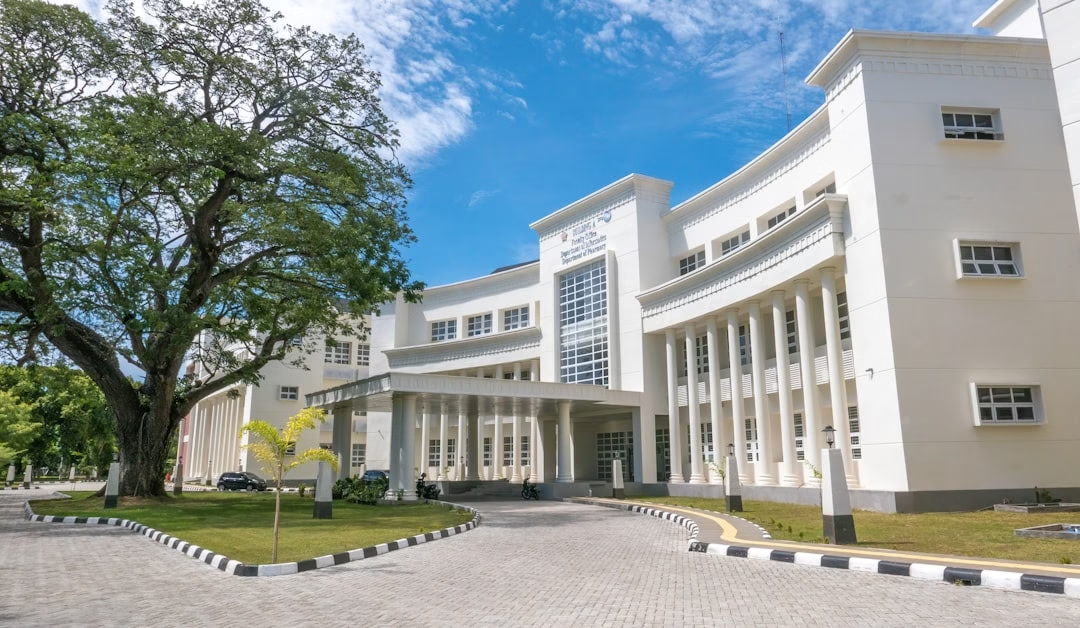
In the sector of education, the importance of indoor air quality (IAQ) in schools cannot be overstated. As students and staff spend a significant portion of their day within school buildings, the quality of the air they breathe plays a crucial role in their overall health, well-being, and academic performance. The architectural design of schools has a profound impact on indoor air quality, and by extension, on the learning outcomes and cognitive function of students.
The significance of healthy indoor environments for cognitive function and learning outcomes is well-documented. Research has shown that poor indoor air quality can lead to decreased concentration, increased absenteeism, and reduced academic performance. Conversely, optimized indoor air quality has been linked to improved cognitive function, better memory retention, and enhanced problem-solving skills. This direct correlation between air quality and learning emphasizes the need for school administrators and architects to prioritize IAQ in their design and maintenance strategies.
The role of architecture in creating sustainable and healthy school environments extends beyond aesthetics. Thoughtful design can significantly improve ventilation, reduce indoor pollutants, and create spaces that promote both physical and mental well-being. By incorporating elements such as natural ventilation systems, sustainable building materials, and biophilic design principles, architects can create schools that not only look good but also function as healthy, nurturing environments for learning.
The direct benefits of improved air quality on health, attendance, and academic performance are numerous. Students in schools with better indoor air quality experience fewer respiratory issues, allergies, and other health problems associated with poor air quality. This leads to reduced absenteeism and more time spent in the classroom. Moreover, staff members also benefit from improved air quality, resulting in increased job satisfaction and productivity. The cumulative effect of these benefits translates to a more effective and efficient educational environment, ultimately contributing to better academic outcomes for students.
Best Practices for School Architecture to Optimize Air Quality
When it comes to architectural designs that contribute to better indoor air quality in schools, several key strategies have proven effective. One of the most important considerations is the layout of the building itself. Open floor plans that allow for easy air circulation, coupled with strategically placed windows and doors, can significantly improve natural ventilation. Additionally, the use of high ceilings and atria can create stack effects that promote air movement and reduce the concentration of indoor pollutants.
Integrating natural ventilation into school buildings is a crucial aspect of sustainable design. This can be achieved through the use of operable windows, wind-driven ventilation systems, and thermal buoyancy-driven ventilation. By harnessing natural air currents, schools can reduce their reliance on mechanical ventilation systems, leading to energy savings and improved air quality. However, it’s important to balance natural ventilation with the need for temperature control and protection from outdoor pollutants, especially in urban areas.
The selection of building materials is another critical factor in optimizing indoor air quality. Key considerations include choosing materials that are low in volatile organic compounds (VOCs), formaldehyde-free, and resistant to moisture and mold growth. For example, using low-VOC paints and adhesives, formaldehyde-free insulation, and moisture-resistant flooring can significantly reduce the emission of harmful pollutants into the indoor environment. Additionally, the use of natural materials like wood and stone can contribute to better air quality while also creating a more aesthetically pleasing and comfortable learning environment.
Incorporating green spaces and biophilic elements in school design is not only beneficial for air quality but also for overall well-being. Indoor plants act as natural air purifiers, absorbing carbon dioxide and releasing oxygen while also filtering out certain airborne pollutants. Moreover, the presence of natural elements in the learning environment has been shown to reduce stress, improve mood, and enhance cognitive function. Design strategies such as living walls, indoor gardens, and direct access to outdoor green spaces can significantly contribute to both air quality and student well-being.
Innovative Technologies for Air Purification in Schools
In addition to architectural design, cutting-edge air purification technologies play a crucial role in maintaining optimal indoor air quality in schools. The latest air purification systems suitable for educational settings include advanced HEPA filtration systems, UV-C light disinfection, and activated carbon filters. These technologies work in tandem to remove a wide range of pollutants, including particulate matter, volatile organic compounds, and microorganisms.
Classroom air filters contribute significantly to a healthier learning environment. High-efficiency particulate air (HEPA) filters are particularly effective in removing fine particles, allergens, and other airborne contaminants. When combined with activated carbon filters, they can also remove odors and gaseous pollutants. The implementation of these filtration systems in classrooms has been shown to reduce absenteeism due to respiratory illnesses and improve overall student health.
UV-C sanitization is another innovative technology gaining traction in school environments. UV-C light effectively neutralizes bacteria, viruses, and other microorganisms, providing an additional layer of protection against airborne pathogens. When installed in HVAC systems or as standalone units, UV-C sanitization can significantly reduce the spread of infectious diseases in school settings.
The role of air quality monitoring in maintaining healthy indoor environments cannot be overstated. IoT-based air quality monitoring systems provide real-time data on various air quality parameters, including particulate matter levels, CO2 concentrations, temperature, and humidity. This continuous monitoring allows school administrators to quickly identify and address air quality issues, ensuring a consistently healthy environment for students and staff. Moreover, the data collected can inform future design decisions and help optimize HVAC system performance.
Regulations and Standards for Indoor Air Quality in Schools
Understanding and complying with regulations governing indoor air quality in educational institutions is crucial for school administrators and facility managers. In the United States, the Environmental Protection Agency (EPA) provides guidelines for indoor air quality in schools, although specific regulations may vary by state and local jurisdictions. These guidelines cover aspects such as ventilation rates, maximum allowable concentrations of various pollutants, and maintenance practices for HVAC systems.
Green building standards, such as LEED (Leadership in Energy and Environmental Design) and WELL Building Standard, have a significant influence on school design and air quality. These certification systems provide comprehensive frameworks for creating healthy, efficient, and sustainable buildings. Schools pursuing LEED or WELL certification must meet stringent requirements for indoor air quality, including specifications for ventilation rates, filtration efficiency, and the use of low-emitting materials.
Navigating the complexities of compliance with air quality standards can be challenging for schools, particularly those with older buildings or limited resources. However, the benefits of meeting and exceeding these standards are substantial. Schools that prioritize indoor air quality often see improvements in student health, attendance, and academic performance. Moreover, compliance with these standards can lead to long-term cost savings through improved energy efficiency and reduced health-related absenteeism.
The Role of Environmental Psychology in School Design
Environmental psychology plays a crucial role in informing the design of learning environments that promote both physical and mental well-being. The connection between physical space, air quality, and cognitive function is well-established in research. Well-designed school environments that prioritize air quality, natural light, and connection to nature have been shown to enhance student concentration, reduce stress, and improve overall academic performance.
The psychological benefits students experience in well-designed schools are numerous. Exposure to natural light and views of nature has been linked to improved mood, reduced anxiety, and better sleep patterns. Clean, fresh air contributes to a sense of alertness and well-being, while comfortable temperatures and humidity levels support optimal cognitive function. Additionally, the use of biophilic design elements, such as indoor plants and natural materials, can create a sense of calm and connectedness to the environment.
Applying principles of environmental psychology to create spaces that encourage learning and reduce stress involves a holistic approach to design. This includes considerations such as color psychology, acoustic design to minimize noise distractions, and the creation of varied spaces that support different learning styles and activities. By integrating these principles with strategies for optimizing air quality, schools can create environments that are not only physically healthy but also psychologically supportive of learning and development.
Funding and Grants for Improving School Air Quality
Accessing financial resources for air quality improvements is a critical concern for many schools. Fortunately, there are various funding sources available, including federal, state, and private grants. The Environmental Protection Agency (EPA) offers several grant programs specifically targeted at improving indoor air quality in schools. Additionally, the Department of Education and state-level agencies often provide funding for school infrastructure improvements, including HVAC upgrades and other air quality-related projects.
To access grants for air purification systems and other air quality improvements, schools need to be proactive in their approach. This involves staying informed about available grant opportunities, understanding the application requirements, and developing compelling proposals that highlight the need for and potential impact of air quality improvements. Collaborating with local health departments, environmental agencies, and community organizations can also enhance a school’s chances of securing funding.
Strategies for maximizing funding for healthy indoor environments include prioritizing projects that offer multiple benefits, such as energy efficiency improvements that also enhance air quality. Schools can also consider phased approaches to improvements, tackling the most critical issues first and building on successes to secure additional funding for future projects. Case studies of schools that have successfully secured funding for air quality projects can provide valuable insights and best practices for other institutions seeking to improve their indoor environments.
Architecture and design decisions create the physical conditions that determine how well a building supports indoor air quality over its lifetime. But even well-designed buildings need continuous monitoring to confirm that conditions in practice match design intent. Ventilation rates that work at design occupancy may fall short when classrooms are over-filled. Materials specified as low-emission may interact with cleaning products or furnishings in ways that affect tVOC levels. Measurement is the practical check on design assumptions.
Nosy provides the continuous monitoring that helps schools understand whether their built environment is actually delivering the conditions it was designed for. It tracks CO2, temperature, humidity, tVOCs, and occupancy across all sensor locations, with readings every five minutes and a web-based dashboard that shows patterns by room and zone. At a K-12 school in Rhode Island, Nosy monitoring identified a 41% correlation between low humidity periods and student absenteeism, surfacing an environmental condition that design decisions alone could not have prevented or predicted without measurement. Schools and institutions exploring IAQ monitoring can find more at Nosy for Schools.
Conclusion
The integration of architecture and design for optimized indoor air quality in schools is a multifaceted approach that requires collaboration between architects, school administrators, environmental experts, and policymakers. By prioritizing air quality in the design and maintenance of school buildings, educational institutions can create environments that support the health, well-being, and academic success of students and staff.
The overarching benefits of prioritizing air quality in educational settings extend far beyond immediate health improvements. Enhanced cognitive function, reduced absenteeism, and improved academic performance contribute to long-term success for students. Moreover, schools that demonstrate a commitment to healthy indoor environments often see increased community support and positive reputational impacts.
Looking to the future, trends in school design and technology promise even greater advancements in indoor air quality. Innovations such as smart building systems that automatically adjust ventilation based on occupancy and air quality data, advanced filtration technologies, and the integration of artificial intelligence in building management systems are poised to further enhance the ability of schools to maintain optimal indoor environments.
