
Introduction to Thermal Comfort and Indoor Air Quality
In the realm of building design and management, thermal comfort considerations and indoor air quality are two critical factors that significantly impact occupant well-being and productivity. These elements form the cornerstone of indoor environmental quality, shaping the experience of those who inhabit various indoor spaces, from offices and schools to residential buildings. Thermal comfort refers to the state of mind that expresses satisfaction with the thermal environment. It is a complex interplay of factors including air temperature, relative humidity, air movement, and personal factors such as clothing insulation and activity level. The importance of thermal comfort in indoor environments cannot be overstated, as it directly influences occupant comfort, productivity, and overall well-being.
Indoor air quality pertains to the air quality within and around buildings and structures, especially as it relates to the health and comfort of building occupants. Poor indoor air quality has been linked to a range of health issues, from minor discomforts like headaches and fatigue to more serious conditions such as respiratory diseases. The impact of indoor air on health and well-being is profound, affecting not only physical health but also cognitive function and mental well-being. Studies have shown that improved indoor air quality can lead to increased productivity, reduced absenteeism, and enhanced learning outcomes in educational settings.
The sources of indoor air pollution are numerous and varied, ranging from building materials and furnishings to outdoor pollutants that infiltrate indoor spaces. Common indoor air pollutants include volatile organic compounds (VOCs) emitted from paints, carpets, and cleaning products; particulate matter from combustion sources or outdoor air; biological contaminants such as mold and dust mites; and gases like carbon monoxide and radon. Additionally, human activities such as cooking, smoking, and the use of personal care products contribute to indoor air pollution. Understanding these sources is crucial for developing effective strategies to improve indoor air quality and create healthier indoor environments.
The relationship between thermal comfort and indoor air quality is intricate and often intertwined. For instance, efforts to improve energy efficiency by tightening building envelopes can lead to reduced ventilation rates, potentially compromising indoor air quality. Conversely, strategies to enhance indoor air quality through increased ventilation may impact thermal comfort and energy consumption. This complex interplay underscores the need for a holistic approach to indoor environmental quality that considers both thermal comfort and air quality in tandem.
Understanding Thermal Comfort Guidelines
To address the challenges of creating comfortable indoor environments, various organizations have developed guidelines and standards for thermal comfort in buildings. The American Society of Heating, Refrigerating and Air-Conditioning Engineers (ASHRAE) has been at the forefront of establishing these guidelines, particularly through its Standard 55, which provides a systematic approach to determining thermal environmental conditions for human occupancy. These guidelines take into account factors such as air temperature, radiant temperature, air velocity, and relative humidity, as well as personal factors like clothing insulation and metabolic rate.
The impact of these guidelines on building design and operation is significant. Architects and engineers must consider thermal comfort requirements from the earliest stages of design, influencing decisions on building orientation, thermal insulation, window placement, and HVAC system selection. For facility managers, adherence to these guidelines often involves a delicate balance between maintaining occupant comfort and managing energy consumption. The challenge lies in creating thermal environments that satisfy the majority of occupants while recognizing that individual preferences for thermal comfort can vary widely.
One of the primary challenges faced by facility managers in meeting thermal comfort guidelines is the variability in occupant preferences and the dynamic nature of indoor environments. Factors such as changing outdoor conditions, varying occupancy levels, and diverse activities within a space can all impact thermal comfort. To address these challenges, many facilities are turning to advanced building management systems that allow for more precise temperature control of indoor environmental conditions. These systems often incorporate features like zoned temperature control, occupancy sensors, and predictive algorithms to optimize comfort while minimizing energy use.
The Role of Ventilation in Indoor Air Quality
Ventilation systems play a crucial role in maintaining indoor air quality by removing indoor air pollutants and supplying fresh air from outside. Effective ventilation helps dilute and remove contaminants, control humidity levels, and regulate indoor temperature, all of which contribute to a healthier and more comfortable indoor environment. The benefits of optimizing ventilation efficiency extend beyond improved air quality; they also include enhanced energy savings and increased occupant satisfaction.
There are several strategies for improving ventilation efficiency without compromising energy efficiency. One approach is demand-controlled ventilation, which adjusts ventilation rates based on occupancy levels or measured pollutant concentrations. This ensures that ventilation is provided when and where it is needed most, avoiding unnecessary energy expenditure. Another strategy is the use of heat recovery ventilation systems, which transfer heat from outgoing exhaust air to incoming fresh air, reducing the energy required to condition the incoming air.
Advanced filtration technologies, such as high-efficiency particulate air (HEPA) filters and activated carbon filters, can also enhance indoor air quality by removing a wide range of pollutants from the air. When combined with efficient ventilation strategies, these filtration systems can significantly improve indoor air quality while maintaining energy efficiency. Natural ventilation, when properly implemented, can also contribute to improved indoor air quality and thermal comfort, especially in moderate climates.
Mechanical ventilation systems are essential in many modern buildings, particularly in areas where natural ventilation is not feasible or sufficient. These systems can be designed to provide optimal thermal comfort and indoor air quality by carefully controlling the flow of fresh air and the removal of stale air. The integration of mechanical ventilation with building automation systems allows for real-time adjustments based on occupancy, outdoor conditions, and indoor air quality measurements.
Humidity Control and Its Impact on Comfort and Health
Humidity control is a critical aspect of indoor environmental quality, affecting both thermal comfort and air quality. The ideal relative humidity range for indoor environments is generally considered to be between 30% and 60%. Within this range, most people feel comfortable, and the risk of adverse health effects and damage to building materials is minimized. Too high humidity can lead to mold growth, dust mite proliferation, and increased chemical off-gassing from building materials. Conversely, excessively low humidity can cause discomfort, dry skin, and respiratory irritation.
Effective humidity control solutions vary depending on the climate and building characteristics. In humid climates, dehumidification systems are often necessary to remove excess moisture from the air. These can range from standalone dehumidifiers to integrated systems within the HVAC equipment. In dry climates or during winter months when heating systems can dry out indoor air, humidification systems may be needed to add moisture to the air. Advanced humidity control systems often incorporate sensors and automated controls to maintain optimal relative humidity levels throughout the year.
The impact of humidity on thermal comfort is significant. High humidity levels can make a space feel warmer than it actually is, as it reduces the body’s ability to cool itself through evaporation. This phenomenon is reflected in the concept of “feels like” temperature or heat index. Conversely, low humidity can make a space feel cooler, as moisture evaporates more readily from the skin. Understanding and controlling humidity is therefore essential for achieving optimal thermal comfort and energy efficiency in buildings.
Indoor Air Quality Standards and Monitoring
Indoor air quality standards have been developed by various organizations to provide guidelines for maintaining healthy indoor environments. The World Health Organization (WHO) and the U.S. Environmental Protection Agency (EPA) are among the leading bodies that have established such standards. These guidelines typically set limits for concentrations of specific pollutants and provide recommendations for ventilation rates and other factors affecting indoor air quality.
Effective monitoring of indoor air quality is crucial for identifying and addressing potential issues before they become significant problems. Air quality monitoring systems can range from simple handheld devices that measure specific pollutants to sophisticated integrated systems that provide continuous monitoring of multiple parameters. These systems often measure factors such as carbon dioxide levels (as an indicator of ventilation adequacy), particulate matter, volatile organic compounds, temperature, and humidity.
The data collected through air quality monitoring can be used to inform ventilation strategies, identify sources of pollution, and verify the effectiveness of air quality improvement measures. Many modern building management systems incorporate air quality monitoring data to automatically adjust ventilation rates and HVAC settings, ensuring optimal indoor environmental quality while maximizing energy efficiency.
Biophilic Design and Its Benefits for Indoor Environmental Quality
Biophilic design is an innovative approach to building design that seeks to connect occupants more closely with nature. This design philosophy incorporates natural elements and patterns into the built environment, recognizing the innate human affinity for nature and its potential benefits for health and well-being. Biophilic design elements can include the use of natural materials, incorporation of plants and water features, maximization of natural light, and the creation of views to nature.
The benefits of biophilic design for indoor environmental quality are multifaceted. From a psychological perspective, exposure to natural elements has been shown to reduce stress, improve mood, and enhance cognitive function. Physically, biophilic design can contribute to improved indoor air quality through the use of plants that filter air pollutants and increase oxygen levels. Natural materials like wood can help regulate humidity levels, while access to natural light supports circadian rhythms and can reduce the need for artificial lighting.
Case studies have demonstrated the positive impact of biophilic design on both thermal comfort and indoor air quality. For example, green walls and indoor plants can act as natural air filters while also providing evaporative cooling effects. The use of natural ventilation strategies, inspired by biophilic principles, can improve air circulation and reduce reliance on mechanical ventilation systems. Moreover, the psychological benefits of biophilic design can influence occupants’ perception of comfort, potentially leading to greater satisfaction with indoor environmental conditions.
Innovations in HVAC and Ventilation for Better Indoor Air Quality
The field of HVAC and ventilation technology is rapidly evolving, with new innovations aimed at improving indoor air quality and thermal comfort while enhancing energy efficiency. Advanced HVAC systems now incorporate features such as variable refrigerant flow (VRF) technology, which allows for more precise temperature control in different zones of a building. These systems can simultaneously heat and cool different areas, optimizing comfort and energy use.
Another significant advancement is the integration of artificial intelligence and machine learning into building management systems. These smart systems can learn from occupancy patterns, weather data, and user preferences to predictively adjust HVAC settings, ensuring optimal thermal comfort and efficiency. Some systems even incorporate personal comfort devices that allow individual occupants to fine-tune their immediate thermal environment.
In the realm of air purification, new technologies such as photocatalytic oxidation and bipolar ionization are being integrated into HVAC systems to actively remove pollutants from the air. These technologies can effectively neutralize a wide range of contaminants, including volatile organic compounds, bacteria, and viruses, contributing to improved indoor air quality.
For existing buildings, retrofitting advanced HVAC systems presents both challenges and opportunities. While upgrading to more efficient and effective systems can significantly improve indoor environmental quality, it often requires careful planning to integrate new technologies with existing infrastructure. However, the long-term benefits in terms of improved occupant health, productivity, and energy savings often justify the investment.
Thermal comfort is one dimension of indoor environmental quality, but it doesn’t exist independently of humidity, CO2, and air quality conditions that affect how temperature is actually perceived. A space can hit the right temperature setpoint while still feeling stuffy or uncomfortable if CO2 has accumulated or humidity is out of range. Addressing IEQ comprehensively requires monitoring all of these parameters simultaneously, not just tracking the thermostat reading.
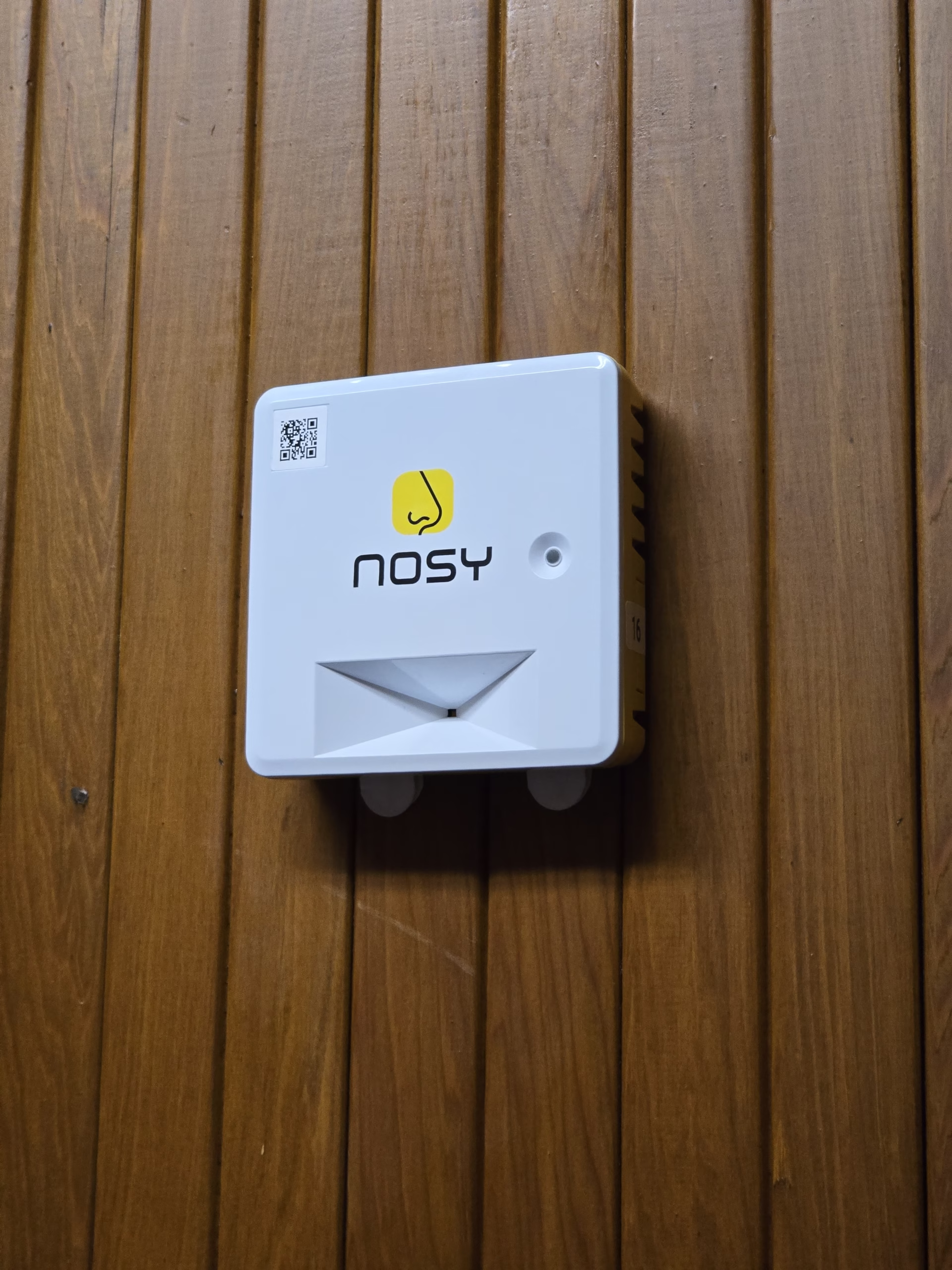
Nosy monitors CO2, temperature, humidity, tVOCs, and IAQ continuously across commercial buildings, with readings every five minutes and a web-based dashboard that shows conditions by zone. The multi-parameter data makes it possible to understand why a space feels the way it does, rather than relying on single-parameter readings that don’t capture the interactions between temperature, humidity, and CO2. Building managers and facilities teams looking for context on comprehensive environmental quality monitoring can find a useful overview at Fractional BAS Explained.
Conclusion
The interconnection between thermal comfort considerations and indoor air quality is fundamental to achieving superior indoor environmental quality. Throughout this exploration, we have seen how these factors are inextricably linked, each influencing the other and collectively shaping the experience of building occupants. The key takeaways for improving indoor environmental quality in buildings include a holistic approach that considers both thermal comfort and air quality, the importance of effective ventilation and humidity control, the potential benefits of biophilic design, and the role of advanced HVAC and monitoring technologies.
For facility managers and building owners looking to implement these strategies effectively, a multi-faceted approach is recommended. This includes conducting comprehensive assessments of current indoor environmental quality, investing in robust monitoring systems, and developing tailored strategies that address the specific needs and challenges of each building. It’s also crucial to engage with occupants, understanding their comfort preferences and experiences, and educating them on the importance of indoor environmental quality.
The pursuit of optimal thermal comfort and indoor air quality is an ongoing process, requiring continuous monitoring, adjustment, and innovation. By prioritizing both thermal comfort and indoor air quality, building owners and managers can create healthier, more productive, and more sustainable indoor environments that benefit both occupants and the broader community. This approach not only enhances the well-being of individuals but also contributes to the creation of truly healthy buildings that support human thermal comfort and performance in the long term. As our understanding of indoor environmental quality continues to evolve, so too will our strategies for creating indoor spaces that promote health, comfort, and productivity for all occupants.
