
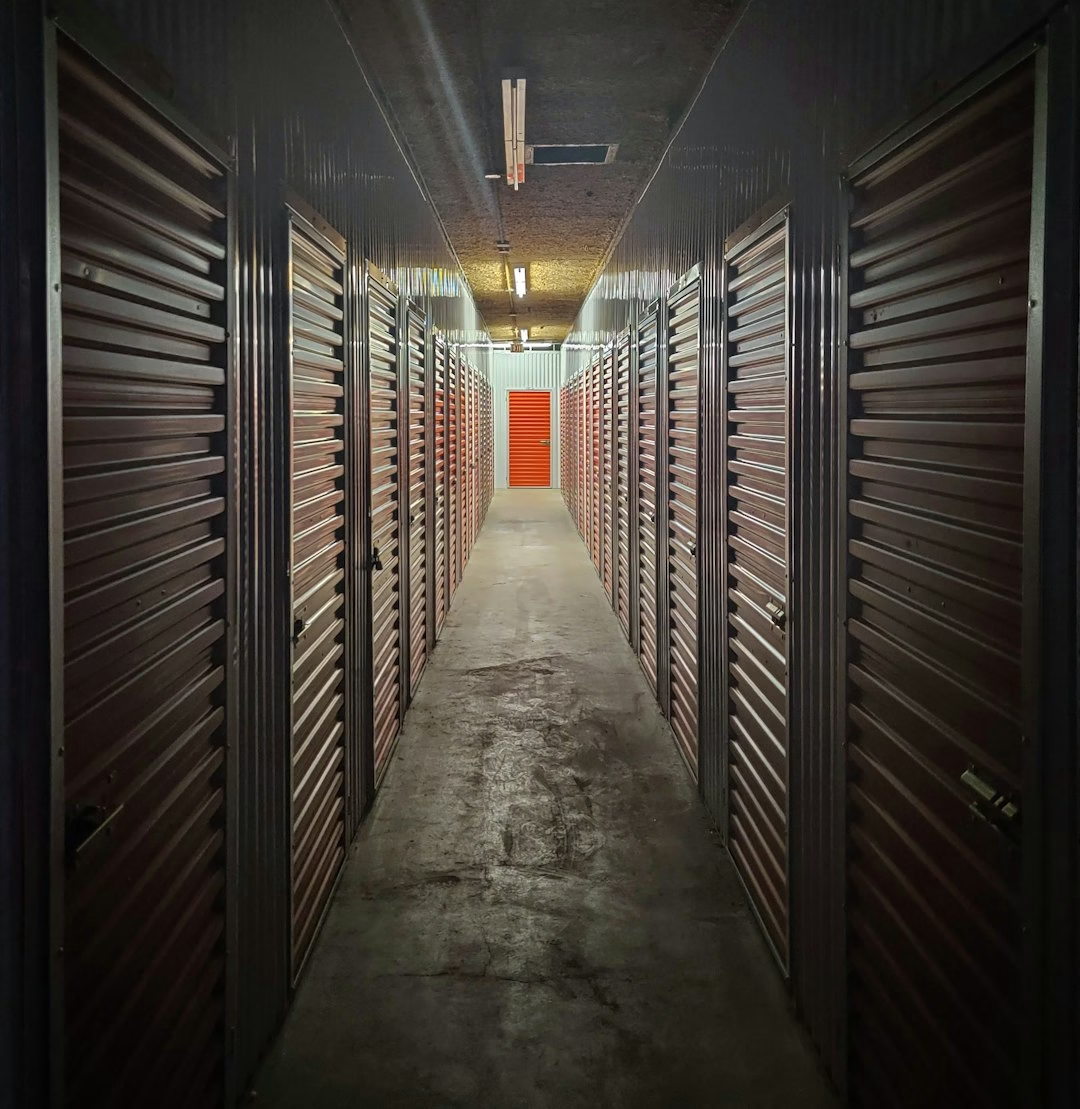
Indoor air quality (IAQ) plays a crucial role in climate-controlled storage facilities, significantly impacting the preservation of stored items and the overall integrity of the facility. The importance of maintaining optimal IAQ cannot be overstated, as it directly affects the longevity and condition of stored goods, particularly those sensitive to environmental changes. Climate-controlled storage facilities are designed to provide a stable environment for various items by regulating temperature and humidity levels.
The significance of IAQ in these facilities stems from its direct impact on the preservation of stored items. Poor air quality can lead to a range of issues, including mold growth, material degradation, and even structural damage to the facility itself. Excessive humidity can promote mold growth, which not only damages stored items but also poses health risks to facility staff and visitors. Conversely, air that is too dry can cause certain materials to become brittle or crack.
Facility managers face several common challenges in maintaining optimal IAQ in climate-controlled storage facilities. Controlling humidity levels, mold prevention, and managing pollutants from both indoor and outdoor sources are ongoing challenges. Additionally, the design of storage facilities can impact air quality, with inadequate ventilation systems or poor air circulation leading to stagnant air pockets where pollutants and moisture can accumulate.
Best Practices for IAQ Management
Effective IAQ management in storage facilities involves a multifaceted approach that addresses various aspects of air quality control. Implementing best practices is crucial for preserving stored items and ensuring a safe environment for staff and visitors.
One of the primary best practices is the implementation of a robust ventilation system. Proper ventilation plays a critical role in maintaining air quality by removing stale air, pollutants, and excess moisture while introducing fresh air into the facility. Effective ventilation systems should be designed to provide adequate air exchange rates throughout the facility, paying particular attention to areas where air might stagnate.
Another key best practice is the implementation of a comprehensive air filtration system. High-efficiency particulate air (HEPA) filters can remove a significant percentage of airborne particles, including dust, pollen, and mold spores. For storage facilities dealing with particularly sensitive items, the use of activated carbon filters can help remove gaseous pollutants and odors.
Continuous monitoring of air quality parameters is essential for effective IAQ management. This involves the use of sensors and monitoring equipment to track key indicators such as temperature, relative humidity, carbon dioxide levels, and the presence of volatile organic compounds (VOCs). Modern environmental monitoring systems can provide real-time data, allowing facility managers to quickly identify and address any deviations from optimal conditions.
Humidity control is particularly crucial in storage facilities, as excessive moisture can lead to mold growth and material degradation. Best practices for humidity control include the use of dehumidifiers in areas prone to high humidity and ensuring proper sealing of the building envelope to prevent moisture infiltration. Maintaining relative humidity levels between 30% and 50% is generally recommended for most storage applications.
Impact of Climate Control Technology on IAQ
Climate control technology plays a pivotal role in enhancing IAQ in storage facilities. Modern climate control technologies go beyond simple temperature regulation, incorporating sophisticated systems that address various aspects of air quality, including humidity control, air filtration, and ventilation.
Advanced HVAC systems with variable speed drives can adjust their operation based on real-time air quality data, optimizing energy use while maintaining ideal conditions. These systems often include precise humidity management capabilities, using advanced sensors and control algorithms to maintain humidity levels within a narrow optimal range.
Air filtration is another critical component of climate control technology that directly impacts IAQ. Advanced filtration systems integrated into climate control units can remove a wide range of airborne contaminants, including dust, pollen, mold spores, and even certain gases. Some cutting-edge systems also incorporate UV-C light technology or photocatalytic oxidation to neutralize biological contaminants such as bacteria and viruses.
Recent advancements in climate control technology have led to the development of smart, interconnected systems that offer unprecedented levels of control and monitoring capabilities. These systems use Internet of Things (IoT) technology to create a network of sensors and devices that continuously monitor and adjust environmental conditions.
Solutions for Improving Air Quality in Storage Facilities
Improving air quality in storage facilities requires a comprehensive approach that combines innovative technologies, strategic planning, and ongoing management practices. One of the most effective solutions is the implementation of advanced air filtration systems that go beyond basic particle removal, incorporating multiple stages of filtration to address a wide range of air quality issues.
Environmental monitoring systems play a crucial role in maintaining optimal IAQ in storage facilities. These systems utilize a network of sensors to continuously monitor various air quality parameters, providing real-time data and alerts that allow facility managers to quickly identify and address any deviations from ideal conditions.
Humidity control is a critical aspect of IAQ management in storage facilities, and innovative solutions in this area are making a significant impact. Advanced dehumidification systems offer precise control over moisture levels without significantly affecting temperature, which is particularly useful in facilities storing moisture-sensitive items.
Mold prevention strategies are an essential component of IAQ management in storage facilities. Beyond controlling humidity, some facilities are implementing antimicrobial treatments on surfaces to inhibit mold growth. These treatments can be applied to walls, floors, and even storage containers to create an inhospitable environment for mold and other microorganisms.
Regulatory Updates and Compliance for Storage Facilities
The landscape of regulations affecting IAQ in storage facilities is continually evolving, reflecting growing awareness of the importance of air quality in both environmental and public health contexts. Recent updates from the Environmental Protection Agency (EPA) and the Occupational Safety and Health Administration (OSHA) have emphasized a more holistic approach to IAQ management and set more stringent limits on exposure to airborne contaminants.
To ensure compliance with these evolving regulations, storage facilities must implement a range of strategies. Regular IAQ assessments, comprehensive IAQ management plans, proper documentation and record-keeping, and staff training are all crucial components of regulatory compliance.
The implications of non-compliance with IAQ regulations can be severe, both in terms of operational and safety consequences. Facilities found to be in violation of air quality standards may face fines, legal liabilities, and potential closure until issues are rectified.
Environmental Impact of Storage Facilities
Storage facilities can have significant environmental impacts that extend beyond their immediate surroundings. These impacts include energy consumption, land use, waste generation, and potential contributions to air and water pollution.
To minimize the environmental footprint of storage facilities, managers can implement a range of measures. Energy efficiency should be a top priority, given its significant impact on both environmental sustainability and operational costs. This can involve upgrading to more energy-efficient HVAC systems, improving insulation, and implementing smart building technologies that optimize energy use based on occupancy and environmental conditions.
Water conservation and management strategies are crucial for reducing the environmental impact of storage facilities. This can include implementing rainwater harvesting systems, using drought-resistant landscaping to reduce water needs, and ensuring proper drainage systems to manage runoff and prevent water pollution.
Effective IAQ management contributes not only to the preservation of stored items and occupant health but also to environmental sustainability. By maintaining optimal indoor air quality, facilities can reduce the need for excessive climate control, thereby lowering energy consumption.
Conclusion
Optimizing IAQ in climate-controlled storage facilities yields numerous benefits that extend far beyond the preservation of stored items. It enhances overall operational efficiency, ensures regulatory compliance, and contributes to environmental sustainability. The key takeaways for facility managers and owners include investing in advanced climate control and air filtration technologies, staying compliant with regulatory standards, prioritizing staff training and education, and considering the environmental impact of all operational decisions.
The necessity of continuous improvement in IAQ practices cannot be overemphasized. The field of air quality management is rapidly evolving, with new technologies, research findings, and regulatory standards emerging regularly. Facilities that adopt a culture of ongoing assessment, learning, and adaptation will be best positioned to meet future challenges and opportunities in IAQ management.
By embracing best practices, leveraging advanced technologies, and committing to continuous improvement, storage facilities can create environments that not only protect valuable items but also contribute positively to the broader community and environment. As the industry continues to evolve, those facilities that prioritize IAQ will undoubtedly find themselves at the forefront, ready to meet the challenges and opportunities of the future.
