
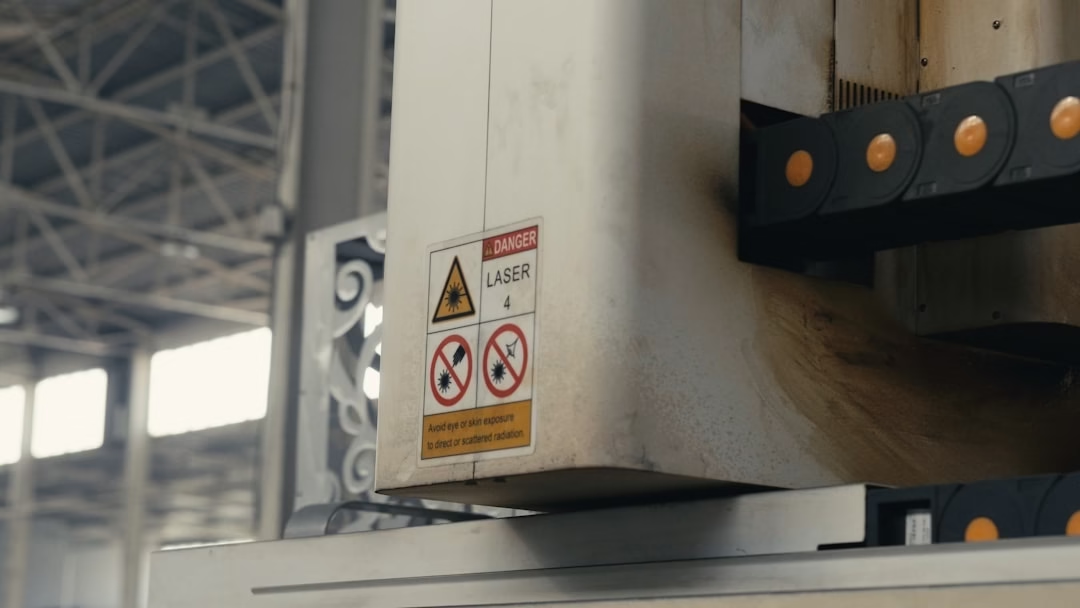
In the ever-evolving landscape of industrial operations, building automation has emerged as a game-changing technology that significantly enhances manufacturing safety and industrial security. Building automation refers to the centralized control and monitoring of a facility’s various systems, including heating, ventilation, air conditioning (HVAC), lighting, security, and safety systems. When applied to manufacturing environments, this technology plays a crucial role in optimizing operations, reducing risks, and ensuring a safer workplace for employees.
The importance of building automation in industrial safety has grown exponentially in recent years. As manufacturing processes become increasingly complex and interconnected, traditional manual safety measures are often insufficient to address the multifaceted risks present in modern industrial settings. Building automation systems offer a more comprehensive and responsive approach to safety management, enabling real-time monitoring, rapid incident response, and proactive risk mitigation.
One of the primary ways building automation enhances workplace safety and security is through the integration of various safety protocols and security measures into a centralized system. For instance, automated fire detection and suppression systems can quickly identify potential fire hazards and initiate appropriate responses without human intervention. Similarly, access control systems integrated with building automation can restrict unauthorized entry to sensitive areas, reducing the risk of security breaches and potential accidents.
Moreover, building automation systems can continuously monitor environmental conditions such as air quality, temperature, and humidity. This capability is particularly crucial in manufacturing environments where maintaining optimal conditions is essential for both worker safety and product quality. By automatically adjusting ventilation systems or triggering alerts when conditions deviate from safe parameters, these systems play a vital role in preventing accidents and ensuring a healthy work environment.
The integration of Internet of Things (IoT) devices in manufacturing processes further amplifies the benefits of building automation. IoT sensors can collect vast amounts of data on equipment performance, energy consumption, and environmental conditions. When this data is fed into the building automation system, it enables more informed decision-making and predictive maintenance, ultimately contributing to a safer and more secure industrial environment.
Key Benefits of Building Automation for Safety and Security
The implementation of building automation in industrial settings offers numerous benefits that significantly enhance safety and security measures. One of the primary advantages is the reduction of human error in critical safety processes. Automated systems can consistently perform repetitive tasks and monitor conditions with a level of accuracy and vigilance that is difficult for human operators to maintain over extended periods. This increased reliability translates directly into improved safety outcomes and reduced incident rates.
Enhanced monitoring capabilities represent another crucial benefit of building automation systems. These systems provide real-time visibility into various aspects of the manufacturing environment, from equipment performance to environmental conditions. This continuous monitoring allows for immediate detection of potential safety hazards or security breaches. For example, if a piece of machinery begins to operate outside of its safe parameters, the system can automatically alert maintenance personnel or shut down the equipment to prevent accidents. This rapid response capability significantly reduces the risk of workplace injuries and equipment damage.
Building automation also plays a vital role in ensuring compliance with safety regulations and industry standards. Many industries are subject to strict safety guidelines and regulatory requirements. Automated systems can be programmed to enforce these standards consistently, maintaining logs and generating reports that demonstrate compliance. This not only helps in avoiding costly fines and legal issues but also fosters a culture of safety within the organization.
From an operational efficiency standpoint, building automation contributes to streamlined processes and improved response times to safety incidents. By integrating various systems such as access control, surveillance, and emergency response, automation enables a more coordinated and efficient approach to managing safety and security. For instance, in the event of a chemical spill, the system can simultaneously activate ventilation systems, alert emergency responders, and guide employees to safe evacuation routes through automated messaging and signage.
Data analytics capabilities inherent in modern building automation systems provide valuable insights for continuous improvement of safety measures. By analyzing patterns and trends in collected data, organizations can identify potential safety risks before they manifest into incidents. This proactive approach to safety management allows for the implementation of preventive measures, further enhancing the overall safety profile of the manufacturing facility.
Smart security systems integrated with building automation offer advanced protection against both internal and external threats. These systems can include features such as biometric access control, intelligent video surveillance with anomaly detection, and automated lockdown procedures in case of security breaches. The integration of these security measures with other building systems creates a comprehensive security framework that is both robust and adaptable to evolving threats.
Integration of Building Automation with Existing Safety Protocols
The integration of building automation systems with existing safety protocols is a critical process that requires careful planning and execution. While the benefits of such integration are significant, organizations often face challenges in seamlessly incorporating automated systems into their established safety frameworks. The key to successful integration lies in adopting a holistic approach that considers both technological and operational aspects.
One of the primary strategies for effective integration is to conduct a thorough assessment of current safety protocols and identify areas where automation can enhance or complement existing measures. This process involves close collaboration between safety managers, IT professionals, and automation specialists to ensure that the new systems align with safety objectives and regulatory requirements. For instance, if a manufacturing facility already has a manual emergency shutdown procedure, the building automation system can be programmed to initiate this procedure automatically under specific conditions, while still allowing for manual override if necessary.
Organizations may encounter several challenges during the integration process. One common issue is the compatibility of new automated systems with legacy equipment and protocols. In many cases, older machinery or systems may not have the capability to interface directly with modern building automation platforms. To address this, companies may need to invest in middleware solutions or consider phased upgrades of their equipment to ensure seamless integration.
Another challenge lies in ensuring that the integration of automation does not inadvertently create new safety risks or vulnerabilities. For example, while automated systems can enhance security, they may also introduce cybersecurity risks if not properly secured. To mitigate this, organizations must implement robust cybersecurity measures as part of their integration strategy. This includes implementing firewalls, encryption protocols, and regular security audits to protect the automated systems from potential cyber threats.
Best practices for integrating building automation with existing safety protocols include adopting a modular approach to implementation. This allows organizations to integrate automation in phases, starting with less critical systems and gradually expanding to more crucial safety functions. Such an approach enables thorough testing and validation at each stage, minimizing disruptions to ongoing operations and allowing for adjustments based on real-world performance.
Training and change management are also crucial aspects of successful integration. Employees at all levels, from operators to management, need to understand how the new automated systems work and how they interface with existing safety protocols. Comprehensive training programs should be developed to ensure that staff can effectively utilize the new systems and respond appropriately in both routine and emergency situations.
Furthermore, it’s essential to establish clear protocols for system maintenance and updates. Regular maintenance ensures that both automated and manual safety systems continue to function optimally, while updates allow for the incorporation of new features and security patches. A well-defined update process helps prevent potential conflicts between system updates and existing safety protocols.
Lastly, organizations should implement a robust feedback mechanism that allows for continuous improvement of the integrated system. This can include regular safety audits, incident reviews, and employee feedback sessions. By actively seeking and incorporating feedback, companies can refine their integrated safety systems over time, addressing any shortcomings and enhancing overall effectiveness.
Challenges and Solutions in Adopting Building Automation
While the benefits of building automation for manufacturing safety and industrial security are significant, organizations often face several challenges in adopting these technologies. Understanding these challenges and implementing effective solutions is crucial for successful implementation and long-term success.
One of the primary obstacles is the initial cost of implementation. Building automation systems often require substantial upfront investment in hardware, software, and infrastructure. This can be particularly challenging for small to medium-sized manufacturers with limited budgets. To address this, organizations can consider phased implementation approaches, prioritizing critical safety systems first and gradually expanding the automation scope over time. Additionally, exploring leasing options or seeking government grants for safety improvements can help offset initial costs.
Another significant challenge is resistance to change among employees. Many workers may be accustomed to traditional safety protocols and may view automation as a threat to their jobs or as an unnecessary complication. Overcoming this resistance requires a comprehensive change management strategy. This should include clear communication about the benefits of automation, not just for the company but for employee safety as well. Involving employees in the planning and implementation process can also foster a sense of ownership and increase acceptance of the new systems.
Technical complexity is another hurdle that organizations must overcome. Building automation systems often involve sophisticated technologies that require specialized knowledge to implement and maintain. Many companies lack the in-house expertise to manage these systems effectively. To address this, organizations can invest in training programs for existing staff or consider partnering with external experts or system integrators. Developing long-term relationships with vendors who offer ongoing support and training can also help bridge the knowledge gap.
Data security and privacy concerns present another challenge in the adoption of building automation. As these systems collect and process large amounts of data, ensuring the security of this information becomes paramount. Organizations must implement robust cybersecurity measures, including encryption, access controls, and regular security audits. Compliance with data protection regulations such as GDPR or industry-specific standards is also crucial. Working with cybersecurity experts to develop a comprehensive security strategy can help mitigate these risks.
Integration with legacy systems is often a significant hurdle, especially in older manufacturing facilities. Many existing machines and systems may not be compatible with modern automation technologies. To overcome this, companies may need to invest in custom integration solutions or consider gradual upgrades of legacy equipment. In some cases, using middleware or IoT gateways can help bridge the gap between older systems and new automation platforms.
Scalability and future-proofing present another challenge. As technology evolves rapidly, there’s a risk that today’s automation solutions may become obsolete quickly. To address this, organizations should focus on implementing flexible, modular systems that can be easily upgraded or expanded. Choosing open standards and interoperable solutions can also help ensure that systems remain adaptable to future technological advancements.
Lastly, maintaining a balance between automation and human oversight is crucial. Over-reliance on automated systems can lead to complacency and a decrease in situational awareness among staff. To mitigate this, organizations should implement hybrid approaches that combine the strengths of automation with human judgment and expertise. Regular training and drills can help maintain human competency in safety procedures, even as automation takes on more routine tasks.
By addressing these challenges proactively and implementing thoughtful solutions, organizations can successfully adopt building automation technologies, enhancing their manufacturing safety and industrial security posture. accurate predictions and faster response times to potential safety incidents. As these systems become more sophisticated, they will be able to anticipate and prevent safety issues before they occur, moving from a reactive to a proactive safety management approach.
Another emerging trend is the increased use of advanced robotics and automation in safety-critical tasks. Collaborative robots, or cobots, are being developed to work alongside human workers in potentially hazardous environments, reducing the risk of injury to human personnel. These robots can be equipped with advanced sensors and AI to perform tasks that are dangerous for humans, such as handling hazardous materials or working in extreme temperatures.
The concept of digital twins is also gaining traction in the realm of building automation for industrial safety. A digital twin is a virtual replica of a physical system or process, allowing for real-time monitoring and simulation of various scenarios. In the context of manufacturing safety, digital twins can be used to simulate emergency situations, test safety protocols, and optimize evacuation procedures without putting employees at risk. This technology enables organizations to identify potential safety issues and refine their protocols in a virtual environment before implementing changes in the real world.
Edge computing is another trend that is set to revolutionize building automation in manufacturing environments. By processing data closer to its source, edge computing reduces latency and enables faster decision-making in safety-critical situations. This is particularly important in scenarios where split-second reactions can mean the difference between safety and disaster. Edge computing also enhances the reliability of safety systems by reducing dependence on central servers or cloud connectivity.
The integration of 5G technology is expected to further enhance the capabilities of building automation systems. With its high-speed, low-latency connectivity, 5G will enable more devices to be connected simultaneously, facilitating the deployment of a dense network of sensors and IoT devices throughout manufacturing facilities. This will provide more comprehensive and real-time data on safety conditions, enabling faster and more accurate responses to potential hazards.
Augmented reality (AR) and virtual reality (VR) technologies are also poised to play a significant role in the future of industrial safety. AR can be used to provide workers with real-time safety information and guidance overlaid on their field of view, helping them navigate potentially hazardous environments more safely. VR, on the other hand, can be used for immersive safety training, allowing employees to experience and respond to dangerous situations in a safe, controlled environment.
Blockchain technology is emerging as a potential solution for enhancing the security and integrity of safety-related data in building automation systems. By providing a tamper-proof, distributed ledger of safety records and incident reports, blockchain can help ensure the authenticity and traceability of safety-related information. This can be particularly valuable in industries where regulatory compliance and auditing are critical.
As these technologies continue to evolve and converge, the future of building automation in manufacturing safety and industrial security looks increasingly integrated and intelligent. The trend is moving towards creating comprehensive, adaptive safety ecosystems that can anticipate, prevent, and respond to a wide range of safety and security challenges.
However, with these advancements come new challenges, particularly in the areas of data privacy, cybersecurity, and the ethical use of AI. As building automation systems become more sophisticated and interconnected, ensuring the security and integrity of these systems will be paramount. Organizations will need to stay abreast of these technological developments and their implications, continually updating their safety strategies to leverage new capabilities while mitigating potential risks.
Implementing Building Automation: A Step-by-Step Guide
Implementing building automation for safety and security in a manufacturing environment is a complex process that requires careful planning and execution. The following step-by-step guide outlines the key considerations and best practices for a successful implementation:
1. Assessment and Planning: The first step is to conduct a comprehensive assessment of the current safety and security measures in place. This involves identifying potential risks, evaluating existing systems, and determining areas where automation can provide the most significant benefits. Based on this assessment, develop a detailed plan that outlines specific goals, timelines, and resource requirements.
2. Stakeholder Engagement: Engage all relevant stakeholders early in the process. This includes management, safety personnel, IT teams, and floor workers. Their input and buy-in are crucial for successful implementation. Address any concerns and ensure that everyone understands the benefits and potential challenges of the new system.
3. System Design: Work with building automation experts to design a system that meets your specific needs. Consider factors such as scalability, integration with existing systems, and future expansion possibilities. Ensure that the design complies with all relevant safety standards and regulations.
4. Vendor Selection: Choose vendors and technology partners carefully. Look for providers with experience in industrial settings and a track record of successful implementations. Consider factors such as technical support, training offerings, and long-term partnership potential.
5. Phased Implementation: Implement the building automation system in phases, starting with less critical areas and gradually expanding to more crucial safety and security functions. This approach allows for testing and refinement at each stage, minimizing disruptions to ongoing operations.
6. Integration and Testing: Carefully integrate the new automation systems with existing safety protocols and equipment. Conduct thorough testing at each stage of implementation to ensure all systems are functioning correctly and communicating effectively with each other.
7. Training and Education: Provide comprehensive training to all staff who will interact with the new systems. This includes not only technical training on how to use the systems but also education on the importance of building automation in enhancing safety and security.
8. Monitoring and Optimization: Once the system is operational, continuously monitor its performance and gather feedback from users. Use this information to optimize the system, making adjustments and refinements as necessary to improve its effectiveness.
9. Regular Maintenance and Updates: Establish a regular maintenance schedule to ensure all components of the building automation system continue to function optimally. Stay informed about software updates and new features, implementing them as appropriate to keep the system current and secure.
10. Continuous Improvement: Treat the implementation of building automation as an ongoing process rather than a one-time project. Regularly review the system’s performance against safety and security goals, and be prepared to adapt and evolve the system as new technologies and best practices emerge.
By following these steps and maintaining a focus on continuous improvement, organizations can successfully implement building automation systems that significantly enhance their manufacturing safety and industrial security measures.
Manufacturing and industrial facilities carry environmental risks that office buildings do not — heat accumulation in production areas, VOC exposure from materials and processes, and CO2 buildup in spaces with limited ventilation. Step-by-step building automation guides often focus on commercial offices, but the underlying monitoring need in industrial settings is just as real: knowing what conditions are present across a facility at all times, not just when someone walks the floor.
Nosy monitors CO2, temperature, humidity, tVOCs, and IAQ continuously across commercial and industrial buildings, with readings every five minutes and a web-based dashboard that shows conditions across all sensor locations. Sensors use a wireless Bluetooth mesh that requires no wiring infrastructure, making multi-zone deployment practical across production floors and administrative areas alike. Building managers in manufacturing and commercial environments looking for affordable environmental monitoring can find more at Nosy for Offices.
Conclusion
Building automation has emerged as a transformative force in manufacturing environments, revolutionizing approaches to safety and security. By integrating advanced technologies such as AI, IoT, and real-time monitoring systems, building automation offers unprecedented capabilities for risk mitigation, incident prevention, and rapid response to safety threats.
The key takeaways from this discussion highlight the multifaceted benefits of building automation in industrial settings. These systems not only enhance safety measures through continuous monitoring and automated responses but also contribute to operational efficiency, regulatory compliance, and overall security. The ability to collect and analyze vast amounts of data enables proactive safety management, moving beyond traditional reactive approaches.
However, the implementation of building automation is not without its challenges. Organizations must navigate issues such as initial costs, technical complexity, and integration with legacy systems. Overcoming these hurdles requires careful planning, stakeholder engagement, and a commitment to ongoing learning and adaptation.
Looking to the future, the integration of building automation technologies in manufacturing safety and security is set to continue evolving. Emerging trends such as AI-driven predictive analytics, advanced robotics, and digital twins promise to further enhance the capabilities of these systems. As these technologies mature, they will enable even more sophisticated and proactive approaches to industrial safety and security.
The ongoing evolution of automation technologies in the context of industrial safety underscores the need for organizations to stay informed and adaptable. As new capabilities emerge, companies must be prepared to update their strategies and systems to leverage these advancements effectively. This may involve ongoing investment in technology, training, and infrastructure to ensure that safety and security measures remain at the cutting edge.
