
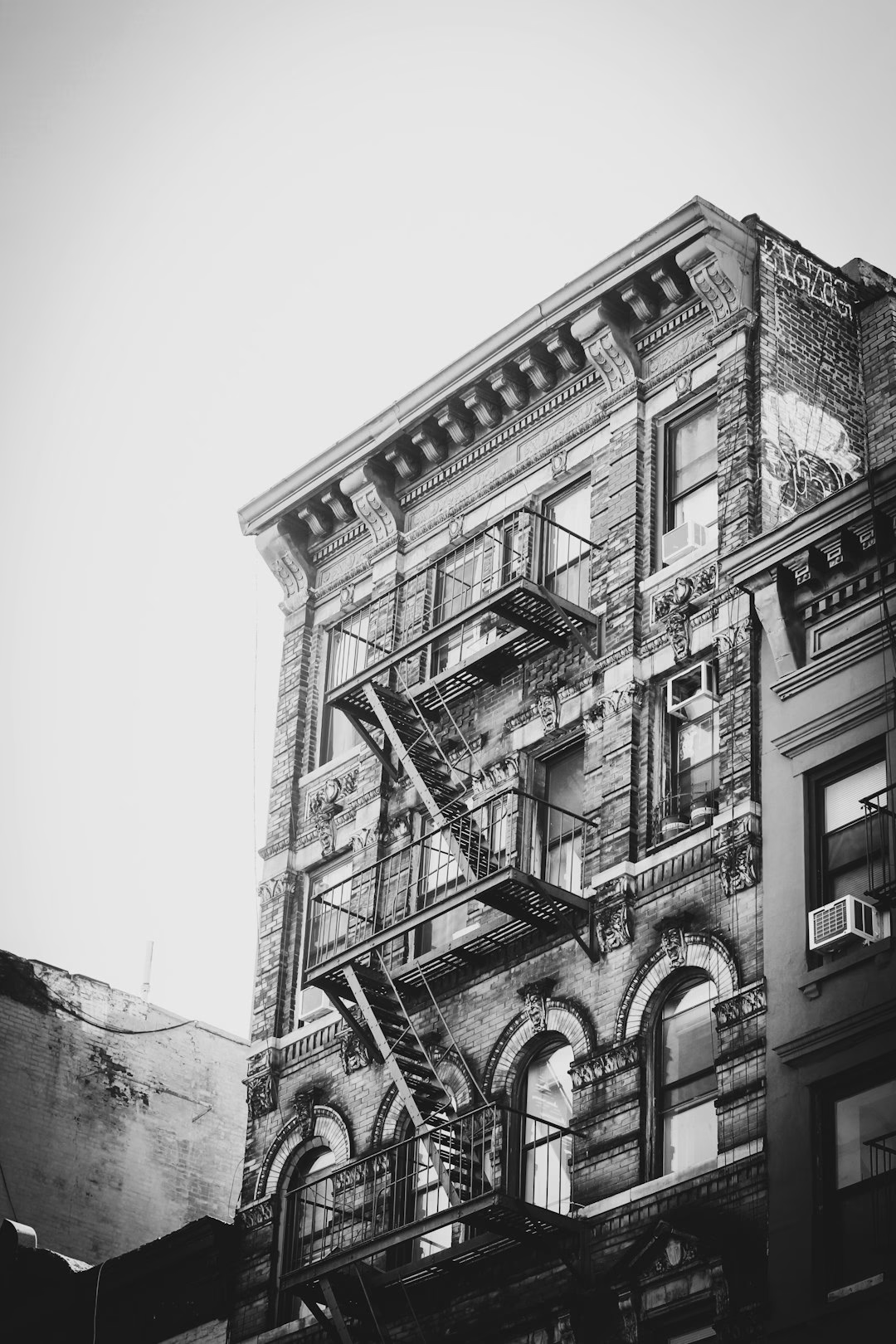
Introduction to LL97 Compliance for Small Buildings
Local Law 97 represents one of the most ambitious climate initiatives in the United States, fundamentally reshaping how New York City approaches building energy efficiency. Enacted as part of the Climate Mobilization Act in 2019, this groundbreaking legislation targets greenhouse gas emissions from the city’s largest buildings. While much attention focuses on large buildings, small building owners face equally important compliance obligations that require careful planning and strategic action.
The local law establishes strict emissions limits for covered buildings, setting carbon caps that become progressively more stringent over time. For building owners in New York City, understanding these requirements isn’t just about avoiding fines—it’s about participating in a citywide transformation toward sustainability. The legislation affects thousands of properties across all five boroughs, creating a new standard for building performance that prioritizes energy efficiency and environmental responsibility.
Small buildings under LL97 face unique challenges compared to their larger counterparts. These properties often operate with tighter budgets, less technical staff, and fewer resources to navigate complex regulatory requirements. However, NYC Local Law 97 recognizes these constraints and provides various pathways to compliance. Property owners can pursue energy efficiency upgrades, invest in renewable energy, or purchase renewable energy credits to meet their obligations. The flexibility built into the legislation acknowledges that different properties require different solutions.
The compliance timeline unfolds in two major periods. The first compliance period runs from 2024 through 2029, with emission limits calculated based on building type and square footage. The second period, spanning 2030 through 2034, introduces even more stringent requirements. Building owners must report their annual building emissions to the NYC Department of Buildings, demonstrating progress toward meeting their specific limits. Missing these deadlines or exceeding emissions thresholds triggers substantial fines that can significantly impact a property’s bottom line.
Understanding ll97 compliance for small buildings starts with recognizing that this local law isn’t merely a regulatory burden—it represents an opportunity. Properties that achieve early compliance often see reduced operating costs through lower energy bills, increased property values, and enhanced tenant satisfaction. Moreover, as climate concerns grow increasingly prominent among renters and buyers, buildings with strong energy performance stand out in competitive real estate markets. The initial investment in compliance typically pays dividends through long-term operational savings and market advantages.
Understanding the Basics of LL97
The foundation of LL97 compliance rests on understanding how the local law calculates emissions limits for individual buildings. Each property receives a specific annual emissions limit based on its occupancy classification and total square foot measurement. The NYC Department of Buildings assigns these limits using standardized factors that vary by building type, recognizing that residential buildings, commercial buildings, and mixed-use buildings have different energy profiles. Small building owners must first determine their classification to understand their specific obligations under the law.
Covered buildings under this local law include properties over twenty-five thousand square feet, though certain exemptions exist for affordable housing and other specific categories. The covered buildings list published by New York City identifies which properties must comply. Building owners should verify whether their property appears on this list and understand their classification. Multifamily buildings, residential buildings, and commercial properties all face different emission limits based on their occupancy group. This classification system acknowledges the varying energy demands across different building types.
Assessing current energy efficiency levels requires a systematic approach that begins with data collection. An owner needs to gather utility bills spanning at least one full year, providing a baseline understanding of energy consumption patterns. This information reveals seasonal variations, identifies unusual spikes in usage, and establishes the starting point for improvement efforts. Additionally, property owners should document their building’s physical characteristics, including age, insulation quality, window conditions, heating and cooling systems, and any previous energy upgrades. This comprehensive inventory helps identify the most impactful opportunities for improvement.
Conducting a thorough energy audit represents a critical step in the compliance journey. Professional energy auditors examine every aspect of building performance, from the building envelope to mechanical systems and lighting. A registered design professional can provide detailed assessments that meet New York City requirements for certain compliance paths. These experts use specialized equipment to detect air leaks, measure insulation effectiveness, and assess HVAC efficiency. The audit process typically uncovers multiple opportunities for improvement, ranging from simple fixes like weather stripping to major investments like heating system replacements.
Improving energy efficiency to meet LL97 standards involves prioritizing interventions based on cost-effectiveness and impact. The most successful compliance strategies focus on measures that deliver the greatest emissions reductions relative to their implementation costs. For many small buildings, this means starting with the building envelope—the barrier between interior and exterior spaces. Upgrading insulation, replacing old windows with energy-efficient models, and sealing air leaks can dramatically reduce heating and cooling demands. These improvements create lasting benefits that compound over time as clean energy becomes more prevalent.
Beyond envelope improvements, building systems require careful evaluation and potential upgrades. Heating systems in older buildings often operate at significantly lower efficiency than modern alternatives. Replacing an aging boiler with a high-efficiency model can reduce fuel consumption by thirty percent or more while directly lowering building emissions. Similarly, upgrading to LED lighting throughout the property cuts electricity usage while improving light quality. Water heating represents another major energy consumer that often responds well to efficiency improvements through insulation, temperature optimization, or equipment replacement.
The compliance checklist for building owners includes several essential actions beyond physical improvements. Owners must register with the NYC Department of Buildings and submit annual emissions reports through the city’s online portal. These reports require accurate utility data and proper calculations to determine total greenhouse gas emissions. Additionally, owners should document all energy efficiency investments, maintain records of renewable energy credit purchases, and track progress toward meeting their specific emissions limit. Staying organized and proactive prevents last-minute scrambles as reporting deadlines approach during each compliance period.
Strategies for Improving Energy Efficiency
Retrofit strategies for small buildings demand careful consideration of both immediate impacts and long-term value. The most effective approaches combine multiple interventions that work synergistically to reduce overall energy consumption and building emissions. Building owners should begin by addressing the most significant sources of energy waste, which audits typically reveal with clarity. However, successful retrofits require more than just technical solutions—they need realistic budgets, reliable contractors, and realistic timelines that minimize disruption to tenants and operations.
One particularly effective strategy involves upgrading the building envelope through a comprehensive approach. This means examining the entire barrier between interior and exterior spaces, identifying weaknesses, and implementing coordinated improvements. Attic insulation often provides the highest return on investment, as heat naturally rises and escapes through poorly insulated roof areas. Wall insulation improves comfort while reducing heating and cooling loads. Window replacements eliminate drafts and reduce heat transfer, though the substantial upfront cost requires careful evaluation against energy savings and potential utility rebates that the Urban Green Council and similar organizations help property owners access.
HVAC system upgrades contribute significantly to ll97 compliance by directly reducing fuel consumption and associated building emissions. Modern heating systems incorporate advanced controls, improved combustion efficiency, and better heat distribution that older systems cannot match. For small buildings with central heating, replacing an aging boiler with a condensing model captures waste heat that conventional systems exhaust. These high-efficiency units extract additional energy from combustion gases, achieving efficiency ratings above ninety percent compared to sixty or seventy percent for older equipment, substantially reducing emissions limits violations.
Air conditioning and ventilation improvements complement heating upgrades by reducing electricity consumption during warmer months. Many older buildings in New York rely on individual window units that consume excessive power while providing uneven cooling. Installing ductless mini-split systems offers efficient climate control with precise temperature management for different zones. These systems use inverter technology that adjusts compressor speed based on demand, eliminating the energy waste associated with constant on-off cycling. Additionally, improved ventilation strategies can reduce cooling needs by leveraging natural airflow when outdoor conditions permit.
Sustainable building materials play an increasingly important role in energy efficiency through their inherent properties and long-term performance. When undertaking renovations or repairs, choosing materials with superior insulation values, durability, and low environmental impact enhances overall building performance. For example, spray foam insulation provides better air sealing than traditional fiberglass batts, preventing the convective heat loss that undermines insulation effectiveness. Reflective roofing materials reduce heat absorption during summer months, lowering cooling demands. These material choices compound their benefits over decades of building life while supporting compliance with proposed rules for future periods.
Energy-saving technologies extend beyond major system replacements to include numerous smaller interventions that collectively make substantial differences in reducing building emissions. Programmable thermostats prevent energy waste by adjusting temperatures based on occupancy patterns rather than maintaining constant settings. Occupancy sensors for lighting ensure that common areas and vacant units don’t unnecessarily consume electricity. Water-saving fixtures reduce both water usage and the energy required for water heating. Smart building controls integrate multiple systems, optimizing performance while providing data that helps identify additional opportunities for improvement along each compliance path.
Navigating Legal and Regulatory Requirements
The legal implications of failing to comply with LL97 carry serious consequences that small building owners cannot afford to ignore. The local law imposes civil penalties based on the extent and duration of non-compliance, calculated per metric ton of carbon dioxide equivalent emissions exceeding the annual limit. These fines can quickly accumulate into substantial financial burdens, particularly for buildings that significantly exceed their emission limits. In the first compliance period through 2029, fines start at two hundred sixty-eight dollars per ton of excess emissions. The second period beginning in 2030 increases this amount significantly, creating escalating pressure for compliance.
Beyond direct fines, non-compliance creates additional risks that affect property values and operational viability in the New York real estate market. Buildings with documented violations may face difficulties securing financing or refinancing existing loans. Prospective buyers often hesitate to purchase properties with compliance issues, knowing they will inherit both the violations and the costs of achieving compliance. Tenants increasingly prioritize sustainability when choosing where to live or conduct business, making non-compliant buildings less attractive in competitive markets. These indirect consequences can ultimately prove more costly than the direct fines themselves.
Navigating the building permit process for energy efficiency upgrades requires understanding which improvements trigger permit requirements and how to satisfy them efficiently. Major system replacements, structural modifications, and electrical work typically require permits from the New York City Department of Buildings. The application process involves submitting detailed plans, demonstrating code compliance, and paying applicable fees. While this bureaucratic process can seem daunting, working with experienced contractors or a registered design professional familiar with local requirements streamlines approval. Many energy efficiency improvements qualify for expedited review under city programs designed to encourage sustainability investments.
Recent updates to New York City building codes increasingly emphasize energy performance and climate considerations. The city regularly revises its Energy Conservation Code to align with evolving best practices and technological capabilities. These updates affect both new construction and substantial renovations, requiring higher levels of insulation, more efficient mechanical systems, and better air sealing than previous standards demanded. Small building owners planning major work must ensure their projects comply with current codes and any proposed rules, which may exceed the minimum requirements for NYC LL97 compliance but ultimately deliver superior long-term building performance.
Developing effective legal compliance strategies requires proactive planning rather than reactive responses to deadlines. Building owners should establish clear timelines for achieving compliance well ahead of reporting dates, allowing buffer time for unexpected delays or complications. The New York City Council continues monitoring LL97 implementation and may introduce adjustments or additional support programs. Engaging professional help—whether energy consultants, engineers, or specialized attorneys—provides expert guidance through complex requirements. Additionally, staying informed about regulatory changes, available incentives, and emerging compliance paths ensures that strategies remain current and effective as the regulatory landscape evolves.
Documentation plays a crucial role in demonstrating compliance and protecting against potential disputes. Building owners should maintain comprehensive records of all energy efficiency investments, including contracts, invoices, technical specifications, and performance data. Annual emissions reports require supporting documentation that city inspectors may review. Renewable energy credit purchases need proper certificates and registration. This organized record-keeping not only facilitates reporting but also provides valuable information for tracking progress, justifying investments to stakeholders, and planning future improvements throughout each compliance period.
Resources and Tools for Compliance
Numerous resources exist to help small buildings navigate LL97 compliance, though finding and accessing them requires some research and initiative. The NYC Department of Buildings maintains extensive online resources explaining the local law, providing calculation tools, and offering guidance on reporting requirements. These official resources represent the authoritative source for understanding obligations and accessing necessary forms. However, the technical nature of some materials can challenge building owners without engineering or environmental backgrounds, making supplementary resources valuable.
NYC Accelerator provides free advisory services specifically designed to help property owners achieve energy efficiency and emissions reductions. This city-funded program offers one-on-one consultations with technical experts who can explain compliance requirements, identify potential strategies, and connect owners with qualified contractors. The program also hosts workshops and training sessions covering various aspects of building energy efficiency and emissions reduction. For small building owners with limited resources, these free services provide invaluable support that might otherwise require expensive private consultants.
The Building Energy Exchange serves as another valuable resource center, offering educational programs, technical assistance, and networking opportunities for building owners and real estate professionals. This organization helps property owners understand the covered buildings list, navigate different compliance paths, and learn about emerging technologies. Their programs connect building owners with registered design professionals and contractors experienced in energy efficiency retrofits. Participating in these educational opportunities helps owners make informed decisions about their compliance strategies.
Energy audit checklists and sustainability assessment tools structure the evaluation process, ensuring comprehensive analysis of building performance. These tools guide users through systematic examination of all major energy systems and potential improvement opportunities. Some checklists focus on quick walk-through assessments that building owners can complete themselves, identifying obvious issues like drafty windows or inefficient lighting. More detailed tools support professional energy audits, organizing data collection and analysis in standardized formats that facilitate comparison across different buildings or time periods.
Financial incentives and rebate programs significantly reduce the cost of energy efficiency improvements, making compliance more affordable for budget-conscious building owners. Con Edison and other utilities offer substantial rebates for qualifying upgrades to heating systems, insulation, lighting, and other measures that reduce building emissions. New York State programs provide additional financial support through tax credits and low-interest financing. Federal tax incentives reward energy efficiency investments in residential buildings. Combining multiple incentive programs can offset a substantial portion of upgrade costs, improving the financial return on compliance investments.
Renewable energy solutions for ll97 compliance extend beyond on-site installations to include various alternative pathways. While rooftop solar panels represent the most visible renewable energy option, many small buildings in New York lack adequate space or proper roof orientation for effective solar generation. Community solar programs allow building owners to purchase renewable energy generated off-site, receiving credits on their utility bills while supporting clean energy development. Renewable energy credits provide another compliance option, though this approach doesn’t reduce actual building emissions or energy costs—it simply offsets reported emissions for regulatory purposes during the compliance period.
Green building certifications like LEED or ENERGY STAR offer frameworks for achieving superior energy performance beyond minimum LL 97 requirements. These voluntary programs establish rigorous standards for sustainable building operation and provide third-party verification of achievements. While certification involves additional costs and effort, the resulting recognition can enhance property values, attract environmentally conscious tenants, and demonstrate commitment to sustainability. Some building owners in the New York real estate market pursue certification as part of broader sustainability strategies that view ll97 compliance as just one component of comprehensive environmental stewardship toward carbon neutrality.
Future Trends in Building Energy Efficiency
The building energy efficiency landscape continues evolving rapidly in New York City, driven by technological innovation, policy developments, and growing climate urgency. Small building owners who understand emerging trends can anticipate future requirements and make strategic decisions that maintain compliance over the long term. Beneficial electrification represents one significant trend, involving the replacement of fossil fuel systems with electric alternatives powered by increasingly clean energy grids. This shift fundamentally transforms how buildings consume energy, reducing direct building emissions while creating new opportunities for efficiency improvements.
Heat pump technology exemplifies the electrification trend, offering highly efficient heating and cooling using electricity rather than natural gas or oil. These systems extract heat from outdoor air even in cold weather, providing warmth while consuming far less energy than traditional heating methods. As electricity generation becomes cleaner through expanded renewable energy capacity, buildings using heat pumps automatically reduce their carbon footprint without any additional changes. New York State actively promotes heat pump adoption through substantial incentives, recognizing their potential to dramatically reduce building emissions and help property owners meet emission limits.
Energy storage technologies promise to reshape building energy management by enabling time-shifting of electricity consumption. Battery systems allow buildings to store electricity during periods of low demand and low prices, then use that stored energy during peak hours. This capability reduces electricity costs while supporting grid stability and increased renewable energy integration. Although currently expensive for most small buildings, declining battery costs suggest that storage will become increasingly accessible and economically attractive in coming years, particularly for covered buildings seeking optimal compliance paths.
Smart building technologies integrate sensors, controls, and data analytics to optimize energy performance continuously. These systems monitor real-time conditions throughout buildings, adjusting heating, cooling, ventilation, and lighting based on occupancy, weather, and other factors. Machine learning algorithms identify patterns and optimize operations beyond what static programming achieves. While sophisticated smart building systems were once limited to large buildings, scaled-down versions now make this technology accessible for smaller properties. Cloud-based platforms reduce upfront costs by eliminating the need for expensive on-site servers.
Regulatory changes will undoubtedly continue shaping compliance requirements and strategies beyond the current compliance period. The second compliance period beginning in 2030 includes significantly stricter emissions limits that many buildings cannot meet through efficiency improvements alone. This reality will drive increased adoption of renewable energy, beneficial electrification, and potentially carbon offset programs. The New York City Department of Buildings may adjust the local law based on early implementation experiences, potentially providing additional flexibility for certain building types like affordable housing or introducing new compliance paths through proposed rules. Building owners should monitor regulatory developments and participate in public comment opportunities to help shape future requirements.
Clean energy technologies under development promise even greater efficiency gains and emissions reduction. Advanced window coatings that change properties based on sunlight conditions could dramatically reduce heating and cooling needs. Building-integrated photovoltaics that incorporate solar generation into construction materials may make renewable energy generation practical for buildings where traditional panels don’t work. New insulation materials with superior performance in smaller thicknesses could enable envelope improvements where space constraints currently prevent upgrades. While these innovations may take years to reach widespread commercial availability, they illustrate the ongoing progress in building energy technology supporting the path toward carbon neutrality.
Small buildings subject to LL97 often have limited facilities staff and smaller budgets for compliance investments, which makes cost-effective monitoring more important than for large commercial properties. The challenge is that smaller buildings still need the same quality of environmental data to identify compliance opportunities, but they typically cannot afford enterprise-level building automation systems designed for much larger installations.
Nosy is designed for commercial buildings under 100,000 square feet, offering continuous monitoring of temperature, humidity, CO2, occupancy, and tVOCs at hardware costs under $250 per sensor with a SaaS subscription of $2-5 per month per sensor. The wireless Bluetooth mesh network installs without electricians, wiring, or building IT changes, making it accessible for buildings with lean facilities teams. Small building owners working through LL97 compliance can find more at Nosy for Offices.
Conclusion
Small building owners face both challenges and opportunities as they navigate LL97 compliance requirements in New York City. The local law establishes clear expectations for emissions reduction, backed by substantial fines that make compliance a business necessity rather than an optional sustainability gesture. However, the compliance journey offers benefits extending far beyond avoiding penalties. Buildings that achieve superior energy efficiency enjoy reduced operating costs, enhanced real estate market value, and improved tenant satisfaction. These advantages compound over time, providing lasting returns on compliance investments.
Proactive preparation represents the most effective approach to ll97 compliance, allowing building owners to plan strategically rather than react frantically to approaching deadlines. Starting early creates opportunities to thoroughly evaluate options, compare contractors, access available incentives, and implement improvements without rushing. Early adopters also gain experience with new systems and technologies, identifying and resolving issues before stricter emission limits take effect in the next compliance period. This measured approach reduces stress, improves outcomes, and typically delivers better financial returns than last-minute compliance efforts.
Key strategies highlighted throughout this guide emphasize comprehensive approaches that address buildings holistically rather than implementing isolated improvements. Beginning with energy audits establishes baselines and identifies opportunities. Prioritizing envelope improvements and HVAC upgrades typically delivers the greatest emissions reductions. Leveraging available resources, incentives, and professional expertise makes compliance more affordable and successful. Maintaining thorough documentation supports reporting requirements and provides valuable information for ongoing management throughout each compliance period.
The broader significance of LL97 compliance extends beyond individual properties to encompass citywide climate goals and environmental justice. New York cannot achieve its ambitious emissions reduction targets without substantial improvements in building performance. Buildings account for roughly seventy percent of the city’s greenhouse gas emissions, making them the critical focus for climate action. Small buildings collectively represent a substantial portion of this impact, meaning that widespread compliance among smaller properties significantly contributes to city and state climate goals as outlined in the Climate Mobilization Act.
Energy efficiency standards established by NYC Local Law 97 will continue influencing building operations for decades to come. The local law creates a regulatory framework that progressively raises expectations, driving continuous improvement in building performance. Building owners who embrace this reality and view sustainability as an ongoing commitment rather than a one-time obligation position themselves for long-term success in the New York real estate market. As climate concerns intensify and regulations evolve, buildings with strong energy performance will increasingly stand out as desirable places to live, work, and invest.
Sustainable building practices benefit everyone—from property owners who save money, to tenants who enjoy comfortable spaces with lower utility bills, to communities that experience improved air quality and reduced climate impacts. LL97 compliance represents New York City’s commitment to confronting climate change through concrete action in the building sector. Small building owners play an essential role in this transformation, demonstrating that properties of all sizes can contribute meaningfully to creating a more sustainable urban environment for current and future generations while advancing toward carbon neutrality.
