
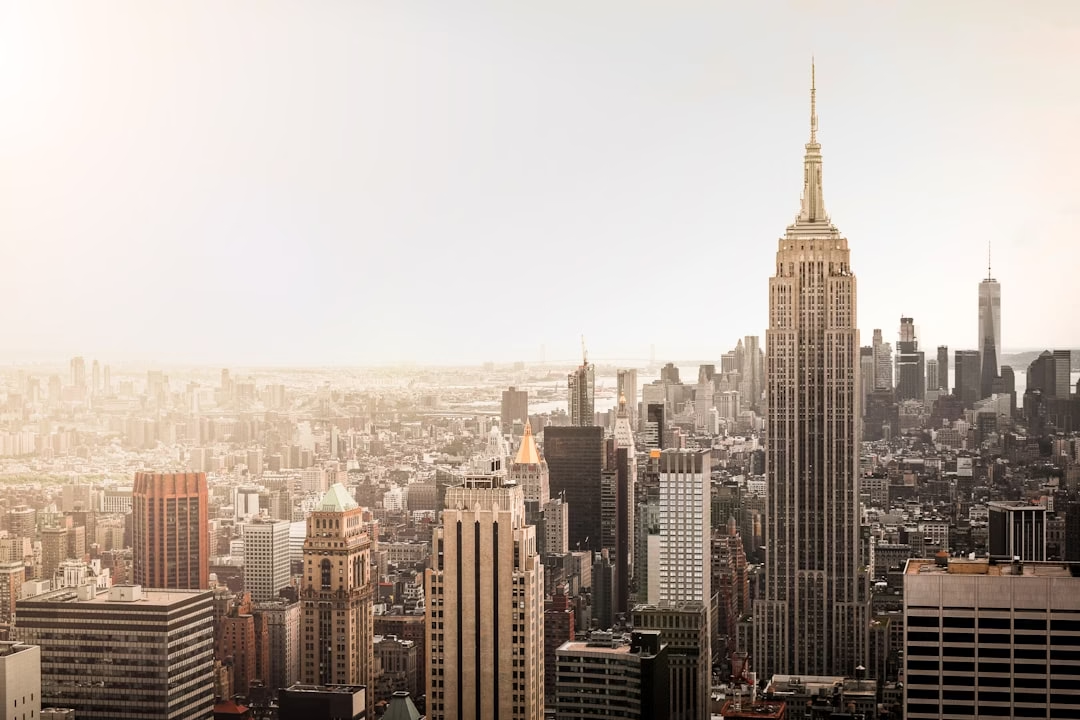
Introduction to LL97 and Sustainable Co-working Spaces
New York City’s Local Law 97 represents one of the most ambitious climate initiatives in the United States, fundamentally changing how building owners approach greenhouse gas emissions. This groundbreaking legislation, part of the Climate Mobilization Act, sets strict emission limits for buildings larger than 25,000 square feet. For co-working and variable-occupancy spaces, understanding LL97 compliance isn’t just about avoiding Local Law 97 fines—it’s about embracing a future where sustainability drives business success.
The local law targets covered buildings with specific emissions limits that become progressively stricter over time. Starting in 2024, building owners must meet initial carbon caps, with even more stringent requirements taking effect in 2030. The emissions limit structure under this NYC local law creates clear accountability for reducing carbon dioxide and other greenhouse gas emissions. Co-working and variable-occupancy spaces face unique challenges under these regulations because their energy usage fluctuates throughout the day and across seasons. Unlike traditional office buildings with predictable energy patterns, these flexible workspaces must design systems that efficiently handle variable loads while maintaining compliance.
The NYC Accelerator program offers free technical assistance to building owners navigating these requirements, providing energy audits, technical support, and financing options. This New York City initiative helps property owners understand their current building emissions and develop strategies to meet the emission limits established by local law. For multifamily buildings that include co-working spaces, the program provides specialized guidance on managing mixed-use properties under LL97 compliance requirements.
Sustainable design has become crucial for modern co-working spaces for several compelling reasons. First, members increasingly choose spaces that reflect their environmental values, making green certifications a competitive advantage in New York and beyond. Second, energy-efficient operations directly reduce operating costs, allowing space managers to offer better amenities or more competitive pricing. Third, sustainable practices enhance employee wellness and productivity, which attracts corporate clients seeking healthier work environments for their teams. Every New Yorker benefits when buildings reduce their carbon footprint, contributing to cleaner air and a healthier urban environment.
Meeting LL97 requirements while promoting sustainability requires a strategic approach that addresses both immediate compliance needs and long-term environmental goals. Co-working spaces can start by conducting comprehensive energy audits to identify their current carbon emissions per square foot. This baseline measurement helps owners understand where their building stands relative to the emissions limits and which systems require upgrades. Smart building technologies play a vital role in monitoring real-time energy use, allowing managers to adjust heating, cooling, and lighting based on actual occupancy rather than fixed schedules. Furthermore, integrating renewable energy sources, improving insulation, and upgrading to high-efficiency HVAC systems can significantly reduce building emissions while creating more comfortable workspaces.
Understanding Energy Efficiency and Sustainability Regulations
Energy efficiency regulations like Local Law 97 profoundly affect how co-working and variable-occupancy spaces operate and plan for the future. The law establishes annual emissions limits based on building type and square footage, with Local Law 97 fines for non-compliance reaching millions of dollars for larger properties. These fines start at $268 per metric ton of carbon dioxide equivalent emissions above the allowed limit, creating significant financial pressure on building owners who fail to reduce their greenhouse gas emissions.
For co-working spaces, these regulations impact everything from lease negotiations to capital improvement budgets. Tenants increasingly expect their landlords to demonstrate compliance with New York City building codes, while building owners must balance investment costs against potential fines and lost revenue from spaces that can’t attract environmentally conscious clients. The New York City Department of Buildings enforces these regulations, requiring annual reporting of energy consumption and building emissions through the city’s benchmarking system.
The financial implications extend beyond direct penalties for exceeding emission limits. Non-compliant NYC buildings face reduced property values, higher insurance costs, and difficulty securing financing for renovations. Conversely, spaces that exceed compliance requirements often command premium rents and enjoy higher occupancy rates. Additionally, the operational cost savings from improved energy efficiency can offset initial investment within a few years, creating a strong business case for proactive compliance measures rather than last-minute retrofits. New York State has also implemented complementary policies that support clean energy adoption, creating additional incentives for building owners to reduce their carbon emissions.
Several key components of LL97 compliance demand attention from co-working space operators and their building owners. The NYC local law uses emissions intensity limits measured in kilograms of carbon dioxide equivalent per square foot annually. Different property types have different emission limits, with multifamily buildings, offices, and mixed-use properties each facing tailored requirements. Variable-occupancy spaces must demonstrate compliance through careful measurement and reporting, tracking energy usage across different usage patterns throughout the year.
Understanding covered buildings is essential for determining whether LL97 for co-working and variable-occupancy spaces applies to a particular property. Generally, buildings exceeding 25,000 square feet fall under the regulations, though certain exemptions exist for affordable housing and other special categories. NYC buildings that house multiple tenants require coordinated efforts to reduce overall building emissions while allowing individual spaces to maintain their operations. A registered design professional or professional engineer often assists building owners in developing compliance strategies that address the specific challenges of their property type.
The Urban Green Council, which helped draft the Climate Mobilization Act, provides extensive resources for understanding local law requirements. Their guidance helps building owners navigate the complexities of measuring greenhouse gas emissions, calculating emission limits, and implementing effective reduction strategies. For residential buildings with co-working components, the council offers specialized advice on managing mixed-use compliance scenarios.
Navigating the complexities of sustainability regulations requires both technical knowledge and strategic planning. Building owners should start by engaging qualified engineers who specialize in energy efficiency and understand New York City building codes. These professionals can assess current systems, identify cost-effective improvements, and develop comprehensive decarbonization roadmaps. A registered design professional can evaluate building-specific challenges and opportunities, ensuring that improvement plans meet both regulatory requirements and operational needs. Working with sustainability consultants helps owners prioritize investments based on their impact on reducing annual emissions and return on investment.
Many New York City buildings benefit from phased approaches that spread costs over several years while steadily improving performance toward compliance goals. The NYC Accelerator provides technical assistance throughout this process, helping building owners access financing options and understand the latest clean energy technologies. For multifamily properties with variable-occupancy spaces, coordinating improvements across different building systems while maintaining tenant comfort requires careful planning and expert guidance.
Best Practices for Sustainable Co-working Space Design
Designing sustainable co-working and variable-occupancy spaces requires a holistic approach that integrates environmental performance with user experience. The most successful spaces recognize that sustainability and functionality aren’t competing priorities but complementary goals that enhance each other. Starting with the building envelope, proper insulation and high-performance windows reduce heating and cooling loads while improving comfort and reducing noise from outside. Natural lighting strategies minimize artificial lighting needs during daytime hours, reducing energy consumption while creating more pleasant work environments that support productivity and well-being.
Interior design choices significantly impact both sustainability and the overall workspace experience. Selecting sustainable building materials like reclaimed wood, recycled metal, and low-VOC paints creates healthier indoor air quality while reducing carbon emissions associated with construction and renovation. Modular furniture systems allow spaces to adapt to changing needs without requiring complete replacements, reducing waste and long-term costs. Additionally, incorporating biophilic design elements such as living walls and indoor plants improves air quality naturally while creating calming environments that reduce stress and enhance creativity among members.
Green workspace strategies extend beyond physical design to operational practices that maximize energy efficiency. Implementing smart lighting systems with occupancy sensors ensures lights only activate when people use spaces, preventing energy waste in unused areas. Installing programmable thermostats and zone-based climate control allows different areas to maintain appropriate temperatures based on actual use rather than heating or cooling entire facilities uniformly. These energy-saving measures directly reduce building emissions while lowering operational costs for owners and operators.
Water conservation measures like low-flow fixtures and rainwater collection systems for landscaping further reduce environmental impact while lowering utility costs. For New York City buildings subject to Local Law 97, every reduction in energy use contributes to meeting emissions limits and avoiding Local Law 97 fines. Building owners who implement comprehensive sustainability strategies often find that their investments pay for themselves through reduced energy bills and increased property values.
Smart building technologies revolutionize how co-working spaces manage their environmental performance and member experience. Advanced HVAC systems with variable refrigerant flow adjust cooling and heating based on real-time demand, maintaining comfort while minimizing energy consumption. Building management systems integrate lighting, climate control, and security into unified platforms that optimize performance across all systems simultaneously. These technologies provide detailed analytics on energy usage patterns, helping managers identify opportunities for further improvements and demonstrate LL97 compliance.
For co-working and variable-occupancy spaces in New York, monitoring systems track energy consumption per square foot, providing the data needed for annual emissions reporting to the New York City Department of Buildings. This documentation proves compliance with NYC local law requirements while identifying opportunities to further reduce greenhouse gas emissions. A professional engineer can help interpret this data and recommend targeted improvements that deliver the greatest emission reductions.
Green building certifications play multiple roles in sustainable co-working space design, serving as roadmaps for sustainability and marketing tools that attract environmentally conscious members. LEED certification, the most recognized standard, evaluates buildings across several categories including energy efficiency, water usage, materials selection, and indoor environmental quality. Achieving LEED certification requires meeting specific performance benchmarks, pushing spaces to implement comprehensive sustainability strategies rather than piecemeal improvements.
The Urban Green Council recognizes that certifications drive continuous improvement by requiring documentation of sustainable practices and regular performance verification. Certified spaces often achieve 25-40% lower energy costs compared to conventional buildings, directly improving profitability while reducing carbon dioxide emissions. Moreover, certifications enhance marketability, as corporate clients increasingly require their real estate partners to demonstrate environmental responsibility through third-party verified standards. For NYC buildings subject to Local Law 97, certifications provide additional validation that the property meets or exceeds emission limits established by local law.
Energy Efficiency Strategies for Co-working Spaces
Implementing energy efficiency strategies compliant with LL97 for co-working and variable-occupancy spaces requires understanding both the technical requirements and practical realities of flexible work environments. Co-working spaces can start with relatively simple measures that deliver immediate results in reducing energy consumption and building emissions. Replacing traditional lighting with LED fixtures throughout the facility cuts energy use by 75% compared to incandescent lighting while lasting significantly longer, reducing both energy costs and maintenance expenses.
Upgrading to Energy Star-rated appliances and equipment in kitchens, break rooms, and office areas further reduces consumption without compromising functionality or user experience. For building owners in New York City, these improvements directly contribute to meeting emissions limits while creating more sustainable operations. Every kilowatt-hour of electricity saved reduces greenhouse gas emissions and moves the property closer to LL97 compliance, helping avoid Local Law 97 fines that can reach thousands of dollars annually.
HVAC systems typically account for the largest portion of energy usage in commercial buildings, making them a critical focus for efficiency improvements and emission reductions. Modern systems with variable speed drives adjust their output based on actual cooling or heating needs rather than running at full capacity constantly. Regular maintenance ensures systems operate at peak efficiency, preventing energy waste from clogged filters, refrigerant leaks, or worn components. A registered design professional can evaluate existing HVAC systems and recommend upgrades that deliver the greatest reductions in building emissions per square foot.
Furthermore, installing heat recovery ventilators captures waste heat from exhaust air to pre-warm incoming fresh air during winter, significantly reducing heating loads while maintaining excellent indoor air quality. These systems particularly benefit co-working and variable-occupancy spaces in New York where winter heating demands contribute substantially to annual emissions. The NYC Accelerator provides technical assistance for evaluating and financing these HVAC improvements, helping building owners navigate the complexities of system upgrades.
Smart building technologies enable unprecedented control over energy consumption by providing real-time data and automated responses to changing conditions. Occupancy sensors throughout the facility detect when spaces are in use, automatically adjusting lighting, temperature, and ventilation accordingly. These systems prevent the common waste of conditioning empty rooms while ensuring comfortable environments when members arrive. For variable-occupancy spaces, this technology proves essential for managing fluctuating energy usage patterns efficiently.
Advanced analytics platforms aggregate data from all building systems, identifying patterns and anomalies that indicate opportunities for optimization or signal maintenance needs before they escalate into larger problems. Building owners can track energy use per square foot across different times of day and year, understanding how occupancy patterns affect overall building emissions. This data informs decisions about operational adjustments and capital improvements, ensuring investments deliver maximum emission reductions and move the property toward LL97 compliance.
Integration with mobile apps allows members to reserve spaces, control environmental settings in their immediate area, and receive updates about building amenities. This technology enhances user experience while providing valuable data about space utilization patterns that inform operational decisions. For NYC buildings subject to local law requirements, demonstrating efficient energy management becomes a competitive advantage that attracts environmentally conscious tenants and corporate clients.
Flexible office design contributes substantially to energy efficiency by creating adaptable spaces that accommodate various work styles and group sizes without requiring separate dedicated rooms for each function. Open floor plans with movable partitions allow quick reconfiguration based on demand, ensuring the facility always uses space efficiently rather than maintaining oversized areas for occasional large gatherings. Hot desking and desk-sharing models reduce the total square footage needed for a given number of members, concentrating occupancy into smaller, more efficiently conditioned areas.
Activity-based working zones designate specific areas for focused individual work, collaborative team projects, casual conversations, and phone calls. This approach allows each zone to have environmental settings optimized for its purpose rather than trying to maintain uniform conditions throughout the entire building. Quiet focus areas can maintain cooler temperatures that promote alertness, while collaborative spaces might run slightly warmer to encourage social interaction. Phone booths and private offices need minimal conditioning when unoccupied, allowing smart systems to reduce their energy consumption between sessions.
Incorporating renewable energy sources represents another crucial strategy for reducing carbon emissions and achieving compliance with New York City’s emission limits. Building owners can install rooftop solar panels to generate clean energy onsite, directly offsetting electricity consumption and the associated greenhouse gas emissions. For multifamily buildings with co-working components, shared renewable energy systems distribute clean energy benefits across all tenants while reducing overall building emissions. The New York City Council has supported various programs that make renewable energy adoption more accessible and financially viable for building owners throughout the city.
The Role of Green Building Certifications in Co-working Spaces
Green building certifications provide standardized frameworks for evaluating and improving environmental performance across multiple dimensions. For co-working and variable-occupancy spaces in New York, these certifications offer clear benchmarks that guide sustainability efforts while providing third-party validation of achievements. The credibility that comes from certification helps spaces differentiate themselves in competitive markets where many operators claim environmental consciousness without documented proof of their actual performance regarding energy efficiency and emission reductions.
Beyond marketing benefits, certifications drive operational improvements that enhance profitability and resilience for building owners. The certification process requires comprehensive evaluation of current practices, revealing inefficiencies and opportunities that might otherwise go unnoticed. Required documentation creates accountability systems that maintain sustainable practices over time rather than allowing gradual drift back toward less efficient operations. For NYC buildings subject to Local Law 97, certifications provide additional assurance that the property meets emission limits and maintains LL97 compliance over the long term.
Regular recertification ensures spaces continue improving rather than resting on initial achievements, fostering cultures of continuous environmental enhancement. This ongoing commitment to reducing building emissions and improving energy efficiency aligns perfectly with the increasingly stringent emission limits that New York City will implement in future compliance periods. Building owners who pursue certifications position themselves as leaders in sustainability, attracting tenants who prioritize environmental responsibility.
Achieving green building certifications involves systematic evaluation across multiple categories and strategic implementation of improvements to meet specific criteria. The process typically begins with selecting the appropriate certification based on the space’s goals, location, and target market. LEED offers several rating systems tailored to different property types, with LEED for Commercial Interiors being particularly relevant for co-working spaces within larger buildings. The WELL Building Standard focuses on occupant health and wellness, addressing factors like air and water quality, nourishment, lighting, fitness opportunities, and thermal comfort.
Documentation requirements vary by certification but generally include detailed information about building systems, materials, operations, and performance metrics related to energy consumption and carbon emissions. Spaces must demonstrate compliance through utility bills, equipment specifications, material certifications, and operational policies. A professional engineer or registered design professional often assists with technical documentation, ensuring accuracy in reporting energy use per square foot and other critical metrics. Third-party verification through on-site inspections and document review ensures accuracy and prevents false claims.
The rigor of this process, while demanding, creates confidence among members and corporate clients that certified spaces genuinely deliver the environmental and health benefits they advertise. For building owners in New York City, certifications demonstrate commitment to sustainability that extends beyond mere compliance with local law to embrace best practices recognized globally. This commitment becomes increasingly important as the New York City Department continues raising environmental standards for commercial and residential buildings.
The impact on operational efficiency extends well beyond energy savings, though those typically represent the most significant financial benefit for building owners. Improved indoor air quality reduces absenteeism and enhances productivity, creating value for members while supporting retention and word-of-mouth marketing. Enhanced daylighting and better thermal comfort contribute to satisfaction and well-being, factors increasingly important to knowledge workers choosing where to work. Water efficiency measures reduce utility costs while demonstrating environmental stewardship in regions facing water scarcity challenges.
Comparing leading certifications helps co-working and variable-occupancy spaces select the most appropriate standard for their specific circumstances and goals. LEED certification enjoys the highest recognition globally and covers comprehensive sustainability criteria including site development, water efficiency, energy performance, materials selection, and indoor environmental quality. Achieving LEED certification typically requires 12-18 months and varies in cost depending on project size and complexity, but certified buildings often command 7-13% higher rents while using 25% less energy than conventional buildings.
The WELL Building Standard takes a human-centered approach, prioritizing occupant health and wellness alongside environmental sustainability. This certification particularly appeals to co-working spaces targeting health-conscious professionals and companies prioritizing employee well-being. WELL’s criteria address air quality through ventilation requirements and material restrictions, water quality through filtration standards, nourishment through healthy food access, lighting through circadian-friendly systems, fitness through active design features, comfort through acoustic and ergonomic standards, and mind through design elements supporting mental health.
The Living Building Challenge represents the most rigorous sustainability standard, requiring net-zero energy usage, water, and waste. While its demanding requirements make it less common for co-working spaces within existing NYC buildings, some forward-thinking owners pursue this certification to demonstrate exceptional commitment to reducing greenhouse gas emissions and achieving true sustainability. The Urban Green Council provides resources for building owners considering this ambitious certification path, helping them understand the technical and financial requirements involved.
Future Trends in Sustainable Co-working Space Design
The evolution of sustainable workspace design accelerates as technology advances and environmental awareness deepens across society. Looking toward 2024 and beyond, several emerging trends promise to reshape how co-working and variable-occupancy spaces approach sustainability while enhancing member experience. Artificial intelligence and machine learning algorithms will increasingly optimize building operations in real-time, predicting occupancy patterns and adjusting systems preemptively rather than reactively. These technologies can reduce energy consumption by 20-30% compared to traditional programmable systems while maintaining superior comfort through their ability to anticipate needs.
For building owners in New York City facing increasingly strict emission limits under Local Law 97, AI-powered systems offer powerful tools for minimizing greenhouse gas emissions while avoiding Local Law 97 fines. These advanced systems learn from patterns in energy usage and occupancy, continuously optimizing operations to reduce building emissions per square foot. The NYC Accelerator has begun incorporating guidance on smart building technologies in its technical assistance programs, recognizing their importance for achieving LL97 compliance in co-working and variable-occupancy spaces.
Carbon-neutral and carbon-negative design aspirations are shifting from aspirational goals to competitive necessities as corporate sustainability commitments drive demand for spaces that actively contribute to climate solutions. Future co-working spaces will incorporate onsite renewable energy generation through solar panels, wind turbines, or geothermal systems, moving beyond efficiency improvements to produce clean energy that eliminates carbon dioxide emissions from operations. Battery storage systems will capture excess renewable production for use during peak demand periods, reducing grid dependence while providing backup power during outages.
Some forward-thinking building owners are exploring carbon sequestration through innovative building materials that capture and store atmospheric carbon dioxide, effectively removing greenhouse gases while constructing or renovating facilities. These approaches align with New York State’s broader climate goals and demonstrate leadership that extends beyond minimum compliance with NYC local law requirements. For multifamily buildings with co-working components, shared renewable energy systems can serve all tenants while dramatically reducing overall building emissions.
New sustainable building materials continue emerging with improved performance characteristics and reduced environmental impacts on carbon emissions. Cross-laminated timber offers a renewable alternative to steel and concrete for structural applications while sequestering carbon throughout the building’s life. This material reduces the embodied carbon dioxide in construction significantly compared to traditional materials. Mycelium-based materials grow from agricultural waste to create biodegradable insulation, acoustic panels, and even furniture components, offering near-zero emission alternatives to conventional products.
Recycled and upcycled materials transform waste streams into high-quality building products, closing loops in the construction industry while reducing landfill burden and associated greenhouse gas emissions. Phase-change materials embedded in walls and ceilings absorb and release heat to moderate temperature fluctuations, reducing HVAC loads and energy use while maintaining comfort. For NYC buildings working toward LL97 compliance, these innovative materials offer new pathways to meeting emission limits while creating healthier, more comfortable spaces.
Smart workspace innovations extend beyond energy management to create responsive environments that adapt to individual preferences and work styles. Desk booking systems integrated with environmental controls allow members to pre-set their preferred lighting, temperature, and even ambient sound levels before arriving. Wearable devices can communicate with building systems to adjust nearby conditions based on biometric feedback, ensuring optimal comfort and productivity for each individual. These personalization capabilities enhance member satisfaction while maintaining overall energy efficiency across the facility.
Virtual and augmented reality technologies enable remote collaboration that feels nearly as immersive as in-person interaction, reducing the need for physical travel while maintaining strong team connections. This reduction in commuting contributes to lower overall carbon emissions beyond just the building’s direct energy consumption. The New York City Council recognizes that comprehensive sustainability includes transportation emissions, making these technologies increasingly relevant for urban workspace providers.
The Internet of Things connects previously standalone building systems into integrated ecosystems that share data and coordinate actions for optimal performance. Sensors throughout facilities monitor air quality, temperature, humidity, light levels, and occupancy in real-time, feeding information to central management platforms that orchestrate responses across all systems. This integration enables sophisticated scenarios like automatically adjusting ventilation based on CO2 levels, dimming lights near windows when natural light suffices, or redirecting heating to occupied zones while allowing empty areas to coast to lower temperatures.
For co-working and variable-occupancy spaces in New York, IoT systems provide the real-time monitoring and control necessary to manage fluctuating energy usage efficiently while maintaining detailed records for annual emissions reporting to the New York City Department of Buildings. Building owners can demonstrate LL97 compliance through comprehensive data showing energy consumption per square foot and corresponding greenhouse gas emissions across different operating conditions.
Wellness integration represents another crucial trend as spaces recognize that sustainability encompasses both environmental and human health. Circadian lighting systems adjust color temperature throughout the day to support natural biological rhythms, promoting better sleep quality and daytime alertness. Air purification goes beyond basic filtration to include active systems that eliminate pollutants, allergens, and pathogens, reducing carbon dioxide levels and other contaminants that affect occupant health.
Acoustic design receives greater attention as understanding grows about noise’s impact on stress and productivity, with spaces incorporating sound-absorbing materials and white noise systems that mask distractions without creating oppressive silence. These wellness features complement energy efficiency initiatives, creating spaces that support both environmental and human flourishing. For multifamily buildings with co-working components, integrated wellness strategies benefit all occupants while supporting the property’s sustainability goals.
The increasing importance of sustainability and environmental responsibility in the co-working industry reflects broader societal shifts toward climate action and corporate accountability. Investors increasingly evaluate properties based on environmental, social, and governance criteria, making sustainability performance a factor in property values and financing access for building owners. Regulatory pressures will intensify as more cities follow New York’s lead in establishing building emission limits and reporting requirements through local law frameworks similar to the Climate Mobilization Act.
Consumer preferences, particularly among younger workers, strongly favor businesses demonstrating genuine environmental commitment through measurable reductions in energy consumption and carbon emissions. This makes sustainability a competitive differentiator that influences member acquisition and retention for co-working spaces. Building owners who proactively reduce their building emissions and achieve LL97 compliance position themselves advantageously in markets where environmental performance increasingly drives tenant decisions and property values.
Co-working and variable-occupancy spaces present a specific LL97 challenge: the number of people in the building at any given time can vary from near-empty to fully packed within the same day. Fixed HVAC schedules based on assumed peak occupancy waste energy during quiet periods. Real-time occupancy data enables conditioning systems to respond to actual demand, and for spaces with high demand variability, occupancy sensing is the single most valuable input for energy optimization.
Nosy includes occupancy and motion sensing alongside CO2, temperature, humidity, and tVOC monitoring, all delivered in readings every five minutes through a web-based dashboard with floorplan overlays. For co-working operators, continuous occupancy data makes it possible to see exactly which areas are in use at any given time and align conditioning decisions accordingly. Property owners and managers working through LL97 compliance for variable-occupancy spaces can find more at Nosy for Offices.
Conclusion
Integrating LL97 compliance and sustainability into co-working and variable-occupancy space design and operations represents both a significant challenge and a tremendous opportunity for building owners in New York. The local law’s strict emission limits and substantial Local Law 97 fines for non-compliance make action imperative for properties subject to New York City building codes. However, approaching these requirements strategically transforms regulatory obligations into competitive advantages that enhance property values, reduce operating costs through improved energy efficiency, and attract environmentally conscious members and corporate clients.
Several key strategies emerge as essential for co-working spaces pursuing sustainability and regulatory compliance with NYC local law requirements. Comprehensive energy audits establish baseline performance and identify the most impactful improvement opportunities for reducing building emissions per square foot. Smart building technologies provide the monitoring and control capabilities needed to optimize operations continuously while demonstrating compliance through detailed reporting of energy usage and greenhouse gas emissions to the New York City Department of Buildings.
Green building certifications offer structured frameworks for sustainability while providing credible third-party validation that resonates with members and investors. For NYC buildings subject to emission limits, certifications demonstrate commitment extending beyond minimum compliance to embrace industry-leading practices. Flexible design approaches create adaptable spaces that efficiently serve variable occupancy patterns without wasting resources on underutilized areas, directly reducing energy consumption and carbon dioxide emissions.
Collaboration between building owners, co-working operators, and members creates shared responsibility for sustainability outcomes and achieving LL97 compliance. Owners must invest in efficient building systems and renewable energy infrastructure that reduce building emissions below the emission limits established by local law. Operators need to implement smart operational practices and engage members in sustainability initiatives that minimize energy use and carbon emissions. Members contribute through responsible resource use and participation in recycling and conservation programs.
This partnership approach recognizes that achieving ambitious carbon reduction goals and avoiding Local Law 97 fines requires commitment at every level rather than relying solely on technical solutions or regulatory mandates. The NYC Accelerator facilitates this collaboration by providing technical assistance, connecting building owners with professional engineers and registered design professionals, and offering financing options for energy efficiency improvements.
The broader implications of sustainability in the co-working sector extend well beyond individual spaces to influence urban development patterns and contribute to climate action at meaningful scales. As co-working continues growing as a workspace model in New York City and beyond, the cumulative environmental impact of these thousands of facilities becomes increasingly significant. Spaces that embrace sustainability leadership drive industry-wide improvement by demonstrating that environmental performance and business success complement rather than conflict with each other.
Their example encourages laggards to follow while raising member expectations for what constitutes acceptable environmental stewardship. The Urban Green Council continues working with building owners throughout New York State to advance sustainable building practices and support compliance with the Climate Mobilization Act and related regulations. For multifamily buildings, residential buildings, and mixed-use properties throughout New York City, meeting emission limits requires coordinated action across all building systems and tenant spaces.
Looking forward, the pursuit of sustainability in co-working and variable-occupancy spaces becomes more crucial as climate challenges intensify and stakeholder expectations rise. The spaces that thrive will be those recognizing sustainability not as a compliance burden but as a fundamental aspect of delivering value to members, protecting long-term property investments, and contributing to livable cities. Local Law 97 represents just one milestone in an ongoing journey toward carbon neutrality and environmental regeneration for New York City buildings.
Meeting today’s emission limits while preparing for tomorrow’s even more stringent standards requires vision, commitment, and willingness to invest in both technological solutions and operational excellence. Building owners who proactively address energy efficiency and reduce their building emissions position themselves favorably as the New York City Council continues strengthening environmental regulations. The co-working spaces that embrace this challenge position themselves as leaders in the future of work, where environmental responsibility and business success are inseparable, where every square foot contributes to a sustainable urban future, and where reducing greenhouse gas emissions creates healthier environments for every New Yorker.
