
Introduction to LL97 Compliance
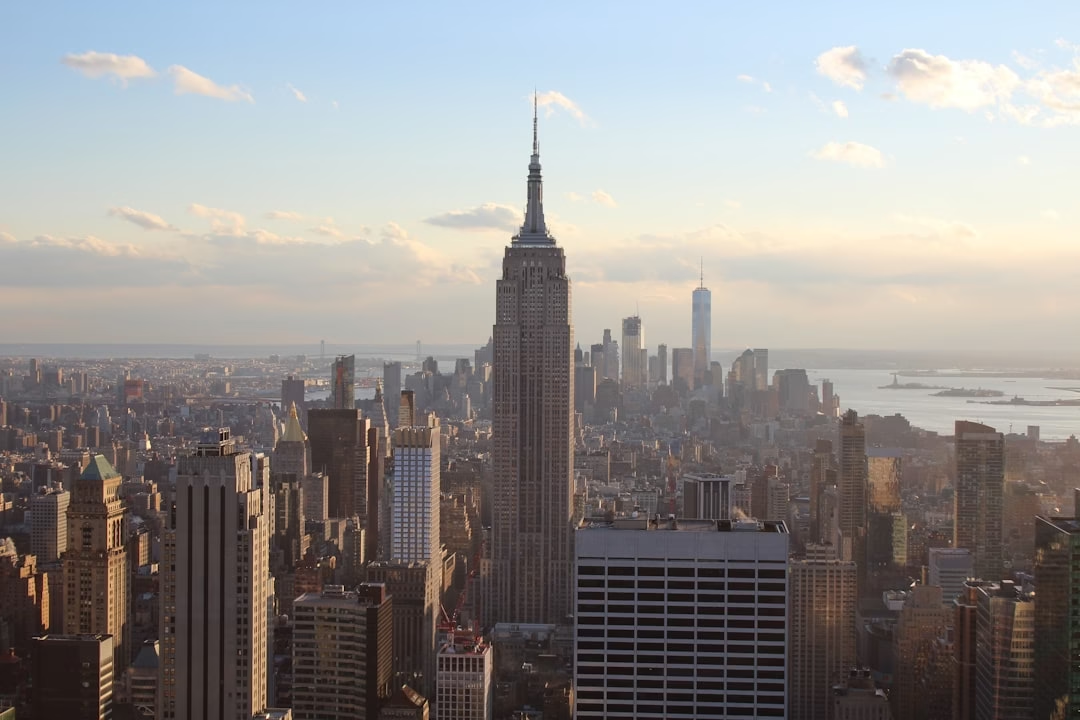
New York City stands at the forefront of urban environmental reform through Local Law 97, a groundbreaking piece of legislation that fundamentally reshapes how building owners approach carbon emissions and energy consumption. As part of the Climate Mobilization Act, this regulation represents one of the most ambitious carbon reduction initiatives ever undertaken by a major American city. Building owners across the five boroughs now face unprecedented requirements to measure, monitor, and dramatically reduce their properties’ environmental impact.
LL97 establishes strict emissions limits for covered buildings, which include most structures exceeding 25,000 square feet. The law targets approximately 50,000 buildings responsible for nearly 70 percent of the city’s total carbon emissions. Through phased implementation, these emission limits become progressively stricter, with the first major compliance deadline beginning in 2024 and subsequent reductions required by 2030. This approach gives property owners time to plan and execute necessary improvements while maintaining steady progress toward the city’s goal of reducing greenhouse gas emissions by 80 percent by 2050.
The significance of LL97 extends far beyond simple regulatory compliance. This local law fundamentally connects building performance to climate action, recognizing that urban structures play a crucial role in addressing the climate crisis. For building owners, understanding these requirements becomes essential not just for avoiding penalties but for maintaining competitive properties in an increasingly sustainability-focused real estate market. The NYC Department of Buildings oversees enforcement, while resources like NYC Accelerator provide technical assistance to help property owners navigate this complex landscape.
Furthermore, LL97 sets a powerful precedent for cities worldwide grappling with climate change. By establishing concrete, enforceable standards for building emissions, New York City demonstrates that meaningful environmental progress can coexist with urban development. Building owners who embrace these changes position themselves as leaders in sustainable real estate, potentially increasing property values and attracting environmentally conscious tenants. The law creates a clear pathway toward sustainable building practices that benefit both individual properties and the broader urban environment.
Legal and Financial Repercussions of Noncompliance
When a building fails LL97 compliance, the consequences extend far beyond simple administrative inconvenience. Building owners face substantial financial penalties that accumulate quickly and can significantly impact their bottom line. The city imposes fines based on the extent of emissions violations, calculated per metric ton of carbon dioxide equivalent that exceeds the established limits. These penalties start at $268 per ton over the limit, though this amount adjusts annually based on inflation. For large buildings with significant emissions overages, annual fines can easily reach hundreds of thousands or even millions of dollars.
Beyond immediate monetary penalties, noncompliance creates cascading legal implications that complicate property ownership and management. The NYC Department of Buildings maintains public records of all compliance violations, making this information readily accessible to potential buyers, investors, and tenants. This transparency means that failing to meet LL97 standards becomes part of a building’s permanent record, potentially affecting future transactions and refinancing opportunities. Legal actions can escalate if building owners demonstrate repeated or willful noncompliance, leading to additional enforcement measures and court proceedings.
The impact on property value represents another critical consequence that building owners must consider. Real estate market trends increasingly favor sustainable, efficient buildings that demonstrate strong environmental performance. Properties that fail LL97 compliance signal to potential buyers and investors that significant capital improvements will be necessary, often resulting in lower valuations and reduced market competitiveness. Conversely, buildings that achieve or exceed compliance standards often command premium prices and attract quality tenants willing to pay higher rents for sustainable spaces.
Tenant relations suffer dramatically when buildings fail to meet compliance standards. Modern tenants, particularly commercial occupants and younger residential renters, prioritize environmental responsibility and expect their buildings to meet current regulatory requirements. Noncompliance can lead to tenant dissatisfaction, increased turnover, and difficulty attracting new occupants. Additionally, some tenant leases include provisions allowing rent reductions or early termination if buildings fail to maintain required certifications and compliance standards. The reputational damage extends beyond individual properties, potentially affecting an owner’s entire portfolio and standing within the real estate community.
Financial institutions increasingly scrutinize building compliance when evaluating loan applications and refinancing requests. Banks and lenders recognize that noncompliant buildings carry higher risk due to potential penalties, decreased property values, and required capital improvements. This scrutiny can result in less favorable loan terms, higher interest rates, or outright denial of financing. Moreover, insurance companies may adjust premiums or coverage based on compliance status, adding another layer of financial pressure on noncompliant property owners.
Navigating Compliance: Steps and Strategies
Building owners seeking to ensure their properties comply with LL97 must begin with a comprehensive compliance audit that accurately assesses current emissions levels and identifies areas requiring improvement. This process starts with gathering detailed information about building systems, energy consumption patterns, and operational practices. Professional energy auditors examine heating, ventilation, and air conditioning systems, building envelopes, lighting, and water heating equipment to determine where inefficiencies exist. These audits produce detailed reports showing exactly how much a building’s current emissions exceed or fall short of LL97 limits.
Following the audit, building owners should develop a building compliance checklist that outlines specific actions needed to achieve compliance. This checklist must account for both immediate priorities and long-term strategies, recognizing that some improvements can be implemented quickly while others require substantial planning and investment. The checklist should include timelines, budget estimates, and responsible parties for each action item. Many building owners work with sustainability consultants and compliance officers to ensure their plans address all necessary requirements while optimizing costs and minimizing operational disruption.
Retrofitting buildings represents one of the most effective strategies for achieving LL97 compliance, particularly for older structures that predate modern energy efficiency standards. These retrofits might include upgrading insulation, replacing outdated windows with high-performance alternatives, installing efficient lighting systems, and modernizing HVAC equipment. Each retrofit project should target the improvements offering the greatest emissions reductions relative to their cost. Building performance metrics help owners track progress and verify that implemented changes deliver expected results.
Renewable energy integration provides another powerful pathway to compliance, allowing buildings to offset their carbon emissions through clean energy generation. Solar panels, wind turbines, and geothermal systems can substantially reduce reliance on fossil fuel-based electricity and heating. For buildings where on-site renewable generation proves impractical, renewable energy credits offer an alternative mechanism for demonstrating reduced carbon impact. These credits represent the environmental attributes of renewable energy generated elsewhere, effectively allowing building owners to support clean energy development while meeting compliance requirements.
The compliance audit process continues beyond initial assessment, requiring ongoing monitoring and adjustment as buildings operate and regulations evolve. Building owners must track energy consumption regularly, compare actual performance against targets, and identify emerging issues before they result in noncompliance. Many properties now implement building automation systems that continuously monitor energy use and automatically optimize operations for maximum efficiency. These systems provide real-time data that helps property managers make informed decisions about building operations and identify opportunities for further improvements.
The Role of Energy Efficiency and Sustainable Practices
Energy efficiency solutions form the foundation of successful LL97 compliance strategies, offering building owners practical methods to reduce carbon emissions while simultaneously lowering operating costs. Improving energy efficiency addresses the root cause of excessive emissions rather than simply offsetting them through credits or other mechanisms. High-efficiency LED lighting systems consume significantly less electricity than traditional fixtures while providing superior illumination. Similarly, modern HVAC systems equipped with variable speed drives and advanced controls deliver comfortable environments using substantially less energy than older equipment.
The building envelope plays a crucial role in overall energy performance, determining how much heating and cooling energy escapes or enters through walls, roofs, and windows. Upgrading insulation in walls, roofs, and basements prevents heat transfer, reducing the workload on heating and cooling systems. High-performance windows with low-emissivity coatings and multiple panes minimize heat loss during winter and heat gain during summer. Even seemingly minor improvements like sealing air leaks around doors, windows, and penetrations can yield measurable emissions reductions when implemented systematically throughout a building.
Sustainable building materials contribute to LL97 compliance both through their inherent properties and their role in enabling other efficiency improvements. Materials with high thermal mass, such as concrete and brick, help stabilize indoor temperatures by absorbing heat during warm periods and releasing it when temperatures drop. Recycled and locally sourced materials reduce the embodied carbon associated with building improvements, addressing the total environmental impact of compliance efforts. Green building standards like LEED certification encourage the use of sustainable materials while providing frameworks for comprehensive environmental performance.
Energy audits serve as diagnostic tools that reveal exactly where buildings lose efficiency and waste energy. Professional auditors use thermal imaging cameras to identify insulation gaps, blower door tests to measure air leakage, and detailed analysis of utility bills to understand consumption patterns. These audits provide building owners with prioritized recommendations showing which improvements deliver the greatest impact for their investment. Regular energy audits also help verify that implemented improvements continue performing as intended and identify new opportunities as technology and building conditions evolve.
Sustainability in construction extends beyond individual projects to influence industry practices and market expectations. Construction managers and developers increasingly recognize that sustainable approaches reduce long-term costs, enhance property values, and meet growing market demand for environmentally responsible buildings. This shift affects material selection, construction techniques, and operational planning from a project’s earliest stages. Building owners who embrace sustainability position themselves advantageously in a market that increasingly values environmental performance alongside traditional real estate metrics.
Tenant Rights and Building Compliance
Tenants possess specific rights regarding building compliance that building owners must respect and address transparently. New York City regulations require building owners to maintain safe, habitable spaces that meet all applicable codes and standards, including environmental requirements like LL97. When buildings fail compliance, tenants may experience consequences ranging from increased utility costs to potential health impacts from inefficient or failing building systems. These situations create legitimate grounds for tenant complaints and potential legal action if owners fail to address noncompliance issues promptly.
Understanding how noncompliance affects tenant relations requires recognizing that modern renters, particularly in commercial spaces, increasingly prioritize environmental sustainability when selecting properties. Corporate tenants often maintain their own sustainability commitments that require occupying compliant, efficient buildings. Similarly, residential tenants frequently seek properties that align with their environmental values and offer lower utility costs through efficient operations. Buildings that fail LL97 compliance struggle to attract and retain these desirable tenants, leading to higher vacancy rates and reduced rental income.
Transparent communication between building owners and tenants becomes essential when addressing compliance challenges. Property managers should proactively inform tenants about compliance status, planned improvements, and how these changes might temporarily affect building operations. This openness builds trust and demonstrates commitment to maintaining quality, compliant properties. When building owners involve tenants in sustainability initiatives, they often discover valuable partners who contribute ideas, modify behaviors to support efficiency goals, and serve as advocates for the property within the broader community.
Legal implications of noncompliance extend to tenant relationships through various mechanisms, including lease agreements, warranty of habitability requirements, and specific disclosure obligations. Some commercial leases include provisions requiring landlords to maintain compliance with all applicable laws and regulations, including LL97. Residential tenants may have grounds to pursue rent reductions or lease terminations if noncompliance results in habitability issues or significantly increases their living costs. Building code violations, whether related to LL97 or other requirements, create potential liability that affects both owners and occupants.
Property managers play a crucial intermediary role between building owners and tenants when addressing compliance matters. These professionals must balance owner directives with tenant needs while ensuring that all parties understand their rights and responsibilities. Effective property managers educate tenants about how they can contribute to building efficiency through simple actions like reporting maintenance issues promptly, adjusting thermostats reasonably, and using building systems appropriately. This collaborative approach often yields better outcomes than purely top-down compliance strategies, creating shared investment in building performance.
Impact of Climate Change on Building Regulations
Climate change fundamentally shapes building regulations like LL97, driving policymakers to create increasingly stringent standards that address both current emissions and future environmental challenges. Rising global temperatures, extreme weather events, and changing precipitation patterns directly affect buildings, making climate-resilient design essential for long-term property viability. New York City’s regulatory framework recognizes these connections, establishing emissions limits that reflect scientific consensus about necessary carbon reductions while encouraging building designs that withstand climate impacts.
The evolving nature of building codes responds to emerging climate data and improved understanding of how built environments contribute to and experience climate change. NYC local laws undergo regular updates that reflect new technologies, changing environmental conditions, and lessons learned from implementation. Building owners must stay informed about these changes to maintain compliance and plan future improvements effectively. Resources like LL97 compliance updates provide critical information about regulatory modifications, adjusted emission limits, and new compliance pathways.
Climate-resilient building design addresses how structures withstand increasing temperatures, more intense storms, flooding risks, and other climate impacts while maintaining efficiency and habitability. This approach integrates features like flood-resistant materials in vulnerable areas, backup power systems for critical building functions, enhanced ventilation to manage heat without excessive air conditioning, and stormwater management systems that reduce flooding risks. These design elements complement emissions reduction efforts, creating buildings that contribute less to climate change while better protecting occupants from its effects.
Environmental impact assessments help building owners understand how their properties interact with the broader environment and identify opportunities to reduce negative impacts. These assessments examine energy consumption, water use, waste generation, and emissions across all building operations. By quantifying environmental footprints, assessments provide baselines for improvement and demonstrate progress toward sustainability goals. They also help identify emerging risks related to climate change, such as increased cooling demands or vulnerability to extreme weather events.
Carbon emissions regulations continue evolving as scientific understanding of climate change advances and technologies for emissions reduction improve. Building owners should anticipate that regulations will likely become more stringent over time, with tighter emissions limits and expanded coverage. Planning for these future requirements today prevents costly scrambles to achieve compliance when new deadlines approach. Forward-thinking owners view current LL97 requirements as minimum standards rather than ultimate goals, implementing improvements that exceed current requirements to prepare for future regulations.
Exploring Solutions: Retrofitting and Renewable Energy
Retrofitting existing buildings offers tremendous potential for achieving LL97 compliance while preserving the substantial investments already made in urban infrastructure. Rather than demolishing and rebuilding, retrofits upgrade specific systems and components to improve performance dramatically. These projects might focus on mechanical systems, building envelopes, or electrical infrastructure depending on where the greatest inefficiencies exist. Modern retrofitting techniques allow buildings to achieve performance levels approaching new construction standards while avoiding the massive carbon emissions and costs associated with complete replacement.
The benefits of retrofitting extend beyond simple compliance to include reduced operating costs, improved tenant comfort, and enhanced property values. Efficient mechanical systems consume less energy, directly lowering utility bills month after month. Better insulation and windows create more comfortable indoor environments with fewer temperature variations and drafts. These improvements make properties more attractive to potential tenants and buyers while demonstrating commitment to sustainability that resonates with environmentally conscious market participants.
Renewable energy integration transforms how buildings meet their energy needs, replacing fossil fuel consumption with clean electricity and heating from sources that produce no direct carbon emissions. Solar photovoltaic panels installed on rooftops or facades generate electricity throughout the day, offsetting grid consumption and reducing both costs and emissions. Solar thermal systems provide hot water using the sun’s energy, eliminating natural gas or oil consumption for this purpose. For buildings with available space, ground-source heat pumps tap into stable underground temperatures to provide highly efficient heating and cooling.
When on-site renewable generation proves impractical due to shading, limited space, or structural constraints, renewable energy credits provide alternative compliance pathways. These credits represent the environmental benefits of renewable energy generated elsewhere, allowing building owners to support clean energy development while demonstrating reduced carbon impact. However, combining on-site efficiency improvements with renewable energy integration typically provides the most cost-effective long-term compliance strategy, minimizing ongoing costs while maximizing property performance.
Green building standards like LEED, WELL, and Passive House provide frameworks for comprehensive sustainability that supports LL97 compliance while addressing broader environmental and health objectives. These standards encourage holistic approaches that consider energy efficiency, water conservation, indoor air quality, and material selection together rather than in isolation. Buildings that achieve these certifications often exceed LL97 requirements while gaining marketable distinctions that attract premium tenants and command higher valuations.
LL97 penalties are calculated based on the emissions exceeding the applicable limit at $268 per metric ton of CO2-equivalent. For buildings in the highest-consumption categories, annual penalties can reach hundreds of thousands of dollars. The most effective way to avoid those penalties is not last-minute compliance efforts but building the operational data infrastructure that identifies and addresses consumption problems before the compliance period closes.
Nosy monitors temperature, humidity, CO2, occupancy, and tVOCs across commercial buildings, with readings every five minutes and automated monthly reports that track conditions over time. For building owners who are not yet sure where their LL97 exposure lies, continuous monitoring provides the granular, zone-level picture of energy-driving conditions that enables targeted improvements before penalty calculations are finalized. More on how building sensor monitoring supports LL97 compliance is at Nosy for Offices.
Conclusion
Building owners who proactively address LL97 compliance position themselves for success in an evolving real estate market that increasingly values sustainability alongside traditional financial metrics. Rather than viewing compliance as a burden, forward-thinking owners recognize the opportunity to improve their properties, reduce operating costs, and attract quality tenants while contributing to meaningful climate action. The strategies discussed throughout this article provide multiple pathways to compliance, from energy efficiency improvements and sustainable materials to retrofitting projects and renewable energy integration.
The long-term benefits of compliance extend far beyond avoiding fines for LL97 noncompliance. Properties that meet or exceed emissions limits typically command higher values in real estate market trends that favor sustainable buildings. Tenant satisfaction improves when buildings operate efficiently, provide comfortable environments, and demonstrate environmental responsibility. These factors reduce turnover, minimize vacancy periods, and support premium rental rates that enhance property cash flow and value.
Urban sustainability depends heavily on the building sector, which generates the majority of New York City’s carbon emissions. LL97 represents a crucial step toward achieving the city’s ambitious climate goals while creating healthier, more resilient communities. Building owners who embrace these requirements contribute to this larger mission, demonstrating that environmental responsibility and successful real estate investment can advance together.
The path to compliance requires careful planning, appropriate investment, and ongoing attention to building performance. However, numerous resources support building owners throughout this process, from NYC Accelerator’s technical assistance to professional consultants specializing in building energy efficiency and sustainability. By leveraging these resources and implementing comprehensive compliance strategies, building owners can successfully navigate LL97 requirements while positioning their properties for long-term success in an increasingly sustainability-focused market. The investment in compliance today yields dividends through reduced penalties, lower operating costs, enhanced property values, and the satisfaction of contributing meaningfully to climate solutions that benefit everyone.
