
Introduction to Environmental Safety in Distilleries
Distilleries play a significant role in the production of alcoholic beverages, but they also face unique challenges when it comes to environmental safety and regulatory compliance. The fundamental environmental requirements for distilleries encompass a wide range of factors, including proper storage of raw materials and finished products, safe handling of hazardous substances, and efficient waste management. These requirements are crucial not only for maintaining the quality of the spirits produced but also for protecting the environment and ensuring the safety of workers and surrounding communities.
Safety and storage are critical concerns in distilleries due to the nature of the materials and processes involved. The production of spirits often requires the use of flammable substances, such as ethanol, which pose significant fire and explosion risks if not handled properly. Additionally, the storage of large quantities of alcohol and other chemicals necessitates stringent safety measures to prevent spills, leaks, or other accidents that could harm the environment or endanger human health.
Environmental regulations have a profound impact on distillery operations and compliance requirements. These regulations are designed to minimize the industry’s environmental footprint, reduce pollution, and promote sustainable practices. Distilleries must adhere to strict guidelines regarding air emissions, water usage, waste disposal, and energy consumption. Failure to comply with these regulations can result in severe penalties, including fines, production shutdowns, and damage to the distillery’s reputation.
To effectively address these challenges, distilleries must implement comprehensive environmental safety practices that cover all aspects of their operations. This includes developing and maintaining robust safety protocols, providing thorough employee training, and regularly updating compliance procedures to keep pace with evolving regulations. By prioritizing environmental safety and storage considerations, distilleries can not only meet regulatory requirements but also enhance their operational efficiency, reduce costs, and demonstrate their commitment to sustainability.
Understanding Regulatory Compliance and Safety Protocols
Staying ahead of the latest environmental regulations is crucial for distilleries to maintain compliance and ensure the safety of their operations. In recent years, regulatory bodies have introduced more stringent requirements aimed at reducing the environmental impact of distilleries. These regulations often focus on areas such as air quality control, water conservation, waste management, and energy efficiency.
For instance, many jurisdictions now require distilleries to implement advanced emission control systems to reduce volatile organic compound (VOC) emissions from the fermentation and distillation processes. Additionally, regulations may mandate the use of closed-loop cooling systems to minimize water consumption and prevent thermal pollution of local water bodies. Distilleries must also comply with strict guidelines for the disposal of spent grains, wastewater, and other byproducts of the distillation process.
Ensuring compliance with distillery safety protocols is a multifaceted task that requires ongoing attention and effort. One effective strategy is to establish a dedicated environmental health and safety (EHS) team responsible for overseeing compliance efforts. This team should conduct regular audits of the facility to identify potential safety hazards and areas of non-compliance. They should also develop and maintain a comprehensive safety manual that outlines all necessary procedures and protocols.
Another key aspect of ensuring compliance is the implementation of a robust documentation system. This system should track all aspects of the distillery’s environmental and safety performance, including incident reports, maintenance records, and training logs. By maintaining detailed records, distilleries can demonstrate their commitment to compliance and quickly address any issues that arise during regulatory inspections.
Employee safety training is a critical component of maintaining compliance with distillery safety protocols. Comprehensive training programs should cover a wide range of topics, including hazard identification, proper handling of chemicals and equipment, emergency response procedures, and personal protective equipment (PPE) usage. Training should be provided to all employees, from production floor workers to management, and should be updated regularly to reflect changes in regulations and best practices.
Effective safety training programs often incorporate hands-on exercises and simulations to reinforce key concepts and ensure that employees are prepared to respond appropriately in emergency situations. Additionally, many distilleries are now utilizing online learning platforms and virtual reality technology to provide more engaging and interactive training experiences.
To further enhance compliance efforts, distilleries should consider implementing a safety incentive program that rewards employees for adhering to safety protocols and reporting potential hazards. This can help foster a culture of safety within the organization and encourage proactive participation in compliance efforts.
By staying informed about the latest environmental regulations, implementing comprehensive safety protocols, and providing thorough employee training, distilleries can create a safer and more compliant work environment. This not only protects workers and the environment but also helps to safeguard the distillery’s reputation and long-term success in an increasingly regulated industry.
Sustainable Practices and Environmental Impact
As the global focus on environmental conservation intensifies, distilleries are increasingly adopting sustainable practices to reduce their ecological footprint and meet the growing demand for environmentally responsible products. Implementing sustainable practices in distillation processes not only helps to minimize environmental impact but can also lead to improved operational efficiency and cost savings.
One of the most effective sustainable practices for distilleries is the implementation of closed-loop systems. These systems aim to recycle and reuse resources throughout the production process, minimizing waste and reducing the need for fresh inputs. For example, distilleries can capture and reuse the heat generated during the distillation process to preheat incoming materials or to power other operations within the facility. This not only reduces energy consumption but also lowers operating costs.
Water conservation is another critical area where distilleries can implement sustainable practices. By installing water-efficient equipment, such as low-flow nozzles and automated cleaning systems, distilleries can significantly reduce their water usage. Additionally, implementing water recycling systems can help to minimize the amount of freshwater required for production processes.
Reducing the carbon footprint of distilleries is a key concern for many operators and environmental regulators. One effective strategy is to transition to renewable energy sources, such as solar or wind power, to meet the facility’s electricity needs. Some distilleries have even begun producing their own biogas from waste materials, creating a circular energy system that reduces reliance on fossil fuels.
Another approach to carbon footprint reduction is the optimization of transportation and logistics. By sourcing raw materials locally and implementing efficient distribution strategies, distilleries can minimize the emissions associated with transporting goods to and from the facility. Some distilleries have also begun exploring alternative packaging options, such as lightweight bottles or recyclable materials, to further reduce their carbon footprint.
The impact of distilleries on local ecosystems is a significant concern that requires careful assessment and mitigation strategies. Distillery operations can affect air quality, water resources, and soil health in the surrounding area. To address these issues, many distilleries conduct regular environmental impact assessments to identify potential risks and develop appropriate mitigation measures.
One common approach to minimizing ecosystem impact is the implementation of advanced wastewater treatment systems. These systems remove contaminants from process water before it is released back into the environment, helping to protect local waterways and aquatic ecosystems. Some distilleries have taken this a step further by creating artificial wetlands or implementing phytoremediation techniques to naturally filter and purify wastewater.
Biodiversity conservation is another important aspect of managing distilleries’ environmental impact. Some facilities have implemented programs to protect and enhance local habitats, such as creating wildlife corridors or planting native species on their properties. These efforts not only help to offset the distillery’s environmental impact but can also contribute to broader conservation goals in the region.
By adopting these sustainable practices and carefully managing their environmental impact, distilleries can position themselves as responsible stewards of the environment. This not only helps to ensure compliance with increasingly stringent regulations but can also enhance the distillery’s reputation and appeal to environmentally conscious consumers. As the industry continues to evolve, those distilleries that prioritize sustainability and environmental protection are likely to find themselves at a competitive advantage in the marketplace.
Hazardous Materials Storage and Handling
The proper storage and handling of hazardous materials is a critical aspect of environmental safety in distilleries. Given the nature of the distillation process, these facilities often deal with a variety of potentially dangerous substances, including flammable liquids, corrosive chemicals, and toxic materials. Implementing best practices for hazardous materials management is essential not only for compliance with regulations but also for protecting workers, the environment, and the surrounding community.
One of the primary considerations in hazardous materials storage is the design and construction of storage areas. These areas should be purpose-built to contain specific types of hazardous materials and equipped with appropriate safety features. For example, storage facilities for flammable liquids should be constructed with fire-resistant materials, have adequate ventilation to prevent the accumulation of vapors, and be equipped with fire suppression systems. Additionally, storage areas should be located away from high-traffic areas and potential ignition sources to minimize the risk of accidents.
Proper labeling and segregation of hazardous materials are crucial for safe storage. All containers should be clearly labeled with the contents, associated hazards, and any necessary handling precautions. Materials should be segregated based on their chemical properties to prevent dangerous reactions in case of spills or leaks. For instance, flammable liquids should be stored separately from oxidizing agents, while acids should be kept apart from bases.
Regular inspections and maintenance of storage areas and containers are essential to ensure the ongoing safety of hazardous materials storage. This includes checking for signs of corrosion, leaks, or damage to containers, as well as verifying that safety equipment such as spill kits and fire extinguishers are readily available and in good working order. Implementing a computerized maintenance management system (CMMS) can help distilleries track inspection schedules and maintain detailed records of all maintenance activities.
When it comes to handling hazardous materials, distilleries must develop and enforce strict protocols to minimize the risk of accidents. This includes providing employees with appropriate personal protective equipment (PPE) such as chemical-resistant gloves, safety goggles, and respirators when necessary. Standard operating procedures (SOPs) should be established for all tasks involving hazardous materials, detailing the correct handling techniques, safety precautions, and emergency response procedures.
Training is a crucial component of safe hazardous materials handling. All employees who work with or around hazardous substances should receive comprehensive training on proper handling techniques, potential hazards, and emergency response procedures. This training should be regularly updated to reflect changes in regulations or best practices, and employees should be required to demonstrate their competence through practical assessments.
Implementing a robust chemical inventory management system is another key aspect of hazardous materials safety in distilleries. This system should track the quantities, locations, and usage of all hazardous materials on-site, allowing for better control over stock levels and ensuring that materials are used before their expiration dates. Advanced inventory management systems can also integrate with safety data sheets (SDS) databases, providing quick access to critical safety information in case of emergencies.
Emergency preparedness is a critical consideration when dealing with hazardous materials. Distilleries should develop comprehensive emergency response plans that outline procedures for dealing with spills, leaks, fires, and other potential incidents involving hazardous materials. These plans should be regularly reviewed and updated, and employees should participate in drills to ensure they are prepared to respond effectively in case of an emergency.
By implementing these best practices for hazardous materials storage and handling, distilleries can significantly reduce the risk of accidents and ensure compliance with environmental and safety regulations. This proactive approach not only protects workers and the environment but also helps to safeguard the distillery’s operations and reputation in an industry where safety and compliance are paramount.
Energy Efficiency and Renewable Energy Use
In the face of increasing environmental concerns and rising energy costs, distilleries are increasingly focusing on improving energy efficiency and integrating renewable energy sources into their operations. These efforts not only help to reduce the environmental impact of distillation processes but can also lead to significant cost savings and improved operational efficiency.
Improving energy efficiency in distillation processes is a multifaceted endeavor that requires a comprehensive approach. One of the most effective strategies is to conduct regular energy audits to identify areas of high energy consumption and opportunities for improvement. These audits can reveal inefficiencies in equipment, processes, or facility design that may be contributing to unnecessary energy use.
Once areas of improvement have been identified, distilleries can implement a range of energy-saving measures. This might include upgrading to more energy-efficient equipment, such as high-efficiency boilers or heat exchangers, which can significantly reduce energy consumption in the distillation process. Implementing advanced process control systems can also help optimize energy use by ensuring that equipment operates at peak efficiency and avoiding unnecessary energy consumption during idle periods.
Heat recovery systems are another powerful tool for improving energy efficiency in distilleries. These systems capture waste heat from various processes, such as the distillation columns or spent wash, and repurpose it for other uses within the facility. For example, recovered heat can be used to preheat incoming materials, heat buildings, or even generate electricity through combined heat and power (CHP) systems.
Insulation plays a crucial role in energy efficiency, particularly in distilleries where maintaining precise temperatures is essential. Properly insulating steam pipes, storage tanks, and distillation columns can significantly reduce heat loss and energy waste. Some distilleries have even begun using advanced insulation materials, such as aerogels, which offer superior thermal performance in a compact form.
The integration of renewable energy sources into distillery operations represents a significant opportunity to reduce environmental impact and achieve long-term sustainability goals. Solar energy is becoming an increasingly popular option for distilleries, with many facilities installing photovoltaic panels on rooftops or unused land to generate clean electricity. Some distilleries have even begun experimenting with solar thermal systems to provide heat for various processes, reducing reliance on fossil fuels.
Wind energy is another renewable option that some distilleries are exploring, particularly those located in areas with consistent wind resources. Small-scale wind turbines can be installed on-site to generate electricity, while larger distilleries may choose to invest in off-site wind farms to offset their energy consumption.
Biomass energy systems present a unique opportunity for distilleries to create a closed-loop energy cycle. By using waste products from the distillation process, such as spent grains or other organic byproducts, as fuel for biomass boilers, distilleries can generate heat and power while simultaneously reducing waste disposal costs. This approach not only improves energy efficiency but also aligns with principles of circular economy and waste reduction.
The use of energy efficiency measures and renewable energy sources can have a significant impact on a distillery’s environmental compliance. Many jurisdictions now offer incentives or require facilities to meet certain energy efficiency standards or renewable energy targets. By proactively implementing these measures, distilleries can stay ahead of regulatory requirements and potentially benefit from government incentives or carbon credit programs.
Moreover, the adoption of energy-efficient practices and renewable energy can enhance a distillery’s brand image and appeal to environmentally conscious consumers. Many consumers are increasingly seeking out products from companies that demonstrate a commitment to sustainability, and distilleries that can showcase their energy-saving initiatives may gain a competitive advantage in the marketplace.
As the distilling industry continues to evolve, those facilities that prioritize energy efficiency and renewable energy use will be better positioned to meet the challenges of a changing regulatory landscape and shifting consumer preferences. By investing in these technologies and practices, distilleries can not only reduce their environmental impact but also build more resilient and sustainable operations for the future.
Water Usage and Conservation in Distilleries
Water management is a critical concern for distilleries, given the significant volumes of water required for various processes, from mashing and fermentation to cooling and cleaning. As water resources become increasingly strained in many regions, implementing sustainable water management practices has become not just an environmental imperative but also a business necessity for distilleries.
The importance of water management in distillery operations cannot be overstated. Water is used at nearly every stage of the production process, and its quality can significantly impact the final product. Moreover, the discharge of wastewater from distilleries can have substantial environmental impacts if not properly managed. As such, effective water management is crucial for maintaining product quality, ensuring regulatory compliance, and minimizing environmental impact.
To implement sustainable water management practices, distilleries must first conduct a comprehensive water audit to understand their current usage patterns and identify areas for improvement. This audit should map out all water inputs and outputs throughout the facility, including production processes, cleaning operations, and ancillary uses such as landscaping or employee facilities.
Once water usage patterns are understood, distilleries can implement a range of strategies to reduce consumption and improve efficiency. One common approach is to install water-efficient equipment and fixtures throughout the facility. This might include low-flow nozzles for cleaning operations, water-efficient cooling towers, or automated clean-in-place (CIP) systems that optimize water use during equipment cleaning.
Process optimization is another key strategy for water conservation in distilleries. By fine-tuning production processes to minimize water use without compromising product quality, distilleries can achieve significant reductions in overall water consumption. This might involve adjusting cooling water flow rates, optimizing wash cycles, or implementing more efficient filtration systems.
Water recycling and reuse systems represent a significant opportunity for distilleries to reduce their freshwater consumption. For example, water used for cooling in one part of the process can often be captured and reused in other areas that don’t require potable water, such as equipment cleaning or landscaping. Some distilleries have implemented advanced water treatment systems that allow them to recycle a large proportion of their processed water, significantly reducing their overall water footprint.
Rainwater harvesting is another sustainable water management practice that is gaining traction in the distilling industry. By capturing and storing rainwater for use in non-potable applications, distilleries can reduce their reliance on municipal water supplies and potentially lower their water costs. This approach can be particularly beneficial in regions prone to water scarcity or where water prices are high.
Effective wastewater management is a crucial aspect of sustainable water practices in distilleries. The high organic content of distillery wastewater can pose significant environmental risks if not properly treated before discharge. Many distilleries are investing in advanced wastewater treatment systems that not only ensure compliance with discharge regulations but also allow for the recovery of valuable byproducts or the generation of biogas for energy production.
The benefits of water conservation for distilleries and the environment are manifold. From an environmental perspective, reducing water consumption helps to preserve local water resources, minimize the impact on aquatic ecosystems, and reduce the energy and chemical inputs required for water treatment. For distilleries, water conservation can lead to significant cost savings through reduced water and wastewater treatment costs, as well as potential reductions in energy consumption associated with water pumping and heating.
Moreover, implementing sustainable water management practices can enhance a distillery’s reputation and appeal to environmentally conscious consumers. Many distilleries are now highlighting their water conservation efforts as part of their broader sustainability initiatives, using these practices as a point of differentiation in an increasingly competitive market.
Compliance Training and Employee Safety
Compliance training is an essential component of environmental safety in distilleries, serving as the foundation for ensuring that all employees understand and adhere to regulatory requirements and safety protocols. Effective compliance training programs not only help distilleries meet legal obligations but also foster a culture of safety and environmental responsibility throughout the organization.
The importance of compliance training for distillery staff cannot be overstated. With the complex array of environmental regulations and safety standards governing the industry, it’s crucial that employees at all levels have a thorough understanding of their responsibilities and the potential consequences of non-compliance. This knowledge helps to prevent accidents, reduce environmental risks, and ensure that the distillery operates within legal and ethical boundaries.
Employee safety training plays a vital role in contributing to overall environmental safety in distilleries. By educating staff on proper handling procedures for hazardous materials, emergency response protocols, and best practices for waste management, distilleries can significantly reduce the risk of incidents that could harm both workers and the environment. For instance, training on proper chemical handling can prevent spills that might contaminate soil or water sources, while instruction on energy-efficient equipment operation can help reduce the facility’s carbon footprint.
A comprehensive compliance training program for distillery staff should encompass several key components. First and foremost, it should cover all relevant environmental regulations and safety standards applicable to the distillery’s operations. This includes topics such as air and water quality regulations, waste management requirements, and occupational health and safety standards.
The training program should also address specific safety protocols and procedures unique to the distillery environment. This might include instruction on the proper use of personal protective equipment (PPE), safe operation of distillation equipment, and protocols for handling and storing flammable liquids. Emergency response procedures, including evacuation plans and spill response protocols, should also be a core part of the training curriculum.
To ensure the effectiveness of compliance training, distilleries should employ a variety of training methods and formats. While traditional classroom-style instruction can be valuable for conveying complex information, hands-on training and simulations can be particularly effective for reinforcing safety procedures and emergency response protocols. Many distilleries are also incorporating e-learning modules and virtual reality simulations into their training programs, allowing employees to practice skills in a safe, controlled environment.
Regular refresher courses and updates are crucial to maintaining the effectiveness of compliance training programs. As regulations and industry best practices evolve, training content should be regularly reviewed and updated to ensure it remains current and relevant. Additionally, distilleries should consider implementing a system of continuous learning, where employees are encouraged to stay informed about industry developments and share knowledge with their colleagues.
To maximize the impact of compliance training, distilleries should strive to create a culture of safety and environmental responsibility that extends beyond formal training sessions. This can be achieved through regular safety meetings, environmental awareness campaigns, and recognition programs that reward employees for their contributions to safety and compliance efforts.
Measuring the effectiveness of compliance training programs is essential for continuous improvement. Distilleries should establish key performance indicators (KPIs) to track the impact of their training efforts, such as reductions in safety incidents, improvements in environmental performance metrics, or increases in employee knowledge as measured through assessments and quizzes.
By implementing robust compliance training programs and prioritizing employee safety, distilleries can create a workforce that is not only knowledgeable about environmental and safety requirements but also actively engaged in maintaining a safe and compliant operation. This proactive approach to training and safety helps to mitigate risks, improve operational efficiency, and demonstrate the distillery’s commitment to responsible business practices.
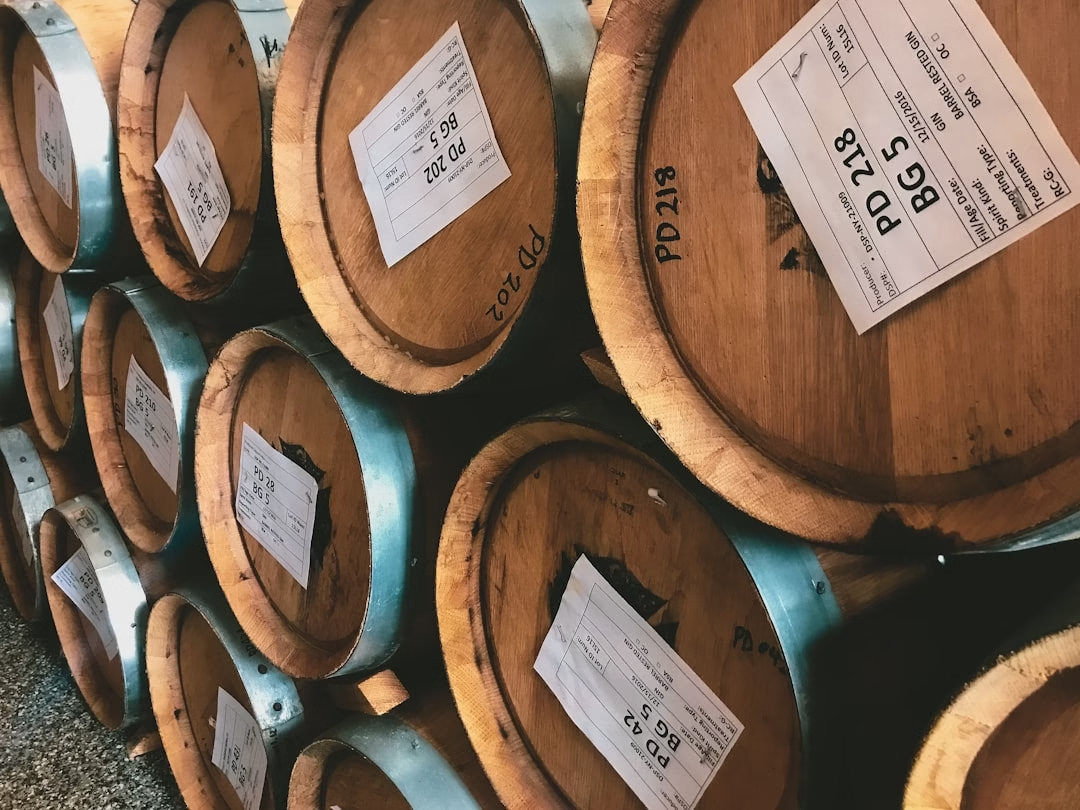
Distillery compliance with environmental and safety regulations increasingly requires documented evidence of actual conditions, not just written procedures. Regulatory agencies looking at storage environments, fermentation areas, or bonded warehouses want records showing that temperature and humidity were maintained within specified ranges, that CO2 levels in occupied fermentation spaces were monitored, and that conditions in spirits storage met permit requirements over time.
Nosy provides continuous monitoring of temperature, humidity, CO2, atmospheric pressure, and tVOCs across distillery facilities, with readings every five minutes and automated monthly reports that create a verifiable environmental record. At a craft distillery in Rhode Island, Nosy sensors are deployed across barrel aging and production areas, generating the ongoing documentation that supports both quality control and regulatory compliance. Distilleries building compliance monitoring programs can find more at Nosy for Craft Distilleries.
Many of the compliance requirements described in this article, including VOC emissions monitoring, air quality documentation, and environmental recordkeeping, require a level of continuous data collection that manual spot checks cannot reliably provide. Regulators increasingly expect facilities to demonstrate ongoing compliance, not just point-in-time measurements. For distilleries without dedicated environmental health and safety staff, building that data infrastructure affordably is one of the core operational challenges.
Continuous sensor platforms are one practical approach. Nosy monitors tVOCs, CO2, temperature, humidity, and atmospheric pressure across every area of a craft distillery, with 5-minute readings that create an ongoing record of environmental conditions. At a distillery in Rhode Island, 21 sensors deployed across barrel aging and production areas provide the kind of continuous environmental data that supports both internal operations and external compliance documentation, without requiring dedicated monitoring staff or changes to existing building infrastructure.
Conclusion
The implementation of comprehensive environmental safety practices in distilleries is crucial for ensuring regulatory compliance, protecting worker health, and minimizing environmental impact. By addressing key areas such as regulatory compliance, sustainable practices, hazardous materials management, energy efficiency, water conservation, and employee training, distilleries can create a safer, more efficient, and environmentally responsible operation.
These practices contribute significantly to the overall environmental safety of distilleries in several ways. First, they help reduce the risk of accidents and environmental incidents, such as spills or emissions, which could have severe consequences for both the distillery and the surrounding ecosystem. Second, they promote more efficient use of resources, including energy and water, which not only reduces environmental impact but can also lead to significant cost savings. Finally, these practices help distilleries stay ahead of evolving regulatory requirements, potentially avoiding costly fines or operational disruptions.
For distilleries aiming to improve their environmental and safety standards, there are several key takeaways to consider. Firstly, it’s essential to view environmental safety as an integral part of the business strategy rather than a mere compliance issue. This mindset can drive innovation and efficiency improvements that benefit both the environment and the bottom line. Secondly, investing in employee training and fostering a culture of safety and environmental responsibility is crucial for the successful implementation of these practices. Lastly, embracing technological solutions, such as advanced monitoring systems and renewable energy technologies, can help distilleries achieve their environmental and safety goals more effectively.
To stay ahead of regulatory changes and ensure continuous compliance, distilleries should adopt a proactive approach. This includes regularly monitoring regulatory developments in the industry, participating in industry associations and forums, and maintaining open lines of communication with regulatory bodies. Implementing a robust environmental management system (EMS) can also help distilleries systematically manage their environmental impacts and maintain compliance.
Additionally, distilleries should consider conducting regular internal audits and third-party assessments to identify areas for improvement and ensure ongoing compliance. Embracing transparency and sharing best practices with industry peers can also contribute to collective advancement in environmental safety standards across the sector.
