
Introduction to Fermentation Room Climate Control
Fermentation is a critical process in various industries, from food and beverage production to pharmaceuticals and biotechnology. The success of fermentation largely depends on maintaining optimal environmental conditions, making climate control a crucial aspect of production facility management. This article delves into the best practices for monitoring and controlling the climate in fermentation rooms, exploring the latest technologies and strategies to optimize fermentation processes.
The environment in which fermentation occurs plays a vital role in determining the quality and consistency of the final product. Microbial growth, which is at the heart of fermentation, is highly sensitive to environmental factors such as temperature, humidity, and air quality. Even slight variations in these conditions can significantly impact the fermentation outcomes, affecting product flavor, texture, and overall quality.
Temperature regulation is particularly critical in fermentation processes. Different microorganisms thrive at specific temperature ranges, and maintaining these optimal conditions ensures efficient fermentation and desirable product characteristics. For instance, in beer brewing, the fermentation temperature can influence the production of flavor compounds, ultimately affecting the taste and aroma of the final product. Similarly, in pharmaceutical fermentation, precise temperature control is essential for the production of specific enzymes or antibiotics.
Humidity is another crucial factor that influences fermentation processes. Proper humidity levels prevent the loss of moisture from fermentation vessels, which can affect the concentration of substrates and metabolites. In some cases, such as in the production of certain cheeses or cured meats, specific humidity levels are required to develop desired flavors and textures.
Beyond temperature and humidity, other environmental factors like oxygen levels, pH, and carbon dioxide concentration can also impact fermentation outcomes. For example, in wine production, controlling oxygen exposure during fermentation can influence the wine’s flavor profile and aging potential. In industrial fermentation for the production of biofuels or chemicals, maintaining the right balance of gases is crucial for optimal microbial activity and product yield.
Understanding and controlling these environmental parameters is essential for sustainable fermentation practices. By implementing effective climate control measures, production facilities can optimize their processes, reduce waste, and ensure consistent product quality. This not only improves efficiency but also contributes to the overall sustainability of the production process by minimizing energy consumption and resource utilization.
As the demand for fermented products continues to grow across various industries, the importance of precise climate control in fermentation rooms becomes increasingly evident. Advanced monitoring systems and innovative technologies are being developed to meet this need, allowing for more accurate and responsive climate management in production facilities.
In the following sections, we will explore the key factors affecting fermentation climate, best practices for monitoring temperature and humidity, cutting-edge technologies for real-time climate control, considerations for designing optimal fermentation rooms, and future trends in this rapidly evolving field. By understanding and implementing these best practices, production facilities can enhance their fermentation processes, improve product quality, and stay competitive in their respective industries.
Key Factors Affecting Fermentation Climate
Fermentation is a complex process influenced by various environmental factors, with temperature and humidity being the most critical. Understanding how these factors impact fermentation is essential for implementing effective climate control strategies in production facilities.
Temperature is perhaps the most crucial factor affecting fermentation. Each microorganism involved in fermentation has an optimal temperature range for growth and metabolic activity. For instance, in beer brewing, ale yeasts typically ferment best between 60-72°F (15-22°C), while lager yeasts prefer cooler temperatures of 45-55°F (7-13°C). Temperature fluctuations can significantly impact fermentation efficiency and product quality. Higher temperatures generally accelerate fermentation but may lead to the production of undesirable flavor compounds or even cause the yeast to become stressed and produce off-flavors. Conversely, lower temperatures can slow down fermentation, potentially leading to incomplete fermentation or the development of unwanted characteristics in the final product.
The impact of temperature on fermentation extends beyond just affecting microbial growth rates. It also influences the production of various metabolites, enzymes, and other compounds that contribute to the final product’s characteristics. For example, in wine production, higher fermentation temperatures can lead to increased production of volatile compounds, affecting the wine’s aroma profile. In industrial fermentation for the production of chemicals or pharmaceuticals, temperature control is crucial for optimizing yield and ensuring the purity of the desired product.
Humidity is another critical factor in fermentation processes, particularly in solid-state fermentations and certain food fermentations. Proper humidity levels help maintain the moisture content of the fermenting substrate, which is essential for microbial growth and metabolic activities. In cheese production, for instance, humidity control during ripening affects the development of desired mold growth and flavor compounds. In the fermentation of some Asian foods like tempeh or koji, maintaining specific humidity levels is crucial for the growth of the fungal cultures responsible for the fermentation process.
Excessive humidity can lead to unwanted microbial growth or contamination, while insufficient humidity may cause drying of the fermenting substrate, inhibiting microbial activity. In large-scale fermentation processes, humidity control also plays a role in preventing moisture loss from fermentation vessels, which could alter the concentration of substrates and metabolites, potentially affecting the fermentation outcomes.
Other environmental factors that influence fermentation include oxygen levels, pH, and carbon dioxide concentration. Oxygen availability is particularly important in aerobic fermentations, where microorganisms require oxygen for growth and metabolism. In contrast, anaerobic fermentations, such as those used in alcohol production, require the exclusion of oxygen. The pH of the fermentation medium affects microbial growth and enzyme activity, with each microorganism having an optimal pH range for fermentation. Carbon dioxide, a byproduct of many fermentation processes, can inhibit microbial growth if it accumulates to high levels, necessitating proper ventilation or controlled release in some fermentation setups.
The interplay between these environmental factors adds complexity to fermentation climate control. For example, temperature changes can affect humidity levels, and both temperature and humidity can influence the solubility of gases like oxygen in the fermentation medium. This interdependence underscores the need for comprehensive climate monitoring and control systems in fermentation facilities.
Understanding these key factors and their impacts on fermentation processes is crucial for implementing effective climate control strategies. By carefully regulating temperature, humidity, and other environmental parameters, production facilities can optimize their fermentation processes, ensure consistent product quality, and improve overall efficiency. The next section will delve into the best practices for monitoring these critical factors in fermentation rooms.
Best Practices for Temperature and Humidity Monitoring
Effective monitoring of temperature and humidity is crucial for maintaining optimal conditions in fermentation rooms. Implementing best practices in this area ensures consistent product quality, improves process efficiency, and reduces the risk of batch failures. This section explores strategies for real-time monitoring and control of fermentation climates, as well as the implementation of automated systems and sensors for accurate environmental regulation.
Real-time monitoring is essential for maintaining precise control over fermentation conditions. This involves continuous measurement and recording of temperature and humidity levels throughout the fermentation process. One best practice is to use multiple sensors strategically placed within the fermentation room and fermentation vessels. This approach provides a comprehensive view of the environmental conditions, allowing for the detection of any localized variations that could affect fermentation outcomes.
For temperature monitoring, resistance temperature detectors (RTDs) or thermocouples are commonly used due to their accuracy and reliability. These sensors can be integrated into fermentation tanks or placed at various points in the room to monitor ambient temperatures. It’s important to calibrate these sensors regularly to ensure accurate readings. Some advanced systems use wireless temperature probes that can be easily moved and repositioned as needed, providing flexibility in monitoring different areas or vessels.
Humidity monitoring typically involves the use of hygrometers or relative humidity sensors. These devices should be placed at multiple points in the fermentation room, particularly in areas prone to humidity fluctuations. In some cases, combining temperature and humidity sensors into a single device (often called a thermo-hygrometer) can provide a more comprehensive view of the environmental conditions.
Data logging is a critical component of effective monitoring. Modern systems often incorporate automated data logging capabilities, recording temperature and humidity readings at regular intervals. This not only provides a historical record for quality control purposes but also allows for trend analysis and early detection of any deviations from desired conditions. Cloud-based data logging systems offer the additional advantage of remote monitoring and real-time alerts, enabling quick responses to any issues that arise.
Implementing automated control systems is another best practice for maintaining consistent climate conditions. These systems use the data from temperature and humidity sensors to automatically adjust heating, cooling, and humidification equipment. Programmable logic controllers (PLCs) or dedicated fermentation control systems can be used to manage these processes, ensuring that environmental conditions remain within specified parameters.
One effective strategy is to implement a cascading control system, where the room’s overall climate is controlled as a baseline, with additional fine-tuning for individual fermentation vessels. This approach helps maintain stable ambient conditions while allowing for precise control at the vessel level, which is particularly important for large-scale operations with multiple fermentation batches running simultaneously.
For humidity control, automated systems may include humidifiers or dehumidifiers that activate based on sensor readings. In some cases, the heating and cooling systems used for temperature control can also be leveraged for humidity management, as temperature changes can affect relative humidity levels.
Regular maintenance and calibration of monitoring equipment are essential best practices. This includes routine checks of sensors, data loggers, and control systems to ensure they are functioning correctly and providing accurate readings. Establishing a schedule for equipment maintenance and calibration helps prevent unexpected failures and ensures the reliability of the monitoring system.
Training staff in the proper use and interpretation of monitoring systems is also crucial. Operators should understand how to read and interpret sensor data, recognize normal patterns, and identify potential issues. This knowledge enables quick responses to any deviations from optimal conditions, minimizing the risk of fermentation failures.
Implementing redundancy in monitoring systems is another best practice, particularly for critical fermentation processes. This might involve using backup sensors or alternative monitoring methods to ensure continuous data collection even if primary systems fail.
Finally, it’s important to regularly review and analyze the collected data to identify trends, optimize processes, and inform future improvements to the climate control system. This data-driven approach allows for continuous refinement of fermentation protocols and climate control strategies.
By implementing these best practices for temperature and humidity monitoring, production facilities can ensure more consistent and high-quality fermentation outcomes. The next section will explore the latest technological solutions available for real-time environmental monitoring in fermentation processes.
Technologies for Real-Time Climate Monitoring
The advancement of technology has revolutionized the way production facilities monitor and control fermentation climates. Real-time monitoring systems, powered by sophisticated sensors and Internet of Things (IoT) devices, are increasingly becoming essential tools for optimizing fermentation processes. This section explores the latest technological solutions available for real-time environmental monitoring in fermentation and evaluates the benefits of integrating these systems.
One of the most significant advancements in fermentation climate monitoring is the development of wireless sensor networks. These systems utilize small, battery-powered sensors that can be easily deployed throughout a fermentation room or within fermentation vessels. These sensors continuously measure parameters such as temperature, humidity, pH, and dissolved oxygen levels, transmitting data in real-time to a central monitoring system. The wireless nature of these sensors allows for flexible placement and easy reconfiguration of monitoring points without the need for extensive wiring.
IoT-enabled devices have taken sensor technology a step further by allowing for seamless integration with cloud-based monitoring platforms. These smart sensors can not only measure environmental parameters but also process and analyze data at the edge, sending only relevant information to the central system. This edge computing capability reduces data transmission loads and allows for faster response times to environmental changes.
Advanced sensor technologies are also improving the accuracy and reliability of climate monitoring. For instance, Micro-Electro-Mechanical Systems (MEMS) sensors offer high precision in a compact form factor, making them ideal for use in fermentation vessels. Optical sensors, using principles such as fluorescence or spectroscopy, provide non-invasive methods for monitoring parameters like dissolved oxygen or biomass concentration in real-time.
Real-time data analytics is another crucial component of modern climate monitoring systems. These analytics platforms use machine learning algorithms to process the vast amounts of data generated by sensor networks, identifying patterns and anomalies that might not be apparent through manual monitoring. Predictive analytics can forecast potential issues before they occur, allowing operators to take preemptive action to maintain optimal fermentation conditions.
The integration of climate monitoring systems with process control systems creates a closed-loop control environment. This integration allows for automatic adjustments to climate parameters based on real-time sensor data, ensuring that fermentation conditions remain within optimal ranges without constant manual intervention. For example, if sensors detect a rise in temperature beyond the specified range, the system can automatically activate cooling mechanisms to bring the temperature back to the desired level.
Mobile applications and remote monitoring capabilities are becoming increasingly common in fermentation climate control systems. These tools allow operators to monitor fermentation conditions from anywhere, receive real-time alerts on their smartphones, and even make adjustments remotely. This level of accessibility enhances response times to potential issues and improves overall process management efficiency.
Blockchain technology is also finding applications in fermentation monitoring, particularly in industries where traceability and data integrity are crucial. By creating an immutable record of environmental data throughout the fermentation process, blockchain can enhance quality assurance and regulatory compliance efforts.
Virtual and augmented reality technologies are being explored for their potential in fermentation monitoring. These tools can provide operators with immersive visualizations of fermentation environments, allowing for intuitive interpretation of complex data and facilitating troubleshooting and optimization efforts.
The benefits of integrating these advanced monitoring technologies are numerous. Real-time data collection and analysis enable faster decision-making and more precise control over fermentation conditions. This leads to improved product consistency, reduced waste, and increased production efficiency. The ability to detect and respond to environmental variations quickly can prevent batch failures, saving time and resources.
Moreover, the vast amounts of data collected through these systems provide valuable insights for process optimization. By analyzing historical data, facilities can identify trends and correlations that lead to the best fermentation outcomes, informing future process improvements and innovations.
However, implementing these advanced technologies also comes with challenges. The initial investment in sensor networks and data analytics platforms can be significant. There’s also a need for staff training to effectively use and interpret the data from these systems. Data security and privacy concerns must be addressed, especially when dealing with cloud-based or IoT-enabled systems.
Despite these challenges, the benefits of advanced real-time monitoring technologies far outweigh the drawbacks for most production facilities. As these technologies continue to evolve and become more accessible, they are likely to become standard tools in fermentation climate control, driving further improvements in product quality and process efficiency.
Designing an Optimal Fermentation Room
The design of a fermentation room plays a crucial role in maintaining desired environmental conditions and ensuring the effectiveness of climate control systems. A well-designed fermentation room not only facilitates precise temperature and humidity control but also contributes to energy efficiency and operational flexibility. This section discusses key considerations in designing fermentation rooms for optimal climate control and explores how room design impacts the effectiveness of climate control systems.
Layout and Space Planning:
The layout of a fermentation room should prioritize efficient workflow and easy access to fermentation vessels while allowing for effective climate control. Adequate spacing between fermentation tanks is essential to ensure proper air circulation and prevent heat buildup. The room should be designed with maintenance in mind, providing easy access to climate control equipment and monitoring systems for regular checks and repairs.
Insulation:
Proper insulation is critical for maintaining stable environmental conditions and energy efficiency. High-quality insulation materials should be used in walls, ceilings, and floors to minimize heat transfer between the fermentation room and the external environment. Special attention should be given to potential thermal bridges, such as around doors, windows, and pipe penetrations. Some facilities opt for modular, pre-fabricated fermentation rooms with built-in insulation for optimal temperature control.
Ventilation:
An effective ventilation system is crucial for managing air quality, temperature, and humidity in the fermentation room. The system should be designed to provide uniform air distribution throughout the space, avoiding dead zones where air stagnates. In some fermentation processes, controlled air exchange is necessary to remove excess carbon dioxide or other gases produced during fermentation. HEPA filtration systems may be incorporated to maintain a clean air environment, particularly important in pharmaceutical or food-grade fermentations.
Temperature Control Systems:
The heating and cooling systems should be sized appropriately for the room volume and expected heat load from fermentation activities. Redundancy in temperature control systems is often advisable to ensure continuous operation in case of equipment failure. Zoned temperature control can be implemented for larger rooms or facilities with multiple fermentation processes requiring different temperature ranges.
Humidity Management:
Depending on the specific fermentation requirements, humidity control systems such as humidifiers or dehumidifiers should be integrated into the room design. The placement of these systems should ensure uniform humidity distribution throughout the space. In some cases, the HVAC system can be designed to assist in humidity control alongside temperature management.
Flooring:
The choice of flooring material is important for both sanitation and climate control. Epoxy or polyurethane floors are often preferred for their durability and ease of cleaning. The flooring should be sloped towards drains to prevent water accumulation, which can affect room humidity levels.
Lighting:
While not directly related to climate control, proper lighting design is important for operational efficiency and can indirectly affect room temperature. LED lighting is often preferred for its energy efficiency and low heat emission. In some fermentation processes where light exposure needs to be controlled, special lighting fixtures or light-blocking curtains may be necessary.
Material Selection:
The materials used in constructing the fermentation room should be chosen for their thermal properties, durability, and ease of cleaning. Stainless steel is often used for surfaces and equipment due to its corrosion resistance and sanitary properties. Non-porous materials that don’t harbor microorganisms are preferred for walls and ceilings.
Integration of Monitoring Systems:
The room design should incorporate provisions for the installation of various sensors and monitoring equipment. This may include dedicated conduits for wiring, mounting points for sensors, and centralized control panels for easy access to monitoring data.
Flexibility and Scalability:
Designing the fermentation room with future expansion or process changes in mind can be beneficial. This might include oversizing utility connections or leaving space for additional equipment. Modular designs that allow for easy reconfiguration of the space can provide long-term flexibility as production needs evolve.
Energy Efficiency Considerations:
The room design should incorporate energy-efficient features to minimize operational costs and environmental impact. This can include heat recovery systems that capture and reuse heat generated during fermentation, variable speed drives on pumps and fans, and smart control systems that optimize energy usage based on real-time needs.
Cleanroom Standards:
In industries such as pharmaceuticals or certain food productions, fermentation rooms may need to meet specific cleanroom standards. The design should incorporate features that facilitate maintaining the required cleanliness levels, such as smooth, easily cleanable surfaces, appropriate air filtration systems, and airlocks or gowning rooms at entry points.
Pressure Control:
For some fermentation processes, maintaining specific air pressure differentials between the fermentation room and surrounding areas is crucial. The room design should include features to control and monitor air pressure, which may involve specialized door seals, pressure sensors, and airflow control systems.
Safety Features:
The design should incorporate safety features such as emergency shut-off systems, proper ventilation for gas removal (especially important in processes that produce significant amounts of CO2), and adequate space for safe movement of personnel and equipment.
Data Infrastructure:
With the increasing reliance on data-driven process control, the room design should include robust data infrastructure. This involves planning for secure network connections, data storage systems, and the integration of various monitoring and control systems into a centralized management platform.
The impact of room design on climate control effectiveness is significant. A well-designed fermentation room facilitates more precise and efficient climate control by:
1. Minimizing external influences: Proper insulation and sealing reduce the impact of external temperature and humidity fluctuations, making it easier to maintain stable internal conditions.
2. Enhancing air circulation: Good layout and ventilation design ensure uniform distribution of temperature and humidity throughout the space, preventing microclimates that could affect fermentation consistency.
3. Facilitating equipment efficiency: Thoughtful placement of climate control equipment and sensors optimizes their performance and accuracy.
4. Improving energy efficiency: Efficient design reduces the load on climate control systems, leading to lower energy consumption and more stable environmental conditions.
5. Enabling precise monitoring: Integration of advanced sensor systems throughout the room allows for more accurate and comprehensive monitoring of environmental conditions.
6. Supporting scalability: Flexible design allows for easy upgrades or additions to climate control systems as production needs change or new technologies become available.
7. Enhancing cleanliness: Design features that facilitate easy cleaning and maintenance help prevent contamination issues that could affect fermentation processes.
Future Trends in Fermentation Climate Control
The field of fermentation climate control is rapidly evolving, driven by advancements in technology and an increasing focus on sustainability and efficiency. This section explores emerging trends in fermentation climate control technology and assesses how advancements in AI and IoT are poised to revolutionize fermentation processes.
Artificial Intelligence and Machine Learning:
AI and machine learning are set to play a transformative role in fermentation climate control. These technologies can analyze vast amounts of data from sensors and historical records to identify patterns and optimize fermentation conditions in real-time. AI-driven predictive models can anticipate changes in fermentation parameters and proactively adjust climate controls to maintain optimal conditions. This predictive capability can significantly reduce the likelihood of batch failures and improve overall product consistency.
Machine learning algorithms can also be used to develop more sophisticated control strategies that adapt to variations in raw materials or environmental conditions. For example, an AI system might adjust fermentation parameters based on the specific characteristics of a batch of raw ingredients, ensuring optimal outcomes despite natural variations in input quality.
Internet of Things (IoT) Integration:
The proliferation of IoT devices in industrial settings is enabling more comprehensive and granular monitoring of fermentation processes. IoT sensors can provide continuous, real-time data on a wide range of parameters, from traditional measures like temperature and humidity to more specific factors such as gas composition or microbial activity. This wealth of data, when combined with cloud computing and AI analytics, allows for unprecedented insights into fermentation processes.
IoT integration also facilitates the creation of “digital twins” – virtual representations of physical fermentation systems. These digital twins can be used for simulation and optimization, allowing operators to test different scenarios and control strategies without risking actual production batches.
Sustainable and Energy-Efficient Solutions:
As industries increasingly focus on sustainability, fermentation climate control systems are being designed with energy efficiency in mind. This trend includes the development of more efficient cooling and heating systems, the use of renewable energy sources, and the implementation of heat recovery systems that capture and reuse waste heat from fermentation processes.
Advanced materials and designs for fermentation vessels and rooms are also being explored to improve insulation and reduce energy requirements for climate control. Some facilities are experimenting with geothermal systems or phase-change materials to maintain stable temperatures more efficiently.
Automated and Autonomous Systems:
The future of fermentation climate control is likely to see an increase in fully automated and autonomous systems. These systems will not only monitor and adjust climate conditions but also make decisions about process parameters without human intervention. This could include adjusting fermentation recipes in real-time based on sensor data or automatically scheduling maintenance activities based on equipment performance metrics.
Blockchain for Traceability and Quality Assurance:
Blockchain technology is being explored for its potential to enhance traceability and quality assurance in fermentation processes. By creating an immutable record of climate control data and process parameters, blockchain can provide a verifiable history of production conditions, which is particularly valuable in industries with strict regulatory requirements.
Advanced Sensor Technologies:
The development of new sensor technologies is enabling more precise and comprehensive monitoring of fermentation environments. This includes non-invasive sensors that can measure parameters inside fermentation vessels without direct contact, as well as miniaturized sensors that can be embedded directly into fermentation media.
Spectroscopic techniques, such as near-infrared spectroscopy, are being adapted for real-time monitoring of chemical composition during fermentation. These advanced sensing capabilities allow for more nuanced control of fermentation conditions based on the actual progress of the biochemical processes.
Adaptive Control Systems:
Future climate control systems are likely to incorporate adaptive control algorithms that can adjust their strategies based on the specific requirements of different fermentation processes or even different stages within a single fermentation. These systems might use a combination of model-based control and data-driven machine learning to optimize performance continuously.
Virtual and Augmented Reality:
VR and AR technologies are expected to play a role in the future of fermentation monitoring and control. These technologies can provide intuitive visualizations of complex data, allowing operators to “see” inside fermentation vessels or visualize heat and humidity patterns in a room. AR systems might overlay real-time data onto physical equipment, providing operators with instant access to critical information as they move through a facility.
Microbiome Monitoring and Control:
Advances in rapid microbial detection and characterization techniques are enabling more sophisticated approaches to monitoring and controlling the microbial ecosystems in fermentation processes. Future climate control systems might adjust conditions based not just on physical parameters but also on real-time data about microbial population dynamics and metabolic activity.
Integration with Supply Chain and Production Planning:
Future fermentation climate control systems are likely to be more tightly integrated with broader supply chain and production planning systems. This integration could allow for dynamic adjustments to fermentation processes based on factors such as ingredient availability, market demand, or downstream processing capacity.
The potential of these emerging technologies to revolutionize fermentation processes is significant. AI and IoT-enabled systems promise to deliver unprecedented levels of precision and consistency in climate control, potentially leading to higher yields, improved product quality, and reduced waste. These smart systems can adapt to changing conditions more quickly and effectively than traditional control methods, potentially enabling new types of fermentation processes or products.
Moreover, the integration of these advanced technologies is expected to drive improvements in energy efficiency and sustainability. By optimizing climate control based on real-time needs and leveraging predictive capabilities, facilities can reduce energy consumption and minimize resource waste.
However, the adoption of these advanced technologies also presents challenges. There are significant upfront costs associated with implementing AI, IoT, and other cutting-edge systems. There’s also a need for specialized expertise to develop, maintain, and effectively utilize these technologies. Data security and privacy concerns will need to be addressed, particularly as fermentation processes become more connected and data-driven.
Despite these challenges, the trend towards more intelligent, connected, and adaptive fermentation climate control systems appears set to continue. As these technologies mature and become more accessible, they have the potential to transform fermentation processes across a wide range of industries, from food and beverage production to pharmaceuticals and biotechnology.
Precise climate control in fermentation rooms is not a set-and-forget process. Yeast activity generates heat that can push fermentation temperatures above target range during active phases. Humidity builds as volatile compounds evaporate. CO2 accumulates from fermentation activity and needs to be monitored for both process quality and occupant safety reasons. Staying ahead of these fluctuations requires continuous monitoring across all areas of the fermentation space, not just a single probe at the temperature controller.
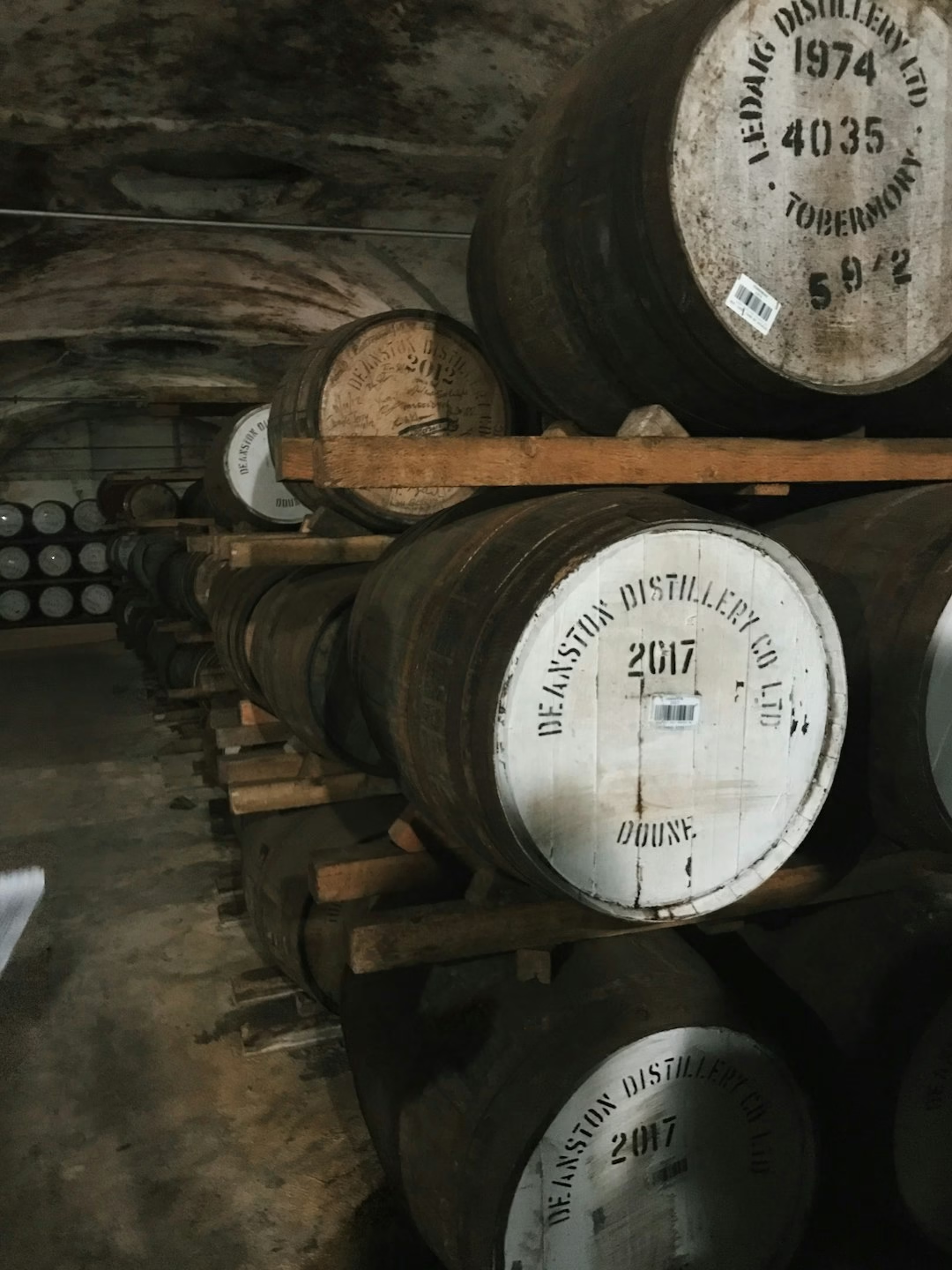
Nosy monitors temperature, humidity, CO2, tVOCs, and atmospheric pressure with readings every five minutes across production and fermentation areas, with a web-based dashboard that shows conditions by zone in real time and stores historical data for trend analysis. At a craft distillery in Rhode Island, Nosy sensors are deployed across barrel aging and production areas, providing continuous visibility into the environmental conditions that affect fermentation outcomes. Craft beverage producers looking to monitor their fermentation environments can find more at Nosy for Craft Distilleries and Nosy for Craft Breweries.
The sensor networks and real-time monitoring systems described here have historically been priced for large-scale industrial operations. Smaller craft producers, including distilleries and breweries, often could not justify the cost of enterprise-level climate control infrastructure for fermentation rooms with only a few dozen barrels or tanks. That gap is narrowing as wireless sensor platforms have become more affordable and easier to deploy without disrupting active production.
Nosy is one platform built for this segment. It uses a wireless Bluetooth mesh network to monitor temperature, humidity, CO2, atmospheric pressure, and air quality across an entire production facility, with readings every 5 minutes and no wiring or building IT involvement required. Craft distilleries and breweries, including a distillery in Rhode Island where 21 sensors are deployed across barrel aging and production areas, are using this continuous zone-level data to track how seasonal temperature and humidity shifts affect fermentation conditions and storage environments throughout the year.
Conclusion
The field of fermentation room climate control is undergoing rapid evolution, driven by technological advancements and an increasing focus on precision, efficiency, and sustainability. From the fundamental importance of maintaining optimal temperature and humidity levels to the integration of cutting-edge AI and IoT technologies, the landscape of fermentation climate management is becoming increasingly sophisticated.
The best practices for monitoring temperature and humidity in fermentation rooms have expanded beyond simple thermostats and hygrometers to include comprehensive sensor networks, real-time data analytics, and automated control systems. These advancements allow for more precise control over fermentation conditions, leading to improved product consistency and quality across various industries.
The design of fermentation rooms has also evolved to support these advanced climate control strategies. Modern fermentation facilities incorporate features such as advanced insulation, efficient ventilation systems, and integrated monitoring infrastructures. These design elements not only facilitate better climate control but also contribute to energy efficiency and operational flexibility.
Looking to the future, the integration of AI, machine learning, and IoT technologies promises to revolutionize fermentation climate control. These technologies offer the potential for predictive maintenance, adaptive control strategies, and unprecedented insights into fermentation processes. Combined with advancements in sensor technology and data analytics, these tools are paving the way for more intelligent and responsive climate control systems.
For production facilities looking to optimize their fermentation processes, the key takeaways include:
1. Invest in comprehensive monitoring systems that provide real-time data on critical environmental parameters.
2. Implement automated control systems that can maintain precise and consistent climate conditions.
3. Design fermentation rooms with climate control in mind, focusing on insulation, ventilation, and flexibility.
4. Stay informed about emerging technologies and consider how they might be integrated into existing processes.
5. Focus on energy efficiency and sustainability in climate control strategies.
6. Train staff to effectively use and interpret data from advanced monitoring systems.
7. Consider the potential of AI and IoT to enhance process control and predictive capabilities.
By adopting these best practices and staying abreast of technological advancements, production facilities can enhance the efficiency and quality of their fermentation processes. The precise control of fermentation room climates not only ensures product consistency but also opens up possibilities for new products and processes that were previously challenging to maintain.
