
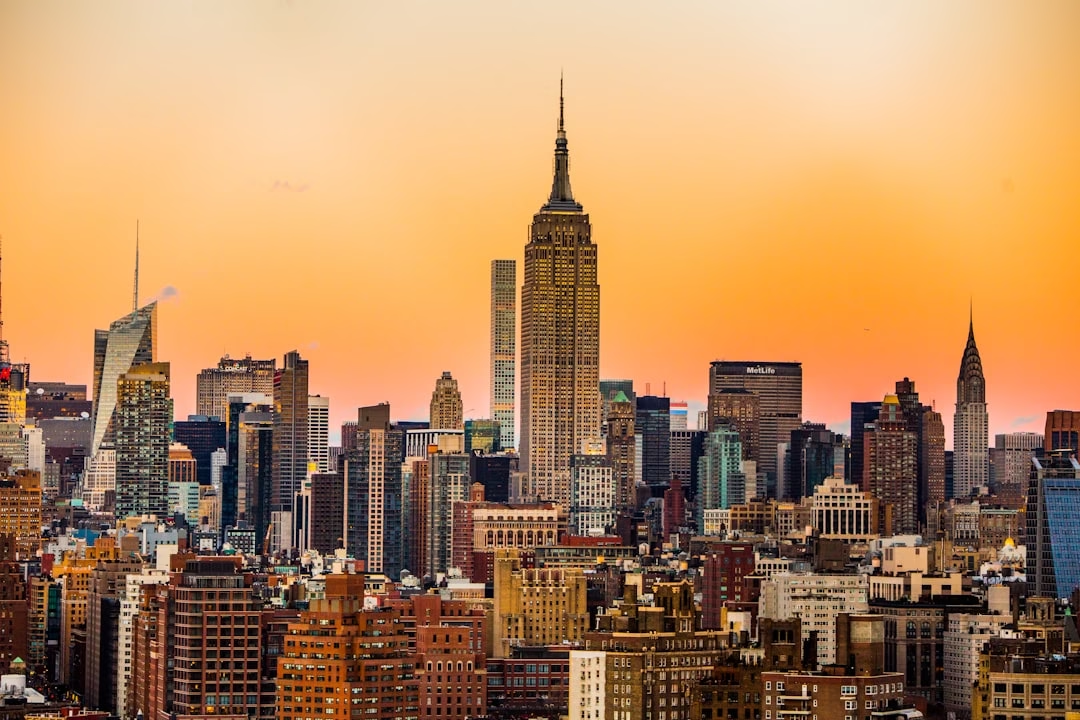
Introduction to Local Law 97
New York City introduced Local Law 97 as part of the Climate Mobilization Act in 2019, marking a transformative moment in urban environmental policy. This groundbreaking legislation targets the reduction of greenhouse gas emissions from large buildings across the city. The local law establishes strict carbon emission limits that building owners must meet by specific deadlines, starting in 2024 and becoming more stringent in 2030. Buildings represent nearly 70 percent of New York City’s total carbon emissions, making them a critical focus for climate action.
The primary objective of this NYC local law centers on reducing building emissions from the city’s largest structures while simultaneously improving energy efficiency across the built environment. The City Council designed New York Local Law 97 to align with ambitious goals of reducing greenhouse gas emissions by 80 percent by 2050, compared to 2005 levels. Through these regulations, the city aims to combat climate change while creating healthier indoor environments and reducing energy costs over time. The emissions limits established under this local law represent some of the most aggressive building performance standards in the United States.
Building owners face the most direct impact from these regulations, as they bear responsibility for ensuring their properties meet the established emissions limit requirements. Property managers must implement monitoring systems and coordinate necessary upgrades to achieve LL97 compliance. Real estate developers now incorporate Local Law 97 compliance requirements into their planning processes, recognizing that future projects must meet increasingly strict environmental standards. Energy auditors and sustainability officers play crucial roles in helping these stakeholders navigate the complex compliance landscape. Environmental consultants guide property owners through the technical requirements, while architects integrate energy-efficient designs into renovation and new construction projects. The legislation touches every corner of New York City’s real estate industry, from affordable housing providers to owners of premium commercial building spaces.
Who Must Comply with LL97?
Understanding who must comply with LL97 building size types and exemptions requires examining specific thresholds and property classifications established by the New York City Department of Buildings. The local law applies to covered buildings larger than 25,000 square feet, a category that encompasses a significant portion of New York City buildings across the five boroughs. For multiple buildings on the same tax lot that total more than 50,000 square feet combined, the law also applies even if individual structures fall below the 25,000 square foot threshold. This means two connected structures of 30,000 square feet each would both need to meet the emissions limits.
Covered buildings include various property types across the city’s diverse real estate landscape. Office towers in Manhattan’s business districts fall under these regulations, as do large residential buildings throughout the boroughs. Shopping centers, hotels, hospitals, and educational facilities must also meet the carbon emissions limit established by the law. Mixed-use developments that combine residential and commercial building elements face compliance requirements when they exceed the size thresholds. Industrial facilities used for manufacturing, warehousing, or distribution also must adhere to these standards when they meet the square foot criteria established under the NYC local law.
However, certain buildings receive exemptions from LL97 requirements despite meeting the size criteria outlined in the proposed rule. Properties owned by city, New York State, or federal governments do not need to comply with these regulations under the covered buildings list, though many government entities voluntarily pursue emissions reductions. Rent-regulated affordable housing receives special consideration, with less stringent emission limit requirements that acknowledge the financial constraints these properties face. Buildings designated as historical landmarks may qualify for adjusted compliance paths that preserve their architectural integrity while still reducing carbon emissions. Industrial facilities with unique energy needs can apply for alternative compliance period requirements that recognize their specialized operations. Real estate investment trusts that own certain affordable housing properties may also qualify for exemptions or modified LL97 requirements.
A building owner can determine their compliance status by first calculating their property’s gross square footage, which includes all conditioned and unconditioned space within the building envelope. Next, property owners should identify their property type using the classifications established by the New York City Department. Consulting the official Local Law 97 compliance guidance documents provides detailed information about emissions limits specific to each building category. Many owners work with a registered design professional who can conduct comprehensive assessments and develop compliance strategies tailored to their property’s unique characteristics. The NYC Department maintains online resources and hosts workshops that help building owners understand their obligations under the local law.
Impact of LL97 on Real Estate
New York Local Law 97 reshapes how real estate developers approach new construction and building operations throughout the city. Developers now prioritize energy efficiency from the earliest design phases, incorporating advanced systems and sustainable materials into their projects to meet the carbon emissions limit. The local law influences decisions about mechanical systems, insulation, windows, and even orientation to maximize natural light while minimizing building emissions. Property managers must adopt new operational strategies focused on continuous monitoring of carbon output to ensure LL97 compliance. These changes extend beyond simple regulatory adherence, fundamentally altering how the real estate industry thinks about building performance and long-term value.
The financial implications of Local Law 97 compliance vary dramatically depending on a building’s current energy performance and required improvements to meet emissions limits. Older structures typically face substantial retrofit costs, potentially ranging from hundreds of thousands to millions of dollars for comprehensive upgrades that reduce carbon emissions. Replacing outdated heating and cooling systems represents a significant expense, as does improving building envelope performance through enhanced insulation and window replacements. Installing energy management systems and upgrading lighting to LED technology add to the initial investment. However, these improvements generate ongoing savings through reduced energy consumption, often providing payback periods of five to fifteen years depending on the scope of work required for 97 compliance.
Buildings that achieve Local Law 97 compliance often experience increased property values as environmentally conscious tenants and investors seek out efficient, sustainable spaces. Lower operating costs make compliant buildings more competitive in the real estate market, potentially commanding premium lease rates. Green certification achieved through compliance efforts enhances marketability and attracts tenants who prioritize environmental responsibility. Properties that demonstrate strong performance in meeting emissions limits may also benefit from preferential financing terms as lenders increasingly recognize the value of sustainable investments.
Non-compliance carries serious consequences that extend well beyond financial fines imposed by the City Council. Buildings exceeding their carbon emission limits face penalties starting at $268 per ton of carbon dioxide equivalent over the limit annually. For a large building significantly out of compliance with LL97 requirements, these fines can reach hundreds of thousands or even millions of dollars each year during the compliance period. Beyond immediate penalties, non-compliant properties suffer reputational damage in an increasingly environmentally aware real estate market. Tenants may choose competitors with better environmental credentials, leading to higher vacancy rates and reduced rental income. Investors and lenders view buildings failing to meet emissions limits as risky assets, potentially limiting access to capital for refinancing or future development. The compounding effect of annual fines, lost rental income, and diminished property value makes non-compliance financially unsustainable for building owners over time.
Steps to Ensure Compliance with LL97
Achieving LL97 compliance requires a systematic approach that begins well before regulatory deadlines established in the local law. Building owners should start by establishing their property’s baseline carbon emissions through detailed analysis of utility data and comprehensive energy audit procedures. This initial assessment identifies the gap between current performance and required emissions limit thresholds, allowing owners to develop realistic timelines and budgets for necessary improvements. Working with a registered design professional RDP ensures that compliance strategies address technical LL97 requirements while considering the building’s unique characteristics and constraints.
An energy audit forms the foundation of effective compliance planning by revealing exactly where and how buildings consume energy and generate carbon emissions. Professional auditors use specialized equipment to detect air leaks, assess insulation performance, and evaluate mechanical system efficiency in covered buildings. These comprehensive assessments identify both quick wins that provide immediate reductions in building emissions and larger capital projects that deliver long-term performance improvements toward Local Law 97 compliance. Understanding consumption patterns helps property owners prioritize upgrades that offer the best return on investment while moving buildings toward emissions limits. Auditors also evaluate opportunities for renewable energy integration, such as rooftop solar installations or participation in community solar programs that can generate renewable energy credits.
Retrofitting existing buildings to meet carbon emission limits often requires a phased compliance path that balances immediate needs with available capital during the compliance period. Upgrading HVAC systems to high-efficiency models typically provides the most significant reductions in carbon emissions for most covered buildings. Improving building envelope performance through enhanced insulation and window replacements reduces heating and cooling demands substantially, helping achieve 97 compliance. Converting to LED lighting throughout a property decreases electricity consumption while improving light quality and reducing building emissions. Installing building automation systems allows precise control over energy use, optimizing performance without sacrificing occupant comfort in large buildings. Many building owners pursue multiple smaller projects over several years rather than attempting comprehensive renovations all at once to achieve Local Law 97 compliance.
Numerous resources support property owners in their compliance efforts, making the process more manageable and affordable across different property types. The NYC Accelerator program provides free technical assistance, including energy audits and guidance on developing compliance strategies that meet emissions limits. Financial incentives from utility companies help offset the cost of energy efficiency upgrades through rebates and grants for covered buildings. Low-interest financing programs specifically designed for LL97 compliance make capital improvements more accessible to building owners with limited liquidity. Professional associations offer educational programs and networking opportunities where property owners share best practices and lessons learned about meeting carbon emission limits. Government agencies maintain online databases of qualified contractors and registered design professionals who specialize in energy efficiency and Local Law 97 compliance work, helping owners navigate the compliance path successfully.
Green Building Standards and Certification
Green building standards and Local Law 97 compliance share common goals centered on reducing carbon emissions and improving energy performance in covered buildings. Standards such as LEED (Leadership in Energy and Environmental Design) established by the Urban Green Council and Passive House create comprehensive frameworks for sustainable building design and operation. These certification programs evaluate buildings across multiple criteria including energy efficiency, water conservation, indoor air quality, and material sustainability. While NYC local law focuses specifically on carbon emission limits, green building certifications take a more holistic approach to environmental performance across different property types. Buildings designed to meet green certification standards often exceed LL97 requirements, positioning them well ahead of compliance period deadlines.
The certification process for green buildings involves rigorous documentation and third-party verification of sustainable features and performance in meeting emissions limits. Building teams must register their projects and submit detailed plans showing how they will meet certification criteria and reduce building emissions. During construction or renovation, independent reviewers verify that work proceeds according to approved plans and meets established standards for carbon reduction. After completion, buildings undergo final assessment and performance testing to confirm they achieve intended results in limiting carbon emissions. The process typically spans several months to over a year depending on project complexity, property type, and the certification level pursued. Successful projects receive official recognition and marketing materials highlighting their environmental achievements in Local Law 97 compliance.
Pursuing green certification can significantly support LL97 compliance efforts while delivering additional benefits beyond regulatory requirements for building owners. Certified buildings demonstrate proven energy performance, often exceeding minimum efficiency standards and emissions limits by substantial margins. The documentation required for certification creates detailed records of building systems and performance that streamline ongoing compliance reporting to the NYC Department. Green certifications enhance property marketability in the real estate sector, attracting environmentally conscious tenants willing to pay premium rents for sustainable spaces that exceed carbon emission limits. Many municipalities offer expedited permitting or tax incentives for certified green buildings, potentially offsetting certification costs during the compliance path. The public recognition associated with certifications strengthens a building owner’s reputation and demonstrates commitment to environmental stewardship and 97 compliance. Additionally, certified buildings typically command higher resale values and experience lower operating costs throughout their lifecycle, providing strong financial returns alongside environmental benefits from reduced carbon emissions.
Future of Building Regulations in New York
New York City continues refining and expanding its building regulations as experience with Local Law 97 implementation reveals opportunities for improvement in reducing building emissions. Future amendments may adjust emissions limits for specific property types or create new compliance paths that reflect technological advances in renewable energy. The City Council actively gathers feedback from building owners, industry professionals, and environmental advocates to inform regulatory updates to the local law. Stakeholders can expect periodic revisions that clarify LL97 requirements, address unforeseen challenges, and potentially accelerate carbon reduction timelines during future compliance periods. Additional NYC local laws may complement Local Law 97 by targeting aspects of building performance not covered by current emission limit standards, such as embodied carbon in construction materials or water efficiency requirements for covered buildings.
Evolving sustainability goals at both local and New York State levels increasingly influence building regulation development and emissions limits. New York City’s commitment to carbon neutrality by 2050 drives continued innovation in environmental policy affecting large buildings. International climate agreements create pressure for more aggressive reductions across all sectors, with buildings remaining a primary focus. As climate science advances and extreme weather events become more frequent, regulations may incorporate resilience requirements alongside carbon emission limits established in the local law. Future policies might mandate specific percentages of renewable energy use or require buildings to demonstrate adaptability to changing climate conditions while maintaining 97 compliance. The integration of equity considerations ensures that future regulations protect affordable housing while still advancing environmental goals and reducing building emissions across different property types.
Technological advancements play an expanding role in helping buildings meet current LL97 requirements while preparing for future emissions limit standards. Smart building systems use artificial intelligence to optimize energy use in real-time, learning from occupancy patterns and weather forecasts to minimize carbon emissions. Advanced materials with superior insulation properties enable better envelope performance without extensive structural modifications in covered buildings. Heat pump technology continues improving, offering efficient heating and cooling solutions that eliminate fossil fuel combustion and help property owners meet carbon emission limits. Energy storage systems allow buildings to capture renewable energy during peak production and use it during high-demand periods, potentially generating renewable energy credits. Emerging innovations in building-integrated renewable energy, such as photovoltaic windows and kinetic energy capture systems, expand options for on-site clean energy generation and Local Law 97 compliance. As these technologies mature and costs decline, they become increasingly accessible to building owners seeking to exceed current emissions limits and prepare for stricter future standards during upcoming compliance periods.
Understanding whether a building is subject to LL97 is the first step, but building owners who just meet the threshold, or expect to in future compliance periods as standards tighten, need to start building the operational data that makes compliance planning possible. Buildings that will struggle with LL97 are those that arrive at a reporting deadline without the granular energy and occupancy data needed to identify where efficiency improvements are most achievable.
Nosy monitors temperature, humidity, CO2, occupancy, and tVOCs across commercial buildings, delivering readings every five minutes and providing the kind of continuous operational data that supports both current compliance analysis and longer-term capital planning. The platform uses a wireless Bluetooth mesh network that installs without wiring or IT changes, making it practical to build a monitoring baseline well in advance of compliance deadlines. Building owners assessing their LL97 exposure can find more on sensor-based monitoring approaches at Nosy for Offices.
Conclusion
New York Local Law 97 represents the city’s most ambitious effort to reduce carbon emissions from buildings and advance comprehensive sustainability goals through strict emissions limits. By establishing clear carbon emission limits and compliance period deadlines, the local law creates accountability while driving innovation in building design and operation across all property types. The regulation transforms abstract environmental commitments into concrete LL97 requirements that reshape New York City buildings. Through Local Law 97, the city demonstrates how major metropolitan areas can take decisive climate action while maintaining economic vitality and protecting vulnerable populations through thoughtful exemptions for affordable housing and support programs for building owners.
Property owners and managers must understand that LL97 compliance requires proactive planning, adequate investment, and ongoing attention to building emissions performance. Starting with comprehensive energy audits allows building owners to identify cost-effective improvement strategies tailored to their specific circumstances and property type. Leveraging available technical assistance, financial incentives, and registered design professional expertise makes the compliance path more manageable and affordable for achieving 97 compliance. Owners who view Local Law 97 as an opportunity rather than merely a regulatory burden often discover that efficiency improvements enhance real estate values while reducing operating costs and carbon emissions. Maintaining detailed records of energy use and building emissions positions properties for successful compliance reporting to the NYC Department and helps identify emerging performance issues before they result in fines during the compliance period.
Looking forward, NYC local law and similar regulations will continue shaping urban development and sustainability practices for decades to come in reducing carbon from large buildings. The local law establishes a model that other cities worldwide study and adapt to their contexts for limiting building emissions. As emissions limits become more stringent in 2030 and beyond, buildings that invest in deep energy efficiency and renewable energy today will avoid costly last-minute upgrades and potential fines later. The integration of green building practices, renewable energy credits, and advanced technologies becomes standard practice for building owners rather than exceptional achievement in meeting carbon emission limits. New York City’s experience with Local Law 97 compliance provides valuable lessons about balancing environmental necessity with economic reality, protecting affordable housing while pursuing ambitious climate goals, and creating regulatory frameworks that drive innovation in reducing building emissions. The success or challenges encountered through LL97 implementation will inform the next generation of building regulations from the City Council, ultimately determining whether cities can achieve the dramatic carbon reductions that climate science demands while maintaining livable, equitable urban environments for all residents across different property types and covered buildings.
