
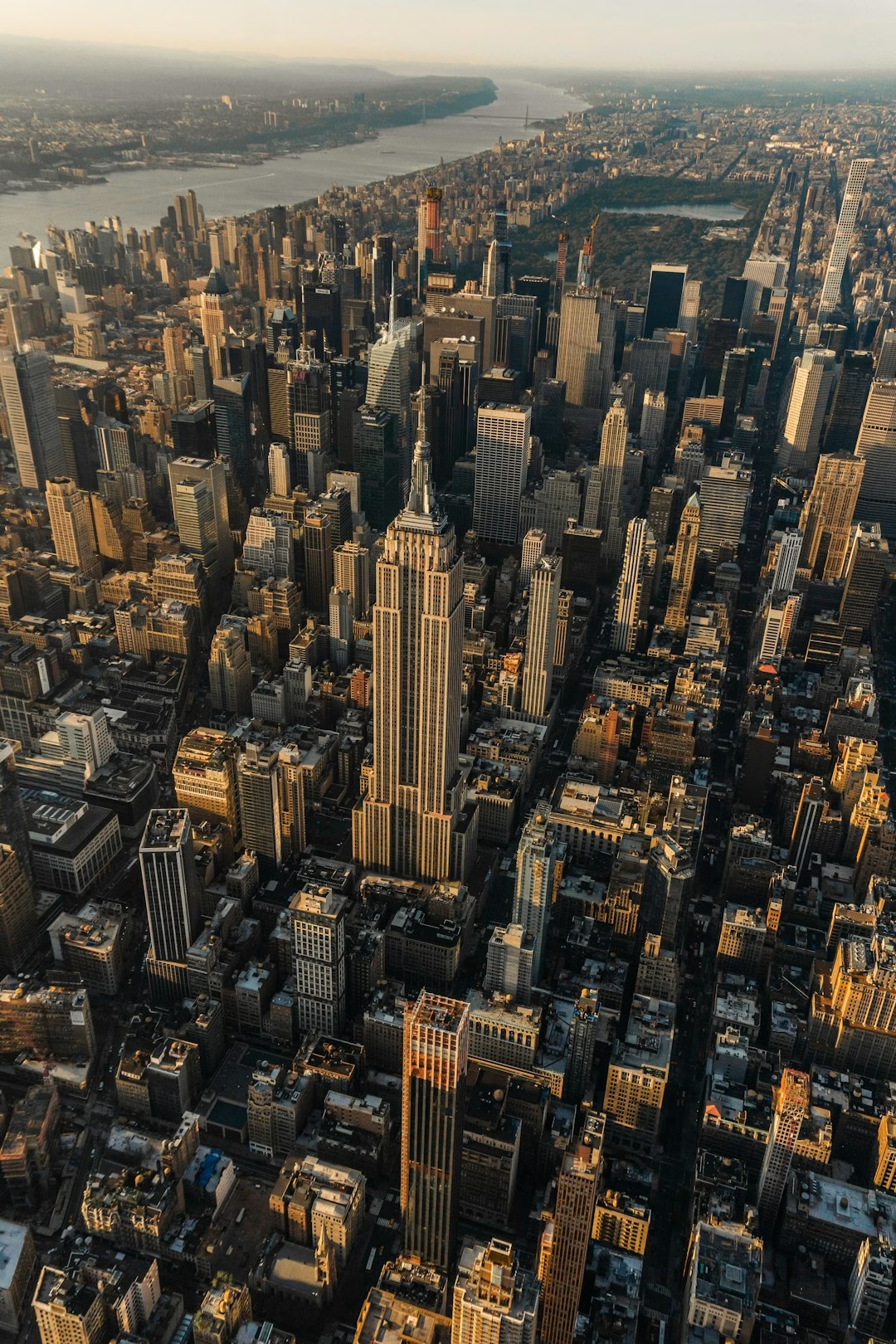
Introduction to Local Law 97 and NYC Climate Action Goals
New York City faces one of the most ambitious climate challenges in America. The city recognizes that buildings create a massive portion of greenhouse gas emissions across the metropolitan area. Local Law 97 emerged as a transformative response to this urgent environmental crisis. This legislation establishes a comprehensive legal framework designed to reduce carbon emissions from the city’s building stock dramatically.
Local Law 97 represents a critical component of the city’s broader Climate Mobilization Act. The law sets strict emissions limits for buildings of all sizes. These emissions limits decrease progressively over time, pushing building owners toward aggressive energy efficiency improvements. The law applies specifically to buildings that occupy more than 25,000 square feet, capturing the largest contributors to the city’s carbon footprint. Building owners must understand how Local Law 97 compliance directly supports larger New York City climate action objectives.
The significance of Local Law 97 extends far beyond simple regulatory compliance. The law embodies New York City’s commitment to environmental justice and sustainable urban development. Environmental consultants and urban planners recognize that this Local Law 97 framework fundamentally reshapes how the city approaches building management and energy efficiency. Policy makers designed Local Law 97 to balance economic growth with environmental protection, addressing a critical pain point for local government officials navigating complex regulatory environments.
How does Local Law 97 fit within the larger NYC climate action goals? The answer lies in understanding that New York State and New York City have established some of the most aggressive climate targets in America. The city’s Climate Mobilization Act requires carbon emissions reductions of eighty percent by 2050 compared to 2005 levels. Building owners operating New York City buildings recognize that compliance with Local Law 97 directly advances these broader New York climate goals. Without aggressive action on buildings, the city cannot achieve its objectives under the Climate Mobilization Act.
New York City’s climate action strategy positions Local Law 97 as a cornerstone of its emissions reduction efforts. The city aims to reduce greenhouse gas emissions by eighty percent by 2050. Building emissions represent roughly seventy-three percent of the city’s total greenhouse gas emissions. Local Law 97 specifically targets building emissions through mandated carbon emissions reductions. Therefore, this law serves as an essential tool for translating citywide sustainability ambitions into concrete action on covered buildings throughout the city.
Understanding how Local Law 97 fits within the larger NYC climate action framework requires examining both the law’s specific requirements and the broader environmental context. The legislation demonstrates that buildings must become more efficient, cleaner, and more resilient. Real estate developers and construction companies now face mandatory changes to their traditional business models. However, these compliance challenges also create opportunities for innovation in green building technologies and sustainable construction practices across New York City.
The New York City Council developed Local Law 97 through an inclusive process involving multiple stakeholders. This Local Law 97 approach reflects decades of environmental advocacy and scientific consensus about climate urgency. Building owners must comply with emissions limits regardless of their current operational practices. The City Council recognized that voluntary measures would not achieve necessary carbon emissions reductions quickly enough. Therefore, mandatory emissions limits became essential for meeting the city’s climate goals.
NYC’s Climate Action and Sustainability Framework
New York City’s climate action goals reflect a comprehensive understanding of urban sustainability challenges. The city has established multiple overlapping initiatives designed to reduce carbon emissions across all sectors. The New York City climate action framework specifically prioritizes renewable energy development, sustainable building practices, and community engagement. Together, these elements create an interconnected system of environmental policies targeting different aspects of urban life.
The overarching climate strategy embraces renewable energy initiatives as fundamental to achieving emissions reduction targets. Solar installations on rooftops and vertical surfaces now receive city support and incentives. Wind energy projects expand across the city’s waterfront areas. Energy-efficient materials and innovative retrofit technologies enable buildings to transition away from fossil fuel dependency. These renewable energy solutions for buildings allow property owners to meet strict emissions limits while reducing operating costs over time. Renewable energy credits provide additional compliance pathways when onsite generation proves insufficient.
Building owners represent critical stakeholders in implementing the city’s climate action strategy. Large property operators control thousands of square feet of space affecting greenhouse gas emissions significantly. Small building owners managing single properties also contribute meaningfully to aggregate citywide emissions reductions. Both groups face compliance challenges requiring investment and operational changes. The city provides support mechanisms helping all categories of building owners navigate Local Law 97 compliance requirements.
Local Law 97 specifically addresses the carbon emissions compliance challenges that building owners face. The law establishes clear emissions limits decreasing in two distinct phases. Phase one runs from 2024 through 2029, with most covered buildings required to reduce emissions by twenty percent. Phase two extends from 2030 through 2034, with mandatory carbon emissions reductions reaching forty-five percent below 2019 baseline emissions. The New York City administrative code outlines detailed compliance requirements and penalty structures.
These emission limits force building operators to evaluate their current greenhouse gas emissions baseline. Buildings must complete energy audits identifying opportunities for efficiency improvements. Many existing buildings require comprehensive retrofits addressing multiple systems simultaneously. Building emissions reduction strategies may include heating system upgrades, improved insulation, LED lighting conversions, and renewable energy installation. The specific approach varies based on each building’s unique characteristics and operational history.
Community engagement plays a vital role in achieving New York City’s broader sustainability goals. Climate action workshops throughout the city educate residents about energy efficiency improvements and sustainability practices. Public transportation improvements reduce car dependency and lower transportation-related emissions. Citizens participate in environmental planning through community boards and public hearings. This grassroots involvement creates social pressure supporting the difficult transitions that buildings must undertake. The New York City climate action framework succeeds when residents actively support necessary changes.
The connection between Local Law 97 and New York City’s larger climate action plan represents a strategic approach to urban sustainability. Rather than relying solely on voluntary measures, the city uses regulatory mechanisms to guarantee progress. Buildings cannot opt out of emissions reductions or indefinitely delay compliance. This regulatory certainty encourages manufacturers to develop new technologies and builders to master new techniques. The New York State climate commitment aligns with New York City’s local climate action initiatives creating consistent policy frameworks across different governance levels.
Environmental consultants working with property owners emphasize that Local Law 97 compliance directly advances multiple city goals simultaneously. Reduced building emissions decrease air pollution that harms public health. Energy efficiency improvements lower utility costs for tenants and building owners. The city’s climate resilience strengthens as building emissions decline. Community engagement efforts build public understanding of climate science and sustainability principles. Each compliance action ripples across multiple dimensions of New York City’s environmental and economic systems.
Compliance and Implementation Challenges of Local Law 97
Building owners and managers face significant compliance challenges in implementing Local Law 97 requirements. Understanding these obstacles helps stakeholders plan effective strategies for meeting emissions limits. The compliance requirements set forth by Local Law 97 create both financial and technical hurdles that organizations must overcome. Penalties for non-compliance encourage building owners to take compliance seriously and invest appropriately.
Financial constraints represent the primary challenge for many building owners and government entities. Comprehensive building retrofits require substantial capital investment to reduce greenhouse gas emissions. Replacing aging HVAC systems, upgrading insulation, and installing new lighting systems demand resources that smaller building owners struggle to secure. Government entities managing municipal buildings face budget limitations that complicate compliance efforts. Construction companies report rising costs for sustainable materials and skilled labor in green building technologies. These economic pressures create tension between profitability and environmental responsibility, a key pain point for real estate developers across New York City.
LL97 compliance penalties escalate over time, creating financial pressure for building owners delaying action. Non-compliance buildings face fines ranging from thousands to hundreds of thousands of dollars annually. These penalty structures encourage building owners to begin compliance planning immediately. The penalty structure reflects the city’s determination to achieve carbon emissions targets. Building owners understand that investing in retrofits proves more cost-effective than accumulating fines indefinitely. The threat of penalties motivates capital investment in compliance measures.
Technical challenges accompany the financial obstacles to Local Law 97 compliance. Many buildings require comprehensive energy audits before owners fully understand their emissions profiles and retrofit options. Building operators must learn new maintenance procedures and management strategies to optimize efficiency. Some older buildings present unique structural challenges making certain efficiency upgrades difficult. Architects and environmental engineers must evaluate each property individually to determine optimal retrofit approaches. This customized analysis requires specialized expertise that not all building managers possess. Covered buildings vary dramatically in age, construction quality, and current operational efficiency.
Innovative retrofit technologies offer solutions to many compliance obstacles. Green roof systems reduce building temperatures while capturing stormwater reducing utility demand. Advanced insulation materials provide superior thermal performance in tight spaces. High-efficiency heating and cooling systems dramatically cut energy consumption compared to older equipment. Smart building management systems use artificial intelligence to optimize energy use throughout the day. Energy-efficient materials reduce operational demands on building systems. These technologies enable compliance while creating co-benefits like improved occupant comfort and reduced operating costs.
Renewable energy installations provide another critical pathway toward meeting emissions limits. Solar panel arrays generate clean electricity on building rooftops throughout New York City. Battery storage systems capture energy for use during peak demand periods. Heat pump technology transfers thermal energy with minimal electricity consumption. District geothermal systems serve multiple buildings from centralized underground installations. These renewable energy solutions reduce dependence on fossil fuels and lower building emissions significantly.
Support mechanisms help organizations navigate compliance complexity. Government incentive programs offer financing assistance for energy efficiency upgrades. Technical assistance programs connect building owners with qualified contractors and engineers. Compliance consulting services guide organizations through the emissions reduction planning process. Educational resources explain Local Law 97 requirements in accessible language. Peer networks allow building managers to share experiences and learn from others implementing similar projects across New York City. These support systems address the challenge that many organizations cannot independently navigate the transition to compliance.
The Role of Renewable Energy in Supporting Local Law 97
Renewable energy initiatives serve as fundamental components supporting Local Law 97 compliance across New York City. The relationship between renewable energy and carbon emissions reduction creates direct pathways for buildings to meet strict legal requirements. Many properties cannot achieve compliance through energy efficiency alone; therefore, renewable energy solutions become essential compliance tools. Renewable energy helps building owners meet both immediate compliance deadlines and longer-term climate goals.
Solar energy represents the most accessible renewable energy option for urban buildings. Rooftop solar installations convert sunlight into electricity without generating carbon emissions or building emissions. Modern solar panels operate efficiently even in the temperate climate of New York City. Ground-mounted systems serve properties with sufficient land area. Building-integrated solar panels integrate into architectural elements like facades and skylights. These varied solar solutions provide flexibility for buildings with different physical configurations and space constraints.
Renewable energy credits enable buildings to meet compliance requirements when direct renewable generation proves insufficient. Buildings purchase renewable energy generated elsewhere through established credit mechanisms. This approach ensures that all covered buildings can achieve compliance regardless of physical constraints. Renewable energy credits represent electricity generated from wind, solar, or hydroelectric sources. The credit system creates revenue streams for renewable energy developers while providing compliance pathways for buildings. However, many advocates argue that buildings should prioritize onsite renewable energy installation over purchasing credits.
Green building certifications validate renewable energy implementation and overall sustainability performance. LEED certification establishes recognized standards for green building practices. Passive House certification demonstrates exceptional energy efficiency through rigorous technical standards. Living Building Challenge certification requires net-positive energy performance. Energy Star certification identifies superior operational efficiency. These certifications communicate commitment to sustainability and often justify higher rental rates or property values. Building owners pursue certifications as evidence of Local Law 97 compliance and genuine environmental performance.
Community-scale renewable energy projects extend sustainability benefits beyond individual buildings. Shared solar arrays serve multiple buildings from centralized installations. Combined heat and power systems serve district heating needs from efficient generators. Microgrid systems balance energy generation and consumption across building clusters. These collective approaches solve problems for properties with limited rooftop space or unfavorable solar exposure. They also create community engagement opportunities as neighbors collaborate on shared sustainability initiatives across New York City.
Wind energy contributes meaningfully to the renewable energy mix serving urban buildings. Vertical axis wind turbines fit into tight urban spaces. Large wind farms in nearby coastal areas deliver clean electricity to city buildings. Wind power complements solar generation because wind production peaks during different seasons than solar. Battery storage systems capture energy from both sources for use during calm, cloudy periods. This diversified renewable energy approach builds resilience into the city’s energy system and supports carbon neutrality objectives.
Building emissions can decrease dramatically through comprehensive renewable energy strategies. When buildings combine solar generation, renewable energy credits, and improved efficiency, they achieve substantial greenhouse gas emissions reductions. Some buildings exceed compliance targets becoming net-zero or net-positive energy facilities. These high-performance buildings demonstrate that ambitious emissions reduction goals remain technically and economically achievable. Their success stories inspire other property owners to pursue aggressive climate action measures within their own facilities.
Engaging Communities in Climate Action and Local Law 97
Community engagement represents a critical success factor for Local Law 97 implementation and broader NYC climate action. Buildings cannot transition to compliance in isolation; instead, successful implementation requires participation from residents, business owners, and civic organizations. Community involvement strengthens compliance outcomes while building public support for continued environmental action. Urban green initiatives thrive when communities embrace sustainability as a shared value.
Climate action workshops throughout New York City educate diverse audiences about Local Law 97 and sustainability practices. Environmental advocates and community leaders organize programs explaining the law’s requirements and compliance opportunities. Construction companies present case studies demonstrating successful retrofit projects. Equipment manufacturers showcase emerging technologies for energy efficiency and renewable energy. These educational sessions help building owners understand their obligations while exploring available solutions. Residents gain knowledge about personal actions supporting building-level compliance efforts and broader climate goals.
The New York City Council continues supporting community engagement as essential for climate action success. City Council representatives participate in educational forums and community meetings. Public input informs policy refinements and supports program design. Community leaders bring grassroots perspectives informing how Local Law 97 implementation affects diverse neighborhoods. Participatory approaches to climate action build broader support than top-down regulatory mandates alone can achieve.
Public participation in climate planning creates accountability and improves policy design. Community boards provide input on Local Law 97 implementation approaches. Environmental activists bring grassroots perspectives to city sustainability discussions. Business organizations represent employer and developer interests. Environmental justice advocates ensure that low-income communities benefit from climate action investments. This diverse stakeholder engagement creates policies reflecting multiple community values and concerns.
Tenant engagement proves essential for achieving compliance targets within residential buildings. Building occupants make daily choices affecting energy consumption through thermostat settings and device usage. Tenants can identify building maintenance problems affecting efficiency. Cooperative tenants accept temporary disruptions during retrofit projects. Educational programs help residents understand how their behavior impacts building emissions and carbon footprint. Buildings performing well involve tenants as partners in sustainability rather than viewing residents merely as energy consumers.
Environmental justice considerations ensure that climate action benefits all communities equitably. Low-income neighborhoods often experience disproportionate pollution from building emissions. Communities of color historically endure greater exposure to environmental hazards. Local Law 97 compliance investments should prioritize renovations in disadvantaged neighborhoods. Workforce development programs train residents from affected communities for jobs in green building and renewable energy industries. Community benefits agreements ensure that local populations share economic gains from climate action investments. Affordable housing preservation remains important as energy-efficient building upgrades proceed.
Participation in local sustainability initiatives empowers individuals to contribute meaningfully to climate goals. Neighborhood tree-planting programs increase urban green space while improving air quality. Community solar projects allow renters and small property owners to benefit from renewable energy. Local food production initiatives reduce transportation emissions while building neighborhood resilience. Participation in climate action creates social cohesion while advancing environmental progress. Individual actions accumulate into collective force transforming urban sustainability across New York City.
Future Directions: Local Law 97 and NYC’s Climate Resilience
The future trajectory of Local Law 97 reflects evolving understanding of urban climate challenges and technological capabilities. As the city progresses toward 2030 emissions reduction targets, stakeholders anticipate continued policy evolution and technological advancement. Understanding likely future directions helps building owners plan long-term compliance strategies. The Climate Mobilization Act framework will likely expand, requiring even deeper carbon emissions cuts in subsequent decades.
Technological innovation will increasingly enable compliance at lower costs and with greater convenience. Advanced materials with superior thermal properties will emerge from laboratory development. Artificial intelligence will optimize building operations more precisely than current systems. Battery technology improvements will enable more efficient energy storage for renewable energy systems. Heat pump systems will continue improving in efficiency and cold-climate performance. Carbon capture technologies may eventually become viable for buildings unable to achieve full compliance through conventional means. These technological advances will make compliance more achievable for properties currently facing significant hurdles.
Climate resilience strategies will expand beyond emissions reduction to encompass adaptation and risk mitigation. Buildings must withstand increasingly frequent and intense weather events threatening operations and occupant safety. Flooding risks intensify as sea levels rise and extreme precipitation increases. Heat waves threaten occupant safety without adequate cooling capacity. Local Law 97 future amendments may require climate resilience measures alongside emissions reductions. This holistic approach recognizes that reducing future emissions requires addressing present climate hazards. Building resilience directly supports long-term survival and functionality.
Expanded policy frameworks may extend Local Law 97 principles to additional building types and sizes. Current regulations focus on larger commercial properties. Future versions might include smaller buildings currently exempt from compliance requirements. Industrial facilities generating significant emissions may face new obligations. This policy expansion would accelerate citywide emissions reductions while creating broader markets for green technologies. The New York City climate action framework could eventually encompass virtually all buildings contributing to greenhouse gas emissions.
Integration of transportation and building emissions reduction represents another future direction. Vehicle electrification reduces transportation-related emissions complementing building efficiency efforts. Charging infrastructure integrated into parking facilities supports electric vehicle adoption. Transit-oriented development concentrates housing near public transportation. Buildings in accessible neighborhoods require less energy-intensive commuting. This integrated approach recognizes interconnections between transportation and building systems across New York City and New York State.
Workforce development will expand to ensure sufficient trained professionals supporting compliance efforts. Green building programs train architects and engineers in sustainable design. HVAC technicians require training on advanced heating and cooling systems. Electricians must master renewable energy installation and integration. Building management professionals need expertise in new operational approaches. This expanding job market creates economic opportunity while advancing climate goals. Career pathways in green building and renewable energy will attract workforce participants seeking meaningful employment.
Community-centered climate action will deepen engagement moving forward. Neighborhood sustainability plans will identify local climate priorities and strategies. Community land trusts will ensure long-term environmental benefits from green investments. Participatory budgeting processes will allow residents to direct climate investment resources. Youth climate movements will drive continued policy ambition. This community leadership will sustain political momentum for climate action beyond Local Law 97’s initial implementation phases. Grassroots support becomes increasingly essential for maintaining ambitious climate targets.
The Urban Green Council and similar organizations will continue playing advisory roles as Local Law 97 implementation proceeds. These advocacy groups bring expertise and community perspectives informing policy refinements. Technical working groups examine emerging compliance approaches and technologies. Advisory processes allow building owners to share implementation challenges and lessons learned. Ongoing dialogue between government, business, community, and environmental organizations strengthens Local Law 97’s ultimate effectiveness. Collaborative approaches produce better outcomes than adversarial dynamics.
Conclusion
Local Law 97 represents a watershed moment in New York City’s relationship with urban sustainability and climate action. The legislation demonstrates that cities can establish regulatory mechanisms driving necessary environmental progress toward ambitious carbon emissions reductions. By targeting the building sector through mandatory emissions limits, New York addresses the largest source of municipal emissions. The law transforms abstract climate goals into concrete requirements affecting thousands of properties and millions of residents throughout New York City.
The integration of Local Law 97 within New York City’s broader climate action framework illustrates a strategic approach to urban sustainability. Emissions limits provide regulatory certainty encouraging innovation across the construction and renewable energy industries. Community engagement builds political and social support for necessary transitions. Renewable energy initiatives reduce carbon intensity across the energy system while building emissions decline toward targets. Support mechanisms help organizations navigate complex compliance pathways regardless of building size or current efficiency. Together, these elements create reinforcing systems advancing toward ambitious emissions reduction targets established by the Climate Mobilization Act.
The city’s climate action goals depend fundamentally on how Local Law 97 develops during subsequent decades. Building owners must demonstrate that ambitious carbon emissions reductions remain technically and economically achievable. Communities must embrace local sustainability initiatives reflecting broader climate urgency. The government must continue refining policies and support mechanisms. Environmental organizations must maintain political pressure supporting continued progress. These collective efforts determine whether Local Law 97 ultimately enables New York City to achieve its eighty percent emissions reduction target by 2050.
Building emissions represent the largest single contributor to New York City’s greenhouse gas emissions inventory. Local Law 97 provides the primary regulatory tool for reducing these building emissions systematically. Success requires sustained commitment from all stakeholders over multiple decades. The compliance challenges prove substantial but not insurmountable given available technologies and resources. The Climate Mobilization Act reflects scientific consensus that such aggressive action remains essential for addressing climate change.
New York City’s experience with Local Law 97 provides a template for urban climate action globally. Cities worldwide face similar building emissions challenges and sustainability imperatives. The approach combining regulatory requirements, technological innovation, community engagement, and equity considerations addresses multiple dimensions of urban sustainability. As the city progresses through successive compliance phases, accumulated experience will inform continued policy refinement and expansion. Cities implementing Local Law 97-style policies will benefit from New York’s early experiences navigating complex compliance dynamics.
Building owners, environmental consultants, urban planners, policy makers, and community members all play essential roles in Local Law 97’s success. Each stakeholder group brings distinct expertise and perspectives. Collaboration across these constituencies multiplies the impact of individual compliance efforts. The coming decades will reveal whether Local Law 97 and related initiatives prove sufficient to achieve New York’s ambitious climate goals. Early evidence suggests that when regulation, technology, investment, and community engagement align, transformational environmental progress becomes achievable even in complex urban environments. The city’s commitment to reducing building emissions through Local Law 97 demonstrates what becomes possible when climate urgency combines with regulatory determination and community support.
