
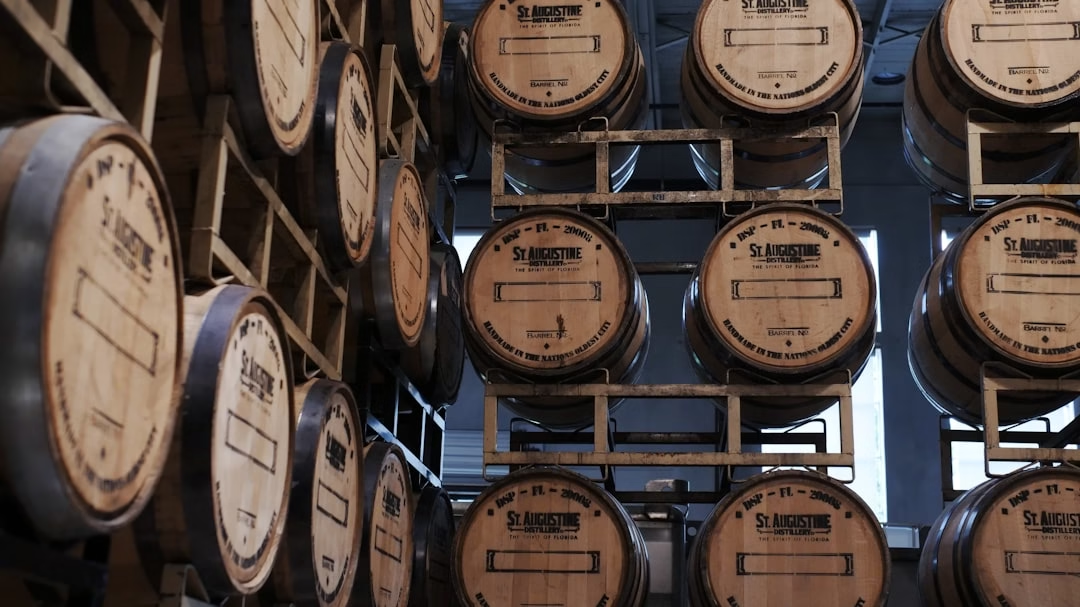
Introduction
In the rapidly evolving world of distillery operations, smart environmental monitoring has emerged as a game-changing technology that promises to revolutionize the way distilleries manage their production environments. This innovative approach goes far beyond traditional HVAC systems, offering a comprehensive solution that addresses the unique challenges faced by modern distilleries. Smart environmental monitoring encompasses a range of advanced technologies, including sensor networks, data analytics, and artificial intelligence, all working in concert to provide real-time insights and control over crucial environmental factors.
The importance of moving beyond traditional HVAC systems in modern distilleries cannot be overstated. While HVAC systems have long been the backbone of environmental control in industrial settings, they often fall short in meeting the precise and dynamic needs of distillery environments. Distillation processes require exacting control over temperature, humidity, and air quality, factors that can significantly impact the flavor, aroma, and overall quality of the final product. Traditional HVAC systems, with their broad-brush approach to environmental management, simply cannot provide the level of precision and responsiveness required in today’s competitive distillery market.
Smart environmental monitoring systems offer a multitude of benefits that can dramatically improve distillery operations. By leveraging advanced sensor technology, these systems can continuously monitor and adjust environmental conditions in real-time, ensuring optimal conditions for fermentation, distillation, and aging processes. For instance, precise temperature control during fermentation can significantly influence the development of flavors and aromas in the final spirit. Similarly, maintaining ideal humidity levels during aging can affect the rate of evaporation and the interaction between the spirit and the barrel, ultimately impacting the character and quality of the aged product.
Moreover, smart monitoring solutions contribute to sustainability efforts by optimizing energy usage and reducing waste. By providing detailed insights into environmental conditions and energy consumption patterns, these systems enable distilleries to identify inefficiencies and implement targeted improvements. This not only reduces operational costs but also aligns with growing consumer demand for environmentally responsible production practices.
The integration of smart environmental monitoring also paves the way for data-driven production optimization. By collecting and analyzing vast amounts of environmental data, distilleries can gain unprecedented insights into the relationship between environmental factors and product quality. This knowledge can be used to fine-tune recipes, adjust production processes, and even predict and prevent potential issues before they arise.
The Limitations of Traditional HVAC Systems
Traditional HVAC (Heating, Ventilation, and Air Conditioning) systems have long been the standard for environmental control in industrial settings, including distilleries. However, as the demands of modern distillery operations have grown more complex and exacting, the limitations of these conventional systems have become increasingly apparent. Understanding these limitations is crucial for distilleries looking to maintain a competitive edge in an industry where environmental precision can make or break product quality.
One of the primary limitations of traditional HVAC systems in distilleries is their inability to provide fine-tuned control over specific environmental parameters. Distillation processes require precise management of temperature and humidity levels, often varying across different areas of the facility. Standard HVAC systems typically operate on a broad, facility-wide basis, lacking the granularity needed to address the unique requirements of different production stages. For instance, the ideal temperature for fermentation may differ significantly from that required for aging or bottling, yet a traditional HVAC system may struggle to maintain these distinct microclimates within the same facility.
This lack of precision can have significant consequences for distillery operations and product quality. Temperature fluctuations during fermentation can affect yeast activity, potentially altering the flavor profile of the final product. In the aging process, inconsistent humidity levels can lead to uneven evaporation rates, impacting the maturation of the spirit and potentially resulting in inconsistencies across batches. These quality variations can be particularly problematic for distilleries aiming to produce premium, consistent products that command higher market prices.
Furthermore, traditional HVAC systems often operate on fixed schedules or simple thermostat controls, lacking the ability to respond dynamically to changing environmental conditions or production needs. This rigidity can lead to inefficiencies, as the system may continue to heat, cool, or dehumidify spaces unnecessarily, wasting energy and increasing operational costs. In an industry where energy expenses can significantly impact the bottom line, such inefficiencies are increasingly untenable.
The environmental impact of relying solely on traditional HVAC systems is another crucial consideration. These systems typically consume substantial amounts of energy, contributing to a distillery’s overall carbon footprint. As sustainability becomes an increasingly important factor for both regulatory compliance and consumer preference, the limitations of energy-intensive HVAC systems become more pronounced. Traditional systems often lack the sophisticated energy management capabilities found in modern, smart environmental control solutions, making it challenging for distilleries to optimize their energy usage or integrate renewable energy sources effectively.
Moreover, conventional HVAC systems usually operate in isolation, without integration into broader production management systems. This siloed approach means that valuable environmental data is often not captured or analyzed in conjunction with other production metrics, limiting the distillery’s ability to gain holistic insights into their operations. The lack of data integration can hinder efforts to implement data-driven improvements or to quickly identify and address issues that may be impacting product quality.
Another significant limitation is the reactive nature of traditional HVAC systems. These systems typically respond to environmental changes after they occur, rather than anticipating and preemptively adjusting to maintain optimal conditions. In a distillery setting, where even minor environmental fluctuations can impact product quality, this reactive approach can lead to suboptimal production conditions and inconsistencies in the final product.
Maintenance and troubleshooting of traditional HVAC systems can also pose challenges for distilleries. These systems often require regular, sometimes disruptive maintenance, and when issues arise, diagnosing the problem can be time-consuming and complex. This can lead to production delays and increased downtime, potentially impacting the distillery’s output and efficiency.
Advancements in Air Quality Sensors and Their Impact
The field of air quality monitoring has seen remarkable advancements in recent years, with the development of sophisticated sensors that offer unprecedented levels of accuracy, sensitivity, and real-time data collection capabilities. These technological improvements have significant implications for distillery operations, where air quality plays a crucial role in various stages of production. From ensuring optimal fermentation conditions to maintaining the integrity of aging spirits, modern air quality sensors are revolutionizing how distilleries monitor and control their environments.
One of the most significant recent advancements in air quality sensors is the miniaturization of sensor technology. Modern sensors are now smaller, more energy-efficient, and more cost-effective than ever before. This miniaturization allows for the deployment of dense sensor networks throughout a distillery, providing granular, location-specific data on air quality parameters. For instance, micro-electromechanical systems (MEMS) sensors can now detect minute particles and volatile organic compounds (VOCs) at parts per billion levels, offering unprecedented insight into the air composition within different areas of the distillery.
Another major advancement is the development of multi-parameter sensors. These advanced devices can simultaneously measure multiple air quality factors, such as temperature, humidity, CO2 levels, and specific VOCs relevant to distillation processes. This integrated approach provides a more comprehensive view of the distillery environment, allowing for more nuanced control and optimization of production conditions.
The integration of Internet of Things (IoT) technology with air quality sensors has also been a game-changer for distillery operations. IoT-enabled sensors can transmit real-time data to central monitoring systems, enabling immediate response to any deviations from optimal conditions. This real-time capability is particularly crucial in distilleries, where rapid changes in air quality can significantly impact the production process.
Machine learning and artificial intelligence have further enhanced the capabilities of air quality monitoring systems. These technologies can analyze vast amounts of sensor data to identify patterns, predict potential issues, and even suggest optimizations to the production process. For example, AI algorithms can correlate air quality data with production metrics to determine the ideal environmental conditions for specific spirit varieties or production stages.
These advancements in air quality sensors offer numerous benefits to distillery operations. Firstly, they enable more precise control over fermentation conditions. During fermentation, yeast activity is highly sensitive to environmental factors, including the presence of certain gases and particles in the air. Advanced sensors can detect subtle changes in air composition that may affect yeast performance, allowing distillers to make real-time adjustments to maintain optimal conditions for flavor development.
In the aging process, air quality plays a crucial role in the interaction between the spirit and the barrel. Modern sensors can monitor the levels of specific compounds in the air that may influence the aging process, such as ethanol vapor or ambient oxygen levels. This level of monitoring allows distillers to fine-tune the aging environment to achieve desired flavor profiles more consistently.
Advanced air quality sensors also contribute significantly to quality control and contamination prevention. By detecting even trace amounts of unwanted substances in the air, these sensors can alert distillery staff to potential contamination issues before they impact the product. This early warning system can prevent costly product losses and maintain the highest standards of quality and consistency.
From a sustainability perspective, modern air quality sensors play a vital role in helping distilleries meet their environmental goals. By providing detailed data on emissions and energy usage associated with maintaining air quality, these sensors enable distilleries to optimize their processes for greater efficiency and reduced environmental impact. For instance, sensors can help identify areas where filtration systems may be underperforming or where energy is being wasted on unnecessary air treatment.
Moreover, the use of advanced air quality monitoring can contribute to a distillery’s sustainability narrative, demonstrating a commitment to environmental responsibility that resonates with increasingly eco-conscious consumers. The ability to precisely control and document environmental conditions throughout the production process can be a powerful marketing tool, particularly for premium and craft distillers.
The implementation of these advanced sensors also opens up new possibilities for product innovation. With a deeper understanding of how air quality affects various stages of spirit production, distillers can experiment with new techniques and environmental conditions to create unique flavor profiles or accelerate aging processes.
Benefits of Real-Time Humidity Tracking for Distilleries
Real-time humidity tracking has emerged as a critical component of environmental monitoring in modern distilleries, offering a range of benefits that significantly impact product quality, consistency, and operational efficiency. The ability to monitor and control humidity levels with precision and immediacy is transforming how distilleries manage their production environments, particularly in the crucial areas of fermentation, distillation, and aging.
The importance of real-time humidity tracking in distillery operations cannot be overstated. Humidity plays a vital role in various stages of spirit production, influencing everything from the efficiency of fermentation to the rate of evaporation during aging. In the fermentation process, maintaining optimal humidity levels is crucial for yeast activity and the development of desired flavors. Too much humidity can lead to unwanted bacterial growth, while too little can stress the yeast, potentially altering the flavor profile of the final product.
During the aging process, humidity becomes even more critical. The interaction between the spirit and the barrel is highly dependent on environmental conditions, with humidity affecting the rate of evaporation (known as the “angel’s share”) and the concentration of flavors in the aging spirit. Fluctuations in humidity can lead to inconsistent aging, potentially impacting the quality and character of the final product. Real-time humidity tracking allows distillers to maintain precise control over these conditions, ensuring consistency across batches and over extended aging periods.
Implementing real-time humidity tracking in distilleries involves deploying a network of advanced humidity sensors throughout the facility. These sensors continuously monitor moisture levels in the air, transmitting data to a central control system. Modern humidity sensors offer high levels of accuracy and reliability, capable of detecting even minute changes in humidity levels. They can be integrated with other environmental monitoring systems, providing a comprehensive view of the distillery’s environmental conditions.
The data collected by these sensors is typically fed into a centralized environmental management system. This system can provide real-time visualizations of humidity levels across different areas of the distillery, allowing operators to quickly identify and respond to any deviations from desired conditions. Advanced systems may incorporate predictive analytics and machine learning algorithms, enabling proactive management of humidity levels based on historical data and production schedules.
The tangible benefits of monitoring humidity in real-time are numerous and significant. Firstly, it enables unprecedented control over product quality and consistency. By maintaining optimal humidity levels throughout the production process, distillers can ensure that each batch of spirit develops the desired flavor profile and characteristics. This level of control is particularly valuable for premium and craft distillers, where consistency and quality are key differentiators in a competitive market.
Real-time humidity tracking also contributes to operational efficiency. By providing immediate feedback on environmental conditions, it allows distillery staff to make timely adjustments to HVAC systems or production processes. This proactive approach can prevent issues before they impact product quality, reducing waste and improving overall yield. For instance, in aging warehouses, real-time humidity data can inform decisions about barrel rotation or the need for additional climate control measures, optimizing the aging process and potentially reducing losses due to excessive evaporation.
Furthermore, the implementation of real-time humidity tracking can lead to significant energy savings. Traditional methods of humidity control often involve over-humidifying or dehumidifying spaces to ensure minimum standards are met. With real-time tracking, humidity control systems can operate more precisely, activating only when necessary and to the exact degree required. This targeted approach can substantially reduce energy consumption associated with environmental control, contributing to both cost savings and sustainability goals.
Real-time humidity tracking also plays a crucial role in regulatory compliance and quality assurance. Many distilleries must adhere to strict environmental standards as part of their production processes. The ability to continuously monitor and document humidity levels provides an auditable trail of environmental conditions, simplifying compliance procedures and potentially reducing the risk of regulatory issues.
Additionally, the data gathered through real-time humidity tracking can be invaluable for research and development purposes. By analyzing the relationship between humidity levels and product outcomes over time, distillers can gain insights that inform process improvements or new product development. This data-driven approach to innovation can give distilleries a competitive edge in developing unique and high-quality spirits.
Tools for Environmental Impact Assessments in Distilleries
Environmental impact assessments (EIAs) have become an integral part of responsible and sustainable distillery operations. As the spirits industry faces increasing scrutiny over its environmental footprint, a range of sophisticated tools has emerged to help distilleries conduct thorough and accurate assessments of their environmental impact. These tools not only aid in regulatory compliance but also contribute significantly to sustainable distillery operations and data-driven decision-making.
One of the primary tools available for conducting environmental impact assessments in distilleries is Life Cycle Assessment (LCA) software. LCA tools provide a comprehensive analysis of a distillery’s environmental impact across the entire production process, from raw material sourcing to product distribution. These software solutions typically offer extensive databases of environmental impact factors, allowing distilleries to input their specific production data and receive detailed reports on various environmental indicators such as carbon footprint, water usage, and energy consumption.
Advanced LCA tools can break down the environmental impact by production stage, helping distilleries identify the most resource-intensive aspects of their operations. This granular analysis enables targeted interventions to reduce environmental impact where it matters most. For instance, a distillery might discover that their grain drying process is particularly energy-intensive, prompting them to invest in more efficient drying technologies or explore alternative energy sources for this stage of production.
Another crucial tool for environmental impact assessments is energy monitoring and management systems. These systems use a network of sensors and meters to track energy consumption across different areas and equipment within the distillery. By providing real-time data on energy usage, these tools enable distilleries to identify inefficiencies, optimize their energy consumption, and reduce their carbon footprint. Some advanced energy management systems incorporate AI and machine learning algorithms to predict energy usage patterns and suggest optimization strategies automatically.
Emissions monitoring tools are becoming increasingly sophisticated and important for distilleries. These tools can measure and track various types of emissions, including greenhouse gases, volatile organic compounds (VOCs), and particulate matter. Advanced emissions monitoring systems can provide real-time data, allowing distilleries to respond quickly to any unusual spikes in emissions and ensure compliance with environmental regulations.
Waste management and tracking tools are another critical component of environmental impact assessments in distilleries. These tools help distilleries monitor and manage various waste streams, including organic waste from grain processing, packaging waste, and wastewater. By providing detailed analytics on waste generation and disposal, these tools can help distilleries identify opportunities for waste reduction, recycling, and even potential valorization of waste products.
Sustainability reporting software has also become an essential tool for distilleries conducting environmental impact assessments. These platforms integrate data from various sources, including energy management systems, water usage trackers, and waste management tools, to generate comprehensive sustainability reports. Such reports are not only valuable for internal decision-making but also for communicating environmental performance to stakeholders, including customers, investors, and regulatory bodies.
Geographic Information System (GIS) tools are increasingly being utilized in environmental impact assessments for distilleries. These tools allow distilleries to map and analyze spatial data related to their operations, such as the location of water sources, transportation routes, and sensitive ecosystems in the vicinity. GIS can help distilleries assess their impact on local environments and communities, aiding in responsible site management and expansion planning.
Carbon accounting software is becoming more sophisticated and tailored to the specific needs of the distilling industry. These tools help distilleries calculate their carbon footprint across the entire supply chain, from agricultural practices in grain production to the transportation of finished products. By providing a detailed breakdown of carbon emissions, these tools enable distilleries to set targeted reduction goals and track their progress over time.
The role of data in environmental impact assessments cannot be overstated. The tools mentioned above generate vast amounts of environmental data, which can be leveraged for continuous improvement and strategic decision-making. Data analytics platforms specifically designed for environmental data can help distilleries uncover insights that might not be immediately apparent from raw data alone.
These analytics tools can identify correlations between production variables and environmental impacts, forecast future environmental performance based on current trends, and even suggest optimization strategies to reduce environmental impact while maintaining or improving product quality. For instance, by analyzing data on energy consumption, production output, and environmental conditions, a distillery might discover that certain weather patterns lead to increased energy usage in their aging warehouses, prompting them to implement adaptive climate control strategies.
Moreover, the integration of Internet of Things (IoT) technology with these environmental assessment tools is creating new possibilities for real-time monitoring and management of environmental impacts. IoT sensors can continuously collect data on various environmental parameters, feeding this information into assessment tools for immediate analysis and response.
The benefits of using these advanced tools for environmental impact assessments in distilleries are manifold. Firstly, they contribute significantly to sustainable distillery operations by providing the data and insights necessary to reduce resource consumption, minimize waste, and lower emissions. This not only helps distilleries meet and exceed regulatory requirements but also aligns with growing consumer demand for environmentally responsible products.
Secondly, these tools support compliance efforts by providing accurate, comprehensive data on environmental performance. Many regulatory frameworks require detailed reporting on environmental impacts, and these tools can streamline the process of collecting and presenting this information.
Thirdly, environmental impact assessment tools can lead to substantial cost savings in the long run. By identifying inefficiencies and areas for improvement, distilleries can implement changes that not only reduce their environmental footprint but also lower operational costs through reduced energy and water consumption and improved waste management.
Lastly, the insights gained from these tools can drive innovation in distillery operations. By understanding the environmental implications of different production methods and technologies, distilleries can make informed decisions about process improvements and new product development that balance quality, efficiency, and sustainability.
Integration of Smart HVAC Systems into Distillery Operations
The integration of smart HVAC (Heating, Ventilation, and Air Conditioning) systems into existing distillery operations represents a significant leap forward in environmental control and energy efficiency. This advanced approach to climate management offers distilleries the ability to maintain precise environmental conditions while optimizing energy usage and reducing operational costs. The process of integrating these systems, however, requires careful planning and implementation to ensure seamless operation and maximum benefit.
Smart HVAC systems can be integrated into existing distillery operations through various strategies, depending on the facility’s current infrastructure and specific needs. One common approach is the retrofit method, where smart controls and sensors are added to existing HVAC equipment. This method allows distilleries to upgrade their environmental control capabilities without the need for a complete system overhaul. Retrofit solutions often include the installation of smart thermostats, variable frequency drives (VFDs) for fans and pumps, and wireless sensors throughout the facility.
For distilleries undertaking more extensive renovations or building new facilities, a comprehensive smart HVAC system can be designed and installed from the ground up. This approach allows for the integration of advanced features such as zonal control, predictive maintenance capabilities, and seamless integration with other smart building systems.
Regardless of the integration method, a crucial component of smart HVAC systems is the central management platform. This software acts as the brain of the system, collecting data from various sensors and control points throughout the distillery. Advanced analytics and machine learning algorithms process this data to optimize HVAC operations based on factors such as production schedules, weather forecasts, and historical performance data.
The benefits of upgrading to a smart HVAC system in distillery operations are numerous and significant. Firstly, these systems offer unprecedented precision in environmental control. Smart HVAC systems can maintain exact temperature and humidity levels in different areas of the distillery, crucial for processes such as fermentation and aging. This level of control ensures consistent product quality and can even allow for experimentation with environmental conditions to develop new flavor profiles.
Energy efficiency is another major benefit of smart HVAC integration. These systems can significantly reduce energy consumption by operating only when and where needed, and at the intensity required. For instance, smart systems can adjust cooling or heating based on occupancy, production schedules, or even the specific requirements of different spirits being produced.
Operational efficiency is also greatly enhanced through smart HVAC integration. These systems provide real-time monitoring and alerts, allowing distillery staff to quickly identify and address any issues before they impact production. Predictive maintenance features can alert operators to potential equipment failures before they occur, reducing downtime and maintenance costs.
The integration of smart HVAC systems contributes to overall operational efficiency by providing valuable data that can be used to optimize various aspects of distillery operations. For example, by analyzing the relationship between environmental conditions and production outcomes, distilleries can fine-tune their processes for improved yield and quality.
Several case studies highlight the successful integration of smart HVAC systems in distilleries and the outcomes achieved. For instance, a craft distillery implemented a smart HVAC system with zonal control and predictive analytics. The system allowed them to maintain different temperature and humidity levels in their fermentation area and aging warehouse simultaneously, resulting in improved product consistency and a 25% reduction in energy costs.
Another example comes from a large-scale distillery in Kentucky that integrated a smart HVAC system with their existing building management system. The integration allowed for comprehensive control over environmental conditions across their extensive facility. The distillery reported a 20% increase in energy efficiency and noted significant improvements in their ability to maintain consistent aging conditions for their premium bourbon lines.
However, the integration of smart HVAC systems is not without challenges. Initial costs can be significant, particularly for comprehensive system upgrades. Additionally, staff training is crucial to ensure that the full capabilities of the system are utilized effectively. Cybersecurity is another important consideration, as these connected systems can potentially be vulnerable to digital threats if not properly secured.
Despite these challenges, the long-term benefits of smart HVAC integration in distillery operations are clear. As the spirits industry continues to evolve, with increasing emphasis on quality, consistency, and sustainability, smart HVAC systems are becoming an essential tool for modern distilleries. These systems not only enhance product quality and operational efficiency but also align with growing consumer and regulatory demands for sustainable production practices.
Sustainable Solutions for Environmental Monitoring
The pursuit of sustainable environmental monitoring solutions has become a critical focus for modern distilleries, driven by increasing environmental awareness, regulatory pressures, and the potential for operational cost savings. These sustainable solutions encompass a range of technologies and practices designed to provide comprehensive environmental monitoring while minimizing resource consumption and environmental impact.
Key components of sustainable environmental monitoring solutions in distilleries include energy-efficient sensors, renewable energy integration, water conservation technologies, and eco-friendly data management systems. These components work together to create a holistic approach to environmental monitoring that aligns with broader sustainability goals.
Energy-efficient sensors form the backbone of sustainable monitoring systems. These advanced sensors consume significantly less power than their traditional counterparts while offering improved accuracy and reliability. For instance, low-power wireless sensors can operate for extended periods on small batteries or even harvest energy from their environment, reducing the need for frequent battery replacements and associated waste.
The integration of renewable energy sources into environmental monitoring systems is another crucial aspect of sustainable solutions. Solar panels, for example, can be used to power sensor networks and data processing units, reducing reliance on grid electricity. Some distilleries have gone a step further by implementing small-scale wind turbines or micro-hydro systems to power their monitoring infrastructure, particularly in remote locations.
Water conservation technologies play a vital role in sustainable environmental monitoring, especially given the water-intensive nature of distillery operations. Smart water meters and leak detection systems can provide real-time data on water usage and identify potential waste. Advanced wastewater monitoring systems can help distilleries optimize their water treatment processes, ensuring compliance with regulations while minimizing water and energy consumption.
Eco-friendly data management systems are essential for processing and storing the vast amounts of data generated by environmental monitoring systems. Cloud-based solutions can reduce the need for on-site servers, lowering energy consumption and hardware requirements. Additionally, edge computing technologies can process data closer to its source, reducing the energy required for data transmission and storage.
When comparing sustainable monitoring solutions with traditional methods, several key differences emerge. Sustainable solutions typically offer greater energy efficiency, reduced material waste, and lower long-term operational costs. While initial investment may be higher, the return on investment often outweighs the upfront costs due to energy savings and improved operational efficiency.
Traditional environmental monitoring methods often rely on manual data collection and standalone systems, which can be labor-intensive and prone to human error. In contrast, sustainable solutions leverage automation and integration, providing more accurate, real-time data while reducing the need for manual intervention. This not only improves data quality but also frees up staff to focus on more value-added tasks.
The long-term benefits of adopting sustainable environmental monitoring practices in distilleries are numerous and significant. From an environmental perspective, these solutions contribute to reduced energy consumption, lower water usage, and decreased waste generation. This reduction in environmental impact can significantly enhance a distillery’s sustainability credentials, an increasingly important factor in consumer and stakeholder perceptions.
From a financial standpoint, sustainable monitoring solutions can lead to substantial operational savings over time. Reduced energy and water consumption translate directly to lower utility costs, while improved efficiency and predictive maintenance capabilities can decrease overall operational expenses. Some distilleries have reported cost savings of up to 40% on their environmental monitoring and control operations after implementing sustainable solutions.
Regulatory compliance is another area where sustainable monitoring solutions offer significant advantages. These systems provide more comprehensive and accurate data, making it easier for distilleries to demonstrate compliance with environmental regulations. The ability to quickly identify and address potential issues also helps prevent costly violations and fines.
Brand reputation and marketing opportunities represent another long-term benefit of sustainable monitoring practices. As consumers become increasingly environmentally conscious, distilleries that can demonstrate a commitment to sustainable practices gain a competitive edge. The data and insights gained from sustainable monitoring systems can be used to support sustainability claims and enhance marketing efforts.
Innovation and product quality improvements are additional long-term benefits. The detailed environmental data provided by sustainable monitoring systems can inform process optimizations and even inspire new product development. For instance, precise monitoring of aging conditions can lead to the creation of unique flavor profiles or accelerated aging techniques.
However, the adoption of sustainable environmental monitoring solutions is not without challenges. The initial investment can be substantial, and there may be resistance to change within organizations accustomed to traditional methods. Additionally, the implementation of these systems often requires specialized expertise, which may necessitate staff training or the hiring of new personnel.
Despite these challenges, the trend towards sustainable environmental monitoring in distilleries is likely to continue and accelerate. As technology advances and becomes more cost-effective, and as environmental regulations become more stringent, the adoption of these solutions will increasingly become a necessity rather than a choice.
Distilleries that have moved beyond relying solely on HVAC output for environmental control understand the gap between a system designed for comfort heating and cooling and the precise, multizone monitoring that aging spirits and active fermentation actually require. HVAC systems confirm that air is being conditioned; they do not tell you whether conditions in a specific barrel room, production area, or bonded warehouse are within the ranges that protect product quality and consistency.
Nosy is a wireless environmental sensor platform that measures temperature, humidity, CO2, atmospheric pressure, and tVOCs across all areas of a facility, with readings every five minutes and a web-based dashboard that shows conditions by zone. The platform can connect to existing HVAC infrastructure via the BACnet protocol (if supported) and other open protocols, all without replacing equipment or requiring wiring changes. At a craft distillery in Rhode Island, Nosy is deployed across barrel aging and production areas, giving the team continuous visibility into the environmental conditions that affect product outcomes. More at Nosy for Craft Distilleries.
Conclusion
The evolution of environmental monitoring in modern distilleries, moving beyond traditional HVAC systems to embrace smarter, more sustainable solutions, represents a significant transformation in the spirits industry. This shift not only enhances operational efficiency and product quality but also aligns distillery practices with growing environmental concerns and consumer expectations for sustainable production methods.
Smart environmental monitoring systems have emerged as game-changers for distillery operations. By providing precise, real-time control over crucial environmental factors such as temperature, humidity, and air quality, these advanced systems enable distilleries to maintain optimal conditions throughout the production process. This level of control is particularly critical in processes like fermentation and aging, where even slight variations in environmental conditions can significantly impact the final product’s quality and consistency.
The integration of smart HVAC systems into distillery operations has proven to be a key component of this transformation. These systems offer unprecedented levels of energy efficiency and environmental control, allowing distilleries to maintain exact conditions in different areas of their facilities while minimizing energy consumption. The ability to create and maintain distinct microclimates within a single facility opens up new possibilities for product innovation and quality improvement.
Real-time humidity tracking, facilitated by advanced sensor technologies, has become an indispensable tool for modern distilleries. The ability to monitor and adjust humidity levels with precision ensures optimal conditions for fermentation and aging, contributing to product consistency and reducing losses due to excessive evaporation. This level of control not only enhances product quality but also improves operational efficiency and reduces waste.
The adoption of sustainable environmental monitoring solutions marks a significant step forward in the industry’s commitment to environmental stewardship. These solutions, which encompass energy-efficient sensors, renewable energy integration, and eco-friendly data management systems, allow distilleries to minimize their environmental footprint while maintaining comprehensive monitoring capabilities. The long-term benefits of these sustainable practices extend beyond environmental impact, including operational cost savings, enhanced brand reputation, and improved regulatory compliance.
The role of data analytics and artificial intelligence in environmental monitoring cannot be overstated. These technologies enable distilleries to derive actionable insights from the vast amounts of environmental data collected, leading to continuous process improvements and informed decision-making. The ability to predict and preemptively address potential issues represents a paradigm shift in distillery management, moving from reactive to proactive environmental control.
For distilleries considering an upgrade from traditional HVAC systems, the key takeaways are clear. While the initial investment in smart and sustainable monitoring solutions may be significant, the long-term benefits in terms of product quality, operational efficiency, and environmental performance far outweigh the costs. The precision and control offered by these advanced systems can lead to improved product consistency, reduced waste, and potentially even new product innovations.
Moreover, the integration of smart and sustainable monitoring solutions is becoming critical for the future of distilling. As environmental regulations become more stringent and consumer demand for sustainably produced spirits grows, distilleries that have embraced these technologies will be better positioned to meet these challenges. The ability to demonstrate a commitment to environmental responsibility through advanced monitoring and control systems can become a significant competitive advantage in an increasingly crowded market.
The transformation brought about by smarter environmental monitoring extends beyond individual distilleries, potentially reshaping the entire spirits industry. As more distilleries adopt these advanced technologies, we may see a shift towards more sustainable production methods across the sector. This could lead to industry-wide improvements in energy efficiency, water conservation, and overall environmental performance.
Furthermore, the data and insights generated by these advanced monitoring systems could contribute to a deeper understanding of the distillation process itself. As distilleries accumulate and analyze environmental data over time, new correlations between environmental factors and product characteristics may emerge, potentially leading to groundbreaking innovations in spirit production.
